5 Tips to Choose the Right Size Food Storage Container
To choose the right size food storage container, start by knowing your typical portion sizes. This way, your meals fit perfectly without any waste. It also helps to measure your fridge or pantry space to find containers that slide in easily and stack well.
Pick versatile sizes—smaller containers are great for snacks, while larger ones work for meals. This keeps your options open and makes food storage more flexible.
Planning for stackable and nesting designs is a smart move too, as it saves space and keeps things organized.
Match the container size with how often you prep meals to stay efficient. If you want to get even better at organizing your food storage, keep exploring these tips!
Key Takeaways
– Measure your typical meal and snack portions to select containers that match serving sizes and minimize food waste.
This way, you only store what you need and avoid extras that might go bad.
– Ensure containers fit your pantry, fridge, and freezer space. Choosing stackable or slim designs can really help with efficient storage.
It saves you a lot of space and keeps things organized.
– Choose versatile container sizes, like 24-30 oz. for meals and 8-12 oz. for snacks or dressings.
These sizes cover most of your needs without cluttering your kitchen.
– Opt for stackable and nesting containers with uniform shapes and compatible lids to maximize storage space.
It’s a smart way to keep everything neat and easy to access.
– Align container sizes with your meal prep frequency to streamline storage and reduce unused container clutter.
That way, you’re not stuck with too many containers sitting around unused.
Assess Your Typical Portion Sizes
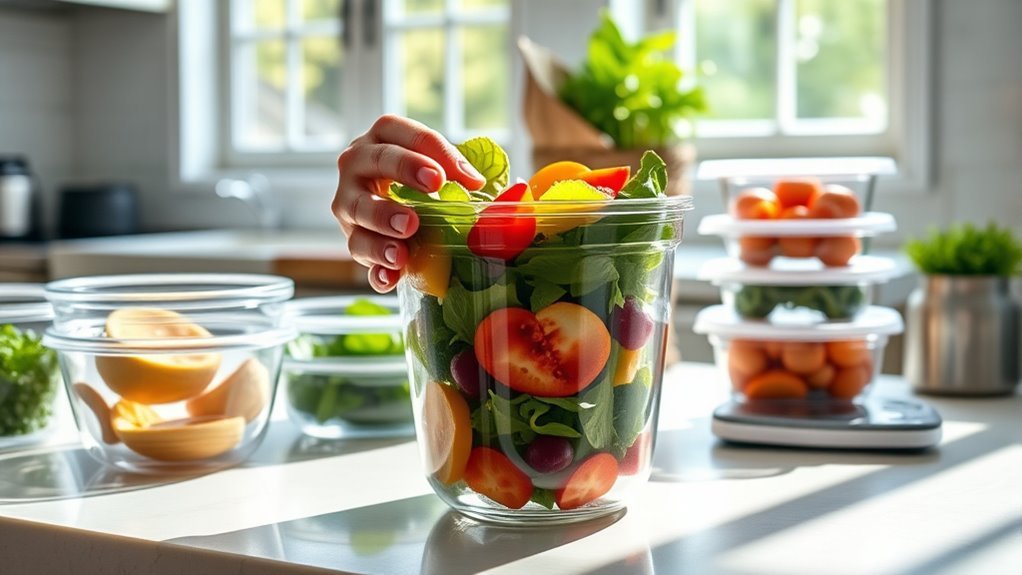
How much do you usually eat in one sitting? Understanding your typical portion sizes is key to choosing the right food storage containers.
Start by measuring your usual meal portions and snacks to match container capacity precisely. For smaller servings like snacks or salads, 8-12 oz. containers work well. Meanwhile, 16-30 oz. containers suit larger meal prep or leftover storage.
Measure your portions to choose containers: 8-12 oz. for snacks, 16-30 oz. for meals and leftovers.
Pay attention to serving sizes of grains, proteins, and vegetables. Accurate food measurement helps with portion control and prevents food waste.
Selecting containers that align with your meal portions improves storage efficiency and keeps your food fresh. By tailoring container size to your eating habits, you avoid overpacking and reduce leftover food.
This smart approach makes meal prep easier and waste-free.
Consider Storage Space Availability
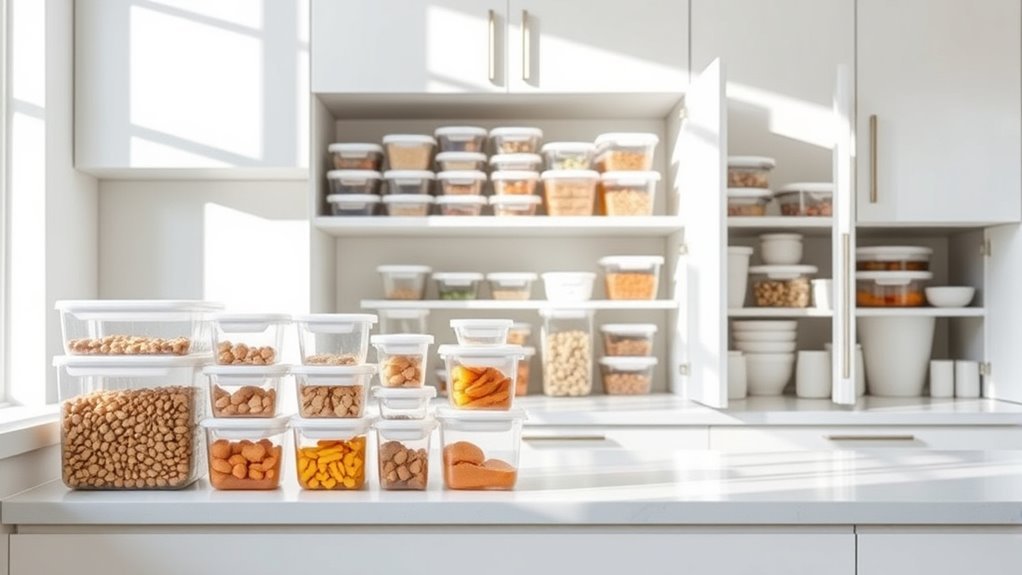
Since your storage space limits your options, measuring your pantry, fridge, and freezer areas guarantees containers fit without overcrowding. You’ll want to assess shelf height and available fridge space carefully to pick container sizes that slide in easily.
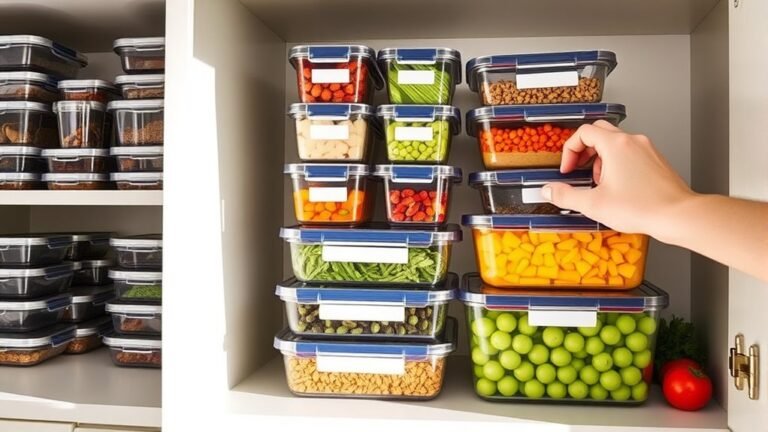
Opt for stackable containers or nesting containers to boost space efficiency, especially in tight spots. Slim, rectangular containers work great for maximizing vertical space and improving pantry organization.
Transparent containers help with quick identification, reducing the need to open each one and keeping clutter down. Managing capacity with appropriately sized containers prevents wasted space and keeps your storage neat.
Choose Versatile Container Sizes
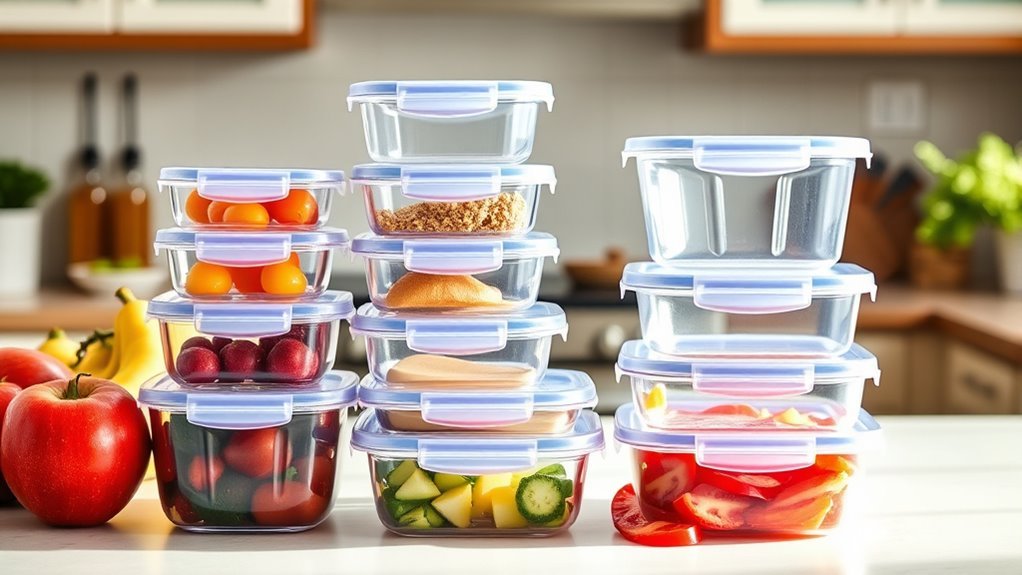
After measuring your storage space and selecting containers that fit well, focus on choosing versatile container sizes that meet your daily needs. Opt for 24-30 oz containers for typical meals—they offer the right capacity for lunch portions with sides.
Smaller 8-12 oz containers work great for snacks and dressings, supporting portion control. Larger 4-8 cup containers handle bulk storage and family-sized meals efficiently.
Having a mix of sizes lets you organize different meal types smoothly while simplifying meal prep and storage. Here’s a quick guide:
| Container Size | Ideal Use | Benefits |
|---|---|---|
| 8-12 oz | Snacks, dressings | Portion control |
| 24-30 oz | Daily meals | Balanced capacity |
| 4-8 cups | Bulk leftovers, meals | Meal prep, organization |
Choose versatile storage containers for easy stacking and efficient use of space.
Plan for Efficient Stacking and Nesting
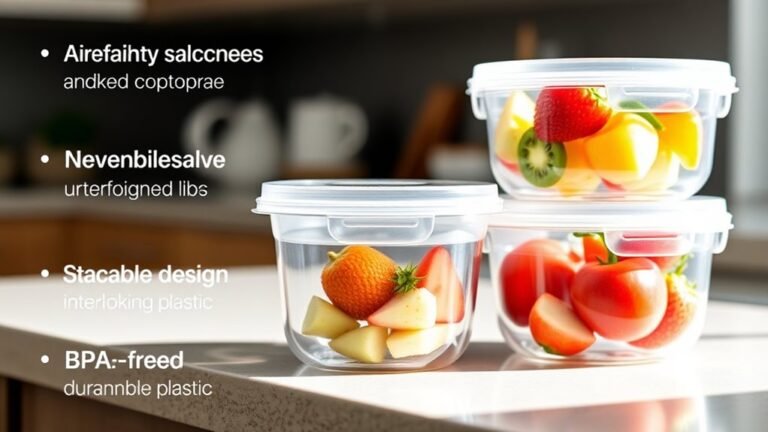
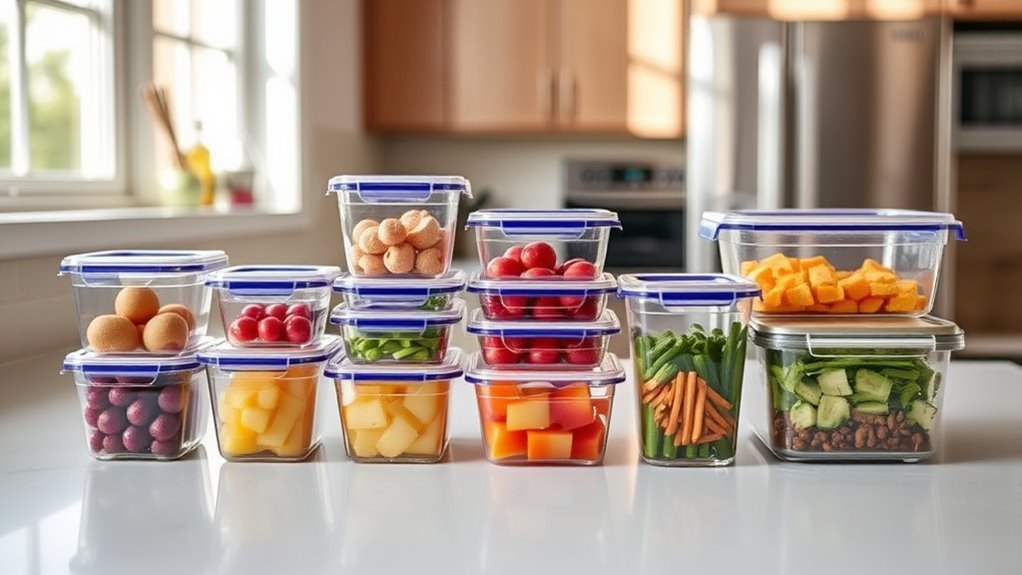
When you select containers designed for efficient stacking and nesting, you save valuable space and keep your pantry or fridge organized. Prioritize stackable containers with flat lids and bases to ensure stacking stability and secure stacking.
Nesting-friendly designs with tapered sides boost storage efficiency by fitting smaller containers inside larger ones when not in use. To maximize space-saving benefits, choose containers with uniform sizes and shapes that simplify stacking and retrieval.
Here’s how to plan for efficient stacking and nesting:
- Pick stackable containers with compatible lids for secure stacking and reduced clutter.
- Opt for nesting designs to save space when containers are empty.
- Select containers with flat lids and uniform shapes and sizes for stacking stability and easy access.
Match Container Size to Meal Prep Frequency
Choosing the right container size helps you match your meal prep routine and keeps your kitchen efficient. If you prep meals daily, smaller meal prep containers (10-12 oz.) are perfect for single servings or snacks. They support portion control and reduce food waste.
For meal prep several times a week, mix small and medium containers (16-20 oz.) to balance variety and convenience. This way, you get the best of both worlds without any hassle.
When your meal frequency is low, larger containers (up to 30 oz.) work best for bulk prep. They allow you to store multiple servings in one go.
Thoughtful container matching to your typical meal portions streamlines food storage and minimizes waste. By aligning container size with your meal prep habits, you optimize storage options and keep your kitchen organized without unnecessary clutter.
Frequently Asked Questions
How to Choose the Right Food Storage Containers?
You should pick containers that fit your meal portions, stack well, and match your fridge space. Choose shapes that suit your food type, like rectangular for leftovers and round for soups.
This reduces waste and keeps food fresh. It’s all about making your storage work for you, so your food lasts longer and your fridge stays organized.
What to Avoid in Food Storage Containers?
You shouldn’t pick containers with non-BPA plastics, weak lids that leak, or those not microwave and dishwasher safe.
Avoid sizes that are too small or brittle plastics that crack easily. These issues can lead to spills, damage, and food safety problems.
It’s really important to choose containers that can handle everyday use without causing headaches in the kitchen.
Should I Throw Out All My Old Tupperware?
You don’t need to throw out all your old Tupperware, but over 60% of plastic containers contain harmful chemicals.
Toss cracked, stained, or warped ones, and replace them with BPA-free or glass options for safety and freshness. It’s a simple swap that can make a big difference.
What Is the Perfect Size for a Meal Prep Container?
The perfect meal prep container holds about 24 to 30 ounces, fitting most lunches or dinners.
Choose sizes that suit your portions to avoid waste and keep food fresh.
Also, mix sizes for snacks or bigger meals to keep things convenient and organized.
Conclusion
Choosing the right size food storage container makes your kitchen more organized and your meal prep easier. By evaluating your portion sizes, considering your storage space, and picking versatile containers, you’ll save time and reduce waste.
Planning for stacking and matching containers to how often you cook keeps everything efficient. So, why settle for clutter and frustration when a few smart choices can simplify your routine and keep your food fresh longer?
When you choose the appropriate food storage containers, you not only maximize your kitchen space but also enhance your meal preparation process. The right container sizes help prevent food spoilage and minimize waste, making your kitchen more efficient and eco-friendly. Remember, using containers that fit your storage needs and cooking habits ensures a smoother, more organized routine every day.