How to Ensure Long-Term Food Storage Shelf Life
To ensure your long-term food storage lasts, it’s important to keep moisture and oxygen out. The best way to do this is by sealing dry foods completely dry in airtight Mylar bags with oxygen absorbers.
These bags are great because they block light and air, which helps prevent spoilage and rancidity. This method works especially well for grains, flours, and oats.
Just a heads up—avoid using oxygen absorbers with salt or sugar since they can cause hardening.
Once you’ve sealed the bags, store them in a cool, dark, and dry place to keep everything fresh.
By mastering these simple steps, you’ll be able to preserve your food’s freshness and maximize its shelf life efficiently. It’s all about creating the right environment to keep your food safe for the long haul!
Key Takeaways
- Use airtight, opaque Mylar bags with proper heat sealing to block moisture, oxygen, and light for maximum shelf life. This helps keep your food fresh for much longer.
- Make sure all foods are completely dry before sealing. This step is super important to prevent mold and spoilage caused by moisture.
- Add the correct number of oxygen absorbers inside sealed bags. Just remember, don’t use them with salt and sugar. These absorbers help eliminate oxygen and stop rancidity.
- Store sealed foods in a cool, dark, and dry place. Doing this slows down spoilage and keeps nutrients intact for a longer time.
- It’s a good idea to repackage dry goods like rice, beans, and flour from their original packaging into sealed Mylar bags. This gives them better protection and extends their shelf life.
Long-Term Storage Principles: Protecting Food From Moisture and Oxygen
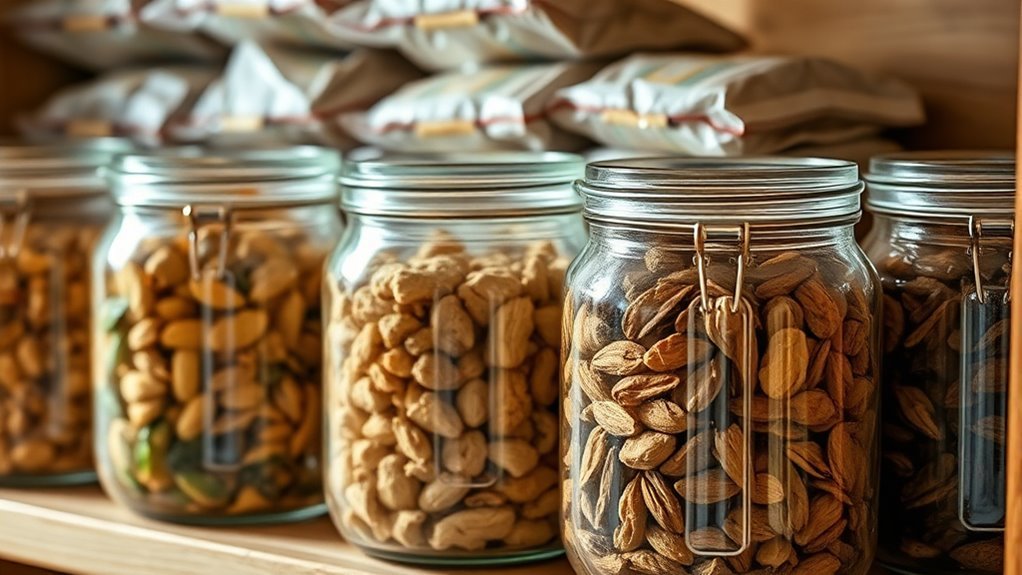
Since moisture and oxygen are the two main enemies of long-term food storage, you need to keep staples like white rice, dried pasta, flour, and powdered milk sealed tightly against both.
Moisture drastically reduces shelf life by encouraging mold and spoilage, while oxygen hastens rancidity, especially in oats and flour due to their oils.
To protect your food, ensure it’s completely dry before sealing to prevent any moisture inside.
While some foods like salt and sugar remain stable when dry, don’t use oxygen absorbers with them as this can cause hardening.
Be aware that whole grains and products with fats, like brown rice or oats, spoil faster if oxygen isn’t regulated.
Proper moisture and oxygen protection keeps your food safe and extends its shelf life considerably.
Using Mylar Bags and Oxygen Absorbers for Maximum Shelf Life
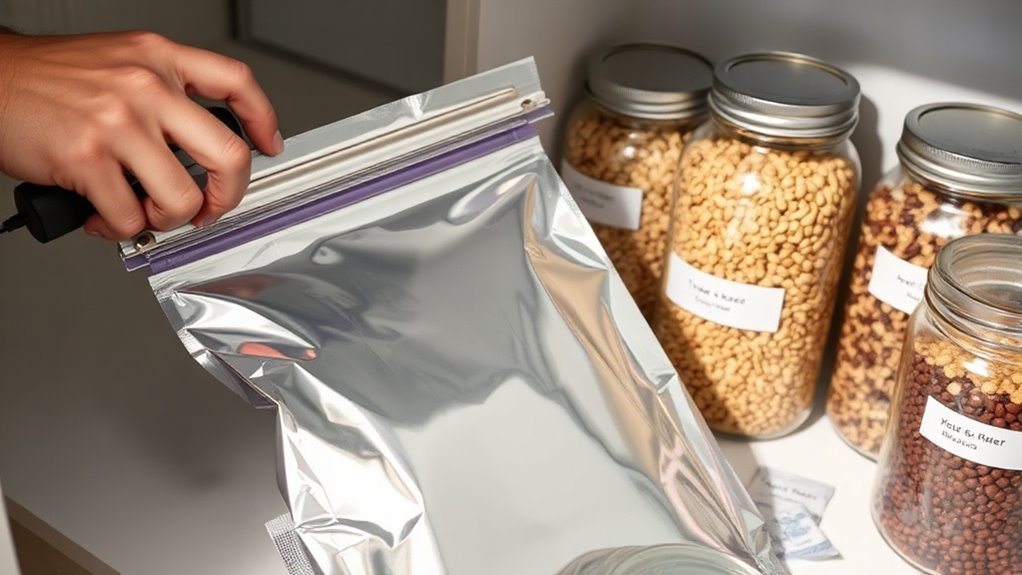
You’ll get the best shelf life by storing food in sealed Mylar bags combined with oxygen absorbers, which block moisture and oxygen effectively.
Oxygen absorbers prevent spoilage, especially in grains and starches, by removing the air that causes rancidity. Just make sure to seal the bags tightly and keep them away from light to maintain freshness over time.
Benefits Of Mylar Bags
When storing dry foods for the long term, using Mylar bags combined with oxygen absorbers can dramatically extend their shelf life. Mylar bags create an airtight, opaque barrier that blocks moisture and light—two key factors that degrade food quality even if the original packaging is shelf-stable.
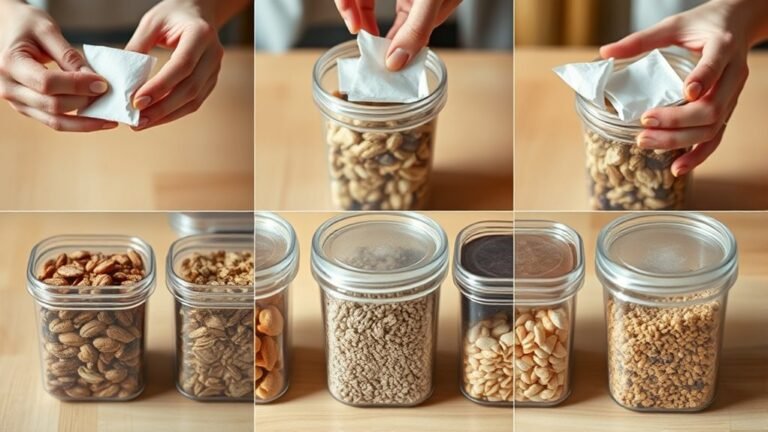
You’ll especially benefit when storing grains, legumes, and powdered milk, as reducing oxygen helps prevent rancidity and nutrient loss. To maximize longevity, transfer foods from their original packaging into properly sealed Mylar bags, ensuring the oxygen absorber fits correctly.
Just a heads up: avoid putting salt or sugar in Mylar bags with oxygen absorbers, since moisture absorption can cause hardening. By using Mylar bags, you protect your staples from spoilage and maintain their freshness for decades.
It’s a simple way to give yourself peace of mind in your long-term food storage.
Role Of Oxygen Absorbers
Although Mylar bags provide a strong barrier against moisture and light, oxygen absorbers play the essential role of actively removing oxygen from the sealed environment. This greatly slows oxidation and prevents spoilage caused by pests and mold.
Using sealed Mylar bags lined with oxygen absorbers keeps oxygen levels extremely low. This helps long-term staples like white rice and dried beans reach shelf lives of 25 to 30+ years.
Remember, oxygen absorbers don’t just cover oxygen—they eliminate it, preserving your dry foods effectively. Just avoid using them with salt or sugar, as this can cause your food to harden into a brick.
For best results, store foods that are already dry, like flour or powdered milk. Oxygen control works best when moisture is minimized.
Proper Sealing Techniques
To maximize the benefits of oxygen absorbers and Mylar bags, proper sealing is key. Start by using clean, food-grade Mylar bags and a heat sealer to create an airtight seal. Oxygen and moisture are the main enemies of shelf life, so sealing well really matters.
Place the right number of oxygen absorbers inside the bag, but be sure to leave enough headspace for them to work efficiently. Seal the bag immediately to trap those low-oxygen conditions that help slow spoilage.
One thing to watch out for: avoid using oxygen absorbers with salt or sugar. They absorb moisture and can end up hardening your food.
For best results, take the food out of its original packaging and transfer it into Mylar bags with oxygen absorbers. Then, store these sealed bags in a cool, dark, and dry place. This will help keep your dry staples fresh for as long as possible.
Long-Term Storage for Grains and Carbohydrates
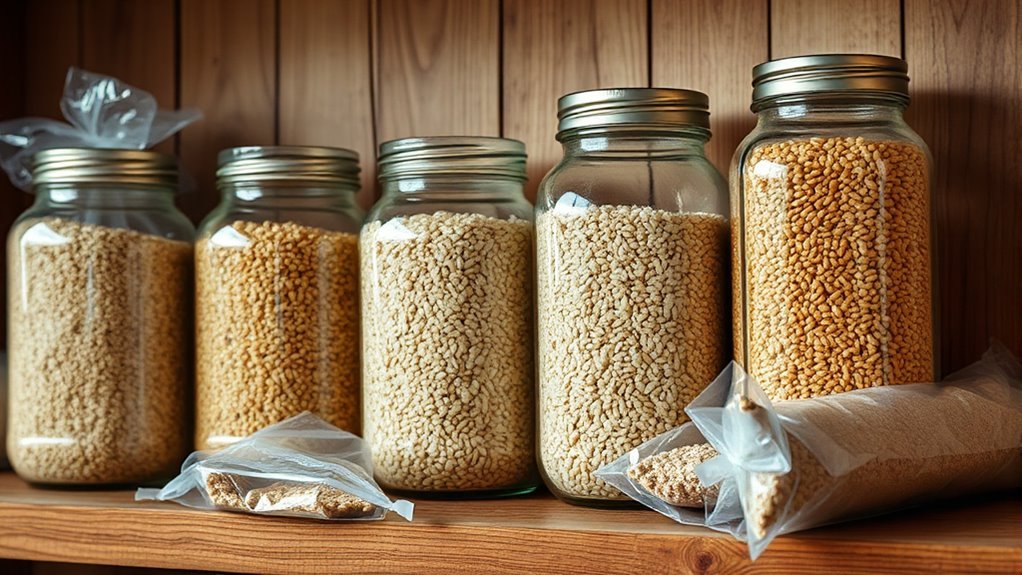
When storing grains and carbohydrates long-term, you’ll want to focus on staples like white rice, pasta, and flour. White rice can last 25–30 years if sealed properly.
Dried pasta holds up for 30+ years but needs plenty of water to cook. Keep flour, oats, and similar grains dry and airtight to maximize shelf life and prevent spoilage.
It’s all about keeping moisture out and storing them in a cool, dark place. That way, your grains stay fresh and ready whenever you need them.
White Rice Longevity
If you want white rice to last for decades, you need to store it away from moisture and oxygen. White rice can remain safe and edible for 25–30 years or more when kept in airtight containers or sealed mylar bags with oxygen absorbers.
Unlike brown rice, which spoils within 1–5 years due to oils in the bran and germ, white rice’s lack of oils makes it ideal for long-term storage. Just make sure to keep it out of humid areas and avoid exposing it to air frequently during use.
While stored rice may change slightly in flavor or texture over time, proper sealing prevents spoilage and ensures multi-decade shelf life. So, prioritize airtight, oxygen-free environments to maximize your white rice’s longevity.
Pasta Storage Tips
White rice shows how effective airtight, oxygen-free storage can be for grains, and pasta benefits from similar care. Store dried pasta in airtight containers or sealed Mylar bags with oxygen absorbers to protect from moisture and oxygen, allowing shelf life beyond 30 years.
Avoid humidity and leaks, since water triggers spoilage. Dried pasta lasts longer than fresh due to low moisture and fat. Expect minimal quality loss, mainly slight dryness or taste changes, which airtight storage helps reduce.
Remember, pasta is calorie-dense and cooks quickly but needs plenty of water when prepared.
| Storage Method | Protection Level | Expected Shelf Life |
|---|---|---|
| Airtight Containers | High (moisture/oxygen) | 30+ years |
| Mylar Bags + Oxygen Absorber | Very High | 30+ years |
| Open or Loose Bag | Low | Months |
Flour And Oats
Although flour and oats differ in composition, both require careful storage to maximize their shelf life. White flour lasts longest—up to 10–25 years—because removing bran and germ cuts oils that spoil quickly.
Rolled or steel-cut oats can keep 20–30 years or more, but you must control oxygen to prevent rancidity from their natural oils. Transfer both into airtight Mylar bags with oxygen absorbers for best results.
Keep moisture away to avoid spoilage, no matter how dry they seem. It’s really important to keep humidity out.
- White flour stored away from moisture and oxygen
- Rolled or steel-cut oats preferred for longevity
- Airtight Mylar bags with oxygen absorbers
- Avoid humidity to prevent spoilage
- Oxygen control critical to slow rancidity in oats
Best Practices for Storing Dried Beans and Legumes
Because dried beans and legumes can last for decades when stored correctly, you should focus on sealing them in airtight, moisture-resistant containers with oxygen absorbers. Keep them away from moisture and oxygen to prevent spoilage and hardness.
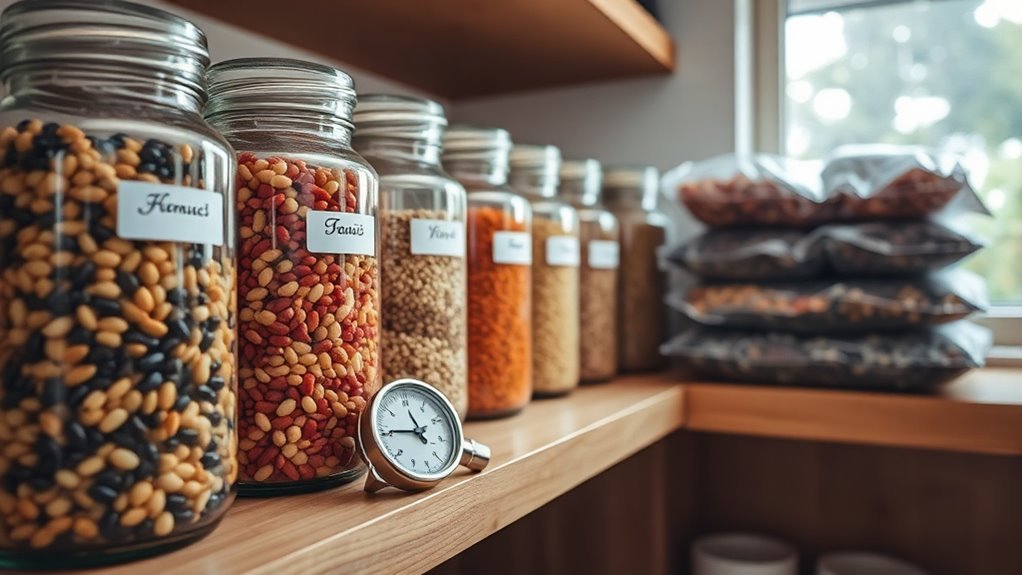
Use mylar bags or similar packaging instead of original bags. Mark and rotate your stock by year. Older beans may require longer soaking and cooking but remain safe to eat.
| Storage Tip | Why It Matters | How It Feels |
|---|---|---|
| Airtight sealing | Stops oxygen damage | Secure, confident |
| Oxygen absorbers | Extends shelf life | Peace of mind |
| Moisture-proof | Prevents spoilage | Protected, safe |
| Label & rotate | Ensures freshness | Organized, in control |
Why Salt, Sugar, and Sweeteners Don’t Need Oxygen Absorbers
When you store salt, sugar, and natural sweeteners, you don’t need to worry about oxygen absorbers because their low moisture content prevents microbial growth. Salt and sugar are naturally shelf-stable dry ingredients, so bacteria, mold, or yeast can’t thrive without water.
Using oxygen absorbers with these can even cause clumping, turning them into a hard “brick.” Their indefinite shelf life depends on keeping them dry and sealed, not on oxygen levels. Natural sweeteners like honey or maple syrup resist spoilage mainly due to their high sugar concentration and low moisture, not oxygen control.
Oxygen absorbers can cause clumping; these items last indefinitely when kept dry and sealed.
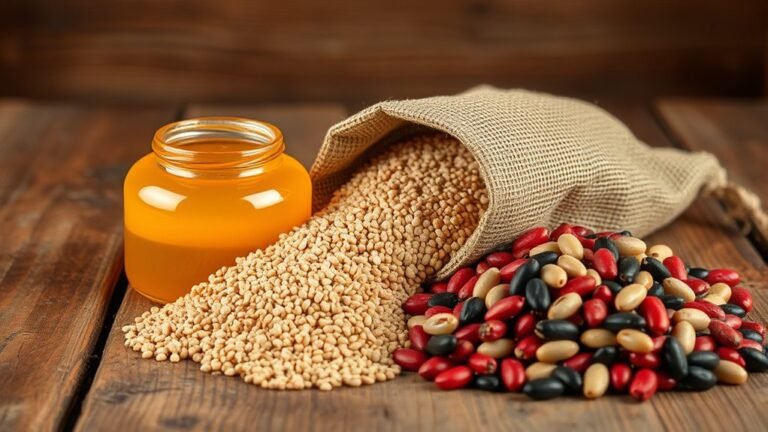
Imagine storing fine white salt crystals, granulated sugar piles, thick amber honey jars, dark, rich maple syrup bottles, and powdered natural sweeteners sealed tight.
You can focus on moisture control, not oxygen, for these staples.
Storing Oils, Fats, and Syrups to Prevent Rancidity
To keep oils, fats, and syrups fresh for the long haul, you need to protect them from oxygen and moisture, which drive rancidity and spoilage. Store oils and fats in sealed Mylar bags with oxygen absorbers, especially if they’re mixed in grains like oats.
Keep these bags away from humidity to slow oxidation. Don’t use oxygen absorbers with salt or sugar, as they can clump and harden.
Syrups such as maple syrup and molasses last indefinitely when unopened and sealed tightly thanks to their high sugar content. Honey stores “immortally” due to its low moisture and acidity, though it may crystallize without spoiling.
| Item Type | Storage Tip |
|---|---|
| Oils & Fats | Use Mylar bags with oxygen absorbers |
| Syrups | Store sealed, avoid opening early |
| Honey | Store airtight, crystallization is normal |
| Salt & Sugar | Avoid oxygen absorbers |
Storing Flour, Powdered Milk, and Instant Oats Long-Term
After securing oils, fats, and syrups against spoilage, turn your attention to flour, powdered milk, and instant oats. These also need careful storage to keep their quality intact.
Store white flour in a cool, dry place. It can last 10–25 years when sealed well.
White flour stays good for 10–25 years when stored sealed in a cool, dry spot.
Powdered nonfat milk keeps 15–20 years but may lose some flavor over time. Rolled or steel-cut oats can last 20–30 years or even longer.
The key is protecting all of them from moisture and oxygen with airtight packaging, like mylar bags combined with oxygen absorbers. Just remember, don’t use oxygen absorbers with salt or sugar. But for these dry staples, oxygen control plus airtight sealing really maximizes shelf life.
Visualize:
- Crisp, sealed mylar bags
- Oxygen absorbers tucked inside
- Cool, dark storage closet
- Dry, powdered milk ready for use
- Rolled oats packed tight
Avoiding Common Mistakes That Ruin Long-Term Food Storage
A few common mistakes can quickly undermine your long-term food storage efforts. Don’t use oxygen absorbers with salt or sugar—they’ll turn the contents into a hard “brick,” making them unusable even though they don’t spoil.
Avoid storing dry goods in their original packaging. Instead, repackage items like white rice, dried beans, and instant coffee into sealed Mylar bags with oxygen absorbers to block moisture and oxygen.
Keep grains and flours dry since bran and germ oils go rancid over time. It’s best to opt for lower-oil versions and control humidity carefully.
Remember, older beans may harden but aren’t spoiled. Just soak them overnight and simmer longer.
Frequently Asked Questions
Do I Need to Stock up on Food?
You don’t always need to stock up, but having long-lasting staples like rice and beans ensures you’re well-prepared.
Proper storage makes a huge difference, so focus on quality preservation rather than just quantity for peace of mind. It’s all about being smart with what you keep on hand.
What Are the Recommended Storage Guidelines for Cooked Food?
You should cool cooked food quickly and dry it thoroughly. Then, store it in airtight, oxygen-reduced containers.
Keep these containers sealed and away from light. Also, make sure to place them in a cool, dark spot to maximize their shelf life safely.
How Long Does Survival Food Last?
Imagine a sealed jar of white rice, untouched for decades. Your survival food can last 25–30 years or more if stored properly.
That means keeping moisture and oxygen out. When you do that, you ensure it’s ready when you need it most.
What Is the 2-2-2 Rule for Food Storage?
The 2-2-2 rule means you keep enough food for 2 weeks, 2 months, and 2 years.
You’ll rotate short-term foods often, stock mid-term staples, and store long-term items sealed to maximize shelf life.
It’s a simple way to make sure you’re prepared without feeling overwhelmed.
Just think of it as balancing what you use regularly with what you save for emergencies.
Conclusion
To keep your long-term food storage fresh, treat it like a treasure chest—seal out moisture and oxygen with Mylar bags and oxygen absorbers.
Remember, each food type has its own needs, from grains to oils, so store them wisely to avoid spoilage.
Avoid common pitfalls, and you’ll keep your provisions ready for any emergency.
With careful attention, your food will stand the test of time, turning your pantry into a fortress against hunger.
Long-term food storage shelf life depends a lot on how well you seal and store your items. Using the right materials like Mylar bags and oxygen absorbers is key to preventing moisture and oxygen damage. Also, knowing the specific storage needs of different food types helps maintain freshness and safety. Avoiding mistakes like exposure to heat or light ensures your supplies last as long as possible. By following these simple but important steps, you can confidently prepare your pantry to provide reliable, nutritious food whenever you need it most.