Which Food Storage Involves Animals?
When you store pet food, treats, or supplements, you’re engaging in food storage that involves animals. This kind of storage is super important because it helps keep your pet’s meals fresh and nutritious. Proper storage prevents spoilage, mold, and pests from ruining the food.
Using airtight containers and refrigerating perishable items are simple ways to protect your pet’s health. These steps help avoid contamination and foodborne illnesses, which can be serious for animals.
Plus, you’ll reduce waste and keep all the benefits of the food intact.
If you want to make sure your pet stays safe and healthy, there’s a lot more to consider about smart storage choices. It’s not just about where you put the food but how you store it to keep everything fresh.
Taking these extra steps can make a big difference in your pet’s well-being.
Key Takeaways
- Pet food storage involves animals since it includes storing food specifically for pets like dogs, cats, and other domesticated animals. Proper pet food storage prevents spoilage, contamination, and protects animals from health risks caused by spoiled or contaminated food.
- Storage of pet treats and supplements is essential to maintain their nutritional value and ensure animal health and safety. Refrigeration and airtight containers are commonly used methods in storing perishable pet food to keep it fresh for animals.
- Preventing pest infestation and mold growth in pet food storage safeguards animals from foodborne illnesses and toxins. So, keeping pet food stored properly really helps keep our furry friends healthy and happy.
Why Proper Pet Food Storage Matters for Your Pet’s Health
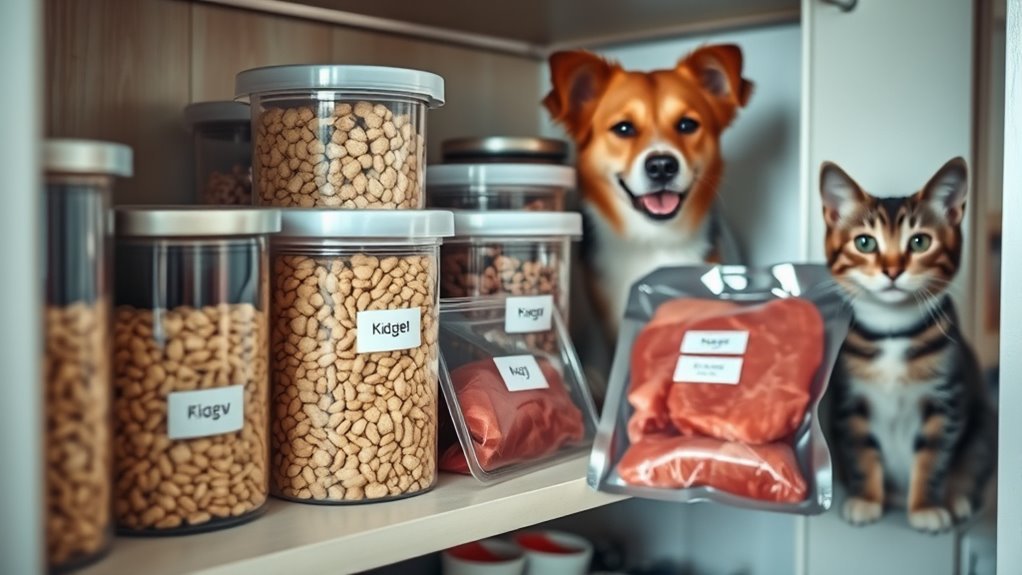
Because your pet’s health depends on the quality of their food, storing it properly is essential. Proper pet food storage helps prevent spoilage and contamination, ensuring your pet gets safe, nutritious meals every time.
When you keep dry pet food in airtight containers, you reduce exposure to moisture, which curbs mold growth and bacterial growth—both serious threats to food safety. This also helps prevent pest infestation, which can introduce harmful bacteria and compromise pet health.
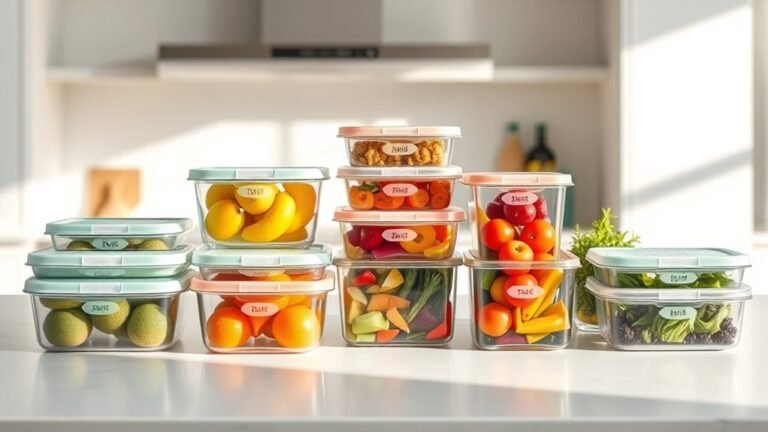
By storing food correctly, you avoid rancid fats and spoiled food that can cause digestive or other health issues. Plus, organized storage lets you rotate supplies easily, maintaining freshness and supporting spoilage prevention.
When you focus on proper pet food storage, you’re actively protecting your pet’s health, keeping their meals safe and wholesome. It’s really a simple step that makes a big difference!
How to Store Pet Food, Treats, and Supplements Safely
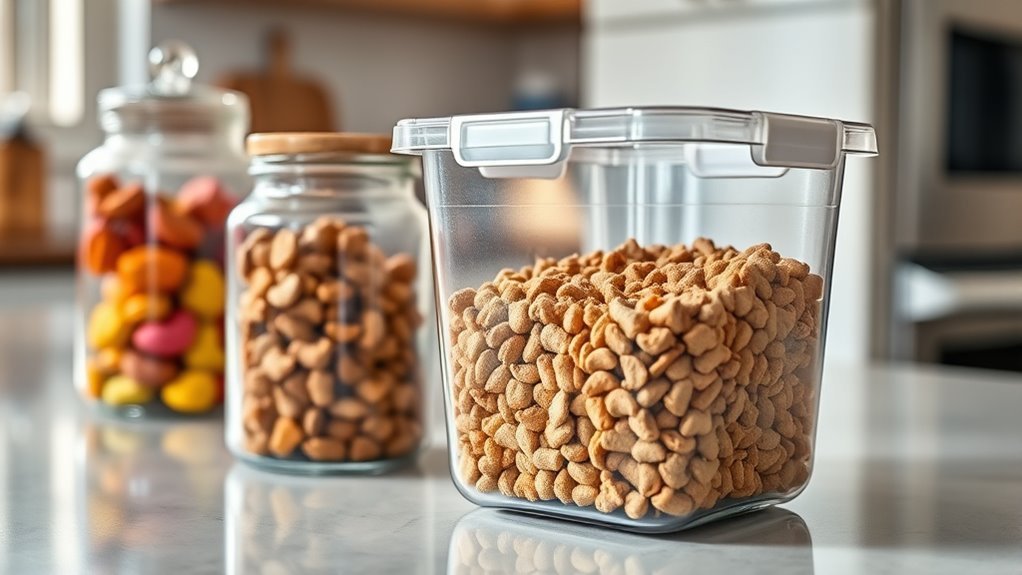
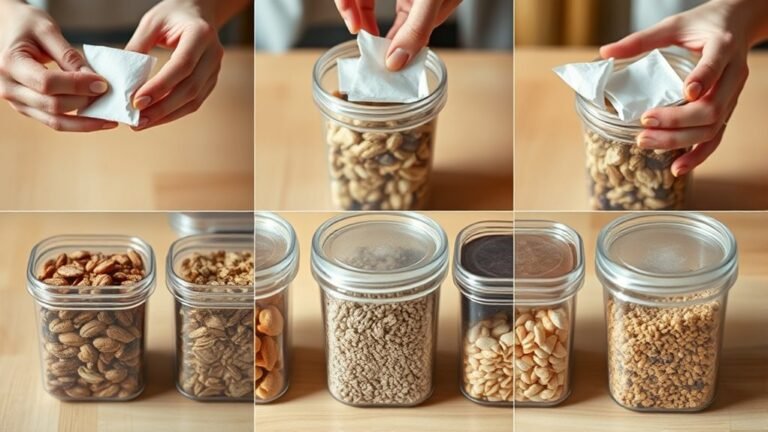
When you store pet food, treats, and supplements properly, you guarantee they stay fresh and safe for your pet to enjoy. Use airtight containers or keep food in its original packaging to maintain pet food storage quality and prevent spoilage.
Properly storing pet food keeps it fresh and safe, using airtight containers or original packaging to prevent spoilage.
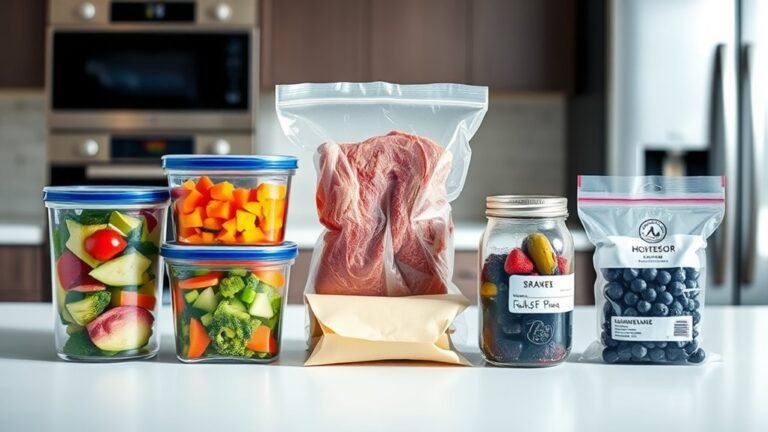
Store pet treats and supplements in cool and dry places away from heat and sunlight to preserve their nutritional value. Refrigerate opened canned or pouched pet food at 40-45°F, and discard leftovers within 2-3 hours to avoid contaminated pet food.
Clean pet food bowls and utensils thoroughly after each use to prevent bacterial buildup that can cause foodborne illness. Always keep pet food and treats out of your pet’s reach to prevent overeating or accidental ingestion of spoiled food.
Following these steps helps you reduce the risk of foodborne illness and keeps your pet healthy by ensuring their food remains safe and nutritious. It’s all about making sure your furry friend gets the best care possible!
Frequently Asked Questions
What Involves Food Storage in Animals?
You store food in animals when you keep honey in beehives or use livestock for meat and dairy products. Then, you refrigerate these products to keep them fresh.
You also manage pests that can spoil stored food. This way, you protect your supplies and make sure nothing goes to waste.
What Are Three Types of Food Storage?
You’ll find three types of food storage: dry storage like silos, refrigerated storage to keep perishables fresh, and controlled atmosphere storage that adjusts gases and humidity to extend shelf life and maintain food quality effectively.
Basically, dry storage is great for things that don’t need to be kept cold, like grains and canned goods. Then, refrigerated storage is your go-to for fruits, veggies, dairy, and other perishables.
And controlled atmosphere storage? That’s a bit more high-tech. It tweaks the air around the food to keep it fresh longer by managing things like oxygen and humidity levels.
What Is It Called When Animals Store Food?
When animals store food, it’s called food caching or hoarding. You’ll notice creatures like squirrels burying nuts or birds hiding seeds to save for later.
This behavior helps them survive when food becomes scarce or seasons turn harsh. Pretty clever, right? It’s like their way of prepping for tough times ahead.
What Is the Storage Food Product of an Animal?
You know what they say, “Don’t put all your eggs in one basket.”
The storage food product of an animal is typically meat, but it also includes eggs, milk, and honey. All of these need proper care to keep fresh and safe.
Conclusion
Properly storing your pet’s food isn’t just a chore—it’s a lifeline for their health. By keeping their food, treats, and supplements in airtight containers and cool, dry places, you’re guarding against spoilage and pests. Think of it as building a fortress around their nutrition.
When you take these simple steps, you’re not just storing food—you’re preserving your pet’s happiness and well-being for many tail-wagging days to come. Proper food storage involving animals is essential to maintain freshness and prevent contamination.
So, whether it’s kibble for your dog or special treats for your cat, ensuring the right storage conditions means your furry friends get the best nutrition possible. In the end, good food storage protects your pet’s health and keeps them thriving.