How to Clean Food Grade Barrels for Water Storage in 3 Easy Steps
To clean food-grade barrels for water storage, start by removing any lids or spigots. Then, give the inside a good scrub with warm water and a mild detergent. This helps get rid of any leftover residue or dirt.
Next, rinse the barrel thoroughly to wash away soap and debris. After that, sanitize it using a bleach solution—about one tablespoon per gallon of water works well. Let the bleach sit for about 30 seconds to kill germs before rinsing again until you can’t smell the bleach anymore.
Finally, let the barrel air dry completely. This step is super important to keep your stored water safe and fresh. Once dry, seal it up tight, and you’re all set! Want to learn more handy tips for water storage? Keep reading!
Key Takeaways
- Wear gloves and eye protection before starting to clean the food-grade barrel.
- Scrub the interior thoroughly with warm water and mild detergent to remove residues.
- Rinse the barrel multiple times until no soap or detergent remains.
- Sanitize by filling the barrel with a bleach solution (1 tablespoon per gallon) and let sit for 30 seconds.
- Rinse thoroughly again, air dry completely, then seal and store in a clean, dry place.
Preparing the Barrel for Cleaning
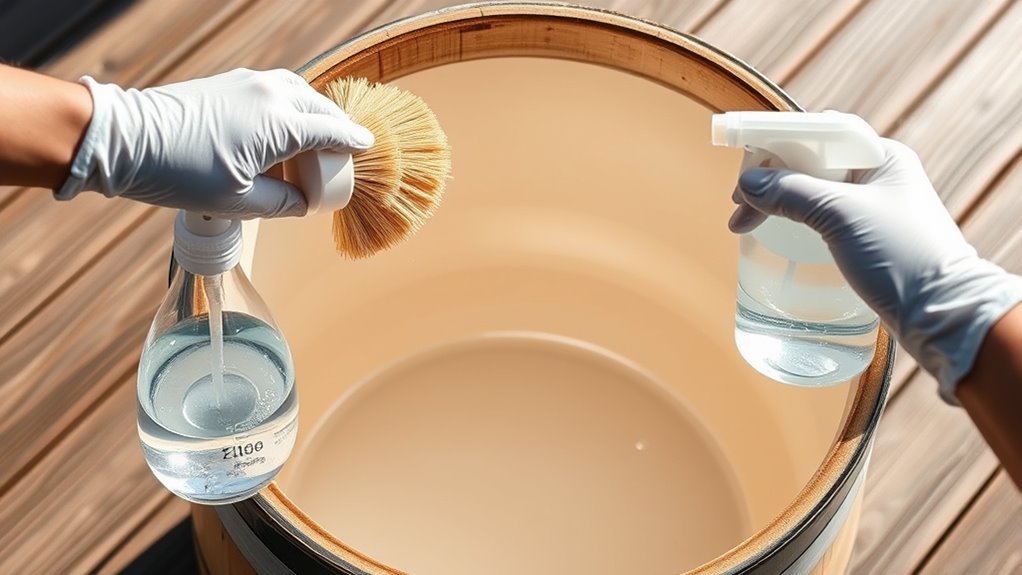
Before you start cleaning, make sure you know what the barrel previously held by checking its labels or safety data sheets. This step is vital for a thorough barrel inspection and helps you identify any hazardous residues.
If you plan to store potable water, confirm the barrel is food-grade. Avoid barrels that held chemicals to keep things safe and clean.
Next, put on your PPE, including gloves and eye protection, to keep yourself safe during handling. It’s always better to be cautious!
Identify whether the barrel is a tight-head or open-head, as this affects your cleaning approach. Also, remove any detachable components like lids or spigots to access all interior surfaces easily.
Taking these preparatory steps sets the stage for effective cleaning while maintaining safety and hygiene. It makes the whole process smoother and safer.
Cleaning and Scrubbing the Interior
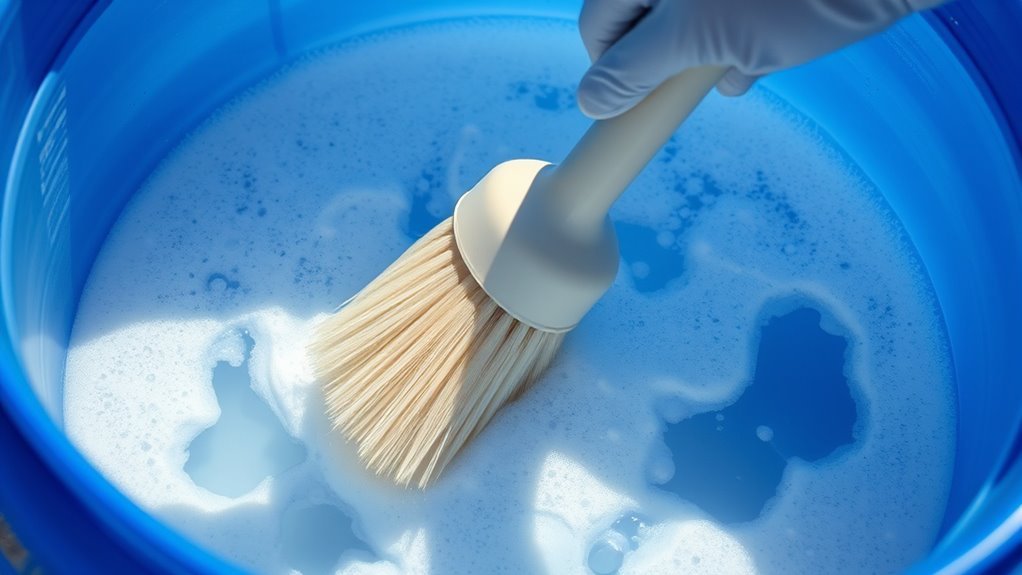
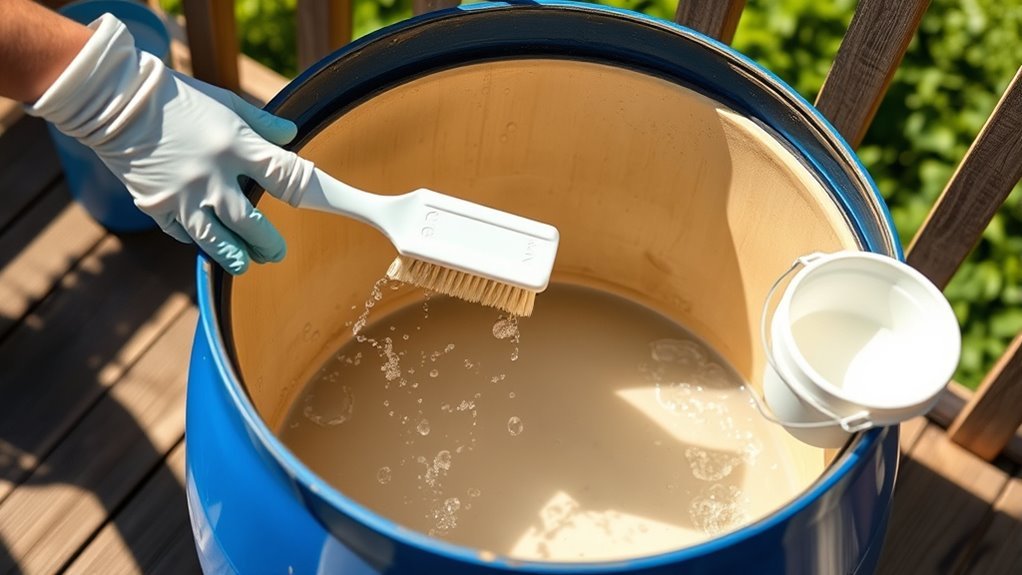
Once you’ve prepared the barrel and removed any detachable parts, it’s time to clean the interior thoroughly. Use a long-handled scrub brush to reach all surfaces.
Apply a mild detergent mixed with warm water and scrub vigorously to remove any residue. For stubborn stains or odors, sprinkle baking soda on the interior and scrub again.
Rinse the barrel multiple times with clean water until no soap or residue remains. After scrubbing, inspect the interior for cracks or damage and make sure it is completely dry before storage.
| Step | Action |
|---|---|
| 1 | Use a long-handled scrub brush |
| 2 | Apply mild detergent solution |
| 3 | Scrub interior thoroughly |
| 4 | Use baking soda for stains |
| 5 | Rinse thoroughly until clean |
Sanitizing and Rinsing for Safe Storage
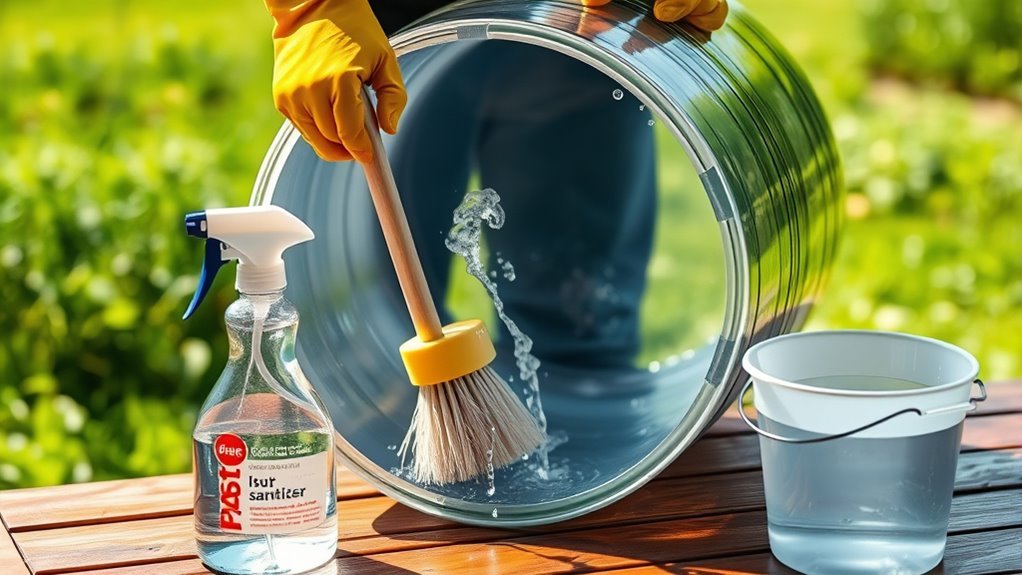
After thoroughly cleaning the barrel, you’ll need to sanitize it to guarantee it’s safe for storing food or water. Start by rinsing the barrel thoroughly with clean rainwater or fresh water to remove any leftover cleaning agents or debris.
Next, fill the barrel with a bleach solution—mix 1 tablespoon of household bleach per gallon of water—making sure all interior surfaces are fully covered. Let the sanitizing solution sit for at least 30 seconds to disinfect and kill bacteria or mold.
Drain the bleach solution, then rinse the interior multiple times with fresh water until the bleach smell disappears and the water runs clear. Finally, let the barrel air dry completely in a well-ventilated area before sealing and filling it with potable water for safe storage.
Frequently Asked Questions
What Can I Put in My Rain Barrel to Stop Algae?
You can add copper sulfate or barley straw to your rain barrel to prevent algae growth. Also, use a tight-fitting lid and consider installing a UV-resistant liner to block sunlight, which algae need to thrive.
These simple steps can really help keep your water clear. Plus, they’re pretty easy to do, so your rain barrel stays in good shape without much hassle.
Can You Store Water in Food-Grade Barrels?
Absolutely, you can store water in food-grade barrels. Just like knights trusted their armor, you can trust these barrels—they’re made from safe HDPE material designed to keep your water clean and free from harmful contaminants.
They’re specifically made for storing food and water, so you don’t have to worry about any nasty chemicals leaching into your water. Plus, they’re durable and reusable, making them a smart choice for long-term water storage.
How Do I Clean a Water Barrel?
You should empty your barrel and remove the caps. Then, rinse it thoroughly to get rid of any loose dirt or debris.
Next, scrub the inside with a food-safe cleaner like vinegar or baking soda. Make sure to rinse it well until no residue remains.
Finally, let it air dry completely before you use it again. This helps keep everything clean and safe!
How to Clean a Container for Water Storage?
Like clearing a foggy mirror, you’ll empty the container, scrub with food-safe detergent or vinegar, rinse thoroughly, and air dry completely.
This guarantees your water stays pure, ready to refresh and sustain you safely. Easy, right? Just a little effort to keep things clean and safe!
Conclusion
Now that you’ve cleaned and sanitized your food-grade barrel, you’re not just storing water—you’re preserving purity and peace of mind.
It’s funny how a simple scrub and rinse can turn a barrel into a safe reservoir, ready for your next adventure or emergency.
By following these easy steps, you’re ensuring fresh water whenever you need it.
This process proves that a little effort now can save a lot of worry later.
Cleaning food-grade barrels for water storage is a smart move to keep your water safe and drinkable.
With just a few steps, your barrel becomes a reliable container that protects against contaminants.
So, take the time to clean and sanitize your barrels well—your future self will thank you when you have clean water ready for any situation.