Top 3 Best Reusable Food Storage Bags for 2026
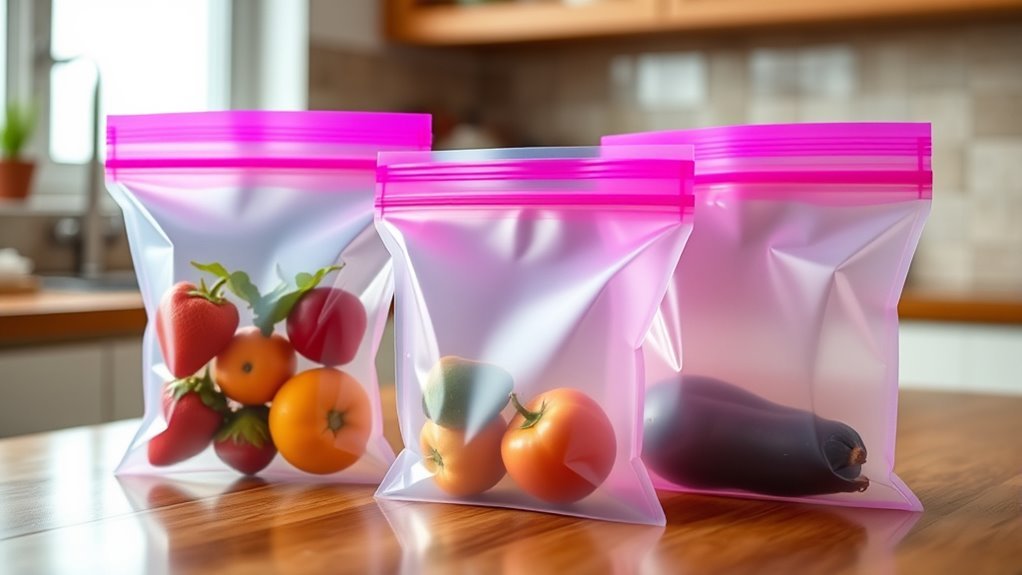
For 2026, you’ll want reusable food storage bags that are durable, leak-proof, and versatile. Silicone options like Stasher stand out for their airtight seals, stain resistance, and heat safety, making them perfect for cooking and freezing. These bags are great if you need something that can handle both hot and cold storage without any fuss.
Budget-friendly PEVA bags offer an eco-conscious choice but can’t handle high heat. So, if you’re looking to save money and reduce plastic waste, they’re a solid option—just don’t use them in the microwave or oven.
Also, look for bags that are dishwasher-safe and easy to store upright; it makes cleaning and organizing a breeze.
If you keep exploring, you’ll find useful tips on care and how to pick the perfect bag for your needs. Finding the right reusable bag means balancing convenience, durability, and your lifestyle. It’s easier than you think!
Key Takeaways
- Stasher silicone bags lead for durability, leak-proof seals, and heat resistance, suitable for freezing, reheating, and dishwasher cleaning. They really hold up well over time, making them a solid investment.
- Qinline PEVA bags offer an eco-friendly, budget-friendly option but require hand washing and are heat-sensitive above 140°F. So, they’re great if you want something cheaper and greener but don’t plan on using heat too much.
- (re)zip and Ziploc Endurables provide versatile designs with stand-up or flat bases for organized storage and easy access. These features make grabbing what you need super convenient.
- Silicone bags outperform PEVA in stain and odor resistance, making them ideal for long-term use. You won’t have to worry about lingering smells or discoloration.
- Proper maintenance, like thorough drying and regular seal checks, extends reusable bag lifespan and ensures leak-proof performance. Taking a little care goes a long way with these bags!
Criteria for Choosing the Best Reusable Food Storage Bags
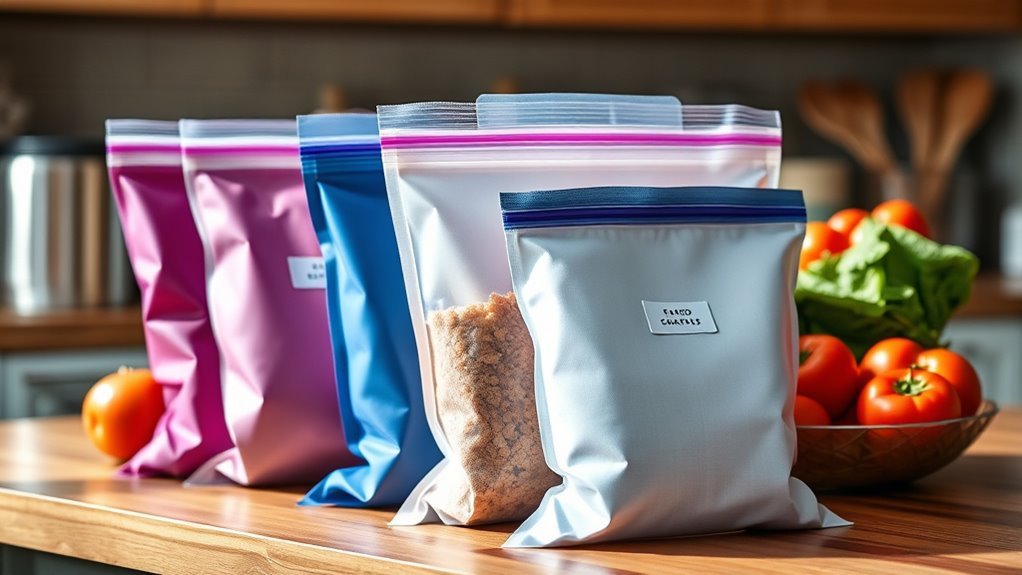
When choosing the best reusable food storage bags, you want to focus on features that combine practicality and durability. Look for bags with a firm, leak-proof seal that keeps your food fresh without spills.
The material matters—opt for food-grade, stain-resistant fiber materials or high-quality silicone that resist odors and stains. Versatility is key, so choose bags that come in multiple sizes and can stand upright or lay flat for easy filling, pouring, and stacking.
Dishwasher-safe options save you time on cleanup, while heat-safe materials let you reheat or cook food directly in the bag. By focusing on these criteria, you’ll ensure your reusable food storage bags not only protect your meals but also last through countless uses.
That way, they become a smart, eco-friendly investment you’ll be glad to make.
In-Depth Reviews of the Top Reusable Food Bags
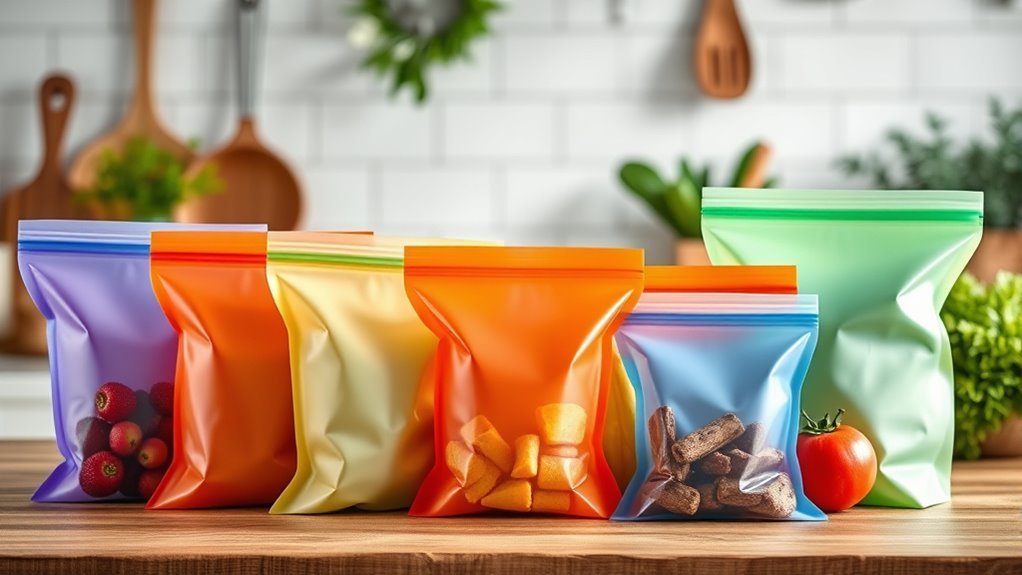
Since durability and versatility matter most, you’ll find that silicone and PEVA bags lead the pack in reusable food storage options for 2026. Silicone bags like Stasher stand out for their durable, leak-proof seals and resistance to stains and odors. They’re dishwasher-safe and perfect for freezer storage, reheating, and even baking, making them incredibly versatile.
On the other hand, PEVA bags such as Qinline offer an eco-friendly, budget-friendly reusable storage option with multiple sizes. Though they require hand washing and can’t handle heat above 140°F.
Designs from (re)zip and Ziploc Endurables improve usability with stand-up or flat bases, simplifying filling and fridge organization. Overall, silicone bags generally outperform PEVA in seal reliability and durability, making them a top choice for long-lasting food storage.
Tips for Maintaining and Using Reusable Food Bags
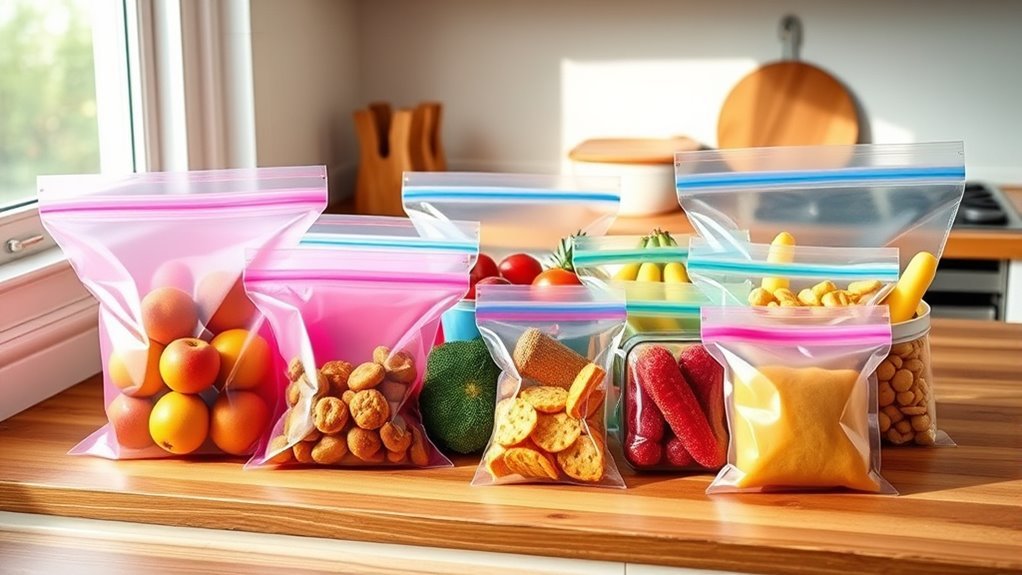
To keep your reusable food bags in top condition, you should always dry them thoroughly before storing to prevent mold and odors. Air-drying your bags on a dish rack or wiping them with a clean towel works great for keeping smells at bay.
When it comes to cleaning, wash silicone bags in the dishwasher or with warm, soapy water. Just avoid abrasive scrubbers so you don’t damage the seals.
If you notice any lingering odors or stains, try soaking the bags in a vinegar and baking soda solution. You can also make a baking soda paste to help remove stubborn smells.
It’s a good idea to regularly check the seals for any wear or damage. Catching issues early means you can fix them quickly and keep your bags leakproof.
Always follow temperature safety guidelines to avoid warping your bags when microwaving or handling hot liquids. With proper storage and routine care, your reusable food bags will last longer and keep your food safe.
Frequently Asked Questions
What Are the Best Reusable Food Storage Bags?
You’ll find the best reusable food storage bags are silicone ones like Stasher for durability and heat resistance, or PEVA options like (re)zip for affordability.
Look for leakproof seals, wide openings, and dishwasher-safe features.
These little things really make a difference in everyday use. So, keep an eye out for them when choosing your bags!
What Are the Best Reusable Grocery Bags?
You’ll want durable, heavy-duty woven polypropylene or recycled PET fabric bags with reinforced handles and flat bottoms.
Choose foldable, easy-to-clean designs made from eco-friendly materials to carry groceries comfortably.
This way, you’re not just making your shopping easier, but also reducing your environmental impact every trip.
What Are Some Popular Brands of Reusable Bags?
Think of popular reusable bags as trusty sidekicks in your eco-adventures. You’ll find Stasher’s durable silicone, (re)zip’s flexible PEVA, and Ziploc Endurables’ heat-safe designs.
Plus, Qinline offers budget-friendly options ready to help. They’re all great choices to keep your stuff safe and the planet happy!
What Are the Best Bags to Preserve Food In?
You’ll want silicone bags like Stasher or thick PEVA bags since they seal tightly and resist stains.
Look for flat bases and easy closures to keep food fresh longer and prevent leaks during storage or transport.
These features really make a difference when you’re trying to preserve your food effectively.
Plus, having a reliable seal means less mess and more convenience whether you’re storing or carrying your meals.
Conclusion
Did you know that using reusable food storage bags can reduce plastic waste by up to 80%? Choosing the right bag not only helps the environment but also keeps your food fresh and saves you money.
By picking one of our top three options and following simple maintenance tips, you’ll enjoy convenience and sustainability every day. It’s easier than you think to make a difference.
Start making a positive impact today—you’ll be surprised how small changes add up to big results! Investing in the best reusable food storage bags for 2026 means less plastic waste, fresher food, and a healthier planet.
So why wait? Make the switch now and join the movement toward eco-friendly living with these top-rated reusable food storage solutions. Your future self—and the environment—will thank you!