5 Tips on How to Properly Rotate Food in Storage
To properly rotate food in storage, always use the FIFO method—place newer items behind older ones so you use older stock first. This simple technique helps reduce waste and keeps your food fresher for longer.
Plus, it makes it easier to keep track of what you have.
Check expiration dates regularly and discard spoiled items.
Organizing your storage by food type also makes a huge difference. Keep older items upfront for easy access, so nothing gets forgotten in the back.
Maintaining proper temperatures and cleanliness is key to prolonging freshness.
Don’t forget to keep accurate inventory logs to track what you have and when it expires.
By following these tips, you’ll find managing your food becomes much more efficient and less stressful.
Key Takeaways
- Always use the First-In, First-Out (FIFO) method by placing new items behind older stock. This way, you make sure the older food gets used first.
- Check expiration dates regularly. If you find anything expired or spoiled, toss it out to keep things safe.
- Organize your storage by category. Put items with the earliest expiration dates at the front so they’re easy to grab.
- Keep storage temperatures right and make sure everything is clean. This helps keep food fresh and prevents contamination.
- Keep accurate inventory records and label items with purchase or opening dates. That way, you can track what you have and use the older stuff first.
Understand and Implement FIFO Principles
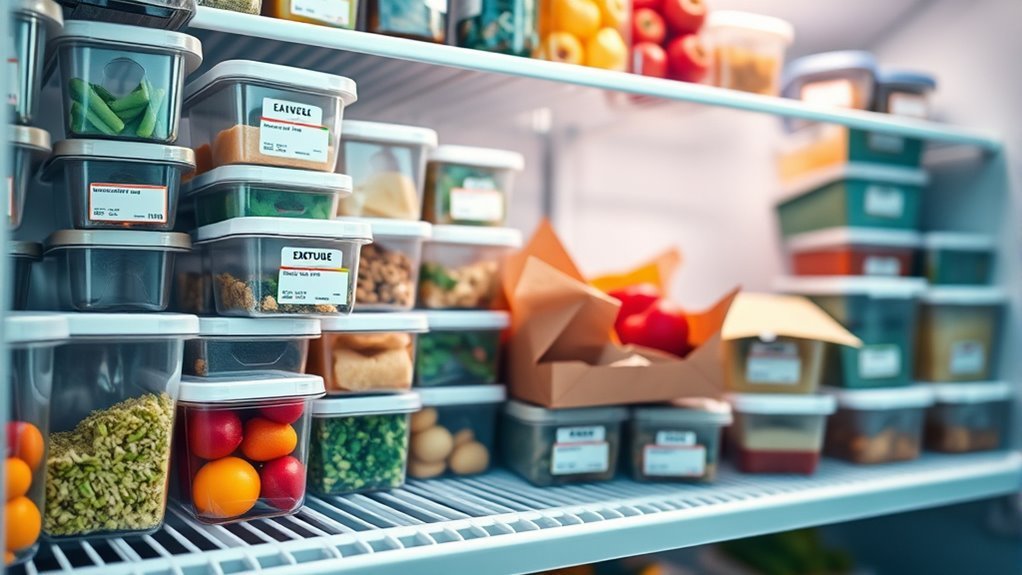
To keep your food fresh and reduce waste, you should follow the FIFO (First-In, First-Out) principle. FIFO means you use older stock before newer items, helping you manage your food’s shelf life efficiently.
When you bring in new groceries, check their expiration date and place them behind the items you already have. This way, you naturally rotate your food.
Store products with the earliest expiration dates at the front of your shelves or containers for easy access. Marking purchase or receipt dates on packages can also help you quickly identify which items to use first.
Regularly Check Expiration Dates and Food Quality
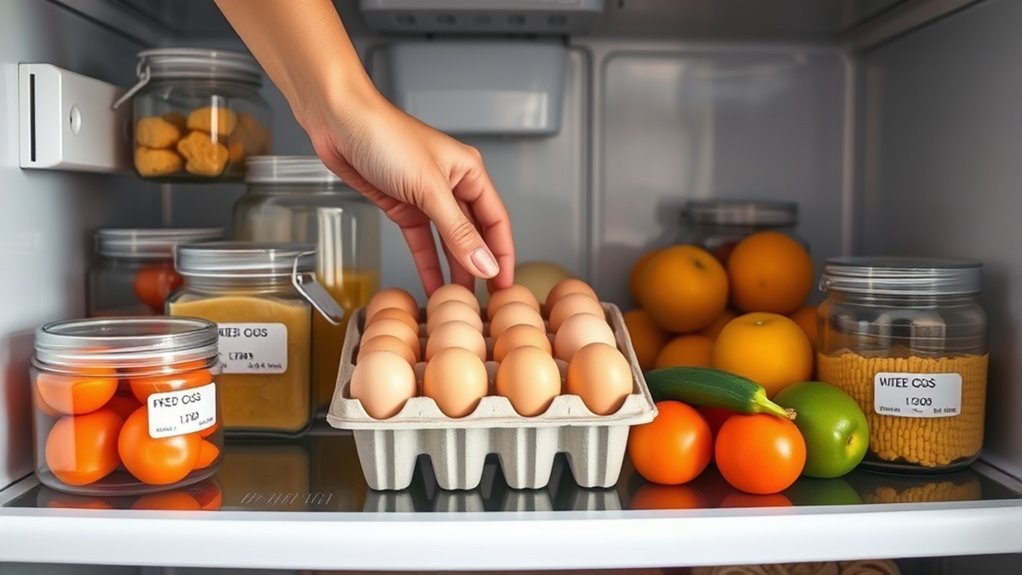
Although you might follow FIFO principles carefully, you still need to regularly check expiration dates and the quality of your stored food. To keep your food storage safe and fresh, inspect your food at least once a month.
When rotating your food, use a checklist to systematically verify each item’s condition. Look for signs like bulging cans, discoloration, or mold, which indicate spoilage.
Always discard stored food that’s past its expiration date or shows deterioration. Prioritize using older stock first and replace it promptly with newer items.
This routine helps prevent waste and ensures your stored food remains safe to consume. By taking these steps, you maintain a reliable and healthy supply while maximizing the effectiveness of rotating your food.
Organize Storage Areas for Easy Access and Rotation
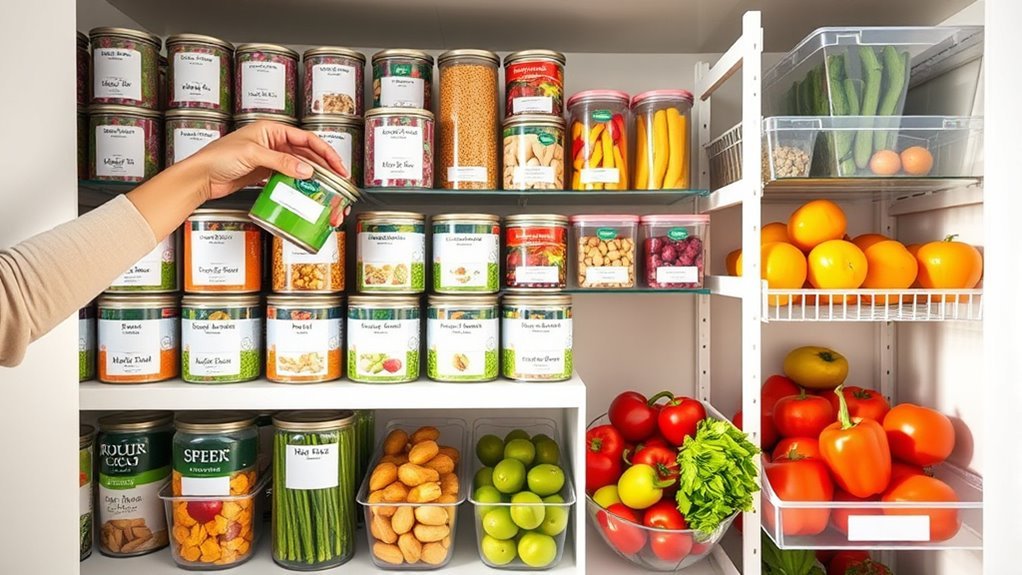
Keeping your storage areas organized makes it much easier to spot items that need to be used soon and helps you stick to the FIFO system.
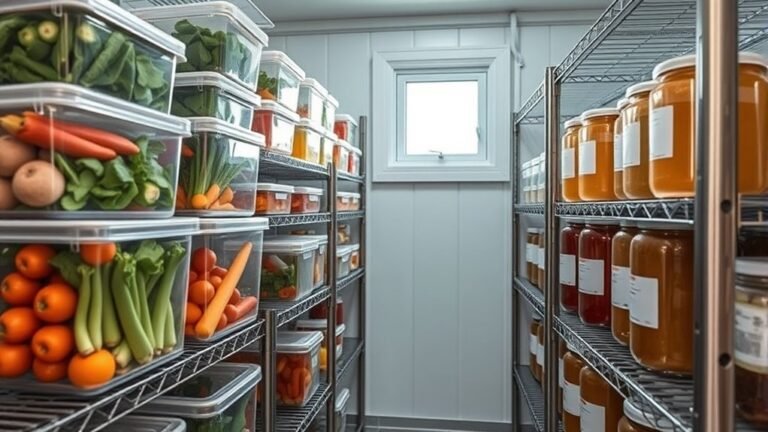
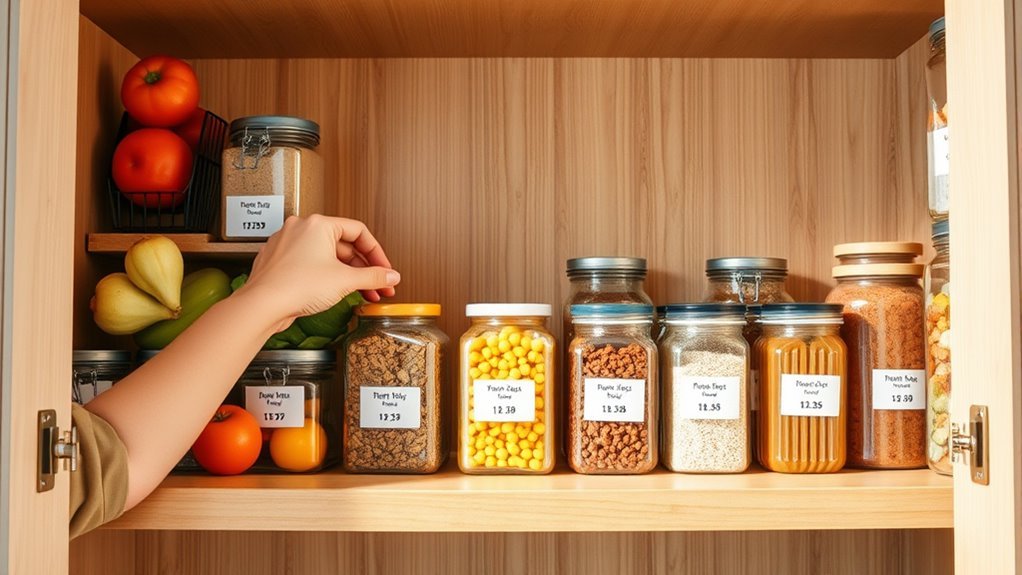
To effectively rotate food, organize your storage by category—canned goods, dry items, and refrigerated products—and place older stock in front.
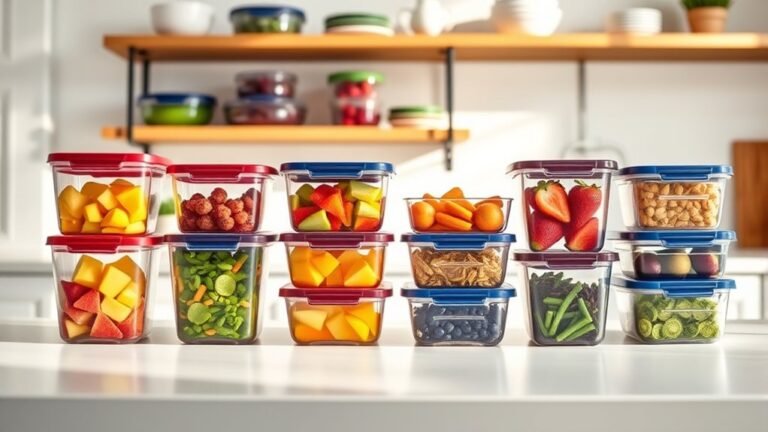
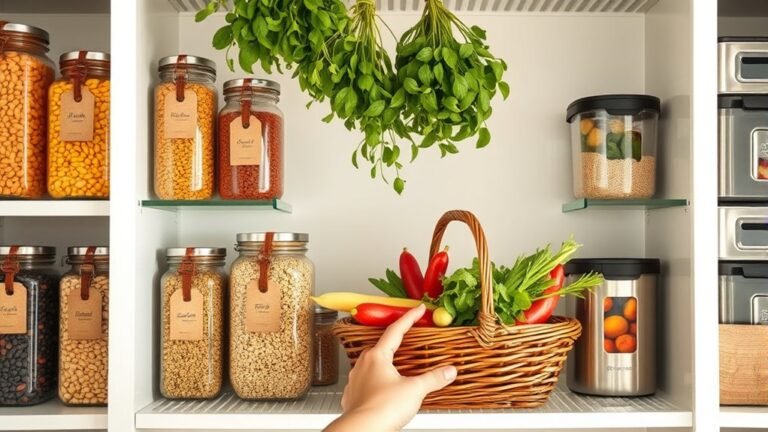
Use clear labels on shelves and storage bins showing the type of food and expiration or purchase dates; this simplifies identifying what to use first.
Store frequently used items at eye level or in easily accessible spots to speed up rotation.
Always place new stock behind or below older items to maintain proper flow.
Regularly clean and rearrange your storage to keep it orderly and quickly spot items nearing expiration, ensuring your rotating food efforts stay efficient and effective.
Maintain Proper Temperature and Cleanliness
When you maintain proper temperature and cleanliness in your storage areas, you considerably reduce the risk of food spoilage and contamination. Keep frozen items at 0ºF or below, refrigerated foods at 41ºF or below, and dry goods between 50-70ºF.
Always check and record these temperatures at the start of each shift. Store perishable foods in an airtight container to prevent exposure and avoid overcrowding to ensure proper air circulation.
Use the freezer first method by placing new items behind older ones, so you always need to rotate stock effectively. Routinely disinfect shelves, walls, and containers to prevent cross-contamination.
Discard any foods stored at incorrect temperatures or showing spoilage signs promptly. These steps are essential for maintaining food safety and extending product shelf life.
Keep Accurate Inventory and Usage Records
Proper temperature control and cleanliness set the foundation for safe food storage, but managing your inventory is just as important to prevent waste. Keep accurate inventory and usage records by using a dedicated tracking sheet or digital app to log each item’s purchase date, quantity, and expiration dates.
Accurate inventory tracking alongside proper storage keeps food safe and reduces waste effectively.
Mark opened packages with the date to monitor how long they’ve been stored. This helps you prioritize their use.
Regularly review and update your records to spot items nearing their expiration dates. That way, you can plan meals around them and keep your rotation effective.
Organize your storage areas with clear labeling and consistent documentation. This makes quick inventory checks easier and ensures food rotation happens smoothly and efficiently.
Taking this proactive approach minimizes spoilage and saves money. It’s a small effort that really pays off in the long run.
Frequently Asked Questions
What Is the 2-2-2 Rule for Food Storage?
The 2-2-2 rule means you use or rotate perishable foods within 2 days of opening, eat leftovers within 2 days, and check stored food every 2 weeks.
It helps keep your food fresh and safe.
Following this simple rule can really make a difference in reducing waste and avoiding foodborne illness.
Just remember: 2 days for using opened items, 2 days for leftovers, and a quick check every 2 weeks. Easy, right?
How Should Food Be Rotated in Storage?
You should place newer food behind older stock, label all items with dates, and always use the oldest first.
Check expiration dates regularly, discard spoiled items promptly, and organize by type and date to keep freshness intact.
It’s a simple way to make sure nothing goes to waste and everything stays tasty!
What Is the Golden Rule for Stock Rotation?
The golden rule for stock rotation is to always use the oldest food first, following FIFO.
You should label items clearly and organize them so you grab older products before newer ones, keeping everything fresh and safe.
What Are 5 Important Food Storage Tips?
Imagine you find expired milk because you didn’t label it. To avoid that, always label foods with dates and store the oldest items upfront.
Also, check expiration dates regularly. Keeping your storage clean is important too.
Don’t forget to maintain proper temperatures. This helps keep food safe and fresh.
Conclusion
By rotating your food storage like the hands of a clock, you keep time—and freshness—always on your side. When you follow FIFO, check dates, and stay organized, you’re not just preventing waste; you’re honoring the cycle of nourishment.
Cleanliness and proper storage temperatures are the steady heartbeat that keeps everything thriving. Keep your inventory sharp, and you’ll turn your pantry into a well-tuned machine, ensuring every meal begins with care and ends with satisfaction.
Remember, proper food rotation is key to maximizing freshness and minimizing waste. By rotating your food in storage regularly and maintaining an organized pantry, you protect your investment and promote food safety. It’s all about staying consistent with FIFO, checking expiration dates, and keeping your storage areas clean and cool. With these simple tips, your food storage will stay fresh longer, helping you create delicious meals with confidence every time.