7 Tips for Proper Food Storage in the Fridge
Keep your fridge at or below 4°C to slow bacterial growth. Using a thermometer can help you ensure the temperature is just right for safe food storage.
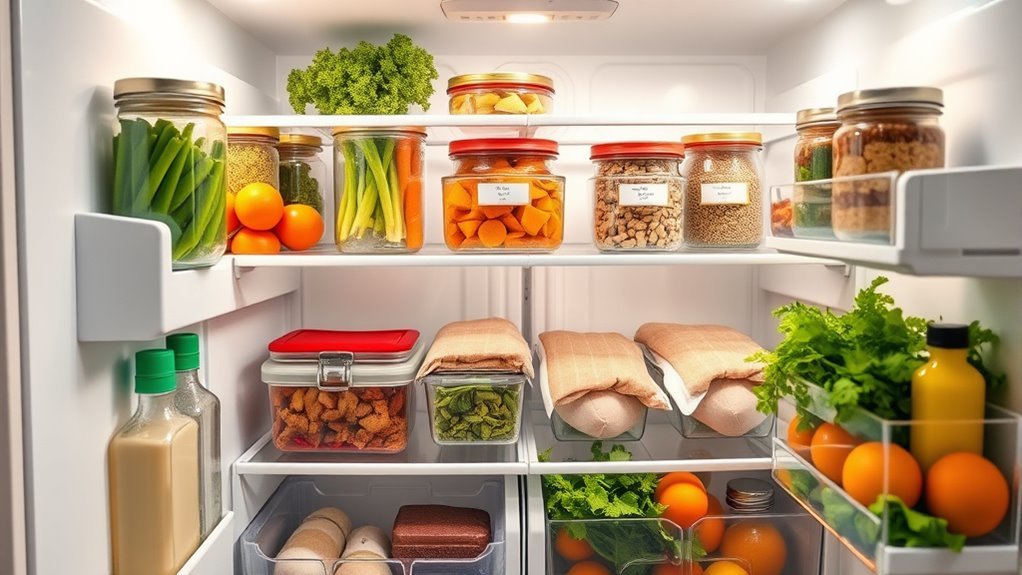
Organize foods by type and always place raw meat on the bottom shelf in leak-proof containers. This simple step helps avoid contamination and keeps your fridge hygienic.
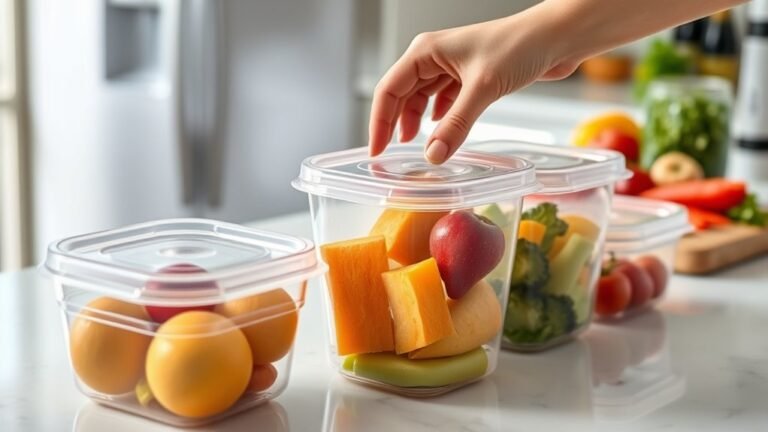
Store leftovers in airtight containers to maintain freshness, and wrap produce properly to extend its life. Don’t forget to use the crisper drawers—they’re perfect for controlling humidity for fruits and veggies.
Make it a habit to clean your fridge regularly and label items with dates. This way, you can easily track freshness and reduce food waste.
Want to master fridge storage? There’s plenty more to explore for ideal food safety and cutting down waste in your kitchen!
Key Takeaways
- Keep fridge temperature at or below 4°C (40°F) using a reliable thermometer for optimal food safety. This helps keep your food fresh and safe to eat.
- Store raw meats on the bottom shelf in leak-proof containers to prevent cross-contamination. It’s a simple step that really makes a difference.
- Place ready-to-eat foods on upper shelves and use airtight containers to maintain freshness. This way, your snacks and leftovers stay tasty longer.
- Organize foods by type and use the FIFO method to rotate older items to the front. That way, you won’t forget what needs to be eaten first.
- Label containers with storage dates and regularly check expiry dates to reduce waste and ensure safety. It’s an easy habit that saves money and keeps you healthy.
Maintain the Correct Refrigerator Temperature
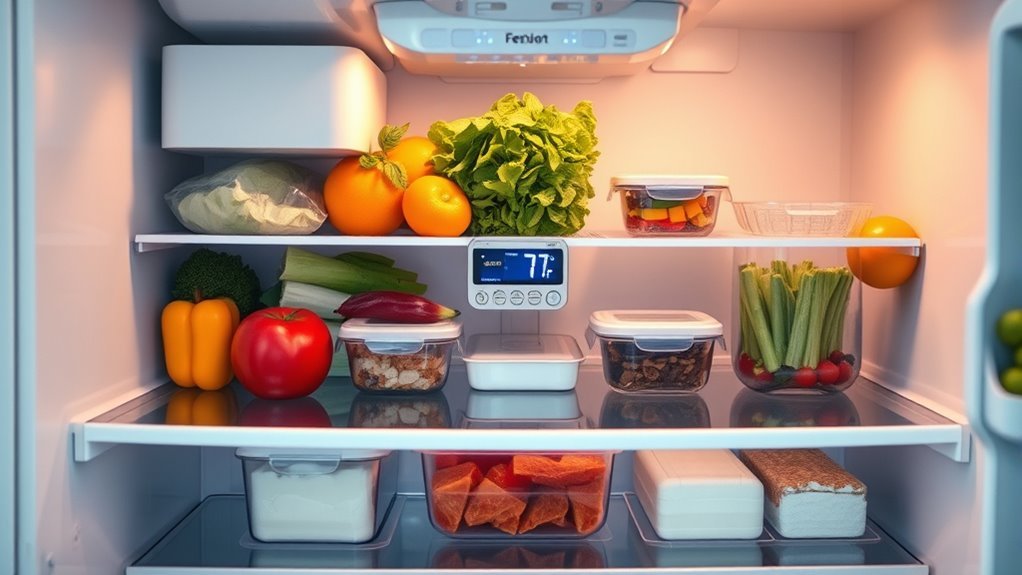
Although it may seem simple, maintaining your refrigerator at or below 4°C (40°F) is crucial to slow bacterial growth and keep your food safe.
To guarantee proper temperature control, you should use a reliable refrigerator thermometer placed away from the door for accurate fridge temperature readings. Checking this thermometer at least once a week helps you monitor and adjust settings to maintain ideal storage conditions.
Avoid overpacking your fridge, as proper airflow is essential to keep the temperature consistent throughout. If the thermometer shows a temperature above 4°C or below 0°C, adjust your fridge settings immediately to prevent foodborne illness risks.
Organize Foods by Safety and Type
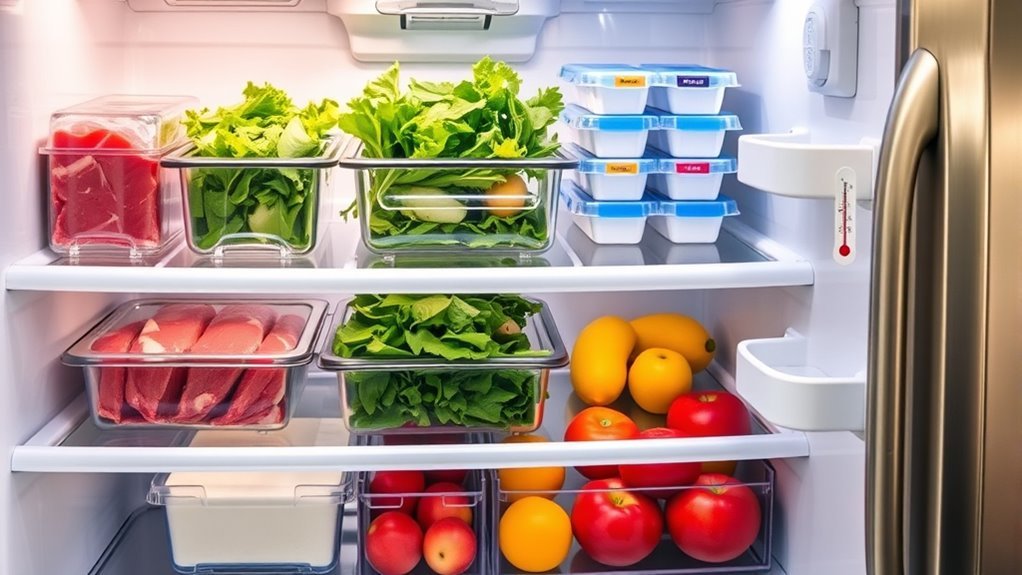
When you organize foods by safety and type, you reduce the risk of cross-contamination and keep everything fresher longer. Proper food storage means separating raw meats from ready-to-eat items and using leak-proof containers to contain juices that could spread bacteria.
To guarantee safety and organized storage, follow these tips:
- Store raw meats in leak-proof containers to prevent drips and contamination.
- Keep ready-to-eat foods like salads and desserts on upper shelves to minimize risk.
- Use separate covers or containers for different food types to maintain freshness and prevent odors.
Store Raw Meat on the Bottom Shelf
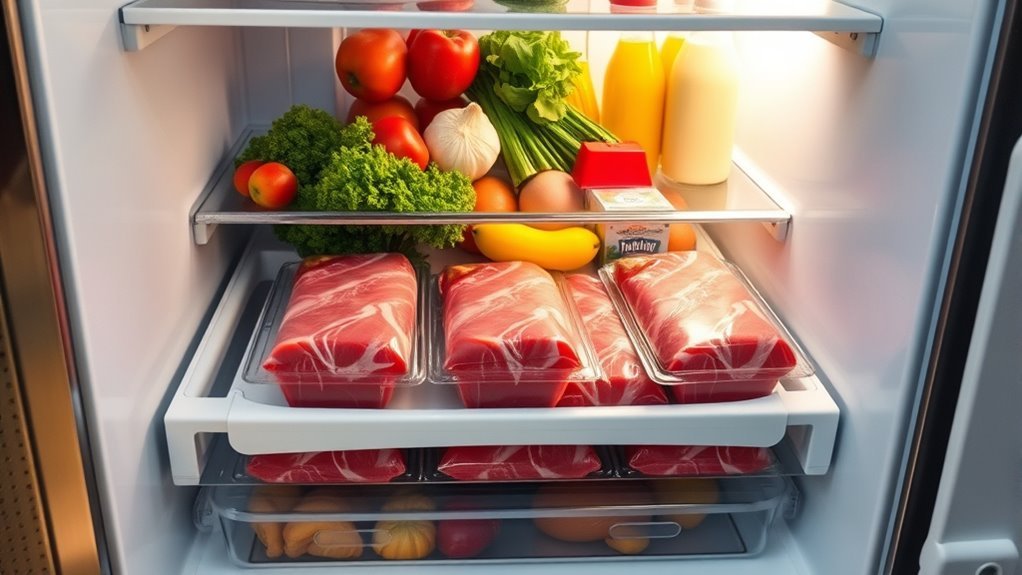
To keep your fridge safe and organized, store raw meat on the bottom shelf where any drips won’t contaminate other foods. This shelf is typically the coldest, maintaining the proper temperature of 4°C (39°F) or below, which helps keep raw meat fresh and safe.
Always keep raw meat stored in a leak-proof container or sealed plastic bag to prevent spills and cross-contamination. After handling, wash your hands, utensils, and surfaces thoroughly to avoid bacteria spread.
| Aspect | Recommendation | Reason |
|---|---|---|
| Shelf Location | Bottom shelf | Prevents drips contaminating other foods |
| Container Type | Leak-proof | Contains juices, avoids spills |
| Temperature | 4°C (39°F) or below | Keeps raw meat safe |
Use Airtight Containers and Proper Wrapping
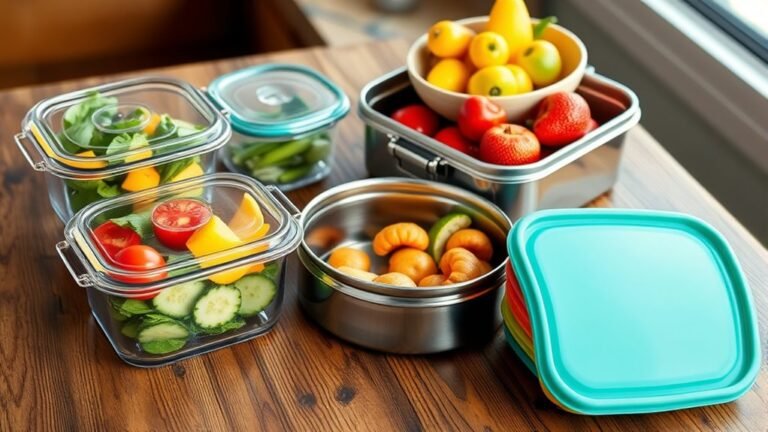
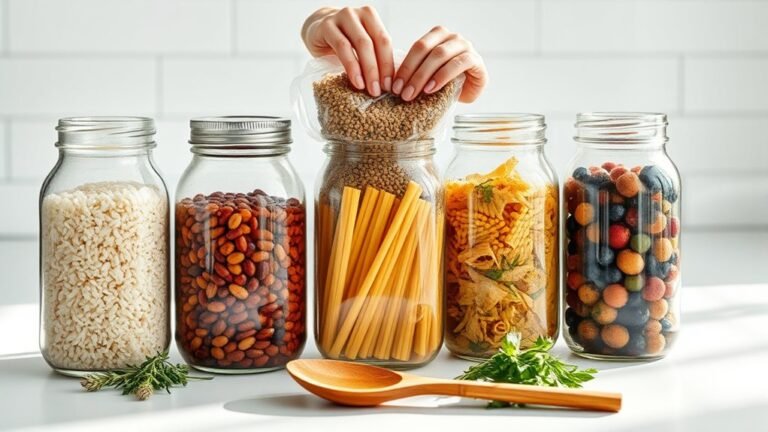
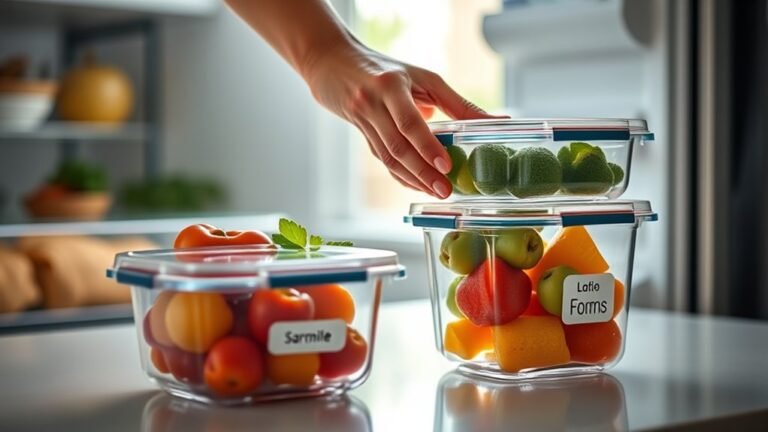
You’ll want to use airtight containers to keep your food fresh and prevent moisture loss.
Wrapping leftovers tightly with plastic wrap or foil helps maintain flavor and stops bacteria from growing. Proper sealing also prevents cross-contamination and keeps odors from mixing in your fridge.
Benefits of Airtight Containers
Although storing food properly can seem simple, using airtight containers makes a significant difference in keeping your food fresh and flavorful. These containers are essential for effective food preservation because they prevent moisture loss, which keeps your produce crisp and your leftovers tasty.
They also block odor transfer, so your fridge stays smelling fresh without mixing flavors.
Here are key benefits of airtight containers:
- Reduce moisture loss, maintaining food freshness longer
- Minimize odor transfer between different foods
- Limit bacterial growth by restricting air exposure
Incorporating airtight containers into your storage routine is one of the best storage tips you can follow. They help you protect your food’s quality, reduce waste, and save money by extending shelf life effectively.
Wrapping Techniques for Freshness
When you combine airtight containers with proper wrapping techniques, you greatly extend the freshness of your food. To prevent spoilage, always seal containers tightly after use.
For example, wrap cheese in parchment paper or kitchen towels before placing it in an airtight container. This helps maintain its moisture and flavor.
Fresh produce benefits from a tight cover with plastic wrap or storage in sealed containers. Doing this helps reduce moisture loss and inhibit mold growth.
Using airtight containers alongside plastic wrap ensures excellent food preservation by limiting air exposure. It’s a simple trick that really works.
Preventing Cross-Contamination
To prevent cross-contamination, always store raw meats in airtight containers on the bottom shelf. This keeps their juices from dripping onto other foods.
Proper storage is key to food safety. So, use leak-proof containers for leftovers and wrap cooked foods tightly in plastic wrap or foil. This helps prevent exposure to bacteria and odors, keeping everything fresh.
Remember to:
- Use airtight containers for raw meats and dairy products to avoid spoilage and cross-contact.
- Wrap cooked foods properly to block bacteria and odors.
- Check packaging regularly and replace if damaged to guarantee leak-proof sealing.
Utilize Crisper Drawers for Produce
You can keep your fruits and veggies fresher by using the crisper drawers in your fridge. These drawers control humidity to match what your produce needs.
Store leafy greens in high humidity to keep them crisp. Fruits like berries do better in low humidity because it helps prevent mold.
Organizing your produce this way really helps reduce spoilage and waste. It’s a simple trick that makes a big difference!
Moisture Control Benefits
Although many overlook them, crisper drawers play a key role in keeping your fruits and vegetables fresh by regulating humidity levels. They provide essential moisture control, which helps prevent spoilage and keeps produce crisp longer.
Using these drawers correctly means adjusting humidity settings based on what you store. For example, high humidity is great for leafy greens to prevent wilting, while low humidity works best for berries to avoid mold growth.
It’s also a good idea to separate fruits and vegetables to reduce ethylene gas effects. This little trick can really help extend the life of your produce!
Organize Fruits and Vegetables
How can you keep your fruits and vegetables fresh longer? Utilize your fridge’s crisper drawers to maintain ideal humidity levels tailored for different produce. Adjust the humidity setting—high for vegetables and low for fruits—to preserve freshness and slow spoilage.
Separate ethylene-producing produce like apples and melons from sensitive, perishable foods to prevent premature ripening. Store leafy greens in perforated bags or wrapped in paper towels inside the crisper to reduce moisture buildup, which can cause spoilage.
Regularly clean your crisper drawers with mild soap and water to remove residue and bacteria that accelerate decay. By organizing your fruits and vegetables this way, you’ll extend their shelf life and enjoy fresher, tastier produce every day.
Regularly Clean and Monitor Your Fridge
Since a clean and well-monitored fridge helps prevent bacteria growth and food spoilage, make it a habit to wipe up spills immediately and clean the interior at least once a month with mild soap and water.
You should regularly monitor your fridge’s temperature with a thermometer to guarantee it stays at or below 4°C (40°F). Also, promptly remove any expired or spoiled foods to keep your fridge hygienic and safe.
To keep your fridge in top shape, remember to:
- Clean spills immediately to avoid cross-contamination and mold
- Use a thermometer to regularly monitor the temperature
- Remove spoiled or expired items to prevent contamination
Label and Track Food Storage Dates
Why does labeling and tracking food storage dates matter? When you label perishable foods with the date they were stored, you can easily track freshness and prevent spoilage.
Labeling perishable foods with storage dates helps track freshness and prevent spoilage effectively.
Always record storage dates on leftovers and prepared meals to monitor their safe shelf life, usually 3-4 days for most cooked items. Use the “first in, first out” method by placing newer items behind older ones so you use older foods first.
Regularly check expiration dates on pre-packaged foods and discard anything past its “use-by” or “best before” date. To stay organized, keep a designated storage chart or list inside your fridge to monitor when foods were added and when they should be consumed.
This simple habit helps reduce waste and keeps your food safe to eat. It’s an easy way to make sure nothing goes to waste or makes you sick.
Frequently Asked Questions
How to Store Food Correctly in a Fridge?
You should store raw meats on the bottom shelf, keep ready-to-eat foods on top, and use airtight containers.
Place eggs in their carton on a middle shelf, and keep your fridge at or below 4°C to guarantee freshness and safety.
Doing this helps prevent cross-contamination and keeps your food fresh longer. It’s a simple way to stay safe and organized in the kitchen!
What Is the 2-2-2 Rule for Food Storage?
You don’t want to play fridge roulette, right? The 2-2-2 rule means eating or tossing perishables within 2 days, freezing leftovers if not eaten, and using opened dairy or meats within 2 days to stay safe.
It’s a simple way to keep your food fresh and avoid any nasty surprises. Just remember the 2-2-2 rule, and you’ll be good to go!
What 12 Foods Should Not Be Kept in the Fridge?
You shouldn’t fridge tomatoes, potatoes, bread, avocados, bananas, honey, onions, garlic, melons, coffee, basil, or olive oil.
Keeping these at room temperature preserves their flavor, texture, and freshness much better than chilling them.
Trust me, your taste buds will thank you for it!
What Is the Proper Food Storage Order in a Refrigerator?
You should store ready-to-eat foods on top, cooked items in the middle, dairy products below them, and raw meats at the bottom in leak-proof containers.
This keeps everything safe and prevents cross-contamination in your fridge. It’s a simple way to keep your food fresh and your kitchen hygienic.
Conclusion
Think of your fridge like a tiny, bustling city where every food item has its perfect spot. Just like a well-organized city keeps traffic flowing smoothly, storing your food properly prevents spoilage and waste.
Studies show that proper storage can extend food life by up to 50%, saving you money and time. By following these simple tips, you’re not just keeping your fridge tidy—you’re creating a smart, efficient system that works for you every day.
Proper food storage in the fridge is key to maintaining freshness and reducing waste. When you organize your fridge thoughtfully, it helps keep your groceries safe and tasty longer. So, next time you stock up, remember these tips—they’ll help you maximize your fridge space and keep your food fresh.