How to Store Water for Food Storage in 7 Essential Steps
To store water safely for food storage, start by calculating at least one gallon per person per day for several days. This ensures you have enough water for drinking, cooking, and hygiene during emergencies or long-term storage.
Choosing the right containers is key, so opt for food-grade containers that won’t leach harmful chemicals. Make sure to clean them thoroughly with soap and a bleach solution before use. Filling containers almost full helps minimize air space, which can affect water quality over time.
Seal them tightly and label each container with the date you filled it. Store your water in a cool, dark place away from chemicals and direct sunlight to keep it fresh.
Don’t forget to check and rotate your water every six months to maintain its safety and taste. Keep following along to uncover more helpful storage tips that can make a big difference in your preparedness.
Key Takeaways
- Determine daily water needs, storing at least 1 gallon per person per day for a minimum of 3 days, ideally 2 weeks. This helps make sure you have enough water in case of emergencies.
- Use FDA-approved, food-grade containers with tight-fitting lids. Avoid containers that previously held toxic substances to keep your water safe.
- Thoroughly clean and sanitize containers with soap and a bleach solution before filling them. This step is important to ensure the water stays safe to drink.
- Label containers with the fill date. Then, store them in a cool, dark place away from sunlight and heat sources to preserve water quality.
- Rotate your water supply every 6 months. While doing this, check containers for any damage and replace both water and containers as needed to maintain freshness.
Determine the Amount of Water to Store
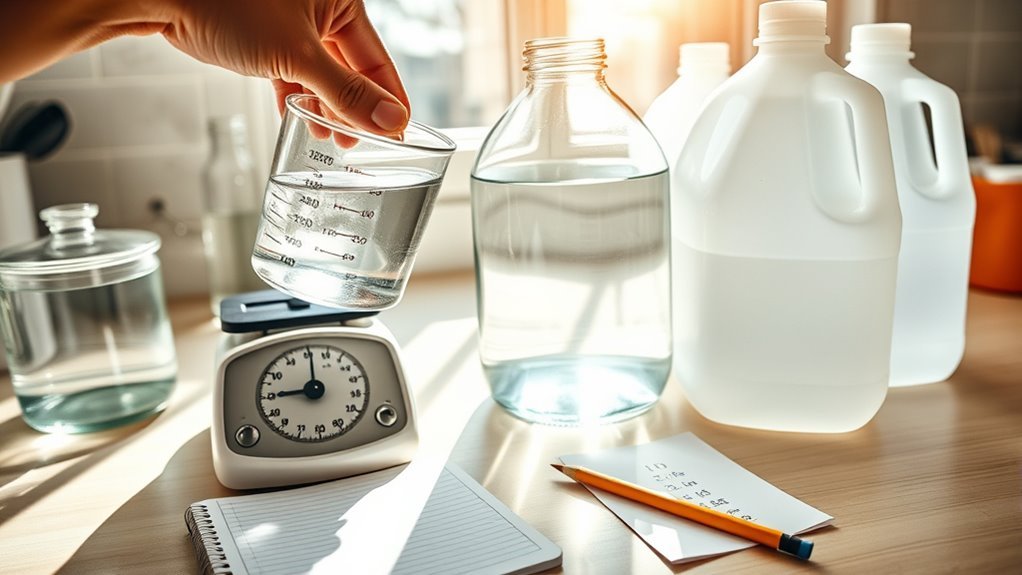
When preparing for emergencies, you should store at least one gallon of water per person per day for a minimum of three days. If you can, aim for two weeks’ worth of water.
To figure out the right amount, think about everyone in your household, including pets. Don’t forget to add extra for cooking and hygiene too.
A general rule of thumb is two quarts (that’s eight cups) per person daily, but your needs might be different depending on your situation.
Make sure to choose containers specifically made for water storage. This helps keep your water safe and free from contamination.
Also, remember to replace your stored water every six months so it stays fresh.
Select Appropriate Food-Grade Containers
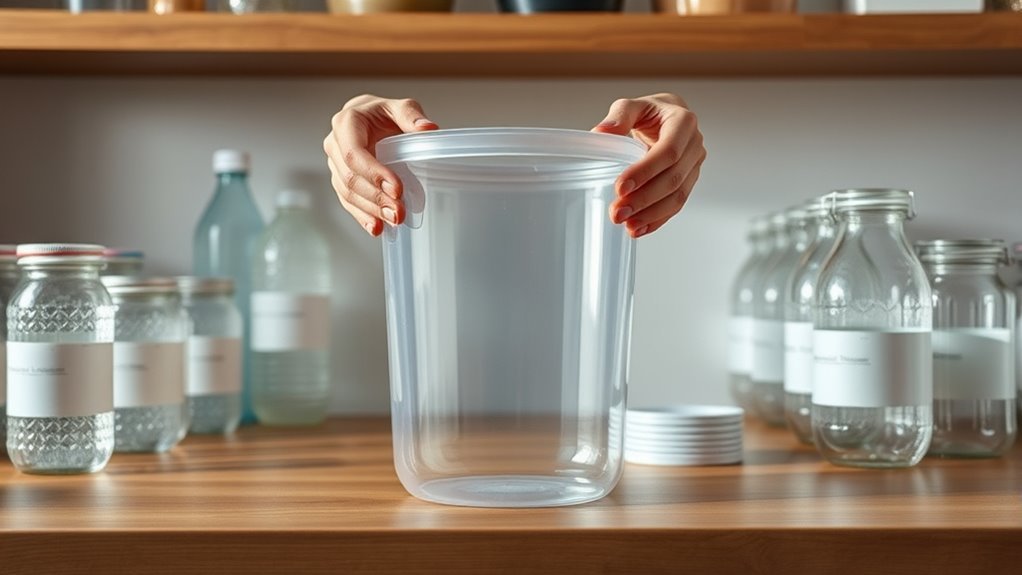
After determining how much water you need to store, the next step is choosing the right containers to keep that water safe and clean. Always use FDA-approved food-grade containers made from glass, plastic, stainless steel, or coated metals.
Avoid containers that previously held toxic substances like pesticides or bleach, as they risk contaminating your water. Choose containers with tight-fitting lids and narrow openings to prevent leaks and reduce exposure to contaminants.
Proper sanitation is vital, so make sure to thoroughly clean and sanitize your containers before filling them. Label each container with the storage date and contents for easy tracking.
Finally, store your water containers in a cool, dark place away from direct sunlight and heat to maintain water quality during storage. This way, your water stays fresh and ready when you need it.
Clean and Sanitize Storage Containers
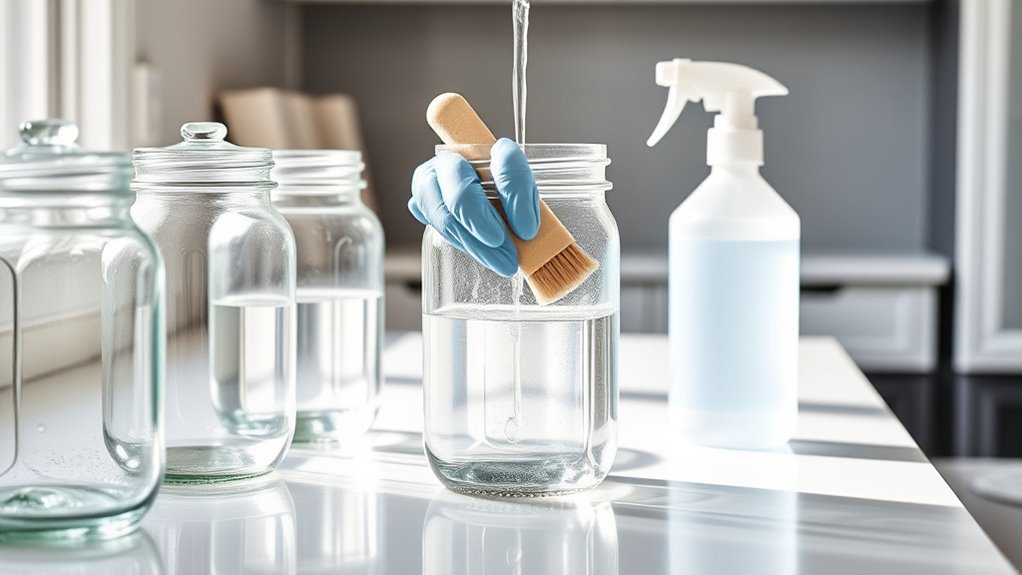
Properly cleaning and sanitizing your storage containers is essential to keep your water safe and free from contaminants. Start by washing your containers with hot water and dish soap to remove residues.
Next, sanitize them using a bleach solution—1 tablespoon of unscented household bleach per gallon of water—then rinse thoroughly. Avoid reusing containers that held chemicals like pesticides.
Using FDA-approved food-grade containers guarantees no harmful leaching occurs.
| Step | Why It Matters |
|---|---|
| Wash thoroughly | Removes dirt and residues |
| Sanitize with bleach | Kills harmful bacteria |
| Rinse well | Prevents bleach taste |
| Use food-grade | Avoids chemical leaching |
| Avoid chemical reuse | Prevents contamination |
Following these steps keeps your stored water safe and drinkable when you need it most.
Fill Containers Properly and Seal Securely
Once your containers are clean and sanitized, focus on filling them correctly to maintain water quality. Use only food-grade containers made of glass or BPA-free plastic to avoid chemical contamination.
Fill containers almost completely to reduce air space, which helps prevent bacterial growth. However, leave about 1 inch of headspace if freezing is expected to allow water expansion.
After filling, seal containers tightly to create an airtight environment that keeps out dust, pests, and contaminants.
- Use clean, food-grade containers only
- Fill containers nearly full to limit air exposure
- Leave 1 inch headspace for freezing or temperature changes
- Seal lids tightly for an airtight seal
- Avoid loose seals to prevent contamination
Properly filling and sealing your containers ensures safe, long-lasting water storage. It’s a simple step that makes a big difference!
Label and Date Each Water Container
Although filling and sealing your water containers is essential, labeling and dating each one is just as important to maintain a safe and organized water supply. Use permanent markers or waterproof labels to clearly write the date you filled each container.
This helps you keep track of freshness and guarantees you replace or refill water every six months. Along with the date, note the contents, like “drinking water” or “emergency water,” to avoid confusion later on.
Proper labeling makes rotating your water supply easier and prevents you from accidentally using outdated or contaminated water. By consistently labeling and dating your containers, you’ll maintain a reliable and safe water reserve for your food storage needs.
Store Water in a Cool, Dark Location
You’ll want to store your water in a cool spot between 50-70°F to keep it fresh and safe. Avoid places where sunlight hits, as it can degrade containers and encourage algae growth.
Choose shaded areas like basements or closets, and stay clear of heat sources to maintain the right conditions. It really helps to pick a spot that stays consistently cool and dark.
Ideal Storage Conditions
When storing water for food storage, keeping it in a cool, dark location helps preserve its quality and safety. You want to choose the right storage containers and place them in a cool environment, ideally between 50-70°F, to prevent bacterial growth and chemical leaching.
Using chemical treatment can further guarantee water safety, but proper storage conditions are just as vital. Here are key tips for ideal storage conditions:
- Store water containers in a basement, closet, or pantry to keep them dark.
- Maintain a consistent temperature to avoid fluctuations that promote spoilage.
- Keep containers away from heat sources and chemicals.
- Use food-grade storage containers designed for water.
- Avoid placing containers near toxins that could contaminate the water.
Following these steps protects your stored water’s freshness and safety. It’s really about keeping things simple and consistent. That way, your water stays safe and fresh when you need it most.
Avoid Sunlight Exposure
Since sunlight speeds up plastic breakdown and encourages algae growth, you should always store your water in a cool, dark place. Sunlight exposure degrades plastic containers, causing chemical leaching that contaminates your water and risks your health.
UV rays also weaken containers, increasing leaks or failure. Keeping water in a dark place between 50-70°F slows bacterial growth and preserves freshness. Regularly inspect containers to ensure they stay shaded and intact.
| Factor | Effect of Sunlight | Recommended Action |
|---|---|---|
| Plastic containers | Chemical leaching | Store in a dark place |
| UV rays | Material breakdown | Keep water out of sunlight |
| Temperature | Bacterial growth | Maintain 50-70°F |
| Algae growth | Increases with sunlight | Use opaque containers |
| Container integrity | Weakens over time | Check regularly |
Rotate and Maintain Your Water Supply Regularly
Although storing water is essential for food storage, rotating and maintaining your supply regularly guarantees it stays safe and fresh. To keep your water storage effective, you need to rotate your water every six months. This prevents bacterial growth and ensures freshness.
Proper maintenance also includes cleaning containers before refilling and inspecting them for damage. Store your water in a cool, dark place to preserve quality.
Here’s how to rotate and maintain your water supply effectively:
- Replace stored water every 6 months.
- Label containers with the storage date.
- Clean and sanitize containers before refilling.
- Store water in a cool, dark environment.
- Check containers regularly for leaks or cracks.
Frequently Asked Questions
Should We Start Stockpiling Water?
Yes, you should start stockpiling water now. It guarantees you’re prepared for emergencies, provides peace of mind, and helps you maintain a safe, reliable supply.
Just make sure to rotate and store water properly in food-grade containers. That way, your stockpile stays fresh and ready when you need it most.
What Are the Five Ways of Storing Water?
When Sarah prepped for a storm, she used five ways to store water: plastic bottles, glass jars, stainless steel containers, water bricks, and large drums.
You can do the same to guarantee reliable water access. It’s all about having options that fit your space and needs.
How to Store 2 Weeks of Water?
You store two weeks of water by securing 14 gallons per person in clean, FDA-approved containers. Sanitize them, label with dates, and keep in a cool, dark place.
Make sure to rotate your water supply every six months to keep it fresh. That way, you’ll always have safe drinking water ready when you need it!
What Is the Healthiest Container to Store Water?
Imagine Sarah choosing a stainless steel container for her emergency kit.
You should use FDA-approved food-grade plastics, glass, or stainless steel because they won’t leach chemicals. This keeps your stored water safe and healthy for consumption.
Conclusion
Now that you’ve got your water storage set up, remember it’s like tending a garden—you need consistent care to keep it fresh and ready.
By following these seven steps, you’ll ensure your water supply is safe, accessible, and long-lasting. Don’t let your hard work dry up; rotate and maintain your water regularly.
With a little attention, you’ll have peace of mind knowing you’re prepared when the unexpected strikes. Proper water storage for food storage is essential to stay ready for emergencies.
Taking these simple steps helps preserve water quality and ensures you have a reliable source when you need it most. So keep your water clean, store it safely, and check it often to protect your family’s health and safety.