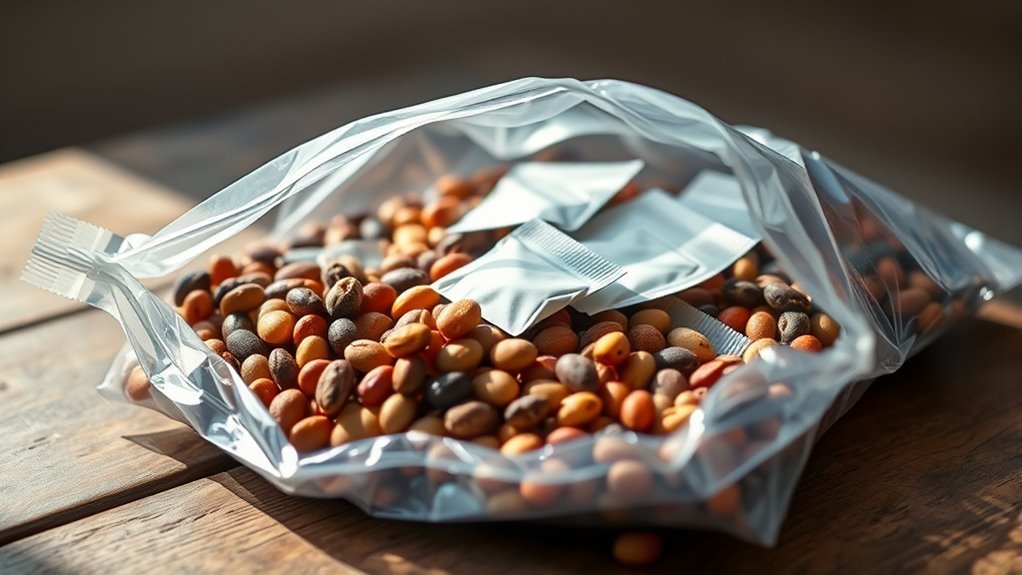
What Are Oxygen Absorbers in Food Storage?
You’ll find oxygen absorbers contain iron particles that react with the oxygen inside your food packaging, turning it into rust and removing oxygen from the air. This lowers oxygen levels to near zero, preventing spoilage, slowing oxidation, and keeping your food fresh longer.
They’re great for nuts, dried fruits, meats, and more. Using them correctly guarantees your stored foods stay flavorful and safe.
Keep going to see how they work and where you can use them best.
Key Takeaways
- Oxygen absorbers contain iron particles that chemically react with oxygen to reduce its presence in sealed food packaging. They activate in moist environments (≥65% relative humidity) to convert oxygen into iron oxide, effectively removing oxygen.
- By lowering oxygen levels to about 0.01%, they slow food spoilage and prevent oxidation damage. This helps keep your food tasting fresh and looking good for longer.
- Oxygen absorbers help preserve flavor, aroma, nutrients, and inhibit microbial growth in stored foods. So, they’re great for keeping your snacks safe and tasty.
- You’ll often find them used with nuts, dried fruits, meats, and baked goods to extend shelf life and maintain freshness. Basically, they’re a simple way to keep your food at its best.
How Oxygen Absorbers Work
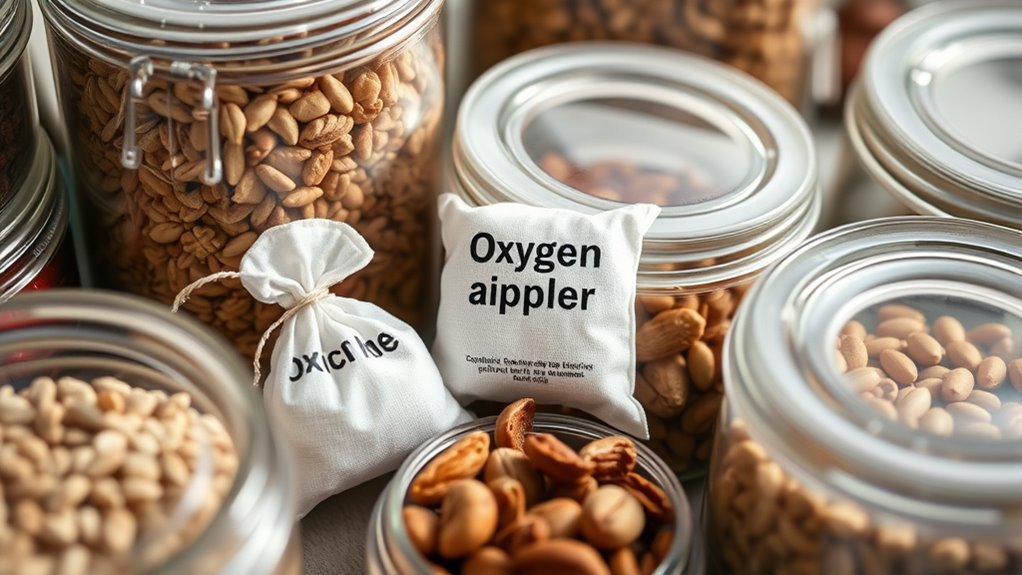
Although it might seem simple, oxygen absorbers work through a clever chemical reaction: iron particles inside them rust by reacting with leftover oxygen, effectively removing it from the sealed environment. This rusting process, or oxidation, transforms iron into iron oxide, which traps oxygen molecules.
Moisture activation plays a vital role—typically, at least 65% relative humidity triggers the iron particles to start this oxygen scavenging reaction. Some absorbers include catalysts like sodium chloride to speed up oxygen removal, even in lower humidity.
As oxygen levels drop dramatically, often to about 0.01%, the oxygen absorber maintains an environment that slows spoilage. Through this precise chemical interaction, oxygen absorbers protect your food by minimizing oxidation, ensuring freshness and extending shelf life in sealed packaging.
Benefits and Applications of Oxygen Absorbers in Food Storage
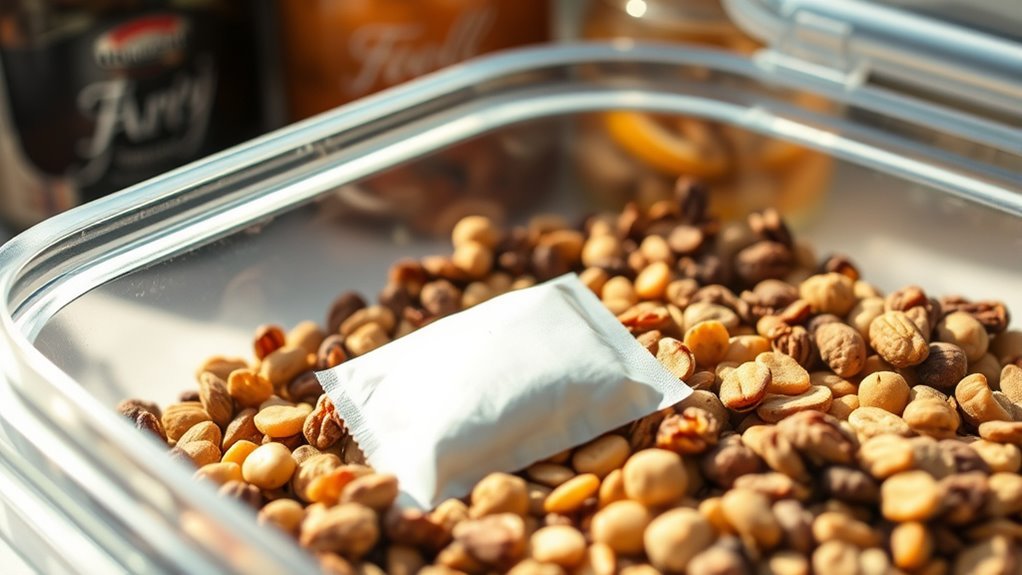
By removing nearly all oxygen from sealed packaging, oxygen absorbers create an environment that slows spoilage and microbial growth. These absorbers, using iron powder to bind oxygen, effectively control oxidation and moisture, extending your food’s shelf life and preserving its quality.
You’ll find oxygen absorbers useful across various food storage needs—from nuts and dried fruits to meats and baked goods. They help maintain flavor, aroma, and nutrients, keeping your food tasting fresh and delicious.
| Benefit | Application | Key Feature |
|---|---|---|
| Extended shelf life | Dry foods, seafood | Iron powder oxidation |
| Microbial growth inhibition | Meat, nuts | Moisture control |
| Food quality preservation | Baked goods, dried produce | Packaging enhancement |
Using oxygen absorbers properly maximizes preservation. This way, your stored food stays fresh longer and you get the most out of your storage efforts.
Frequently Asked Questions
What Foods Should Not Use Oxygen Absorbers?
You shouldn’t use oxygen absorbers with high-moisture foods, oily or fatty items, carbonated drinks, fermented products, or highly perishable foods like dairy and fresh meats unless refrigerated.
These types of foods can spoil or lose quality if stored with oxygen absorbers. So, it’s best to avoid using them in these cases.
Can You Store Rice in Mason Jars With Oxygen Absorbers?
Yes, you can store rice in mason jars with oxygen absorbers. Rice naturally resists spoilage, but using oxygen absorbers takes it a step further.
They actively remove oxygen, which drastically extends the shelf life of your rice. This keeps it fresh instead of just quietly degrading over time.
Are There Any Side Effects to Using Oxygen Absorbers?
There aren’t side effects if you use oxygen absorbers correctly. Just don’t eat or open the packets. Keep them dry, and away from pets.
Otherwise, they’re safe for preserving your food effectively. So, as long as you handle them right, you’re good to go!
What Foods Need Oxygen Absorbers?
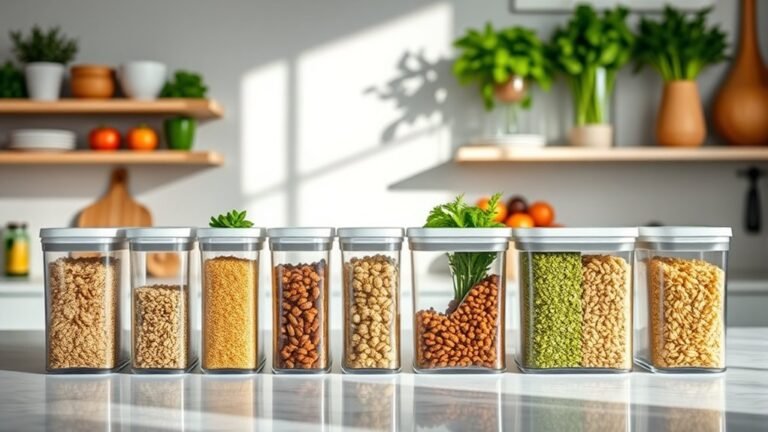
You need oxygen absorbers for foods like nuts, dried fruits, meats, grains, spices, and snacks. They help keep these items fresh by preventing spoilage, rancidity, discoloration, and microbial growth during storage.
Basically, oxygen absorbers suck up the oxygen inside the packaging. This way, the food stays safe and tasty for way longer. So, if you want to keep your snacks crisp or your dried fruits looking good, oxygen absorbers are a smart choice.
Conclusion
By using oxygen absorbers in your food storage, you can extend the shelf life of your items considerably—some studies show they can reduce oxygen levels to less than 0.01%.
This effectively prevents spoilage and mold, keeping your food fresher for longer. It’s a simple addition that works wonders for food safety and taste.
So, if you want to protect your pantry and reduce waste, oxygen absorbers are a smart, easy solution you shouldn’t overlook. They help maintain food quality by minimizing oxygen exposure, which slows down deterioration.
Incorporating oxygen absorbers into your food storage routine is an effective way to keep your supplies safe and tasty. Whether you’re prepping for emergencies or just want to keep snacks fresh, these little packets make a big difference. Don’t miss out on this practical, affordable method to extend shelf life and prevent spoilage in your pantry.