Which 3 Plastic Food Storage Containers Are the Safest?
You’ll want plastic containers made from BPA-free plastics with recycling codes #1 (PET), #2 (HDPE), or #5 (PP) to guarantee safety and durability. These materials are considered the safest for food storage because they minimize the risk of harmful chemicals leaching into your food.
Choosing the right plastic food storage containers can really make a difference in keeping your meals fresh and healthy.
Top choices include Rubbermaid Brilliance for leakproof performance, OXO Good Grips with secure lids, and Amazon Basics for budget-friendly, microwave-safe options. These containers not only help preserve your food but also give you peace of mind by reducing chemical exposure.
Keep using safe practices with your containers, and you’ll find more helpful tips and options that match your needs.
Key Takeaways
- Rubbermaid Brilliance containers are leakproof, stain-resistant, and made from durable, BPA-free plastic. This means they ensure safe food storage without the worry of harmful chemicals.
- OXO Good Grips containers come with secure lids that have sturdy gaskets. These help prevent leaks and keep your food fresh and safe.
- Amazon Basics plastic containers are BPA-free and microwave-safe. Plus, they’re budget-friendly, making them a great safe choice for everyday use.
- When picking containers, look for those made from recycling codes #1 (PET), #2 (HDPE), or #5 (PP) plastics. These are generally the safest options for food storage.
- Try to avoid plastics marked with recycling codes #3, #6, or #7. Steering clear of these helps minimize your exposure to harmful chemicals and keeps your food safer.
Criteria for Selecting Safe Plastic Food Storage Containers
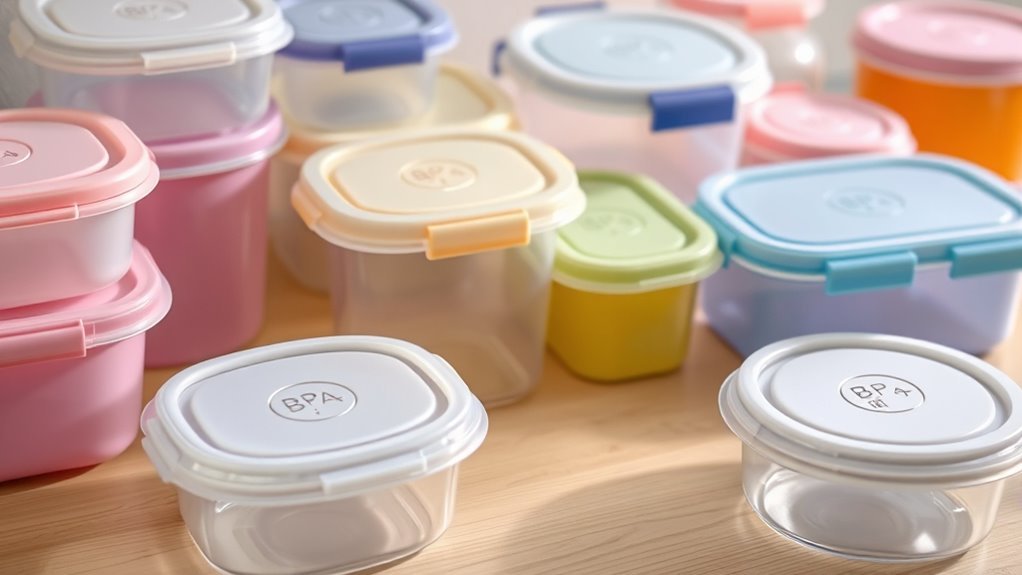
When selecting plastic food storage containers, you should focus on those labeled with recycling codes #1 (PET), #2 (HDPE), or #5 (PP). These are generally regarded as safe for food use.
These food-safe plastics minimize risks of chemical leaching, especially when BPA-free. Avoid containers with recycling codes #3, #6, or #7, which may contain harmful substances.
Pay attention to the original use of plastic; items previously designed for food storage are safer for food reuse and often maintain a longer shelf life. Choose containers with airtight seals and leakproof lids to keep food fresh and prevent contamination.
Even BPA-free plastics can have alternatives like BPS or BPF, so selecting trusted materials is key. Prioritizing these criteria helps you store food safely and effectively.
Top 3 Plastic Food Storage Containers Based on Safety and Performance

Although many plastic containers flood the market, you’ll find only a few that truly combine safety and performance. The Rubbermaid Brilliance set stands out with its leakproof design, durable plastic, and resistance to stains and odors.
OXO Good Grips offers secure lids and sturdy gaskets to prevent leaks. Amazon Basics provides BPA-free plastics that are microwave-safe and budget-friendly, though less impact-resistant.
Choosing containers made from food-grade plastics like BPA-free polypropylene (#5) ensures minimal chemical leaching and high-quality materials.
| Brand | Key Safety Features |
|---|---|
| Rubbermaid Brilliance | Leakproof, stain & odor-resistant |
| OXO Good Grips | Secure lids, sturdy gaskets |
| Amazon Basics | BPA-free, microwave-safe |
| Snapware | BPA-free PP, chemical leaching resistant |
| Caraway | Durable, food-grade plastics |
Tips for Maintaining and Using Plastic Food Storage Containers Safely
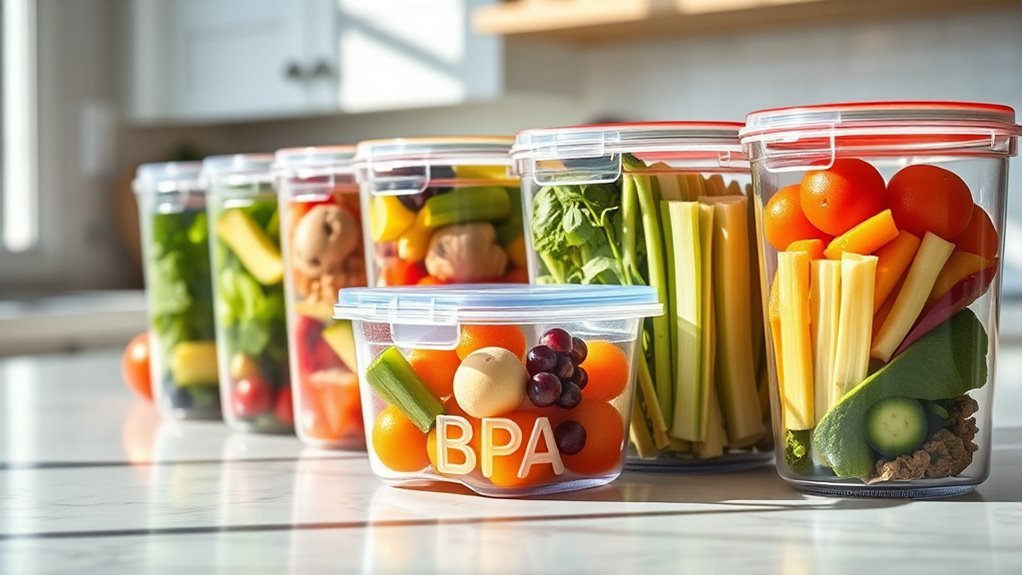
To keep your plastic food storage containers safe and durable, you should always check for food-safe recycling codes like #1, #2, or #5 before using or buying them. Only microwave plastic containers labeled microwave-safe to prevent chemical leaching.
Regularly perform damage inspections by looking for discoloration, warping, or cracks. Replace any damaged containers promptly to keep things safe.
When cleaning, avoid abrasive scrubbers since they can cause scratches that harbor bacteria. Instead, use hot, soapy water for a thorough clean.
Try to limit storing acidic foods in plastic containers because they may cause staining and increase chemical transfer risks. Following these tips helps maintain your containers’ safety and longevity while protecting your food from contamination.
Frequently Asked Questions
What Are the Safest Plastic Food Storage Containers?
You’ll want to choose food-grade plastics labeled #1 (PET), #2 (HDPE), or #5 (PP), especially BPA-free options.
Polypropylene (#5) is durable and microwave-safe, making it the safest choice for storing your food.
What Storage Containers Do Not Have Microplastics?
You won’t find microplastics in glass or stainless steel containers since they’re inert. Silicone is also a great choice.
Avoid plastics, especially scratched or worn ones, because they can shed microplastic particles into your food. It’s better to stick with materials that don’t break down easily.
Is Tupperware or Rubbermaid Better?
When choosing between Tupperware and Rubbermaid, you’ll find Rubbermaid’s BPA-free Tritan plastic and sturdy lids hold the upper hand.
You won’t have to worry about leaks or chemical worries with Rubbermaid on your side. It’s pretty reassuring to know your food stays safe and sealed tight.
Which Plastic Is the Least Toxic?
You want to choose plastics labeled #2 (HDPE) or #5 (PP) since they’re the least toxic. Always pick BPA-free options to keep things safer.
Also, avoid using scratched containers because they can leach chemicals. If you want to be extra cautious, consider alternatives like glass or stainless steel for food storage. They’re great choices for keeping your food fresh and safe!
Conclusion
Now that you know which three plastic food storage containers are safest, you might think the choice is simple. But here’s the twist: the real safety comes down to how you use and care for them every day.
Don’t just pick the right container—make sure you avoid heat damage, cracks, and wear. Your food’s safety depends on more than just the brand.
Ready to protect what you eat? It’s in your hands. Using safe plastic food storage containers properly means keeping them in good condition and avoiding high heat that can cause harmful chemicals to leach. So, to keep your food fresh and safe, always handle your containers with care, inspect them regularly, and replace them if they show signs of damage. That way, you can enjoy peace of mind knowing your food storage is both safe and reliable.