10 Tips on Which Food Storage Method Is Correct
To store food safely, it’s important to keep high-risk items like meat, dairy, and salads out of the danger zone, which is between 5°C and 60°C. Refrigerate these foods at 5°C or below to keep them fresh and safe.
If you’re keeping food hot, make sure it stays above 60°C.
Always store raw foods on the bottom shelf of your fridge to avoid drips contaminating other items.
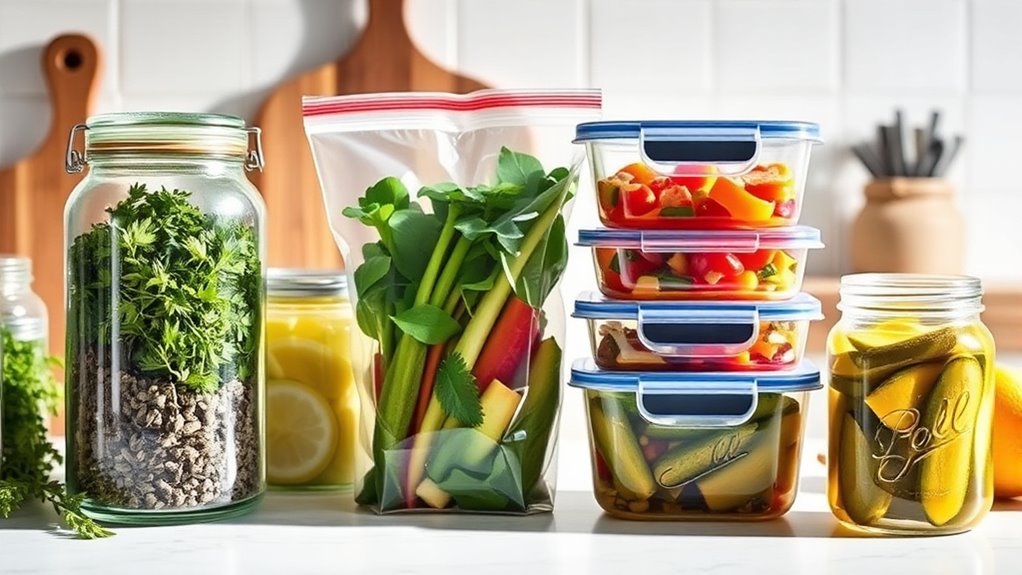
Using airtight containers also helps keep food fresh and prevents odors from mixing.
When thawing frozen food, do it in the fridge and cook it promptly afterward.
Avoid refreezing food that’s already been thawed, and don’t leave opened items uncovered.
If food has been sitting at unsafe temperatures for too long, it’s best to throw it out.
There’s a lot more to learn about keeping your food fresh and safe—you’ll want to discover these tips!
Key Takeaways
- Store high-risk foods like meat, dairy, and eggs at 5 °C or below. Or keep them above 60 °C when serving hot to prevent bacterial growth.
- Keep raw foods sealed and placed below cooked or ready-to-eat items in the fridge. This helps avoid cross-contamination.
- Use airtight containers or tightly sealed packaging for opened items. This slows spoilage and prevents contamination.
- Cool cooked foods quickly in shallow containers before refrigerating. Doing this minimizes the time food spends in the temperature danger zone.
- Thaw food in the fridge at 5 °C or below and cook it promptly. Try to avoid refreezing thawed food to reduce bacterial risk.
Understand the Temperature Danger Zone and Its Risks
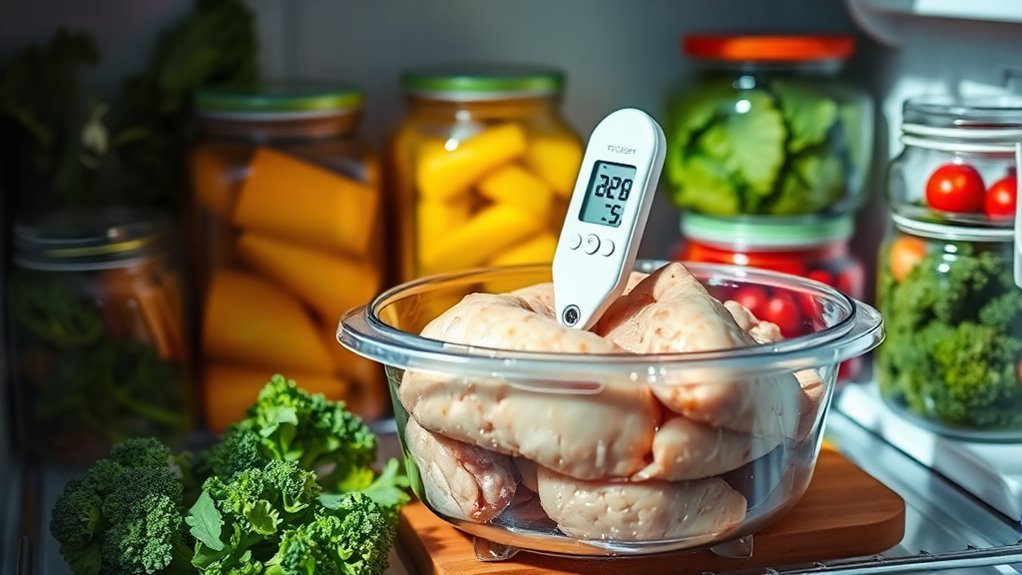
Because bacteria multiply fastest between 5 °C and 60 °C, you need to keep high-risk foods like meat, dairy, eggs, and prepared salads out of this temperature danger zone.
To keep these foods safe, store them properly at 5 °C or below, or above 60 °C if serving hot. Frozen foods should remain frozen until you’re ready to use them to prevent bacteria growth.
If high-risk food sits in the temperature danger zone for more than four hours, throw it away—it’s no longer safe. Don’t try to save it by refrigerating afterward.
Use a fridge thermometer to make sure your fridge stays at 5 °C or below. Following these temperature guidelines ensures your food stays safe and reduces the risk of foodborne illnesses.
Identify High-Risk Foods to Store Safely
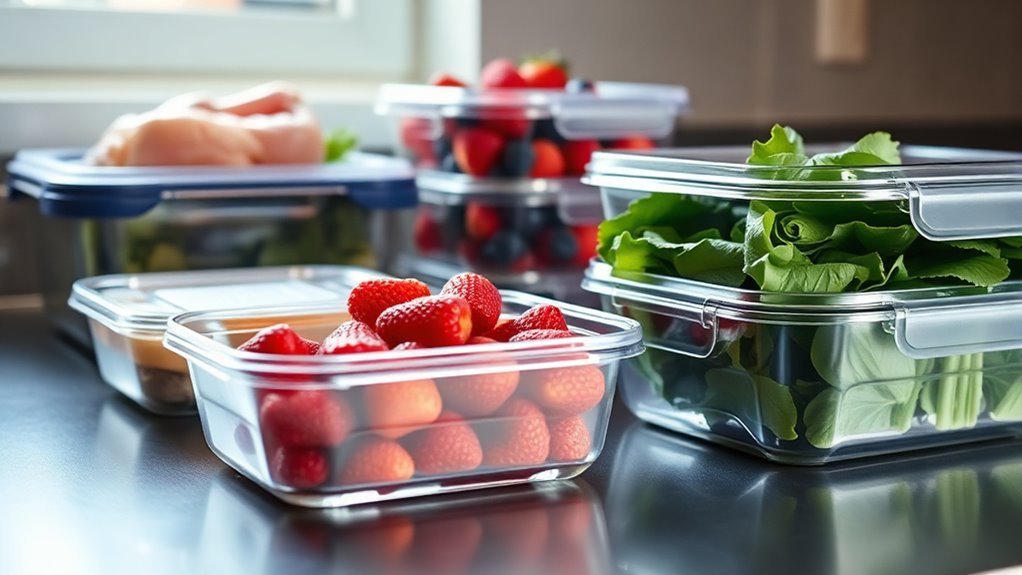
What kinds of foods demand the most careful storage? High-risk foods like raw or cooked meat—including chicken and minced meat—and dishes made with them, such as casseroles and lasagne, need your close attention.
Dairy and egg products like custards and mousse also require proper refrigeration. Prepared salads and fruit salads count as high-risk, too, since they contain perishable ingredients.
Always store these foods at 5°C or below—or keep hot food above 60°C—to prevent bacterial growth. Once you open packages, cans, or jars, treat their contents as high-risk and store them in covered food storage containers.
Set Fridge and Freezer to Safe Food Storage Temperatures
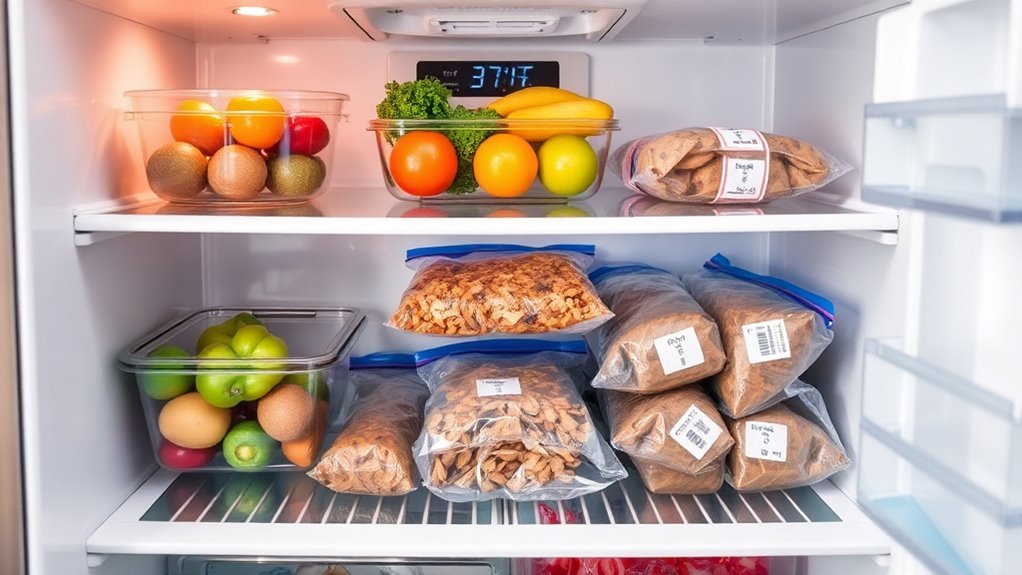
Proper temperature control in your fridge and freezer is important to keep food safe and fresh. You should set your fridge to 5 °C or below and your freezer to below −15 °C. Use a thermometer to check these temperatures regularly.
Avoid leaving high-risk foods like meat, dairy, and prepared salads in the 5 °C–60 °C danger zone. If these foods stay in that zone for more than 4 hours, discard them to prevent illness.
Also, freeze food promptly when needed and keep frozen items at under −15 °C to minimize bacterial growth. Remember to let hot food cool until steam stops before refrigerating to avoid raising the fridge temperature.
- Set fridge ≤ 5 °C and freezer < −15 °C
- Use a thermometer to verify temperatures
- Discard high-risk foods left >4 hours in danger zone
- Cool hot food before refrigerating
Store Raw Foods Below Cooked and Ready-to-Eat Items
When you store raw foods, always place them securely below cooked and ready-to-eat items in the fridge to prevent drips that can cause cross-contamination. Keeping raw meat, eggs, or dairy on the bottom shelf ensures any juices will not drip onto safer foods above.
Make sure raw foods are sealed tightly with foil, plastic wrap, or in covered containers to further reduce risk. Your fridge should stay at 5°C or below since bacteria grow fastest between 5°C and 60°C.
If raw and cooked or ready-to-eat foods do accidentally mix, discard the contaminated ready-to-eat items—you can’t properly “save” them. By following these steps, you’ll protect your food from harmful bacteria and keep your meals safe to enjoy.
Use Covered, Airtight Containers to Prevent Contamination
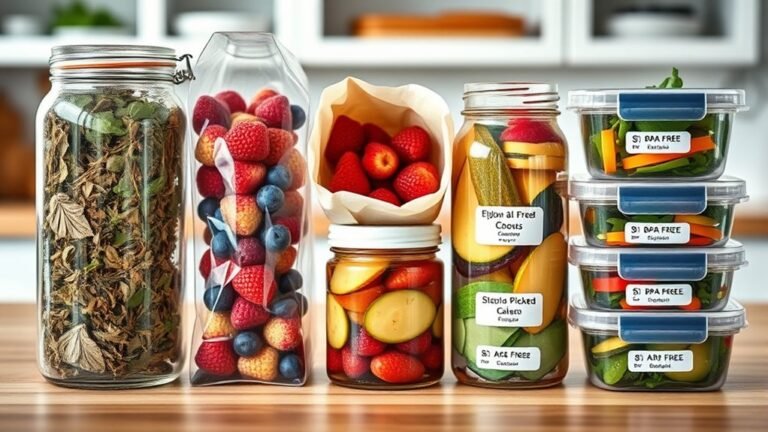
To keep your food safe, always use covered, airtight containers that block bacteria and airborne contaminants. This prevents cross-contamination, especially between raw and cooked items.
Make sure to seal containers tightly right after use to stop harmful microbes from multiplying. It’s a simple step, but it really makes a difference in keeping your food fresh and safe!
Benefits of Airtight Containers
Airtight containers play a critical role in keeping your food safe and fresh by preventing bacteria and contaminants from entering. They help maintain moisture, block odors, and extend the quality and shelf life of your food.
Using them wisely minimizes risks, especially with high-risk items like cooked meat, dairy, and salads. Here’s why you should rely on airtight containers:
- Prevent contamination by sealing food away from other fridge items.
- Protect against moisture loss and fridge/freezer odor transfer.
- Keep raw foods sealed on the bottom shelf to avoid leaks contaminating cooked foods.
- Ensure food left too long in the danger zone (5–60 °C) is discarded before storing.
Preventing Cross-Contamination Risks
Since raw and cooked foods often share fridge space, you need to use covered, airtight containers to make sure cross-contamination doesn’t occur. Store raw items like meat on the bottom shelf in sealed containers to stop drips from contaminating ready-to-eat foods.
Keep high-risk foods such as dairy, eggs, and prepared salads tightly covered, so airborne bacteria and utensil contact don’t spread germs. Use tight-fitting lids, foil, or plastic film on cooked leftovers to avoid contact with raw food residues.
Don’t rely on half-closed jars or cans after opening; transfer contents to clean, covered containers to maintain a protective barrier. Always separate containers for raw and cooked foods to ensure bacteria don’t transfer through shared plates, racks, or fridge surfaces. It’s all about keeping your food safe.
Cool Cooked Food Quickly Before Refrigerating
To cool cooked food quickly, transfer it into shallow containers or divide it into smaller portions so it cools faster. Don’t put hot food straight into the fridge; wait until the steam stops rising to avoid raising the fridge’s temperature.
This helps keep your food safe and your refrigerator running efficiently. Just a little patience goes a long way!
Use Shallow Containers
When you place cooked food in shallow containers, it cools down much faster, helping you get it to a safe refrigerator temperature quickly. Using shallow trays or small portions instead of deep pots spreads the heat out, speeding up the cooling process.
This prevents food from staying too long in the danger zone between 5°C and 60°C, where bacteria thrive. Make sure to wait until steam stops rising before refrigerating, then cover the containers once cooled.
Remember to:
- Use shallow containers for faster heat release
- Divide large batches into smaller portions
- Avoid placing hot food directly in the fridge
- Store food at 5°C or below after cooling
Following these steps keeps your food safer and fresher longer. It’s a simple way to protect yourself and your family from foodborne illness.
Avoid Hot Refrigerator Entry
Once your cooked food has cooled enough in shallow containers and steam stops rising, you should avoid putting it into the refrigerator while it’s still hot. Placing hot food directly into the fridge raises its temperature, creating an environment where bacteria can thrive.
To cool food quickly and safely, divide it into smaller portions or shallow dishes. This helps it drop below 5 °C faster.
Remember, the temperature danger zone is between 5–60 °C. Food left there over four hours becomes risky and should be discarded.
After cooling, cover your food and store it properly in the fridge at 5 °C or below.
Thaw Food Safely and Cook It Promptly
Although thawing food might seem simple, doing it safely is essential to prevent harmful bacteria growth. Always thaw frozen food in the fridge, keeping it at 5 °C or below to stay safe.
Once thawed, cook the food promptly—don’t leave it sitting out or refreeze it. It’s better to be safe than sorry when it comes to food safety.
Cook thawed food immediately—never leave it out or refreeze to ensure safety.
Remember these key points:
- Avoid leaving food in the danger zone (5–60 °C) for more than 4 hours.
- If you use microwave defrost, cook the food immediately afterward.
- Keep thawed high-risk foods like meat, dairy, and eggs refrigerated.
- Cool cooked leftovers quickly in small portions before refrigerating.
Avoid Refreezing Thawed Food to Reduce Risk
Thawing food safely is just the start of keeping your meals safe. Once food is thawed, avoid refreezing it because bacteria can multiply during thawing. Refreezing won’t reliably make it safe again.
If you thaw food in the fridge, keep it refrigerated and use it within a safe timeframe instead of freezing it again. When you microwave-thaw food, cook it immediately rather than refreezing.
Leaving defrosted food out at room temperature increases the risk since bacteria grow quickly between 5 °C and 60 °C. To minimize risk, always store thawed food in covered containers and plan to use it promptly.
This way, you reduce the chance of foodborne illness and keep your meals both tasty and safe.
Store Opened Packages Properly to Prevent Spoilage
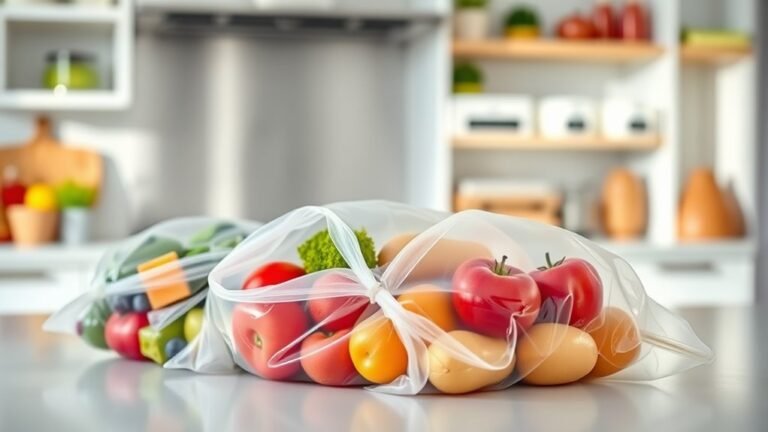
When you open a package, transfer leftovers into a clean, sealed container to keep food fresh longer. Always use suitable covered containers to slow spoilage and prevent contamination.
Don’t forget to check the use-by dates regularly, since opened foods can spoil faster than unopened ones. It’s a simple step, but it really helps keep your food safe and tasty.
Use Suitable Covered Containers
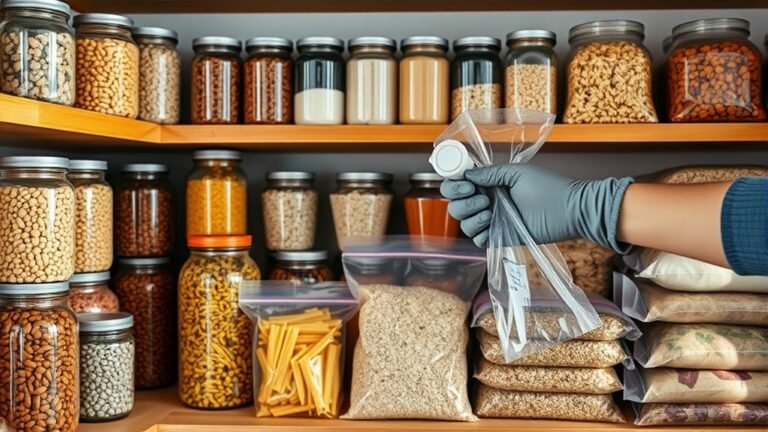
To keep your food fresh and safe, always store high-risk items in suitable covered containers that limit bacterial contact and prevent cross-contamination. Once you open packages, cans, or jars, transfer their contents to clean, tightly sealed containers to reduce spoilage.
Avoid loosely covered or uncovered foods in the fridge to maintain freshness and safety.
Remember these key points:
- Store raw foods in sealed containers on the fridge’s bottom shelf, away from cooked foods.
- Use tight-fitting lids, foil, or plastic wrap to cover all stored foods securely.
Treat opened items as higher risk and never leave them exposed. Also, discard foods left in the 5–60 °C temperature danger zone for over 4 hours instead of storing them.
Following these steps really helps you keep your food safe and extend its shelf life.
Watch Use-By Dates
Although food may look and smell fine, harmful bacteria can still be present, so you must always check the use-by dates on high-risk items like meat, dairy, eggs, and ready-to-eat salads. Never consume these foods past their use-by date, even if refrigerated, as safety can’t be guaranteed.
After opening, store packages properly in covered containers and keep them at 5 °C or below to slow bacterial growth. If high-risk foods sit in the temperature danger zone (5 °C to 60 °C) for over four hours, discard them immediately.
Once you bring groceries home, refrigerate or freeze perishable items quickly to maintain freshness and safety. Watching use-by dates closely helps you avoid spoilage and foodborne illnesses, ensuring you only eat safe, fresh products.
Discard High-Risk Foods Left Too Long in Unsafe Temperatures
Handling high-risk foods like raw or cooked meat, dairy, eggs, and prepared salads carefully is crucial to avoid food poisoning. These foods become unsafe if left between 5°C and 60°C, which is called the temperature danger zone, for too long.
If high-risk foods sit in this range for over 4 hours, you must discard them immediately. Don’t try to refrigerate them afterward to save them—that only increases the risk.
To keep food safe, store high-risk foods at 5°C or below, or above 60°C. Using a fridge thermometer is a good idea to make sure the temperature is just right.
Never keep high-risk foods in the danger zone for more than 4 hours. And always discard any high-risk foods that have been left too long at unsafe temperatures.
Following these tips protects you and your family from foodborne illness. It’s a simple way to stay safe and enjoy your meals without worry.
Frequently Asked Questions
Which Methods of Food Storage Are Correct?
You store raw foods below cooked ones in sealed containers, keep your fridge at 5°C or below, cool cooked food before refrigerating, discard high-risk foods left over 4 hours in the danger zone, and never refreeze thawed food.
It’s all about keeping things safe and fresh. Just remember to handle food with care to avoid any risks.
What Are Some Tips for Storing Food Effectively?
You might think storing food anywhere’s fine, but it’s not. Keep your fridge below 5°C, separate raw from cooked, cool cooked food before refrigerating, and freeze or thaw carefully to avoid bacteria and preserve freshness effectively.
It really makes a difference when you follow these simple steps. Trust me, your food will last longer and stay safer!
What Are Five Methods of Food Storage?
You can store food by refrigerating, freezing, or hot holding. Thawing safely in the fridge or microwave is also important.
Using proper sealed containers helps keep your food fresh. These methods keep your food safe and free from contamination effectively.
It’s all about making sure your food stays good to eat and doesn’t spoil. Simple steps like these go a long way!
What Two Foods Never Expire?
You’ll find that sealed canned foods and dried sugar or salt never truly expire. They resist spoilage well, so keep them sealed and dry.
And you’ll have reliable staples that last indefinitely in your pantry. It’s pretty handy to know!
Conclusion
Remember, nearly 48 million people get sick from foodborne illnesses each year in the U.S. alone. That’s why storing food correctly is essential.
By keeping your fridge at 40°F or below and using airtight containers, you’re doing a great job protecting yourself and your loved ones. Oh, and never refreeze thawed food—that’s a big no-no!
It might seem simple, but these small steps make a huge difference. Proper food storage helps prevent contamination and keeps your meals safe and healthy every day. So, whether you’re packing leftovers or fresh groceries, following these tips ensures your food stays fresh longer and reduces the risk of foodborne illness. Remember, good food storage isn’t just about convenience—it’s about keeping everyone in your home safe and well.