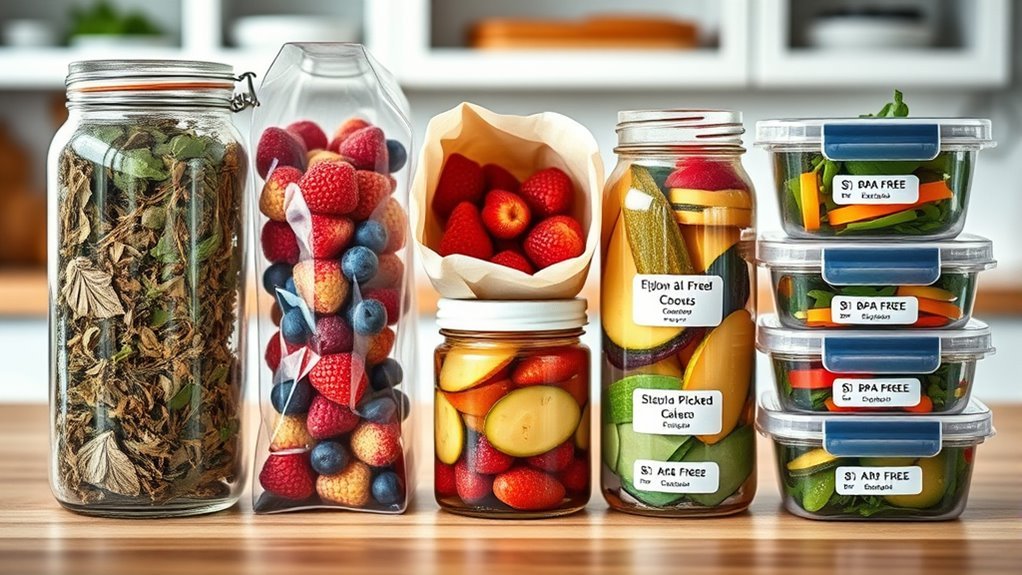
5 Correct Food Storage Methods Which You Should Know
To store food correctly and keep it fresh, it’s important to maintain your fridge temperature below 40°F. Always place raw meats on the lowest shelf to avoid any drips contaminating other foods. This simple step helps prevent foodborne illnesses and keeps everything safer.
When freezing items, make sure to set your freezer at 0°F. Use airtight packaging to lock in freshness and label each package with the date. That way, you can easily track how long something has been stored and avoid wasting food.
Try using the FIFO method—First In, First Out—by putting newer items behind older ones. This helps reduce waste and keeps your food rotating properly.
For non-refrigerated goods, find a cool, dry spot away from heat and moisture. Mastering these basics sets a solid foundation for safer, longer-lasting food storage. Keep exploring these tips to perfect your food storage approach!
Key Takeaways
– Store raw meats on the lowest refrigerator shelf to prevent cross-contamination and drips onto other foods.
This simple step helps keep your other groceries safe and fresh. It’s an easy way to avoid any nasty surprises in your meals.
– Use airtight, labeled containers and apply FIFO to organize and reduce food waste effectively.
Labeling and the “First In, First Out” method really make a difference. You’ll always know what to use first, which means less food tossed out.
– Maintain refrigerator temperature at or below 40°F (4°C) and freezer at or below 0°F (-18°C) for food safety.
Keeping these temperatures steady is key to stopping bacteria growth. Your food stays fresher, longer, and safer to eat.
– Keep non-refrigerated items in cool, dry, dark places with stable temperatures away from moisture and chemicals.
Think pantry or cupboard spots that don’t get too hot or damp. It’s the best way to keep things like grains and spices in top shape.
– Thaw frozen foods safely in the refrigerator, cold water, or microwave, avoiding room temperature thawing.
Thawing at room temperature is risky and can cause bacteria to multiply. Using safe methods keeps your meals healthy and tasty.
Proper Refrigerator Organization
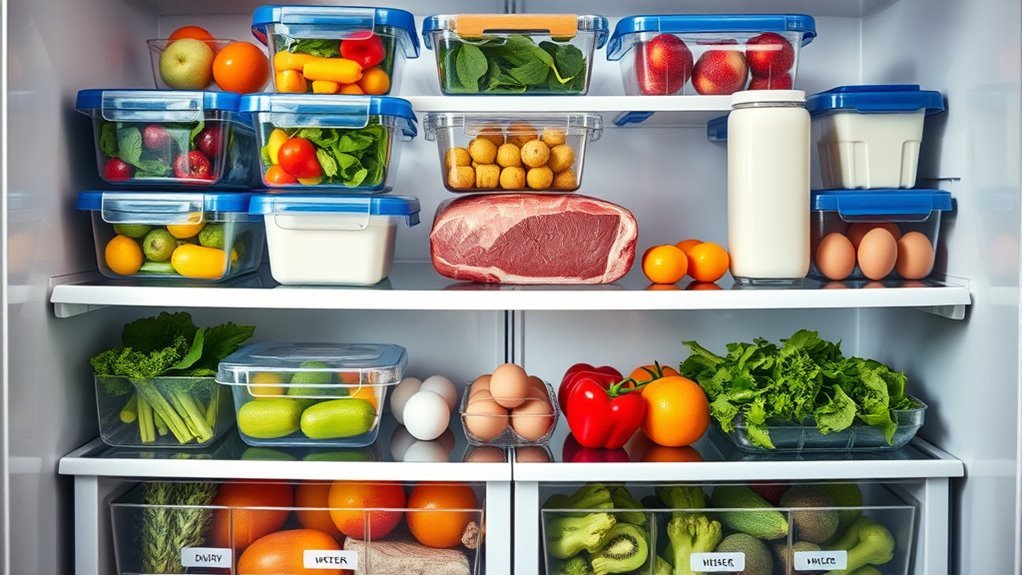
When you organize your refrigerator properly, you reduce the risk of cross-contamination by storing raw meats on the lowest shelves and keeping cooked or ready-to-eat foods above them. This refrigerator organization is essential for safe food storage.
Use clear, labeled containers to easily identify contents and apply the FIFO method to use older items first, minimizing waste. Keep refrigerator temperatures at or below 40°F (4°C) and check regularly with a thermometer to guarantee proper temperature.
Arrange items to allow air circulation, which prevents cold spots and maintains consistent cooling. By following these practices, you effectively prevent cross-contamination between raw meats and cooked foods, ensuring your refrigerator maintains a safe environment for all stored food.
Safe Freezing Techniques
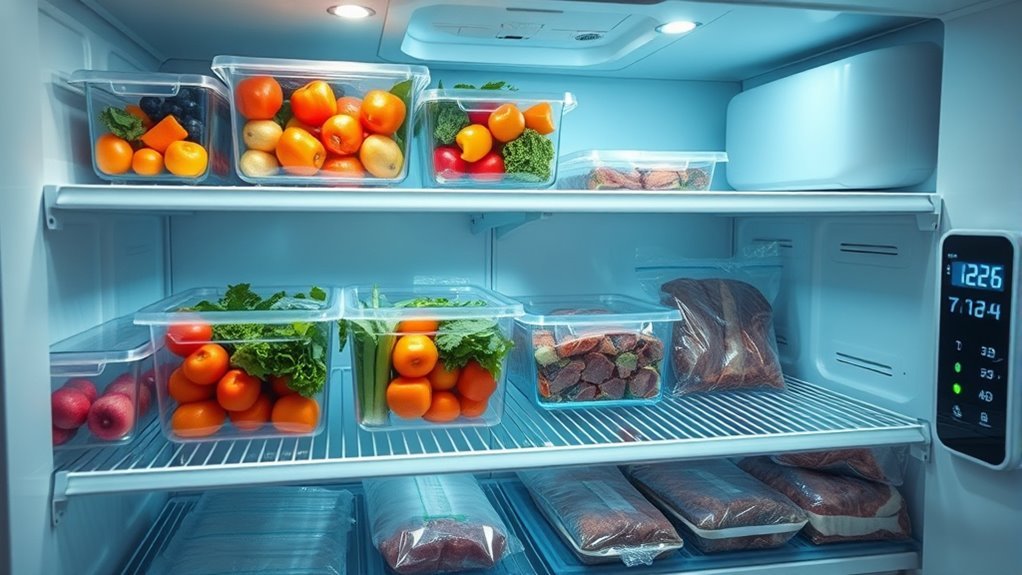
Proper refrigerator organization helps keep your fresh foods safe, but freezing plays a key role in preserving items for longer periods. To guarantee food safety, set your freezer temperature at or below 0°F (-18°C).
Freezing is essential for long-term food preservation; keep your freezer at or below 0°F (-18°C) for safety.
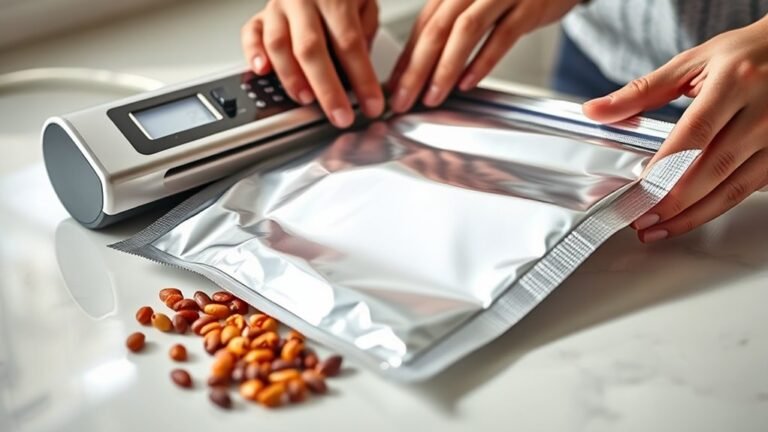
Use airtight packaging like vacuum-sealed bags or freezable containers to prevent freezer burn and maintain quality. Always label frozen foods with the date to track storage duration and use items within recommended storage time.
When thawing, choose safe thawing methods such as refrigeration, cold water, or microwave—not room temperature—to avoid bacterial growth.
- Maintain freezer temperature at or below 0°F (-18°C)
- Use airtight packaging like vacuum-sealed bags
- Label frozen foods with freezing dates for proper rotation
- Thaw safely using recommended thawing methods to ensure food safety
Handling and Storing High-Risk Foods
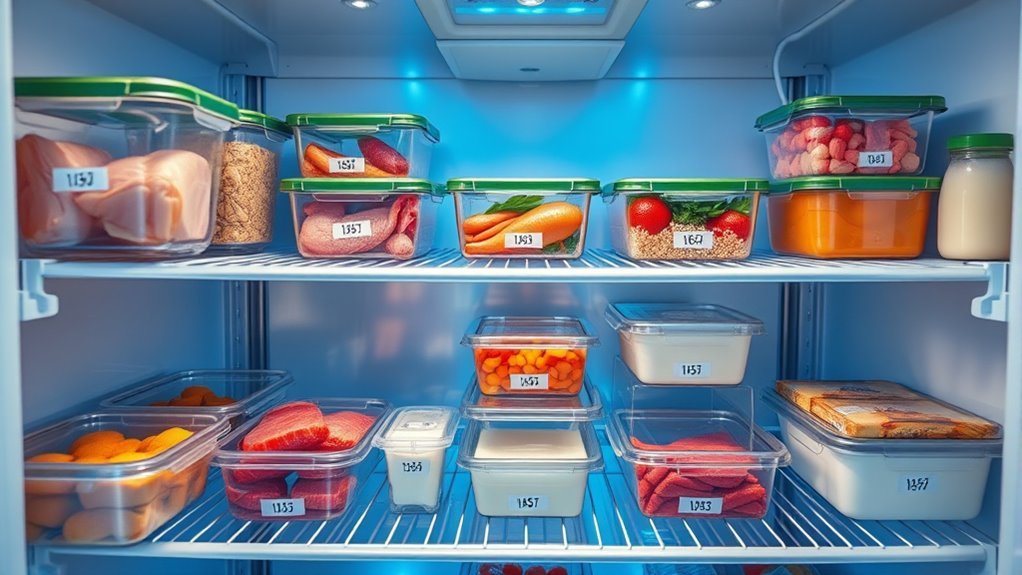
Handling and storing high-risk foods demands extra care to keep them safe and fresh. You should store raw meats on the lowest shelves in the refrigerator to prevent drips from contaminating other foods.
Keep your refrigerator temperature at or below 41°F (5°C) to slow bacteria growth. Use proper storage containers that are airtight and moisture-proof for cooked and perishable items like dairy, eggs, and seafood.
Don’t leave high-risk foods out at room temperature for more than two hours—or one hour if it’s above 90°F (32°C)—to avoid foodborne illness. If you won’t use these foods within their shelf life, freeze them promptly.
Effective Stock Rotation Practices
How can you guarantee your food inventory stays fresh and safe? Effective stock rotation is key. By using the FIFO (First In, First Out) method, you place newer items behind older ones, ensuring nothing spoils unnoticed.
Label storage containers and foods with dates to track shelf life accurately. Keep your refrigerator and pantry organized to spot expiration dates easily and reduce food spoilage risks.
To maintain proper stock rotation, follow these steps:
- Use FIFO by placing new stock behind older items.
- Label all containers with received or opened dates.
- Check expiration dates regularly and discard expired foods.
- Store items with shorter shelf life at the front for easy access.
This organized storage promotes food safety and minimizes waste in your kitchen. It really helps keep everything fresh and ready to use!
Storage Tips for Non-Refrigerated Items
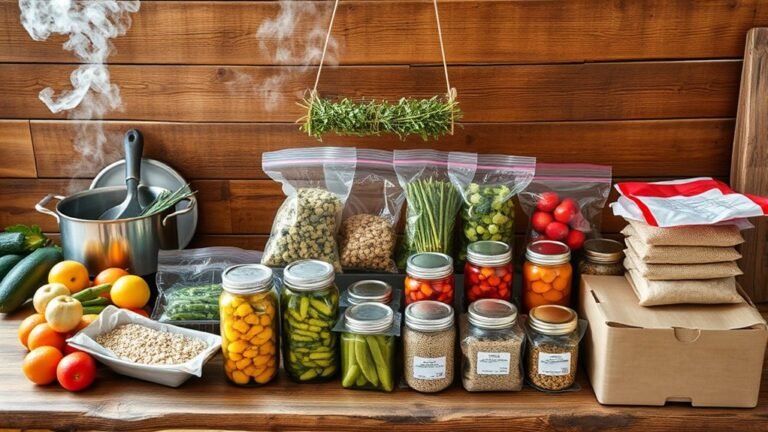
When storing non-refrigerated items, you’ll want to keep them in a cool, dry place away from heat and moisture to maintain their quality. Use airtight containers to protect dried pasta, rice, and canned goods from moisture and pest contamination.
Choose a storage area that’s dark and well-ventilated with stable temperature control, ideally between 60-70°F. This helps extend shelf life and preserve food quality.
Avoid placing foods near household chemicals to ensure food safety and prevent accidental contamination. It’s also a good idea to regularly inspect cans for swelling, leaks, rust, or dents.
If you find any damaged cans, discard or return them to avoid pest contamination and food spoilage. Following these storage tips helps keep your food fresh, supports pest control, and makes sure it’s safe to eat.
Frequently Asked Questions
What Are the Best Methods for Food Storage?
You should store food in airtight containers, keep perishables cold and raw meat below. Wrap items properly before freezing, label everything clearly, and organize storage areas cleanly using FIFO to maintain freshness and prevent spoilage.
It might sound like a lot, but once you get the hang of it, it’s pretty straightforward. Plus, it really helps keep your food fresh and safe to eat!
What Two Foods Never Expire?
You might be surprised to learn honey has been found edible after thousands of years! Honey and pure maple syrup never expire because their natural properties prevent spoilage,
so you can store them safely without worry. It’s pretty amazing when you think about it!
What Is the 2-2-2 Rule for Food Storage?
The 2-2-2 rule means you should eat perishable foods within 2 hours, use opened items within 2 days, and store frozen foods for no more than 2 months.
It keeps your food safer and fresher.
Pretty simple, right? Following this rule helps you avoid food spoilage and waste.
What Are 5 Important Food Storage Tips?
Keep perishables cold, but never freeze fresh herbs. Store raw meats low, but keep fruits high.
Use airtight containers, yet label everything clearly. Rotate stock, yet avoid leaving foods out over two hours.
You’ll prevent spoilage and illness. It’s all about keeping things fresh and safe!
Conclusion
By mastering these five food storage methods, you’re not just preserving meals—you’re safeguarding memories and health. Think of your fridge and pantry as a garden; with the right care, each item flourishes, staying fresh and safe.
When you organize, freeze, and store wisely, you’re weaving a safety net that catches nutrients and flavor before they slip away. So, treat your food with respect, and it’ll reward you with nourishment and peace of mind.
Proper food storage methods are essential for maintaining the quality and safety of your groceries. By following these simple steps, you reduce waste, save money, and keep your family healthy. Remember, a well-organized fridge and pantry mean fresher ingredients and better-tasting meals every day.