Top 3 Plastics Which Are Safe for Food Storage in 2026
You’ll want to choose polypropylene (PP), HDPE, and PET for safe food storage in 2026. These top 3 plastics are BPA-free, FDA-approved, and perfect for keeping your food safe.
They handle heat well without warping or chemical leaching, which makes them durable and reliable for everyday use.
PP is microwave safe, so you can heat your meals without worry.
HDPE resists impact, making it tough enough for rough handling.
PET is ideal for single-use packaging, keeping your food fresh and secure.
It’s best to avoid plastics like PVC and polycarbonate to keep harmful chemicals away from your food.
Keep exploring to discover how heat resistance and durability play key roles in food safety.
Choosing the right plastic really makes a difference!
Key Takeaways
- Polypropylene (PP) is BPA-free, microwave safe, and resists chemical migration, making it ideal for food storage in 2026.
- High-Density Polyethylene (HDPE) is FDA-approved, impact-resistant, and widely trusted for safe and durable food containers.
- Polyethylene Terephthalate (PET) is suitable for single-use beverage bottles and food packaging with food-safe properties.
- Food-safe plastics prevent chemical leaching, maintain freshness, and ensure long-term safety during repeated use.
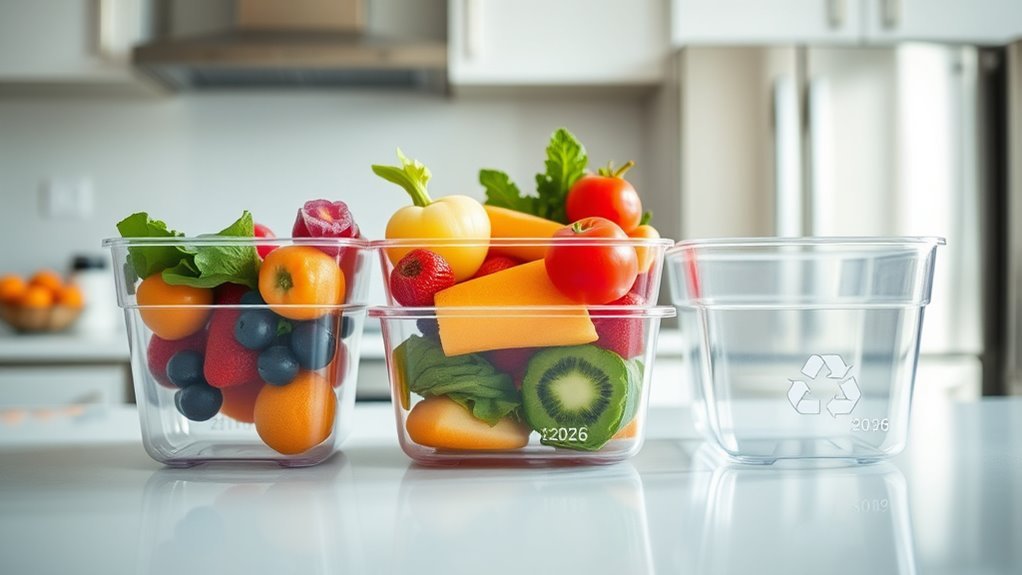
- Recycling codes help identify safe plastics, with codes 5 (PP), 2 (HDPE), and 1 (PET) being top choices for food storage.
Why Polypropylene, HDPE, and PET Are the Best Picks for Food Storage
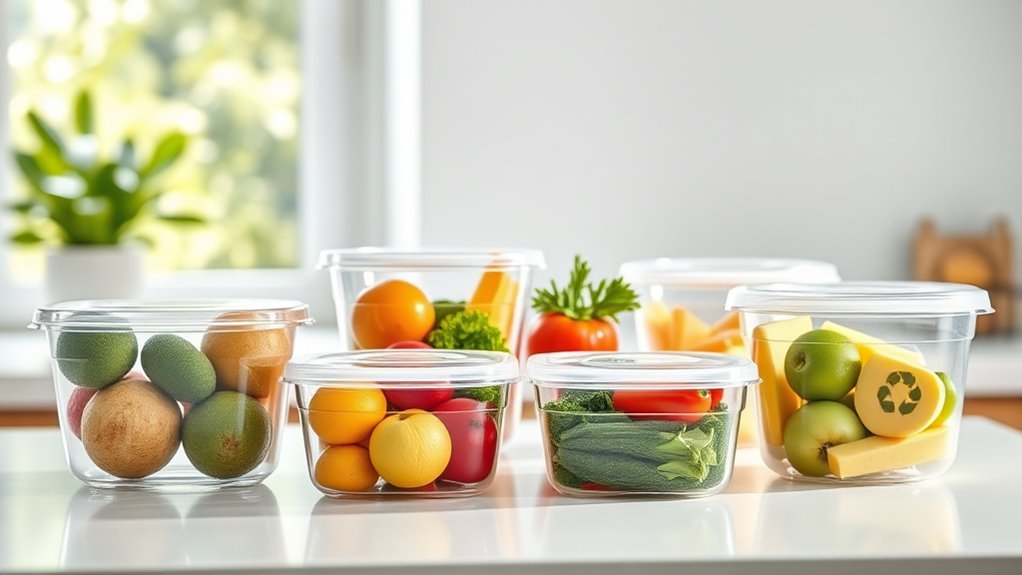
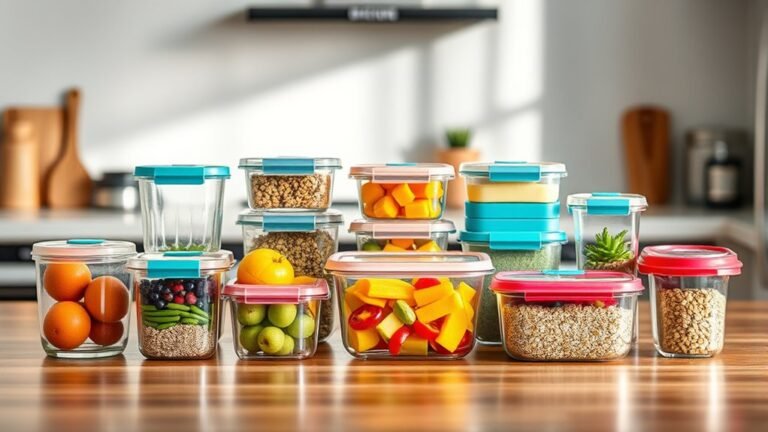
Although many plastics exist, polypropylene (PP), high-density polyethylene (HDPE), and polyethylene terephthalate (PET) stand out as the safest choices for food storage in 2026. You’ll appreciate polypropylene because it’s BPA-free, microwave safe, and resists chemical migration, ensuring your food stays uncontaminated.
HDPE is another excellent option, FDA-approved and widely trusted for food contact. Its impact resistance and chemical resistance make it ideal for everything from milk jugs to storage containers.
PET is perfect for single-use beverage bottles and food packaging, though you should avoid reheating or reusing it to prevent chemical migration. These plastics offer strong impact resistance and maintain food safety by minimizing toxin leaching, unlike plastics with BPA or phthalates.
When you choose polypropylene, HDPE, or PET, you’re selecting materials designed to keep your food safe, fresh, and free from harmful chemicals. Their recycling codes also help you identify food-safe plastics easily, making them smart and responsible choices for food storage.
How Heat Resistance and Durability Make Food-Grade Plastics Safe
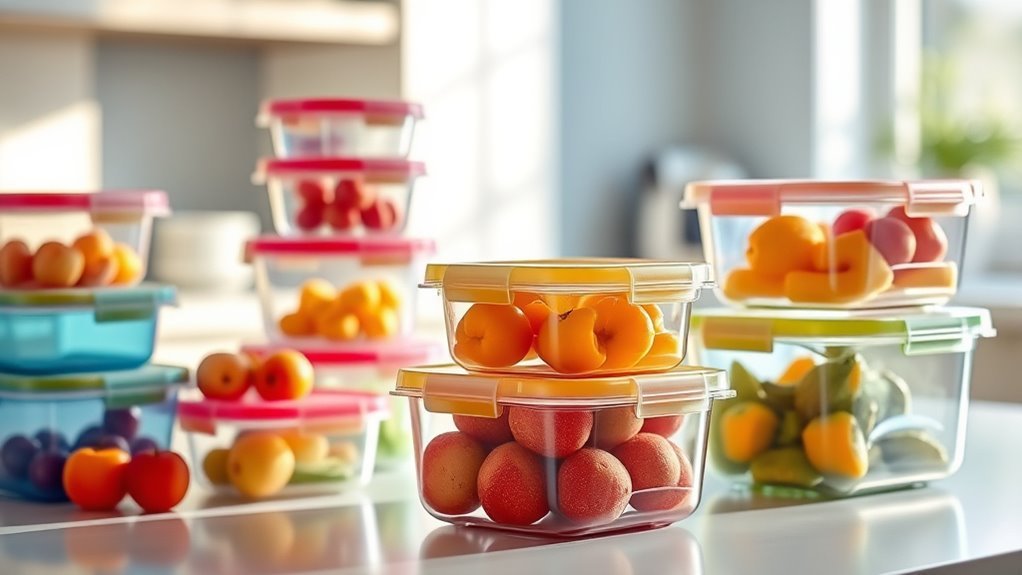
When you rely on food-grade plastics, their ability to resist heat and withstand daily wear plays a crucial role in keeping your food safe. Heat resistance ensures plastics can handle high temperatures without warping or releasing harmful chemicals.
For instance, polypropylene offers excellent temperature tolerance, making it microwave safe and ideal for hot foods. Durability in these plastics means they resist impact and thermal shock, so they won’t crack or deform after repeated use.
Reinforced plastics and features like silicone gaskets boost impact resistance and prevent leaks, maintaining the container’s integrity over time. This durability also helps prevent chemical leaching, which is a key factor for long-term safety.
By choosing food-grade plastics designed with proper heat resistance and structural strength, you guarantee your food stays protected from contamination and spoilage. This holds true even under frequent heating or cooling cycles.
This combination of heat resistance and durability is essential for safe, reliable food storage. It’s what keeps your food fresh and your containers lasting longer.
Plastics You Should Never Use for Food Storage
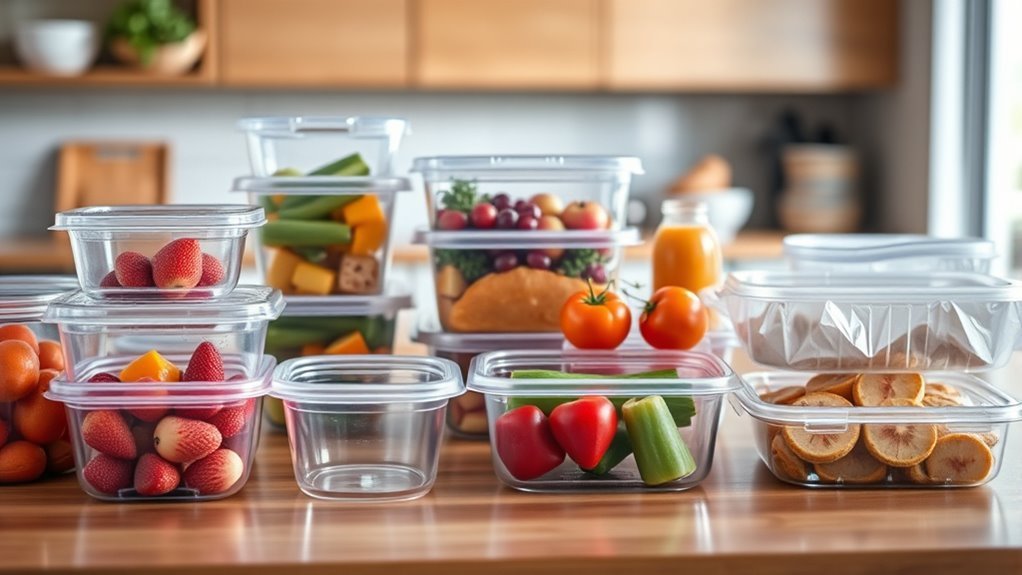
Since the safety of your food depends largely on the materials it contacts, you should avoid certain plastics that can leach harmful chemicals. Plastics with recycling codes 3 (PVC) and 7, which includes polycarbonate plastics, pose significant risks.
Polycarbonate often contains BPA, a chemical linked to endocrine disruption and other health issues. When these plastics come into contact with food, especially under heat, they can release BPA and other harmful chemicals through leaching.
You should also steer clear of polystyrene (recycling code 6), commonly used in foam containers, as it can leach styrene, a possible carcinogen. Additionally, single-use plastics like some bottles (recycling code 1) aren’t designed for reuse and can break down into microplastics over time, contaminating your food.
Avoid plastics with dyes or additives that increase the risk of chemical leaching. By knowing which plastics to skip, you protect your health and prevent safer food storage.
Frequently Asked Questions
What Is the Safest Plastic to Store Food In?
The safest plastic to store food in is polypropylene (PP), marked with recycling code 5. It won’t leach harmful chemicals, especially if you avoid heating it and use newer containers that are in good condition.
Just make sure not to heat food in these containers too much. Also, using ones that are still in good shape helps keep things safe. It’s a simple way to protect your food and health!
Which Plastic Is the Least Toxic?
If plastics were a garden, polypropylene would be your safest bloom—least toxic, BPA-free, and heat-resistant.
You’ll want to choose polypropylene or certain polyethylene types to keep your food storage free from harmful chemical whispers.
These options help you avoid unwanted chemicals sneaking into your meals. It’s like giving your food a safer, cleaner home.
What Are the Best Non-Toxic Food Storage Containers?
You’ll want to choose borosilicate glass, stainless steel, or platinum-cured silicone containers. They’re durable, non-toxic, and won’t leach harmful chemicals.
This means you can keep your food safe and fresh without worrying about toxins or plastic contamination. Pretty great, right?
What Plastics Should I Avoid for Food?
You should avoid plastics with recycling codes 3, 6, and 7 because they can leach harmful chemicals like BPA and microplastics into your food, especially when heated or reused.
Always check labels carefully to stay safe. It’s a simple step, but it can make a big difference!
Conclusion
When it comes to food storage, you want plastics like Polypropylene, HDPE, and PET to be your trusty shields, protecting your food from harm. Their heat resistance and durability mean you’re keeping your meals safe without worry.
Avoid plastics that aren’t food-grade—they can be like ticking time bombs for your health. Choosing the right plastic is like planting a strong foundation for your kitchen’s safety and freshness every day.
In 2026, prioritizing food-safe plastics is more important than ever. Polypropylene, HDPE, and PET stand out as the top choices because they keep your food fresh, reduce contamination risks, and handle temperature changes well. Using these plastics for food storage means you’re investing in your health and the longevity of your meals. So, when you’re sorting through containers, remember to pick plastics that are safe and reliable to ensure your food stays protected and fresh every time.