How to Calculate How Much Food Storage You Need for 1 Year
To calculate your yearly food storage, start with your daily calorie needs—usually about 2,000 to 2,500 calories per person. This is the foundation for understanding how much food you’ll need to store for emergencies or long-term preparedness.
Multiply that daily calorie amount by 365 days, then factor in your family size to get the total calories required for the year. This gives you a clear target for how much food to have on hand.
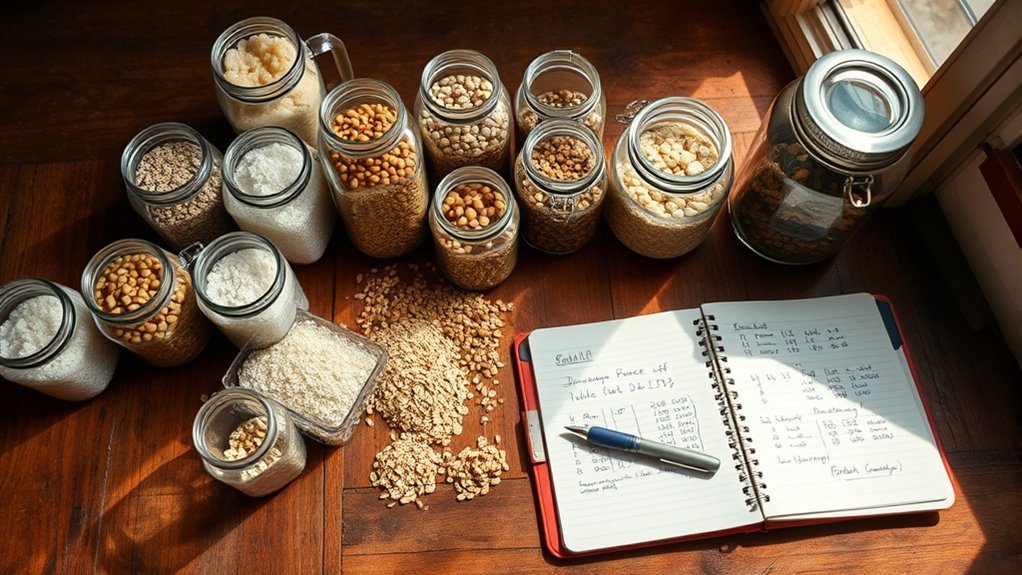
Next, break those calories down by food groups like grains, legumes, and sugars. For example, plan for about 400 pounds of grains and 60 pounds each of legumes and sugar per adult annually.
Don’t forget to include enough water storage and account for any special dietary needs your family might have.
Knowing these basics ensures you’re well-prepared. Plus, understanding proper storage techniques will help you maximize the shelf life and quality of your food supplies.
Key Takeaways
– Estimate daily calorie needs per person, typically 2,000 for women and 2,500 for men, then multiply by 365 days.
This gives you a good baseline for how much energy each person needs in a year.
– Calculate annual food amounts using benchmarks: about 400 lbs of grains, 60 lbs of legumes, and 60 lbs of sugar per adult per year.
These numbers help you figure out how much of each food group to store.
– Multiply per-person food quantities by family size to determine total storage.
Don’t forget to adjust for specific dietary needs and preferences, so everyone’s happy and healthy.
– Include diverse food groups and preservation methods like freeze-drying or canning.
That way, you get balanced nutrition and foods that last a long time.
– Plan water storage at about 183 gallons per person annually.
And remember to rotate your supplies regularly to keep everything fresh and ready to use.
Calculating Your Family’s Annual Food Requirements
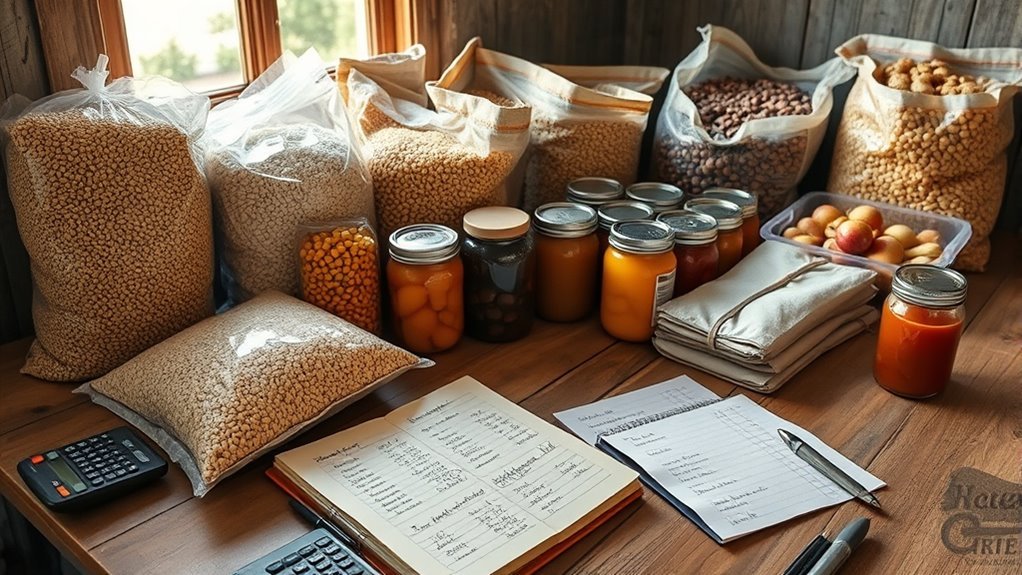
When planning your family’s annual food storage, you’ll want to start by calculating how much each person needs daily and then scale that up for the year. Consider the average calories needed—about 2,000 for women and 2,500 for men—to maintain energy during emergencies.
Use these figures alongside your family size to determine annual needs. Basic storage guidelines recommend around 400 pounds of grains, 60 pounds of legumes, and 60 pounds of sugar per adult.
For example, a family of four should plan for approximately 1,600 pounds of grain storage and 240 pounds each of legumes and sugar. Don’t forget water requirements—about 183 gallons per person yearly.
Using a food storage calculator helps tailor these calculations precisely, enhancing your emergency preparedness with accurate food storage. It really makes the whole process easier and more accurate.
Essential Factors for Effective Food Storage Planning
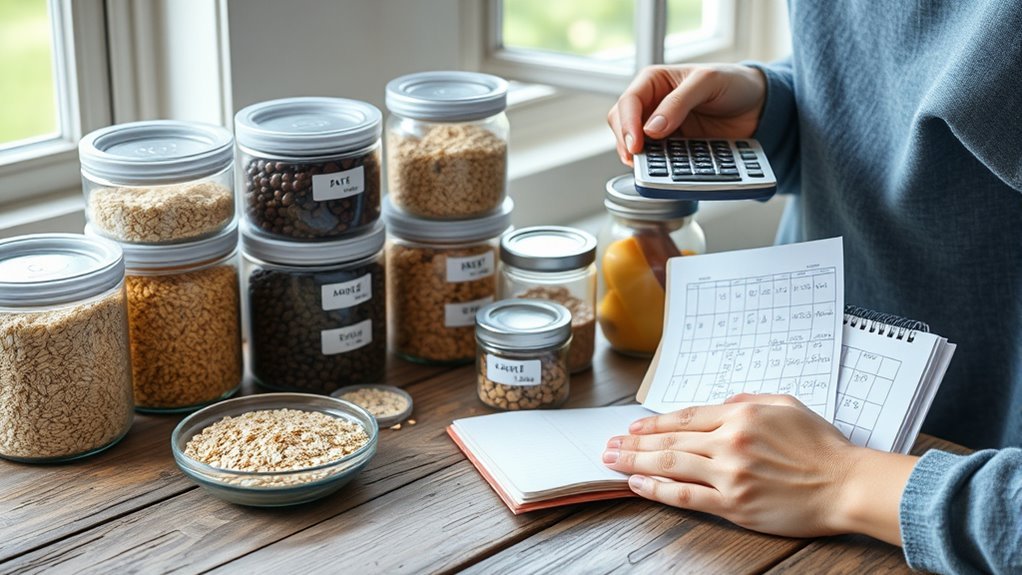
Although calculating your family’s basic food needs is crucial, effective food storage planning requires considering several additional factors to guarantee your supplies truly sustain you. You must factor in family size and specific caloric needs to tailor your stock accurately.
Focus on diverse food groups—grains, legumes, dairy, fats, sugars, fruits, and vegetables—to meet nutritional requirements. Choose preservation methods like freeze-drying, canning, or dehydrating to extend shelf life and suit your storage duration.
Utilize proper storage tools to maintain freshness and prevent spoilage. Regular food rotation ensures you consume older supplies first, maintaining quality.
Finally, account for individual dietary preferences and allergies to enhance emergency preparedness. Balancing these factors ensures your year-long food storage plan is both practical and reliable.
Frequently Asked Questions
How Much Food Storage for 1 Year?
You’ll need around 500 pounds of food, including grains, meats, dairy, and staples. Plus, about 183 gallons of water.
Adjust based on your lifestyle, family size, and dietary needs. And make sure to store food properly to keep it fresh.
What Is the 2-2-2 Rule for Food Storage?
The 2-2-2 rule means you store two weeks’ worth of food, two gallons of water per person, and essential supplies for two weeks.
It helps you prepare a manageable emergency stash without overwhelming your space.
It’s a simple way to make sure you’re ready without going overboard. Just enough to keep you comfortable and safe for a couple of weeks.
What Food Items Can Be Stored for 1 Year?
Think of your pantry as a time capsule: you can stash canned meats, soups, fruits, dried nuts, powdered milk, and seasonings.
These items hold their flavor and nutrition for about a year when stored cool and dry.
Pretty convenient, right? It means you can prepare ahead without worrying about stuff going bad too quickly.
How Do I Calculate How Much Storage I Need?
You’ll calculate storage by estimating each person’s monthly food and water needs, then multiply by 12.
Adjust for family size, age, and dietary needs.
Don’t forget extra for spoilage and special circumstances.
Conclusion
Now that you know how to calculate your family’s annual food needs, you’re better prepared to plan smartly. Did you know the average person needs about 2,000 to 2,500 calories daily? That means storing roughly 730,000 calories per person for the year!
By understanding these numbers, you’ll confidently build a food storage that keeps everyone well-fed and secure through any situation. Start planning today—it’s easier than you think! Having a clear idea of your food storage requirements ensures you’re never caught off guard. So, take the time to calculate your family’s needs, and begin assembling your one-year food supply now. This way, you’ll enjoy peace of mind knowing your emergency preparedness is solid.