Why Are Mylar Bags Good for Food Storage?
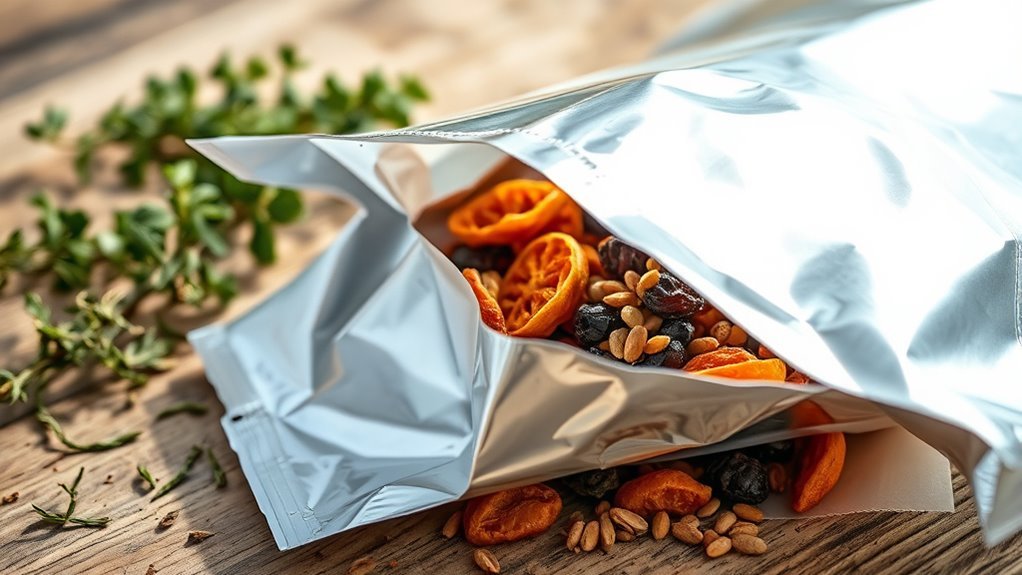
You’ll find Mylar bags great for food storage because they block oxygen, moisture, and light—key factors that spoil food. Their multi-layer design keeps nutrients and flavor intact while preventing rancidity and mold.
Pairing them with oxygen absorbers removes leftover oxygen, extending shelf life from months to decades. They’re durable, flexible, and far better than regular containers.
Keep going if you want to understand how these features work together to preserve your food longer.
Key Takeaways
- Mylar bags block oxygen, moisture, and light, which helps prevent food spoilage and nutrient loss.
- Their multi-layer laminate design gives them great durability and resistance to punctures, making them ideal for long-term storage.
- When you use oxygen absorbers inside Mylar bags, it creates a nearly oxygen-free environment.
- This environment stops mold and insect growth, keeping your food safe.
- Mylar bags can extend your food’s shelf life up to 30 years if you combine them with oxygen absorbers and seal them properly.
- They do a better job than regular containers at preserving flavor, nutrients, and freshness over time.
Key Benefits of Mylar Bags in Extending Food Shelf Life
Because Mylar bags block oxygen, moisture, and light so effectively, they keep your food fresh much longer than regular storage options. Their multi-layer laminate acts as a superior oxygen barrier and moisture barrier, slowing oxidation and spoilage.
Mylar bags’ multi-layer laminate blocks oxygen, moisture, and light, keeping food fresh far longer than typical storage.
This light protection prevents vitamin degradation and rancidity, preserving nutrients and flavor. With puncture resistance and flexibility, Mylar bags ensure durable long-term storage without tearing.
When combined with vacuum sealing and oxygen absorbers, they can extend your food shelf life up to 30 years by removing residual oxygen. Using Mylar for food preservation means you’re investing in a reliable method that considerably outperforms traditional containers.
It gives you peace of mind that your stored food stays fresh and safe over time.
How Oxygen Absorbers Enhance Food Preservation in Mylar Bags
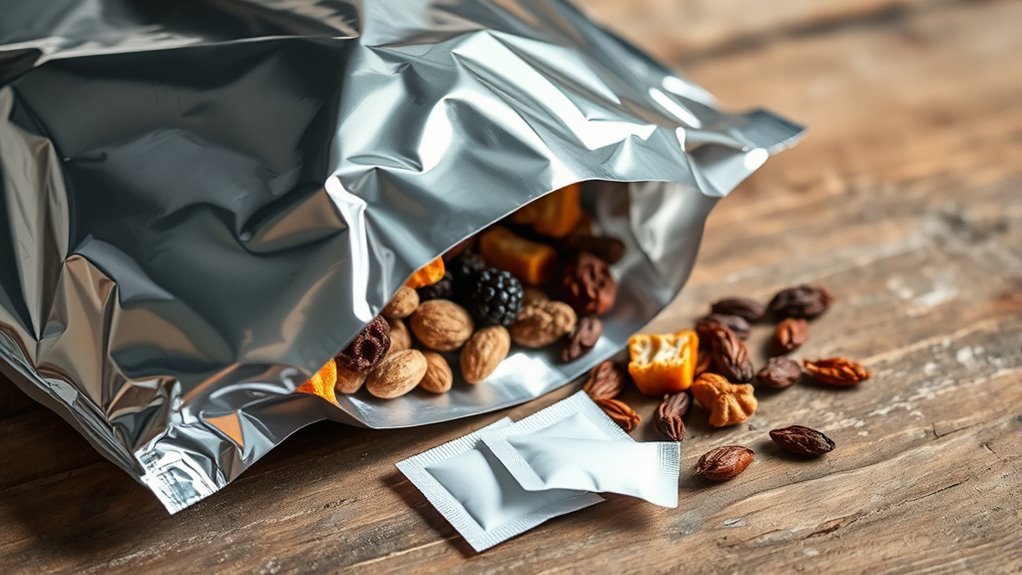
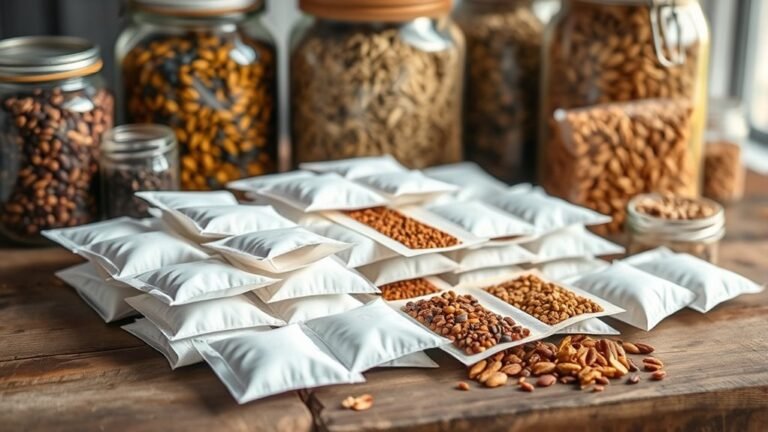
To maximize the protective qualities of Mylar bags, you’ll want to add oxygen absorbers inside. These small packets contain iron powder that rusts when exposed to moisture, removing residual oxygen from the bag.
Oxygen absorbers can lower oxygen levels inside Mylar bags to as little as 0.1%, far better than vacuum sealing alone. This oxygen removal creates a near-oxygen-free environment that prevents spoilage, mold growth, and insect hatch, enhancing food preservation.
For effective storage, match the size of oxygen absorbers to the bag’s volume. Using them with Mylar bags extends your food’s shelf life from months to decades by inhibiting oxidation and preserving nutrients.
Incorporating oxygen absorbers is a simple yet powerful way to safeguard your food during long-term storage. It’s definitely worth the extra step if you want your food to last.
Frequently Asked Questions
Is It a Good Idea to Store Food in Mylar Bags?
Yes, storing food in Mylar bags is a great idea because you’ll protect your food from moisture, oxygen, and pests.
Just add oxygen absorbers and seal them properly to keep your food fresh for years.
It’s a simple way to extend the shelf life and keep your food safe.
Plus, Mylar bags are easy to store and don’t take up much space.
What Foods Cannot Be Stored in Mylar Bags?
You shouldn’t tuck away fresh produce, soft fruits, dairy, or meats in Mylar bags—they tend to get a little too lively with moisture and spoil quickly.
Also, oily snacks like nuts need special care to avoid turning bitter.
What Is the Healthiest Container to Store Food In?
You’ll find glass containers healthiest since they don’t leach chemicals. Food-grade stainless steel is durable and safe, too.
BPA-free plastics work if labeled properly. Choose containers that protect food from contamination and nutrient loss.
Are Mylar Bags Better Than Ziploc Bags?
You’ll find Mylar bags better than Ziploc ones because they reduce oxygen transmission to as low as 0.01 cc per 100 sq. in. daily, preserving your food longer and sealing out moisture and light effectively.
Basically, they create a much tighter barrier. So, your food stays fresher for way longer compared to regular Ziploc bags. Plus, Mylar bags are great if you want to store food for the long haul.
Conclusion
Using Mylar bags for your food storage is a smart move because they can extend shelf life considerably. When combined with oxygen absorbers, they reduce oxygen levels to nearly zero, preventing spoilage and preserving nutrients.
In fact, properly stored food in Mylar bags can last up to 25 years, which is impressive compared to traditional storage methods. So, if you want to keep your food fresh and safe for the long haul, Mylar bags are definitely worth it.
Mylar bags are great for food storage because they create a strong barrier against light, moisture, and air—three things that usually cause food to go bad. Plus, they’re durable and easy to seal, making them perfect for long-term storage.
Overall, using Mylar bags with oxygen absorbers is one of the best ways to preserve your food’s quality and shelf life. If you’re serious about food storage, these bags offer peace of mind by keeping your food fresh, safe, and nutritious for years to come.