5 Steps to Build a Cold Room for Food Storage
To build a cold room for food storage, start by choosing a cool, shaded location like a basement with enough space and good ventilation. This helps maintain a consistently low temperature, which is crucial for preserving your food.
A well-ventilated area also prevents moisture buildup that can spoil your stored items.
Next, insulate walls, ceiling, and floor thoroughly with rigid foam boards and seal all gaps to keep it airtight. Proper insulation is key to maintaining the cold environment and reducing energy costs.
Don’t rush this step because a well-insulated room will keep your food fresh much longer.
Install ventilation and a reliable cooling unit, ensuring proper airflow. This combination helps regulate temperature and humidity levels inside the room.
Without good airflow, your food could spoil faster, so make sure the ventilation system is efficient.
Arrange ventilated shelving for organized storage, and maintain a steady temperature and humidity to preserve your food longer.
Shelving with ventilation allows cold air to circulate evenly around your items.
This setup makes it easier to access and keep track of your food.
Keep going to discover how to perfect each step for the best results.
You’ll learn tips on monitoring temperature and humidity and optimizing your cold room’s performance.
Building a cold room is a smart way to extend the life of your food and reduce waste.
Key Takeaways
– Choose a naturally cool, shaded location with good ventilation and enough space for shelves and easy access.
This will help keep your cold room efficient without using too much energy.
– Insulate walls, ceiling, and floor with at least 4 inches of rigid foam insulation, sealing all gaps for airtightness.
Good insulation is key to maintaining the right temperature inside.
– Install proper ventilation and use reliable temperature and humidity controls to maintain stable, optimal conditions.
These controls make sure your food stays fresh longer.
– Arrange ventilated shelving and storage containers to maximize airflow, organization, and accessibility within the cold room.
Keeping things organized also helps with air circulation.
– Maintain temperature between 37-40°F and monitor humidity regularly to prevent spoilage and extend food preservation.
Regular checks make all the difference in keeping your food safe and fresh.
Selecting the Ideal Location for Your Cold Room
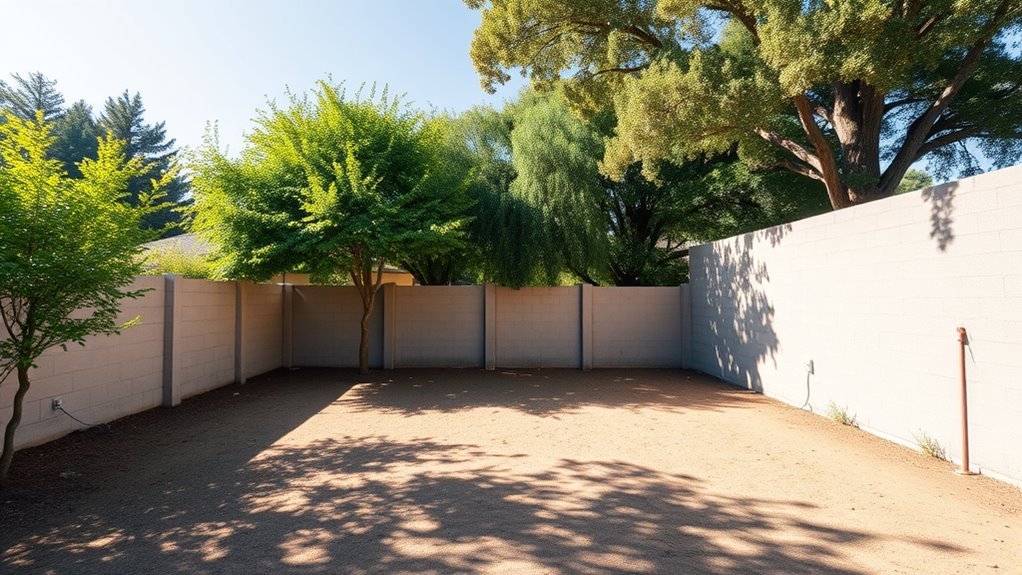
When selecting the ideal location for your cold room, choose a spot that stays naturally cool and dark, such as a basement or a shaded outdoor area. An underground space is perfect because it offers natural insulation and protection from temperature swings.
You’ll want a location that avoids direct sunlight and heat sources to simplify temperature control. Good ventilation is essential to prevent humidity buildup and maintain air circulation, which helps keep your stored food fresh.
Make sure the space is large enough for shelves and easy access, so you can manage your inventory without hassle. Also, consider how accessible the area is for monitoring and maintenance.
Picking the right location with proper insulation and ventilation sets the foundation for a reliable cold room that protects your food effectively. It really makes all the difference!
Preparing and Insulating the Space Effectively
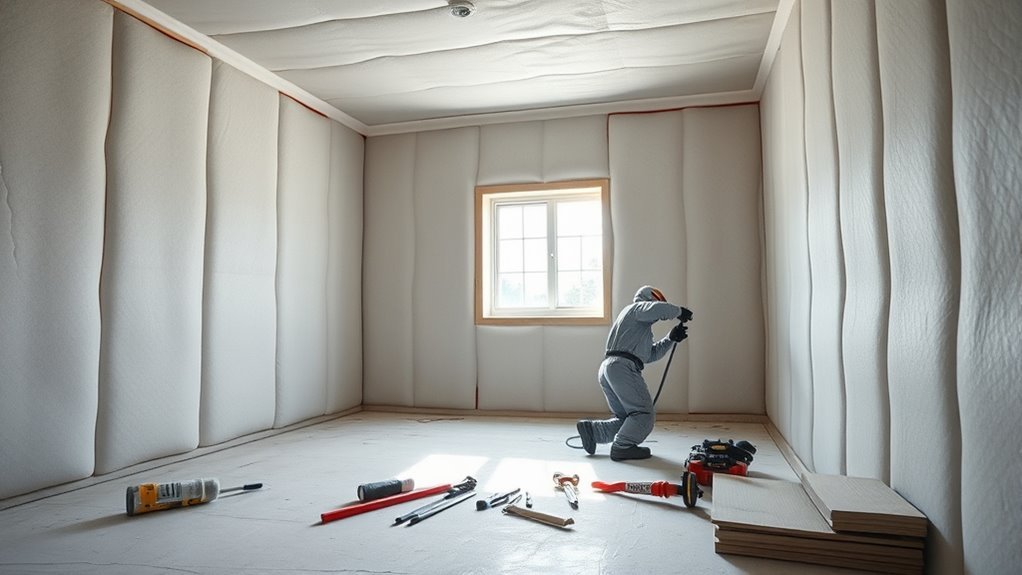
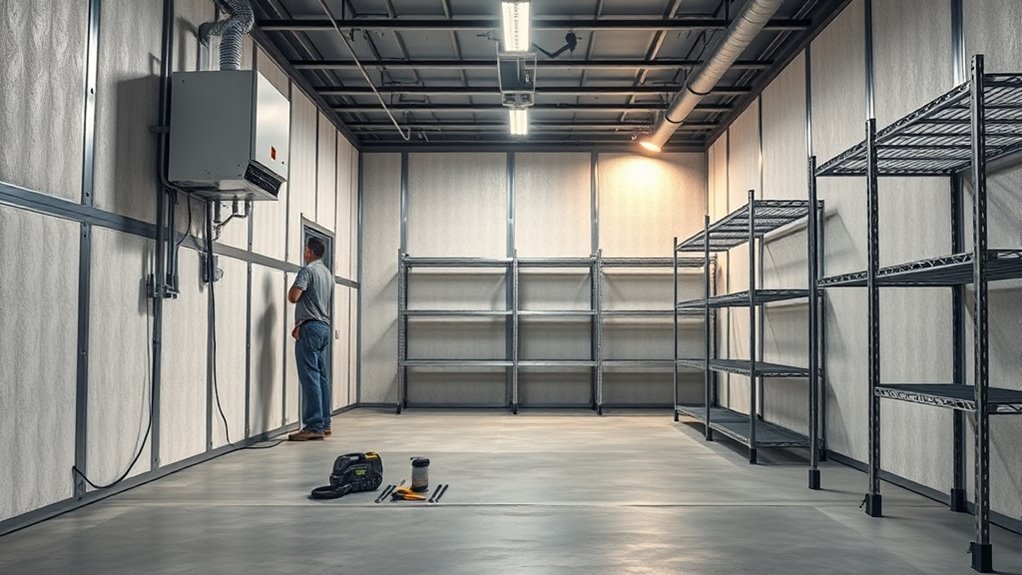
Although selecting the right location is crucial, preparing and insulating the space effectively guarantees your cold room maintains consistent temperatures. Start by installing at least 4 inches of rigid foam insulation with foil backing on all walls and the ceiling, creating a strong thermal barrier.
Use foam boards on the floor, extending beyond the walls to block radiant heat from below. It’s best to focus on insulation installation over the framing instead of between studs to avoid gaps and shrinkage.
Seal all seams, cracks, and gaps with spray foam or caulk to form an airtight seal. This prevents air leakage that could compromise temperature stability.
Finally, carefully seal around the air conditioner and access points to maintain energy efficiency. Doing so ensures your cold room stays reliably cool.
Installing Proper Ventilation and Temperature Control
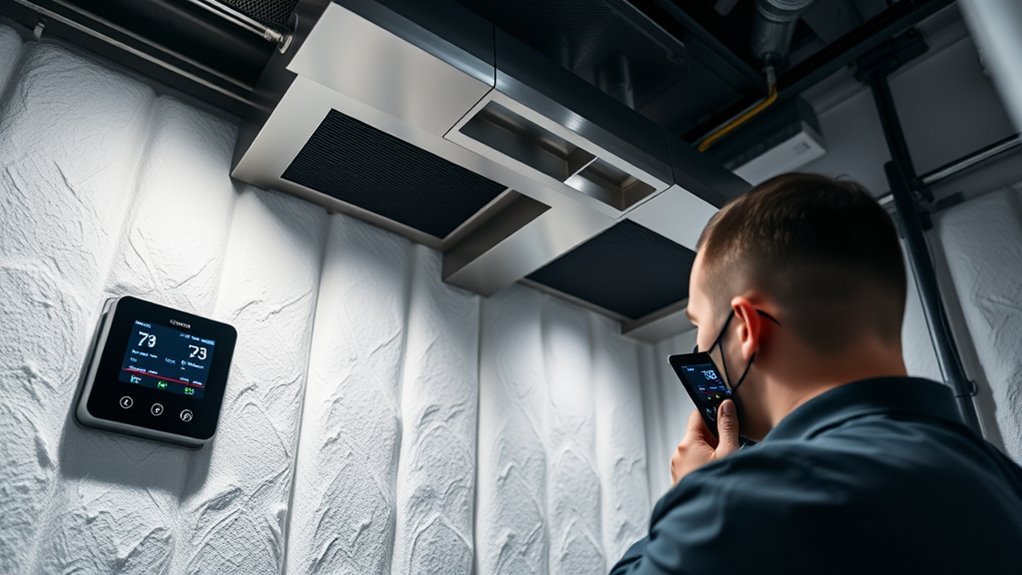
Proper ventilation and temperature control play a vital role in keeping your cold room efficient and your food fresh. To guarantee this, install vents or exhaust fans that promote airflow, allowing excess humidity and gases to escape. This reduces mold and spoilage risks.
Make certain the cooling unit has enough space around it for adequate airflow, preventing frost buildup and cold spots. You’ll also want to focus on sealing all cracks and gaps with spray foam or caulk to stop air leaks that disrupt temperature stability and waste energy.
Finally, use a reliable thermometer and hygrometer to monitor temperature and humidity levels regularly. This helps you verify that your ventilation and temperature control systems are working effectively, maintaining ideal storage conditions.
Choosing and Arranging Storage Solutions
Since selecting the right space sets the foundation for effective cold storage, choose a cool, dark, and unfinished area like a basement, root cellar, or an outdoor structure with stable temperatures around 50-60°F.
Use ventilated shelving to enhance airflow and support temperature control. This helps keep things fresh longer.
Arrange your storage solutions to maximize produce organization and accessibility—keep frequently used items near the entrance and less-used goods deeper inside. It’s a simple trick that makes a big difference.
This setup prevents spoilage and pest issues, maintaining your cold storage room’s efficiency.
| Storage Element | Purpose |
|---|---|
| Ventilated Shelving | Promotes airflow, reduces spoilage |
| Bins & Containers | Keeps produce organized |
| Entrance Area | Stores frequently accessed items |
| Inner Shelves | Holds long-term storage goods |
Maintaining Optimal Conditions for Long-Term Preservation
To keep your cold room effective for long-term food storage, you’ll want to maintain a steady temperature between 37 and 40°F (3-4°C). Proper temperature control slows bacterial growth and preserves food quality.
Use well-insulated walls, ceilings, and floors with R25 or higher insulation to reduce temperature fluctuations. Also, seal all cracks, seams, and door gaps with spray foam or caulk to enhance energy efficiency and maintain stable conditions.
Good ventilation and humidity control are essential to prevent mold, rot, and spoilage. You might want to consider installing ventilation systems and humidity sensors to keep things in check.
Regularly monitor temperature and humidity levels using reliable thermometers and sensors, adjusting settings as needed. By combining insulation, sealing, ventilation, and precise monitoring, you’ll ensure your cold room maintains ideal conditions for long-term preservation.
Frequently Asked Questions
What Are the Common Problems With Coolrooms?
You’ll face common coolroom problems like poor insulation causing temperature swings, air leaks from bad sealing, uneven cooling from wrong AC placement, moisture buildup leading to mold, and maintenance issues like clogged filters or faulty thermostats.
These issues can really mess with your coolroom’s efficiency. For example, if the insulation isn’t good, you’ll notice the temperature going up and down more than it should.
And when the sealing is off, air leaks let warm air sneak in, making it harder to keep things cold. Plus, if the AC isn’t in the right spot, some areas might be colder than others, which isn’t ideal.
Moisture buildup is another common problem—it can encourage mold growth, which you definitely want to avoid. Also, don’t forget about regular maintenance; clogged filters or a thermostat that’s acting up can cause big headaches.
Keeping an eye on these things can save you from bigger problems down the line.
How Much Does It Cost to Set up a Cold Storage Room?
You’ll typically spend between $800 and $3,600 USD to set up a DIY cold storage room, depending on size, insulation, and cooling system.
Commercial options cost more, often $6,000 or higher, plus energy expenses. It really comes down to what you need and how big your space is.
What Temperature Should a Cold Storage Room Be?
You should keep your cold storage room between 37°F and 40°F to maximize produce longevity.
Did you know that temperatures below 37°F risk freezing sensitive items, causing spoilage? So, consistent control is key for freshness.
How to Build a DIY Cold Room?
You’ll pick a cool spot, insulate thoroughly, and install an airtight door. Then, set up a reliable cooling system like a mini-split with a CoolBot.
Make sure to seal all gaps to keep temperatures steady and energy efficient. This way, your cold room works well without wasting power.
Conclusion
By following these steps, you’ll craft a cold room that’s a fortress of freshness, where your food stays crisp as morning dew. Think of it as planting a seed in a garden of preservation—each layer of insulation and every cooled breath of air nurturing your harvest.
With care and attention, your cold room won’t just store food; it’ll hold the promise of flavor and life, ready whenever you need it. Building a cold room for food storage is more than just construction—it’s creating a sanctuary that keeps your produce fresh longer, reduces waste, and saves money.
So take these 5 steps seriously, and you’ll enjoy the benefits of a well-built cold room for food storage that truly protects your investment in fresh food. It’s all about keeping things cool, crisp, and full of life.