5 Steps to Pack Food for Long Term Storage
To pack food for long-term storage, start by choosing durable options like dried grains, canned goods, and freeze-dried items. These types of foods last longer and maintain their nutritional value over time. It’s all about picking the right staples that won’t spoil quickly.
Next, prepare your foods properly by drying or pre-cooking them. Removing air from the packaging using vacuum sealing or oxygen absorbers helps keep your food fresh and free from spoilage. This step is super important to extend shelf life.
Then, select airtight, food-grade containers to protect against moisture and pests. Clear labeling and organizing your food by category make it easier to find what you need when you need it. Trust me, you’ll thank yourself later!
Finally, store your food in a cool, dark, and dry place. Rotating your stock regularly ensures nothing goes to waste and keeps your supplies fresh. Following these simple steps sets you up for success with your food storage and peace of mind.
Key Takeaways
– Select long-lasting foods like dried grains, legumes, canned, and freeze-dried items for optimal shelf life.
These types of foods are great because they can last a long time without going bad.
– Thoroughly dry foods and remove air using vacuum sealing or oxygen absorbers to prevent spoilage.
Getting the air out is key to keeping your food fresh longer.
– Use airtight, food-grade containers such as mylar bags, #10 cans, or sealed plastic buckets for protection.
These containers help block moisture and pests from ruining your food.
– Clearly label each package with contents and packing date to maintain organized inventory.
It makes finding what you need way easier when everything is labeled.
– Store packed foods in a cool, dark, dry place with stable temperatures between 40°F and 70°F.
Keeping food in the right environment really helps extend its shelf life.
Select Appropriate Foods for Long-Term Storage
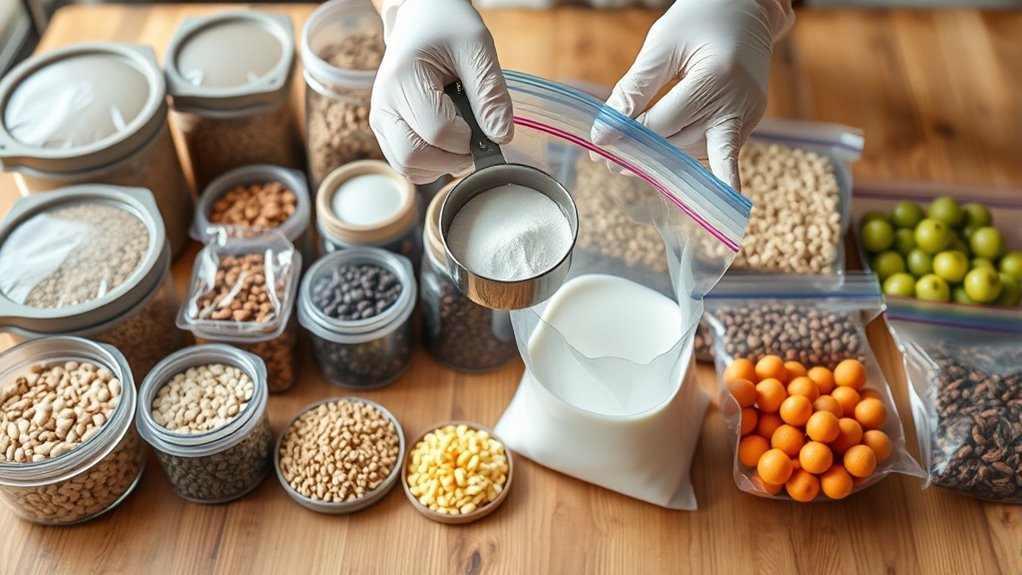
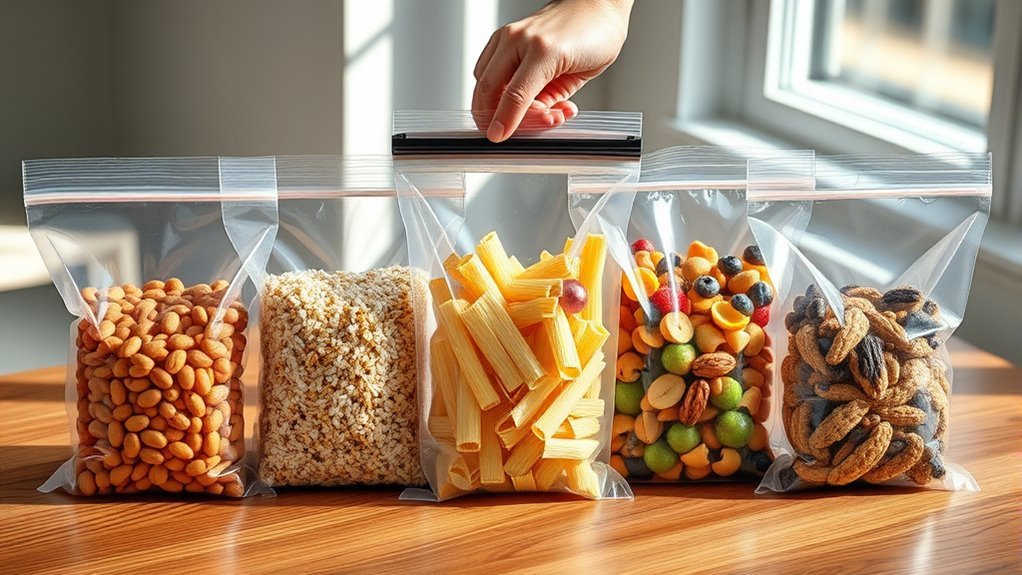
When selecting foods for long-term storage, focus on items with a shelf life ranging from two to thirty years, like dried grains, legumes, canned goods, and freeze-dried products. Choose low-moisture foods such as rice and beans to minimize spoilage risks.
It’s a good idea to prioritize nutrient-dense foods like canned meats and dried fruits to keep your diet balanced. Use airtight storage containers to maintain freshness and support food preservation.
Always check expiration dates and practice food rotation, using older items first to avoid waste. Also, select non-perishable foods that your family enjoys to make sure they’re eaten before expiring.
Avoid high-moisture or oily foods prone to rancidity. By carefully selecting appropriate foods and managing storage, you’ll build a reliable, long-lasting food supply for any situation.
Prepare Foods Properly Before Packaging
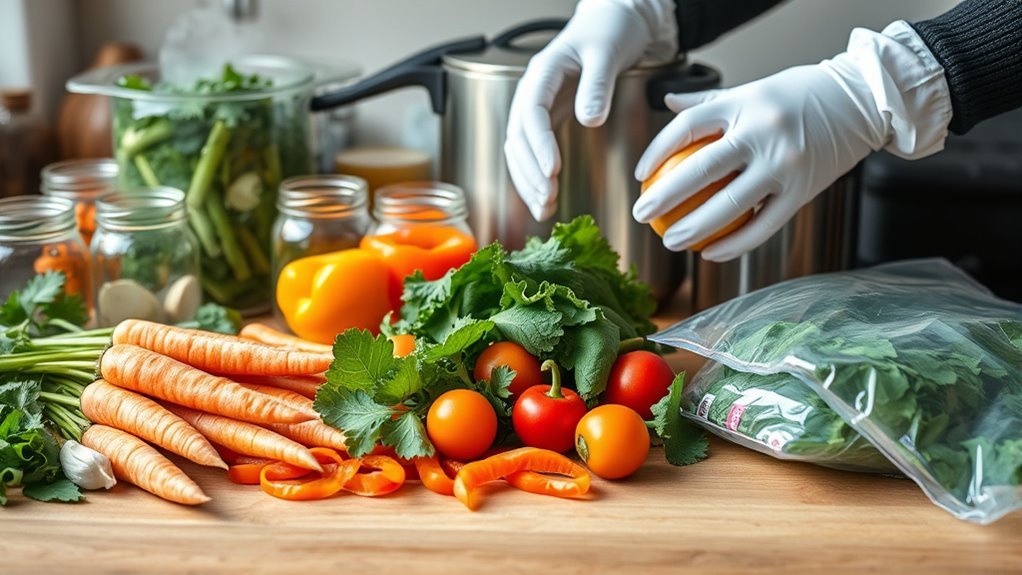
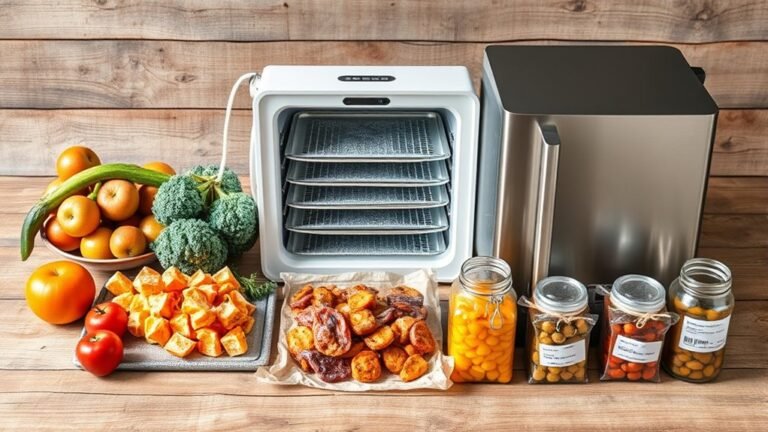
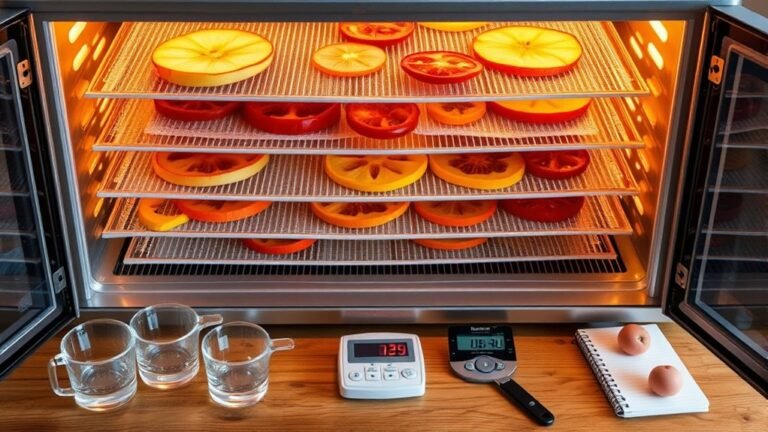
Before packaging your foods, you’ll need to prepare them properly to guarantee they stay fresh and safe for long-term storage. Start by ensuring your foods are thoroughly dried and moisture-free to prevent mold and spoilage.
Use preservation methods like blanching or pre-cooking for vegetables and meats to maintain their quality. Next, remove air from packaging by vacuum sealing or adding oxygen absorbers, which helps inhibit oxidation and bacterial growth.
Don’t forget to label packages clearly with contents and packing dates to keep track of your inventory. Finally, store your prepared foods in a cool and dark storage area to extend shelf life and preserve freshness before sealing.
Proper preparation is key to successful long-term food storage. So, take your time with these steps—it really makes a difference!
Choose the Right Storage Containers and Materials
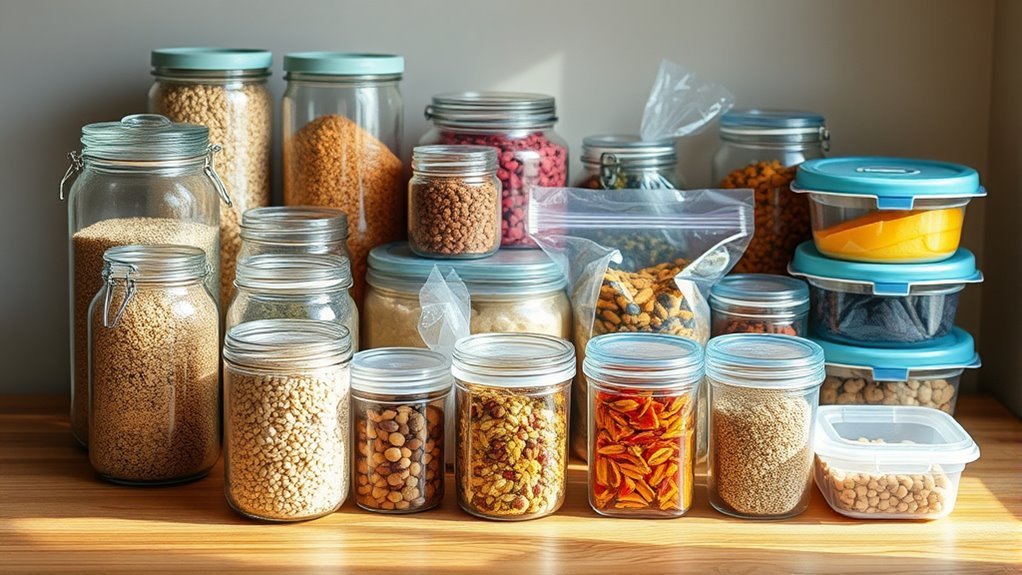
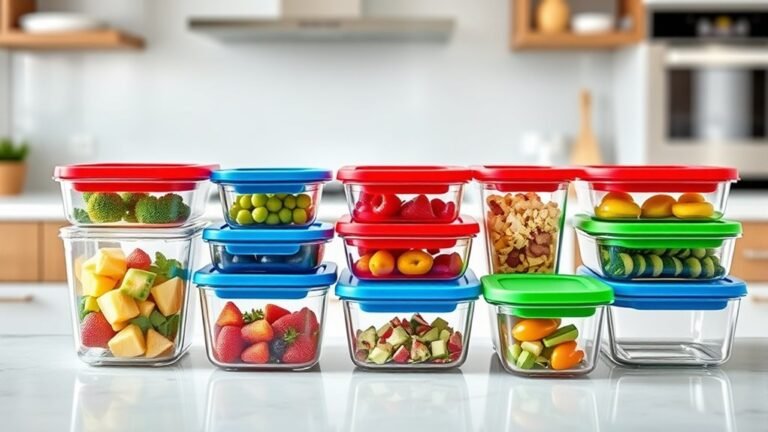
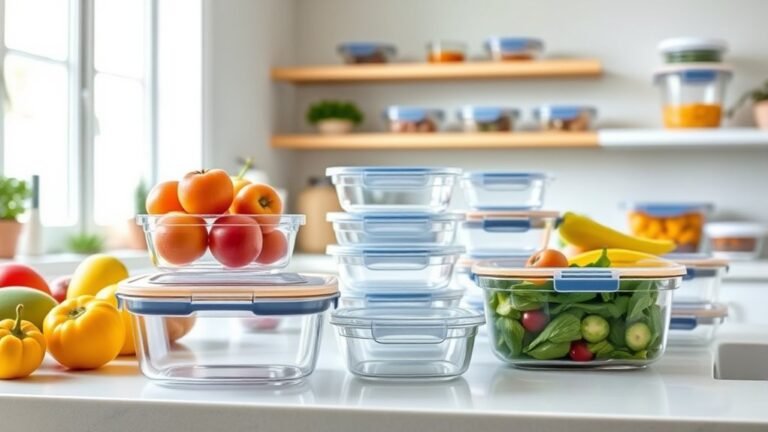
Although selecting the right storage containers might seem simple, it plays an essential role in preserving your food’s quality over time. You should choose airtight containers like mylar bags with oxygen absorbers, #10 cans, or food-grade plastic buckets. This helps guarantee moisture protection and limits air exposure.
Make sure all storage materials are BPA-free and food-grade to avoid chemical contamination. Also, opt for opaque containers or store your food in dark environments to safeguard vitamins and nutrients from light degradation.
Proper cool dry storage, ideally between 40°F and 70°F, also helps extend shelf life and prevent spoilage. While you won’t label containers just yet, keep in mind that clear labeling is critical for managing your food inventory effectively.
Label and Organize Your Food Storage
Once you’ve selected the right containers to protect your food, labeling and organizing your storage becomes the next step to keep everything manageable. Start by clearly labeling each storage container with the contents and expiration dates using durable, moisture-proof storage labels to avoid smudging.
Organize your food storage system by grouping items into food categories like grains, canned goods, and dried fruits. Use a rotation system by placing older items at the front or top, ensuring you use them first.
Keep an updated inventory list or digital record to track quantities and expiration dates, supporting effective inventory management. By following these organization tips, you’ll maintain a well-ordered food storage system that simplifies access and prevents waste.
Store in Ideal Conditions and Maintain Your Stock
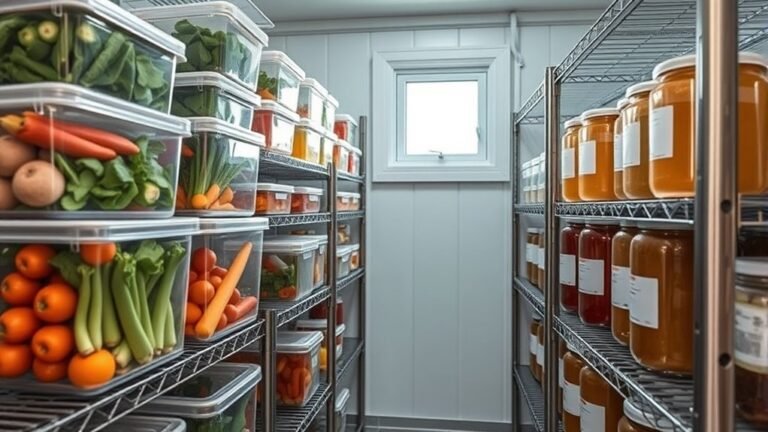
To keep your food fresh and safe for long-term storage, store it in a cool, dark, and dry place where temperatures stay between 40°F and 70°F. Use airtight containers or mylar pouches with oxygen absorbers to block moisture, light, and oxygen, ensuring proper packaging.
Make sure your storage area is free from pests and organize your stock for easy access. It really helps to keep things tidy and prevents any unwanted surprises.
Keeping your storage pest-free and well-organized prevents surprises and makes accessing your food easy.
Regularly check the temperature and humidity with thermometers and hygrometers. This way, you can stop mold or insects before they cause problems.
Keep an eye on your food for any signs of damage or infestation. And don’t forget to rotate your stock by using the first-in, first-out method to keep everything fresh.
With good temperature control, humidity monitoring, and an organized space, you’ll protect your food well and extend its shelf life for long-term use. It’s all about keeping things in check and ready when you need them.
Frequently Asked Questions
What Is the Best Way to Store Food for Long-Term Storage?
You should store food in airtight containers with oxygen absorbers. Keep it cool, dark, and dry to preserve the quality.
Avoid oily or moist items since they don’t last as long. Also, label containers with dates to keep track of freshness.
Make sure to rotate your stock regularly. That way, you always use the oldest items first for best results.
What Is the 2-2-2 Rule for Food Storage?
Imagine opening your pantry every two months to inspect and rotate your food.
The 2-2-2 rule means you check every two months, rotate stock, and use or replace items every two years to keep everything fresh and safe.
What Should I Stock up on if WW3 Happens?
You should stock calorie-dense foods like rice, beans, and oats, plus canned meats, vegetables, and fruits.
Don’t forget powdered milk, protein sources, spices, and water purification supplies to stay nourished and hydrated during WW3.
Should I Be Stockpiling Food in 2026?
Yes, you should start stockpiling food for 2026 to prepare for potential crises.
Focus on long-lasting items, rotate supplies regularly, and build your reserve gradually to guarantee you have a reliable emergency food source when needed.
Taking these steps now can really give you peace of mind later on. It’s all about being ready without feeling overwhelmed.
Conclusion
Now that you’ve got the steps down, packing food for long-term storage isn’t just smart—it’s your secret weapon against uncertainty.
Remember, the right foods, careful prep, sturdy containers, clear labels, and perfect storage conditions all work together like a well-rehearsed orchestra. When you treat your food storage with care, you’re not just saving meals—you’re saving peace of mind.
So go ahead, take control, and let your pantry be your fortress against the unexpected. Long-term food storage isn’t just about having supplies; it’s about being prepared for anything life throws your way. With the right strategy, your emergency food supply will keep you and your family safe and secure, no matter what happens.