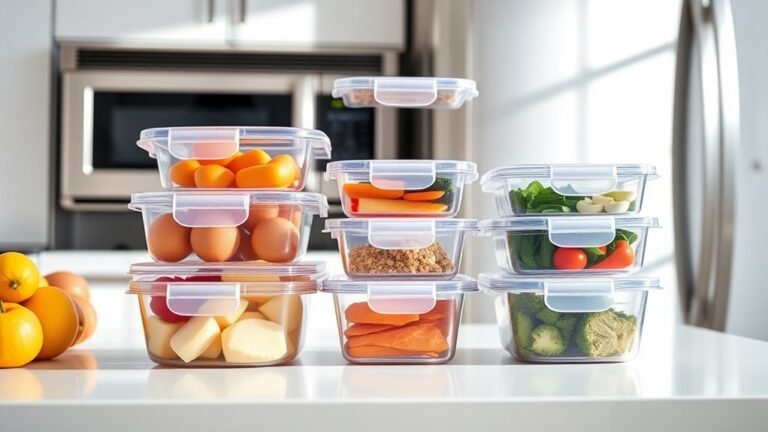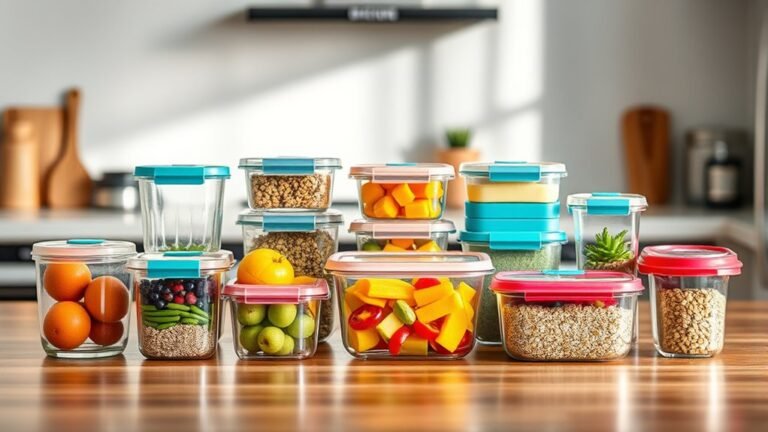
5 Tips for How to Store Food Storage Containers
Start by decluttering and tossing any damaged containers so you only keep what you use. This step is key to organizing your food storage containers efficiently.
Separate lids from containers to nest and save space. Store lids by size for quick finds, making your kitchen routine smoother.
Choose accessible spots like lower cabinets or drawers for easy access. Use baskets or dividers to keep things tidy and adjustable.
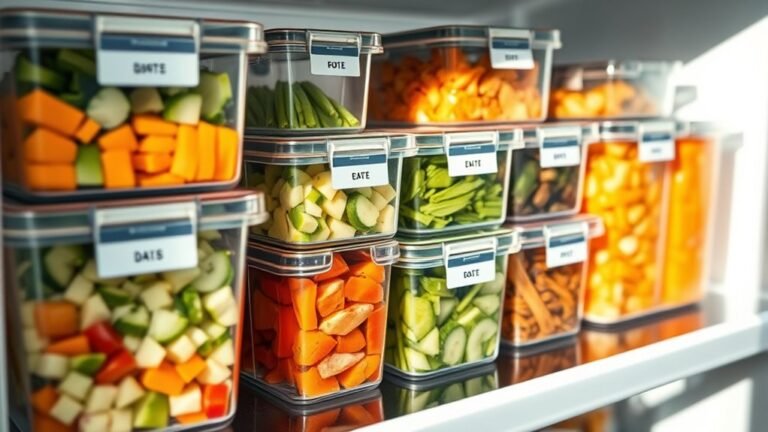
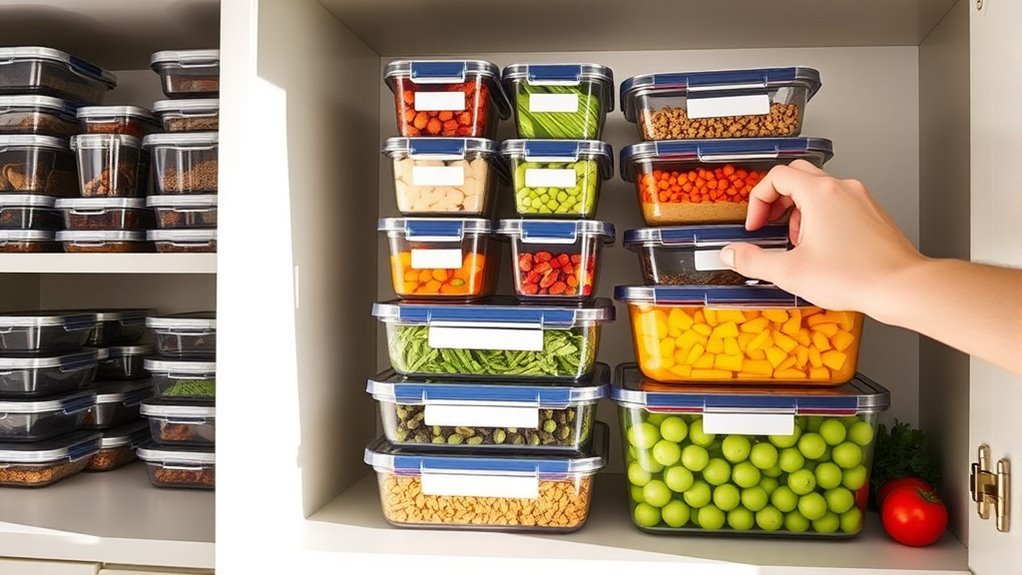
Label containers and leave room for new items to maintain order. These simple tips help you keep your kitchen organized and clutter-free.
Keep these tips in mind, and you’ll discover even more ways to streamline your kitchen storage. It’s all about making your space work better for you!
Key Takeaways
– Empty and sort containers by size, discarding damaged or unused pieces to reduce clutter.
It’s a great way to keep things manageable and tidy.
– Separate lids from containers and nest containers to save space and prevent mismatches.
This trick really helps when you’re short on storage room.
– Store containers in accessible locations, grouping by size and type for easy retrieval.
You’ll thank yourself later when you can grab what you need without digging around.
– Use baskets and adjustable dividers to organize containers and prevent shifting or stacking problems.
These tools keep everything in place and make your storage look neat.
– Label storage areas clearly and leave room for future additions, regularly reviewing to maintain order.
A little planning goes a long way in keeping your kitchen clutter-free!
Declutter and Assess Your Container Collection
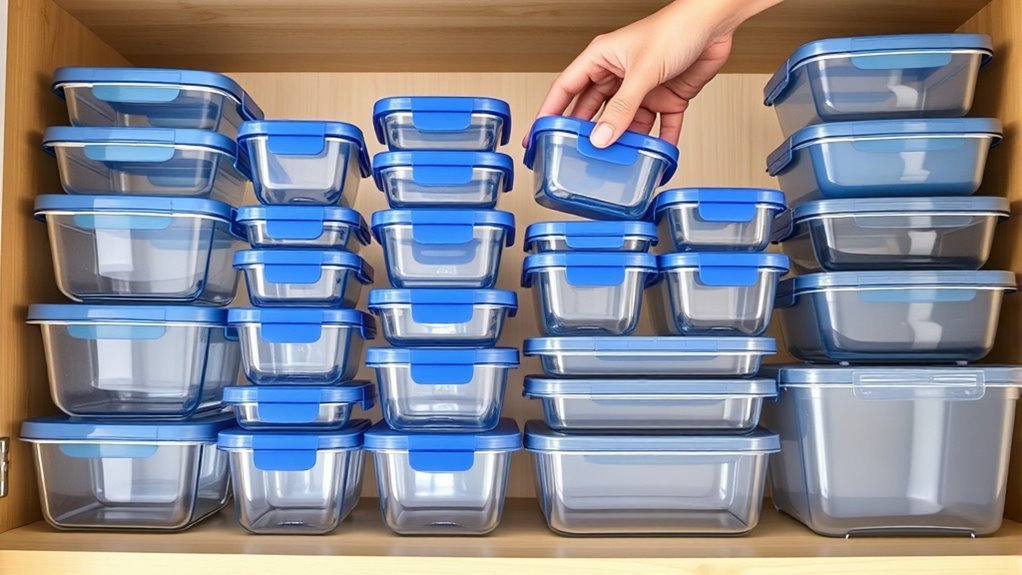
Before organizing your food storage containers, empty your entire collection to see exactly what you have. This lets you assess each piece and identify any mismatched containers or damaged lids.
Start by emptying all your food storage containers to assess and identify any mismatched or damaged pieces.
To declutter effectively, discard broken or stained items that no longer serve you well. Reducing clutter makes it easier to organize your container collection and frees up valuable space.
Next, identify which containers you use frequently and consider donating or recycling the rest. Sort the remaining containers by size and shape to streamline your organization efforts.
Regularly reviewing your container collection helps prevent unnecessary buildup, keeping your storage system efficient and tidy over time. Taking these steps will simplify your kitchen and make meal prep smoother.
Separate Containers From Their Lids
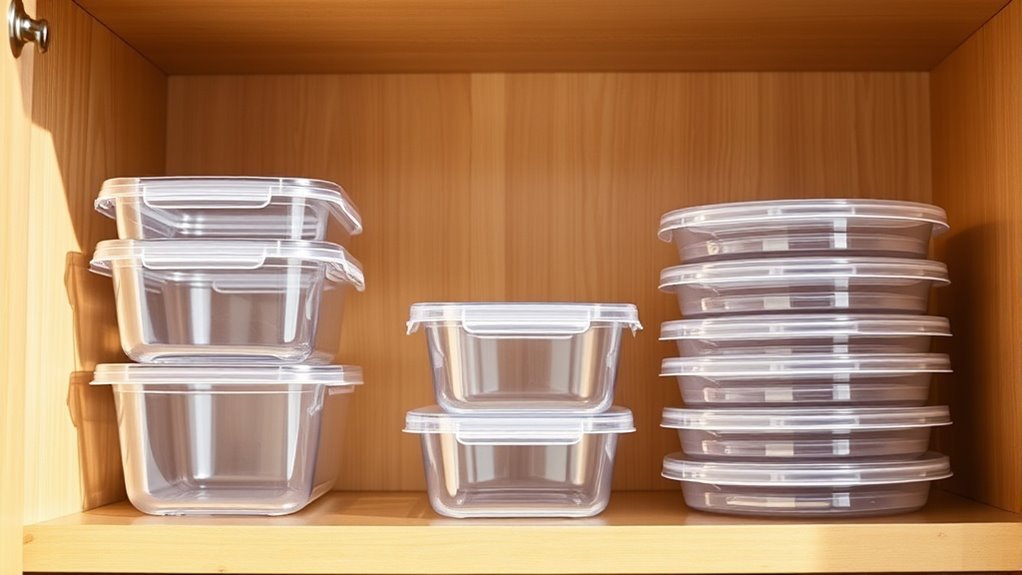
When you separate containers from their lids, you prevent mismatched pairs and reduce clutter. This makes it easier to find exactly what you need.
Separating containers lets them nest inside each other, saving space and making things more visible. Keeping lids in one dedicated spot means you won’t lose matching lids, which helps with accessibility.
Try organizing lids by size or shape. This makes it simpler to grab what you need and avoids those frustrating lid avalanches when you reach for containers.
| Containers | Lids | Benefits |
|---|---|---|
| Nested by size | Sorted separately | Space-saving |
| Stacked carefully | Grouped by shape | Easy visibility |
| Various sizes | Color-coded | Quick accessibility |
| Bases and lids | Matching lids | Reduced clutter |
Storing containers and lids separately keeps your kitchen neat and efficient. It really makes a difference!
Choose Practical Storage Locations
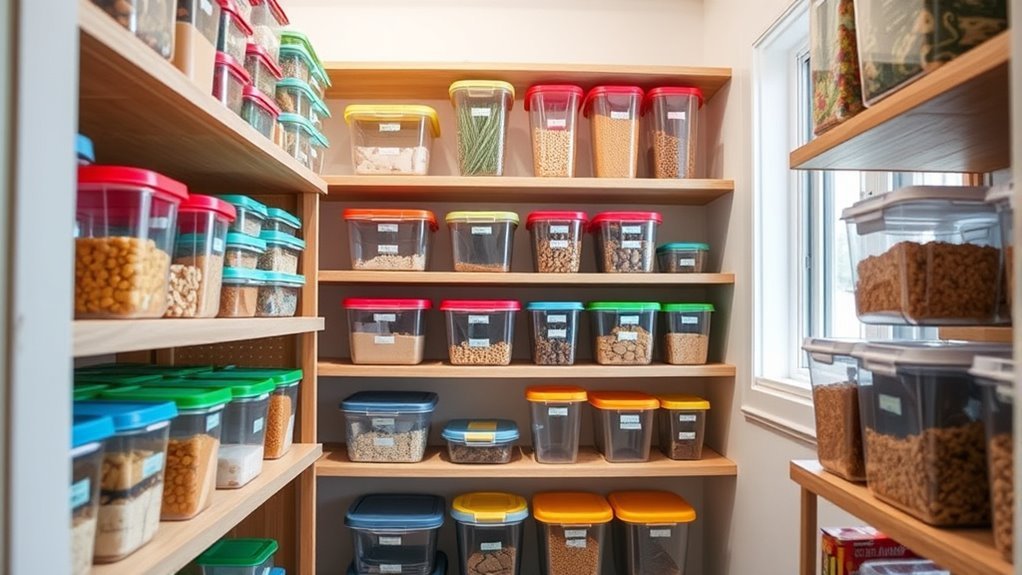
Although it’s tempting to stash containers anywhere, choosing practical storage locations makes your kitchen more efficient and prevents strain. Store food storage containers in easily accessible spots like lower cabinets or deep kitchen drawers to avoid reaching or lifting heavy items from high shelves.
Storage containers are notoriously bulky, so use your storage space wisely by organizing food storage by size and type. You can designate specific zones for containers and lids, keeping lids stacked separately or paired for quick access.
Consider mounting racks on a cabinet door for additional storage. Place frequently used food containers near your prep area or on open shelves to speed up meal prep.
Use Flexible Storage Solutions Like Baskets and Dividers
Since food storage containers come in various shapes and sizes, using flexible storage solutions like baskets and dividers helps you keep everything organized and easy to access. Baskets made of wire, fabric, or plastic provide gentle, movable storage for containers and lids. Meanwhile, adjustable drawer dividers create compartments that prevent shifting and stacking issues.
This flexible storage lets you reconfigure your setup easily to maximize space and adapt to new containers. Here’s a quick comparison:
| Storage Type | Benefits | Ideal Use |
|---|---|---|
| Wire Baskets | Durable, ventilated | Heavy or large containers |
| Fabric Baskets | Soft, flexible | Delicate or oddly shaped items |
| Adjustable Dividers | Customizable compartments | Prevent shifting, space maximization |
| Plastic Baskets | Easy to clean | General organization |
Using baskets and dividers boosts organization and keeps lids and containers accessible without rigid shelving. It’s a simple way to make your kitchen storage more flexible and efficient.
Maintain Organization With Labeling and Room to Grow
Adding labels to your containers, baskets, and drawers makes it easy to spot what you need without rummaging through everything. Clear labels enhance organization and speed up your kitchen routine.
Labeling containers and drawers helps you quickly find items and keeps your kitchen organized and efficient.
To maintain a neat space and accommodate future additions, consider these tips:
- Use adjustable dividers and flexible storage solutions to fit various container sizes and shapes.
- Organize containers by size for efficient stacking and easy access.
- Leave some empty space in your cabinets or drawers to allow room to grow without clutter.
- Regularly review and declutter your collection, removing unused or damaged containers.
Frequently Asked Questions
Should Containers Be Stored With Lids on or Off?
You should store containers with lids on to keep them organized, clean, and stackable.
However, if they’re still damp, leave lids off to avoid mold. Choose what fits your space and preference best.
What Are 5 Important Food Storage Tips?
You definitely want to ignore airtight containers and labeling, right? Just kidding! You should seal and label containers to keep things organized and fresh.
Refrigerate leftovers promptly to avoid bacteria growth. Also, always keep raw meat below other foods to prevent cross-contamination.
Make sure your fridge temperature stays consistent and cold enough. And don’t forget to clean it regularly to keep everything safe and fresh!
What to Avoid in Food Storage Containers?
You should avoid containers with BPA, damaged or cracked ones, and non-airtight lids.
Don’t use metal containers for acidic foods. Also, avoid stacking containers without lids or separators to prevent leaks, corrosion, and spoilage.
Is It Better to Store Food in Plastic or Glass?
Think of glass as your food’s trusty shield—better for keeping flavors pure and safe when reheating.
You’ll want plastic for lightweight, everyday convenience. But glass wins if durability and chemical-free storage matter most to you.
Conclusion
Picture opening your kitchen cabinet to find a neatly arranged collection of food storage containers. Lids are perfectly paired, and everything is easy to grab.
By decluttering and separating lids, you make room for what you really need. Choosing smart storage spots creates a space that feels calm and inviting.
Adding baskets and labels keeps things flexible and helps your storage system grow with your needs. It’s all about making your kitchen work for you.
With these simple tips, your kitchen won’t just be organized—it’ll be a joy to use every day. Efficient food storage container organization saves time and reduces stress during meal prep. So, start arranging your containers and lids today, and enjoy a clutter-free, functional kitchen that makes storing food storage containers easier than ever.