What Does FIFO Stand for in Food Storage?
FIFO in food storage stands for “First In, First Out.” It’s a simple but super effective way to keep your food fresh and safe.
Basically, you use the oldest stock before newer items. This helps prevent spoilage and waste, which is a big win for both your budget and the environment.
By organizing your storage with clear dates and placing older products at the front, you make sure nothing gets forgotten or wasted.
Plus, following FIFO supports compliance with food safety standards and makes inventory management way easier.
Stick to these practices, and you’ll quickly notice how FIFO helps maintain quality and minimize losses. It’s a smart habit that pays off every time!
Key Takeaways
- FIFO stands for “First In, First Out” and is a method to use older stock before newer stock in food storage. It helps make sure that perishable goods are used within their safe shelf life to prevent spoilage.
- This approach helps maintain food quality and freshness by rotating stock properly. Organizing storage so that older items are accessible first really supports FIFO implementation.
- Using FIFO properly reduces waste, supports food safety compliance, and improves inventory management. It’s a simple way to keep things running smoothly in any food storage setup.
Understanding the FIFO Method in Food Storage
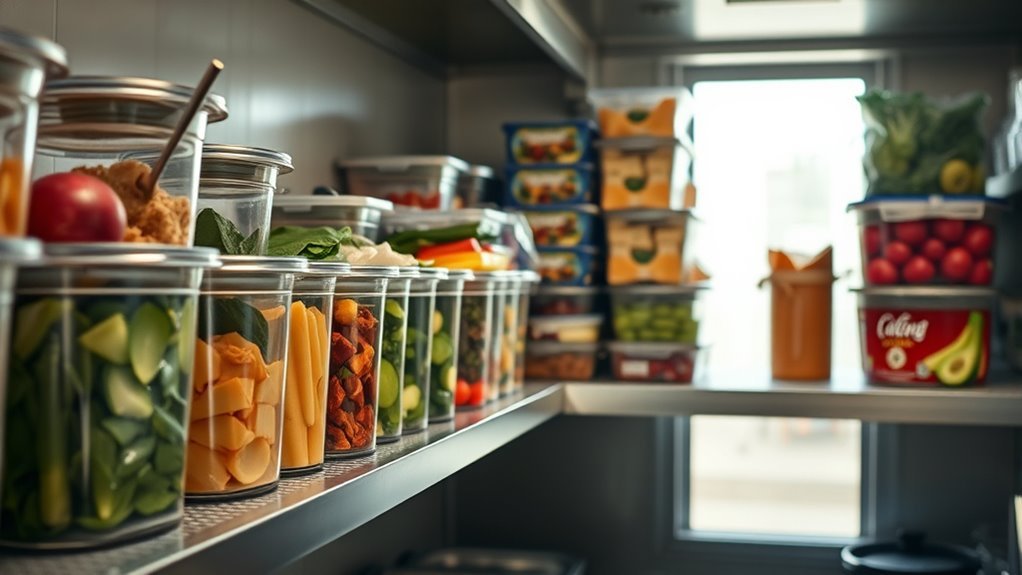
When you manage food inventory, using the FIFO method—First In, First Out—ensures you use older stock before newer items. FIFO is essential in food storage and inventory management because it helps keep perishable goods within their safe shelf life, reducing spoilage and waste.
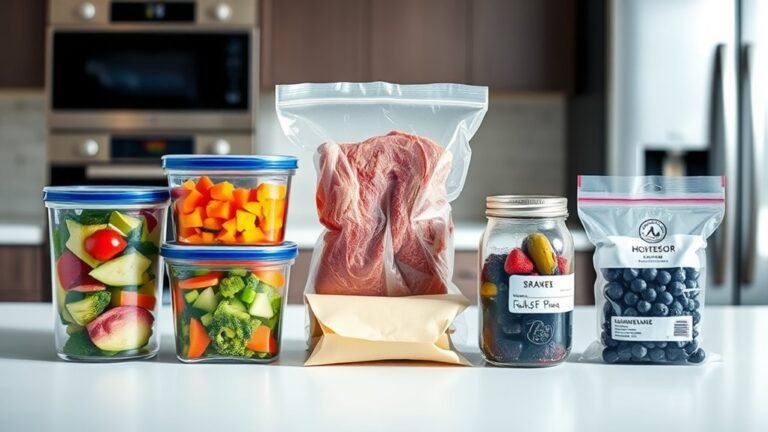
To practice FIFO properly, you’ll want to organize your storage so the oldest items are always in front or on top for easy access. Labeling foods with purchase or receipt dates supports effective food rotation and helps maintain food safety.
Regularly checking and reorganizing your inventory reinforces proper storage habits, making spoilage prevention a natural part of your routine. By consistently applying FIFO, you’ll extend the usability of your stock and safeguard the quality of your perishable goods.
Implementing FIFO to Maintain Food Safety and Quality
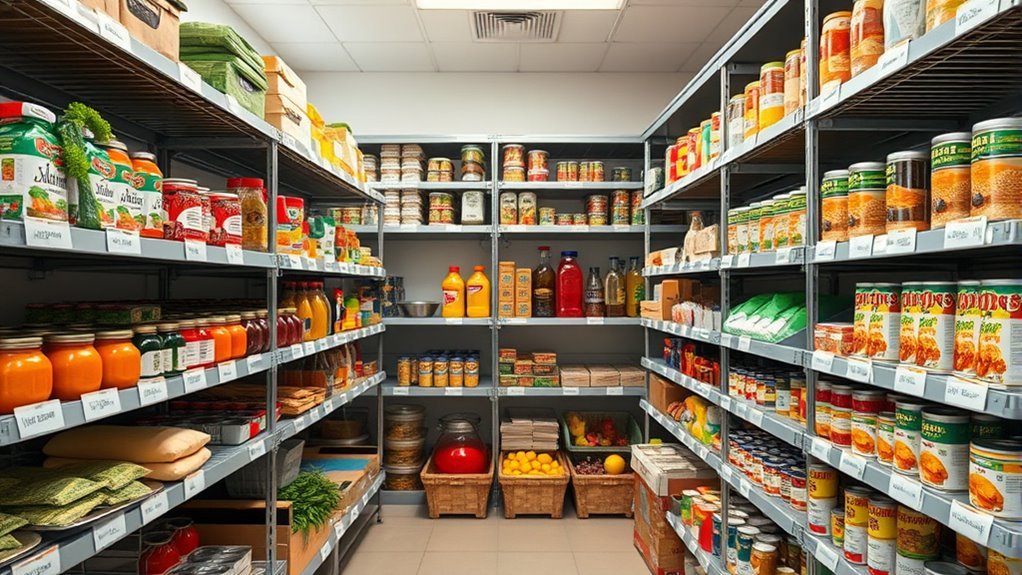
Although managing food inventory can be challenging, implementing FIFO effectively helps you maintain both food safety and quality. By following a proper FIFO system, you ensure compliance with food safety regulations and prevent food spoilage.
To implement FIFO in your food storage system, focus on these key steps:
- Label all items with storage dates and place older products at the front to enable proper rotation.
- Conduct regular inventory management checks to remove expired or near-expiration items promptly.
- Organize storage spaces systematically to support consistent food handling and adherence to food safety standards.
This approach not only promotes food safety and quality but also minimizes waste and supports efficient inventory management. In the end, it guarantees your operation meets essential food safety and quality requirements.
Frequently Asked Questions
Do Grocery Stores Use FIFO or LIFO?
Grocery stores mainly use FIFO, not LIFO. You’ll see them rotate stock so older items sell first, keeping food fresh and safe.
Sometimes they might use LIFO briefly during restocking, but FIFO is the standard approach. It just makes sense to sell the older stuff first, right?
What Is a FIFO Checklist?
Think of a FIFO checklist as your inventory’s compass, guiding you to use older items first. It’ll help you track delivery and expiration dates, so you keep stock fresh.
This way, you reduce waste and stay organized effortlessly. It’s a simple tool that makes managing your inventory way easier.
What Is LIFO and FIFO in Kitchen?
In your kitchen, FIFO means you use the oldest food first to keep things fresh, while LIFO means using the newest items first.
You’ll want to stick with FIFO to avoid spoilage and maintain safety. It just makes sense to use what’s been sitting around the longest before opening new stuff.
What Does FIFO Stand For?
FIFO stands for “First In, First Out.”
When you organize your food this way, you’re not only using the oldest items first but also coincidentally reducing waste.
It helps keep your kitchen efficient and your meals fresh every time.
Conclusion
By using FIFO, you become the gardener tending a thriving kitchen garden, where every ingredient blooms in its prime. You let the oldest fruits and veggies take the spotlight first, preventing waste and keeping flavors fresh.
This simple rhythm guarantees your food storage stays as vibrant and safe as a well-tended orchard, where nothing spoils in the shadows. Embrace FIFO, and watch your meals flourish with every carefully timed choice.
In short, FIFO stands for “First In, First Out,” a smart method for food storage that helps you use older items before newer ones. This approach reduces waste, keeps your ingredients fresh longer, and makes meal prep easier. By following FIFO, you ensure your kitchen runs smoothly and your food stays safe to eat. So, if you want to keep your pantry organized and your meals delicious, adopting FIFO is the way to go!