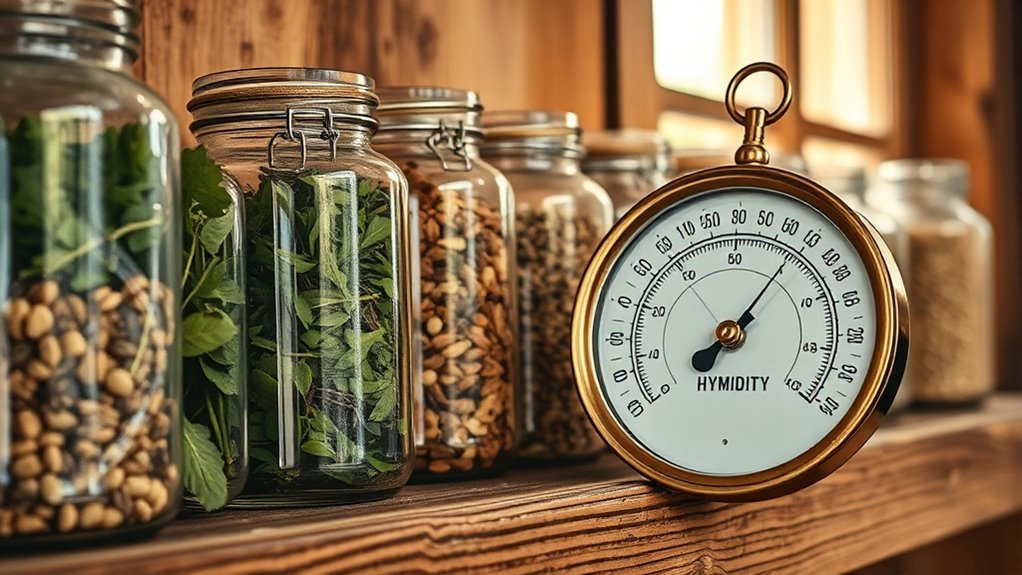
How Does Relative Humidity Affect Food Storage
You need to ensure relative humidity because it affects how much moisture your food absorbs, which impacts freshness and spoilage. Managing humidity levels is key to keeping your food safe and tasty for longer.
When humidity is too high, it can lead to problems like mold growth and bacterial contamination.
High humidity—above 60%—encourages mold, bacteria, and condensation, ruining dry foods and packaging. This not only damages the food but can also create unpleasant odors.
So, controlling the environment where you store your food is super important to avoid these issues.
Keeping pantry RH between 30–50% helps prevent damage and off odors, while airtight containers block damp air and pests. Using airtight containers is a simple way to protect your food from moisture and unwanted critters.
Monitoring humidity with tools like hygrometers ensures early detection of issues. Understanding these basics helps you protect your food better over time.
It’s all about keeping your food fresh, safe, and delicious!
Key Takeaways
- High relative humidity makes food absorb moisture faster, which speeds up spoilage and encourages mold to grow.
- It’s best to keep your pantry’s RH between 30–50%. This range helps keep dry foods fresh and stops changes in texture and smell.
- Using airtight containers and moisture absorbers is a smart move. These help cut down on humidity exposure, keeping your food fresh and your packaging intact.
- Too much humidity leads to condensation, which creates a perfect environment for microbes to thrive. This can ruin your food’s quality and even damage the labels.
- Keeping an eye on humidity with a hygrometer is super helpful. It lets you control moisture levels before things go bad, helping your food last longer.
What Is Relative Humidity and Why It Matters for Food Storage?

Although you might not always notice it, relative humidity (RH) plays a vital role in how well your food stays fresh. RH measures the water vapor in the air compared to its maximum capacity at a given temperature. This directly impacts how much moisture your food absorbs.
In food storage, controlling RH is essential because too much moisture can ruin texture and flavor, especially in dry foods like chips and cereals. Using airtight containers helps you manage RH by preventing unwanted moisture from entering and affecting your food.
Different foods require different RH levels—flour, grains, and spices do best around 30–50% RH. Meanwhile, leafy greens need higher humidity to stay crisp.
How Humidity Makes Mold and Bacteria Grow on Food

When you manage relative humidity to keep your food fresh, you also reduce the chances of mold and bacteria growth. High humidity boosts water activity on food surfaces, creating perfect conditions for mold growth and bacterial multiplication.
Moist air causes condensation inside packaging and on storage shelves, supplying the moisture microbes need to thrive. This not only shortens shelf life but also leads to visible spoilage like fuzzy mold, dark spots, and musty odors.
To protect your food effectively, consider these tips:
- Use sealed containers to block moisture and prevent mold growth
- Store foods in low-humidity environments to limit bacteria survival
- Regularly check for early signs of spoilage to avoid consuming contaminated food
- Keep pantry shelves dry to reduce condensation and microbial colonies
Controlling humidity helps extend shelf life and keeps your food safe. It’s a simple step that makes a big difference!
Effects of Relative Humidity on Dry Foods, Packaging, and Labels

Since dry foods like flour, grains, and spices absorb moisture from the air, high relative humidity can quickly lead to mold growth, off odors, and texture changes that spoil quality.
In your dry pantry, controlling humidity between 30–50% helps keep dry goods fresh. Proper packaging that prevents air from entering is essential.
Airtight containers limit moisture exposure, preserving both food and packaging. High humidity can also damage labels, causing wrinkling and peeling.
| Aspect | Effect of High Humidity |
|---|---|
| Flour & Grains | Clumping, mold growth |
| Spices | Off odors, flavor loss |
| Chips & Crackers | Loss of crispness |
| Packaging | Cardboard weakens, label damage |
| Storage | Airtight containers prevent moisture |
How Humidity Affects Refrigerated Food Safety and Freshness
You’ll want to control humidity in your refrigerator to keep food fresh and safe since excess moisture can speed up spoilage and mold growth.
Using the right drawers for your produce helps maintain ideal humidity levels, protecting items like leafy greens and apples.
Monitoring fridge humidity with a hygrometer and managing condensation can make a big difference in preserving your food’s quality.
Refrigerator Humidity Control
In managing your refrigerator’s humidity, you play a pivotal role in keeping food fresh and safe. Too much moisture speeds up mold and bacterial growth, risking spoilage and foodborne illness.
Use humidity-controlled drawers wisely: leafy greens thrive at 85–95% humidity, while peppers and apples prefer 30–40%. Keep an eye on condensation or standing water, which create hotspots for microbes.
Proper containers and organized storage space help maintain ideal humidity levels and prevent excess moisture buildup. It’s also a good idea to use a refrigerator hygrometer and moisture absorbers like silica gel to monitor and control humidity effectively.
- Store items in appropriate humidity drawers
- Use airtight containers to limit moisture exchange
- Regularly inspect and clean storage space to avoid water buildup
- Employ moisture absorbers and hygrometers for ongoing control
Moisture Impact On Produce
When moisture levels rise inside your refrigerator, produce quality takes a hit as mold and bacteria find the perfect environment to thrive. Excess humidity causes condensation, making leafy greens slimy and wilt faster. Moisture-sensitive items like peppers and apples spoil sooner too.
Your fridge’s humidity drawers help by providing high humidity (85–95% RH) for greens and lower humidity (30–40% RH) for peppers and apples. This slows down decay and keeps your produce fresher for longer.
Moisture pooling on shelves or drawer bottoms accelerates microbial growth, so you should inspect and clean these areas regularly. Keeping these spots dry helps ensure your produce stays safe and fresh.
Using tools like hygrometers and moisture absorbers can help you maintain ideal humidity levels. This way, you prevent mold, off-odors, and loss of crispness in your refrigerated fruits and vegetables.
Monitoring Fridge Humidity
Humidity levels inside your fridge play a big role in keeping your food safe and fresh. Too much moisture encourages mold and bacteria to grow. On the other hand, too little moisture dries out foods and messes with their texture and flavor.
To keep things balanced, use your humidity drawers the right way. Store leafy greens in high humidity (85–95% RH). Meanwhile, peppers or apples do better in lower humidity (30–40% RH).
It’s a good idea to monitor your fridge’s humidity with a hygrometer. This way, you can catch any persistent high moisture early before it causes condensation and spoilage. Also, make sure to keep drawers and shelves clean and dry. This helps prevent trapped water from raising humidity levels.
To manage fridge humidity effectively:
- Use humidity drawers according to the type of food you’re storing
- Check humidity regularly with a hygrometer
- Clean and dry drawers and shelves often
- Use moisture absorbers for dry items like grains and spices
Simple Ways to Keep Your Pantry Dry and Food Fresh
You can keep your pantry dry and your food fresh by controlling moisture with airtight containers and proper storage habits. Using a hygrometer helps you monitor humidity levels so you can take action before dampness causes spoilage.
Small steps like these prevent mold, maintain texture, and protect your ingredients longer. It’s really all about staying on top of things to keep your food in great shape.
Pantry Moisture Prevention
During warmer months or in humid climates, moisture can quickly turn your pantry into a breeding ground for mold and bacteria. This can spoil your food and cause unpleasant odors. To prevent this, try to keep the relative humidity between 30–50% and regularly remove any condensation.
Also, make sure to store dry goods off the floor to avoid dampness. Cleaning shelves frequently helps eliminate moisture buildup, too. Using moisture-control devices like dehumidifiers can really help maintain a dry environment.
Here are some simple steps to prevent pantry moisture:
- Place dry foods off the floor to reduce exposure to damp air.
- Use a dehumidifier sized for your pantry to control humidity.
- Clean shelves regularly and wipe away condensation.
- Monitor humidity with a hygrometer to keep it within the ideal range.
Airtight Container Benefits
Although moisture can easily creep into your pantry, airtight containers create a reliable barrier that keeps humid air out and preserves the freshness of your dry goods. By sealing foods like grains, flour, and spices, you prevent mold and bacteria growth.
These containers also protect crispy snacks such as crackers and cereals from losing their texture by reducing moisture exposure. Plus, airtight lids with good seals keep pests away, as they thrive in damp environments.
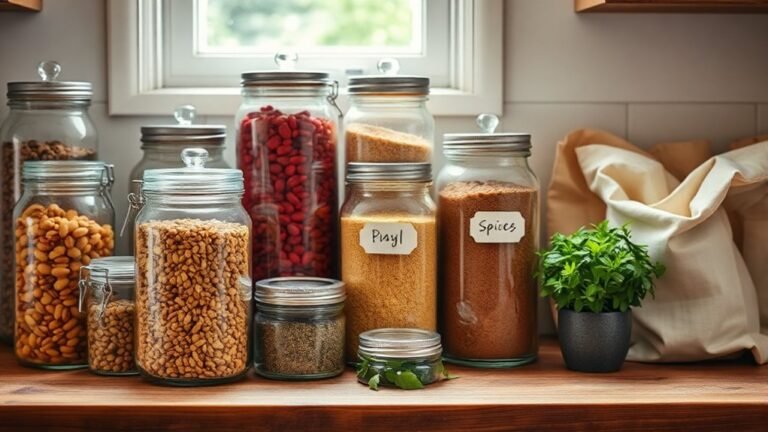
When storing leftovers like soups or cooked meats, airtight containers slow flavor changes and retain moisture by limiting exposure to air. To avoid condensation, label your containers and store them upright on shelves—not the floor—so you can easily track what needs to be used first and keep your pantry dry.
Humidity Monitoring Tips
How can you keep your pantry dry and your food fresh? Start by monitoring humidity levels with a hygrometer placed inside the pantry. Aim for 30–50% RH for grains and spices, and 30–40% for snacks.
Use airtight containers to block damp air, which causes mold and spoilage. It’s also a good idea to keep items off the floor and away from walls where condensation can damage packaging.
If humidity stays high, run a dehumidifier and replace moisture absorbers like silica gel packs regularly. Also, keep an eye out for musty smells, spots, or clumpy textures as early signs of spoilage.
Following these simple steps helps maintain a dry environment and extends your food’s shelf life.
- Measure humidity with a hygrometer inside the pantry
- Store dry goods in airtight containers
- Avoid placing items near walls or floors
- Use dehumidifiers and replace moisture absorbers frequently
Using Airtight Containers to Protect Food From Humidity
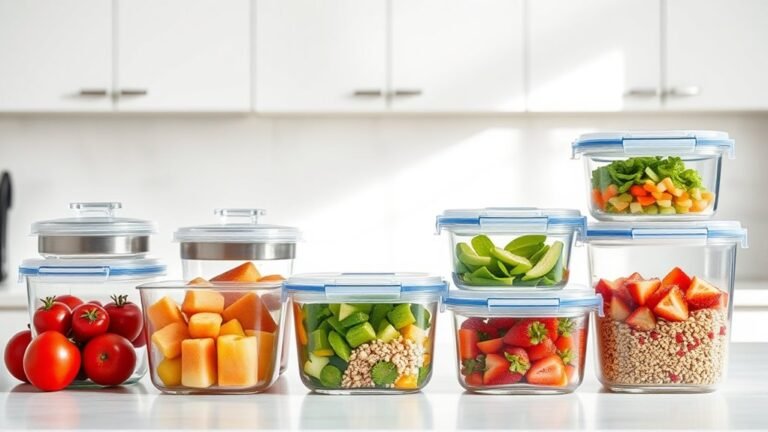
When you store dry foods like flour, sugar, and grains in airtight containers, you block damp air from reaching them. This helps keep their crispness and texture intact.
Airtight containers with secure, well-fitting lids—especially those with gasketed seals—stop humid air from coming in. That reduces mold and bacteria growth, which is super important during humidity spikes when pantry staples are most at risk.
Airtight containers with gasketed seals block humid air, reducing mold and bacteria during humidity spikes.
These containers also keep pests out, so you avoid any unwanted contamination. And when it comes to leftovers, airtight containers preserve flavor and quality by preventing sogginess caused by moisture.
Plus, clear labeling and date tracking in your containers help you rotate food efficiently. This way, you minimize exposure to fluctuating humidity.
Using airtight containers is a simple yet effective way to keep your food fresh and safe from the challenges posed by relative humidity. It really makes a difference!
Tools and Tips for Monitoring and Controlling Humidity
Why guess your storage conditions when you can measure them? Using a hygrometer lets you monitor humidity in your pantry, fridge, or warehouse easily. This helps you spot risky moisture levels before damage occurs.
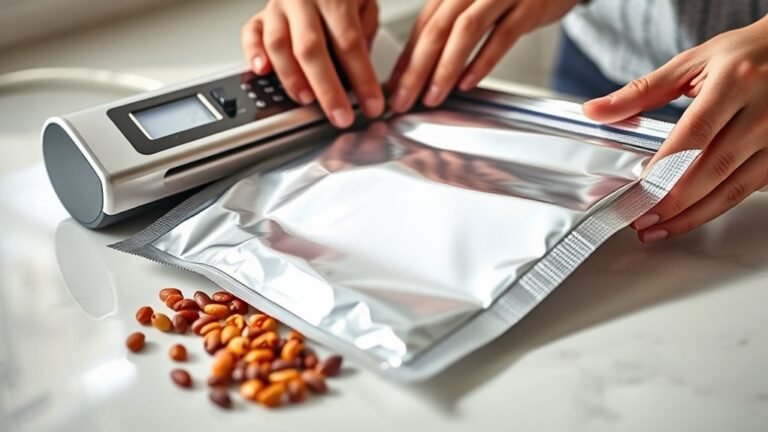
For small spaces, a well-sized dehumidifier keeps humidity within ideal ranges, reducing spoilage. You can also store dry goods in airtight containers to block humid air. Plus, use moisture absorbers like silica gel packs to maintain dryness.
In your fridge, humidity drawers help manage moisture for different produce types. So, check them regularly for water buildup.
- Use a hygrometer for continuous humidity monitoring
- Run a dehumidifier sized for your storage area
- Store foods in airtight containers with tight seals
- Place moisture absorbers and replace them as needed
How to Prevent Mold and Damage Caused by Humidity
Because relative humidity above 60% creates an ideal environment for mold and bacteria to thrive, you need to keep moisture levels in check to protect your food. Store dry goods at 30–50% RH in airtight containers to maintain freshness and prevent mold.
For refrigerated items, use humidity-controlled drawers and clear water buildup quickly. In storage spaces, a dehumidifier or moisture absorbers like silica gel reduce fungal growth and protect packaging.
| Problem | Solution | Result |
|---|---|---|
| Mold growth | Airtight containers | Fresh, safe food |
| Soft bread | Controlled humidity | Crisp texture preserved |
| Warped packaging | Dehumidifiers, silica gel | Packaging stays intact |
Taking these steps helps you avoid costly spoilage and keeps your food safe longer. It’s a simple way to save money and enjoy your food the way it’s meant to be.
Frequently Asked Questions
What Is Equilibrium Relative Humidity?
Equilibrium relative humidity is the specific humidity level where your food’s moisture content stays steady because the water vapor inside matches the surrounding air.
It helps you keep food fresh by balancing moisture gain and loss effectively.
So, when the air around your food has the same moisture level as the food itself, nothing gets too dry or too soggy.
This balance is key to maintaining the quality and texture of your food over time.
What Is the 2-2-2 Rule for Food Storage?
The 2-2-2 rule tells you to use unopened dry goods within 2 years, opened packages within 2 months, and check for moisture or pests every 2 days to keep food fresh and prevent spoilage effectively.
It’s pretty simple to remember, right? Just think of those twos—2 years, 2 months, and 2 days—and you’re good to go! This way, you’ll make sure your food stays fresh and safe to eat.
How to Reduce Humidity in a Storage Unit?
You can reduce humidity by using a dehumidifier sized for your unit. Sealing food in airtight containers also helps keep moisture out.
It’s a good idea to store items off the floor. Placing moisture absorbers like silica gel packs around your stuff can make a big difference.
Don’t forget to regularly monitor the humidity with a hygrometer. That way, you’ll know when to take action and keep your storage unit dry.
How Does Humidity Affect Food Spoilage?
Humidity speeds food spoilage by encouraging mold and bacteria growth. You’ll notice dampness causes mold spots, off smells, and texture changes.
This makes foods stale or slimy faster, increasing the risk of foodborne illnesses. It’s kind of like giving germs a perfect environment to thrive. So, keeping humidity in check really helps your food last longer!
Conclusion
Think of relative humidity as the unseen tide that can either nourish or drown your food’s freshness. When you control it, you’re the captain steering your pantry ship, keeping mold and spoilage at bay.
By using airtight containers and monitoring moisture levels, you create a fortress against dampness, ensuring your food stays crisp and safe.
So, grab the helm—tame the humidity monster—and enjoy longer-lasting, tastier meals every day. Controlling relative humidity in your food storage is key to preventing spoilage and maintaining quality. By managing moisture, you extend shelf life and keep flavors intact, making your food last longer and taste better. Keeping humidity in check isn’t just smart—it’s essential for fresh, safe food storage.