7 Essential Tips to Store Food Storage
You can keep your food fresh and safe by refrigerating leftovers promptly and keeping your fridge between 35–38°F. This temperature range is perfect for slowing down bacterial growth and extending the life of your food. Choosing airtight, durable glass containers helps prevent spills and keeps odors from mixing.
Go for containers that resist stains and odors—it makes life so much easier! Label them clearly with an erasable kit to track what’s inside and when you stored it. Trust me, this little step saves you from a lot of guessing later on.
Store lids separately to avoid mismatches, which can be super frustrating when you’re in a rush. Organize containers by size to save space and keep your fridge neat. Don’t forget to keep produce chilled and separate fruits from vegetables to maintain their freshness longer.
Follow these basics, and you’ll discover even better ways to optimize your food storage. It’s all about making your kitchen work smarter, not harder!
Key Takeaways
- Refrigerate leftovers within two hours and keep your fridge temperature between 35–38°F. This helps slow down bacterial growth and keeps your food safer for longer.
- Use airtight, non-staining glass containers with matching lids. They help preserve freshness and stop your food from absorbing any unwanted odors.
- Label containers with an erasable label kit so you can easily track what’s inside and when it was stored. Don’t forget to update the labels regularly to stay safe.
- Store produce properly by chilling it quickly and using your crisper drawers. Also, keep ethylene-producing items separate to prevent premature ripening.
- Organize containers by size and type. This makes stacking more efficient and helps you find what you need quickly, saving you some valuable space.
Store Leftovers Safely: Time and Temperature Tips

When you store leftovers, refrigerate them promptly and keep your fridge between 35–38°F (1.7–3.3°C) to slow bacterial growth. In food storage, timing and temperature are essential.
Make sure you don’t leave food out at room temperature for too long before refrigerating, as that raises the risk of harmful microorganisms. Use leftovers within 3–4 days to guarantee safety, since refrigeration slows but doesn’t stop bacteria like Listeria or Salmonella.
If you’re not going to eat the food soon, freeze it instead and aim to consume it within 3–4 months for best quality. Proper storing food habits protect you from foodborne illnesses and keep your meals safe.
Always discard leftovers that look or smell spoiled, no matter how carefully you’ve stored them. It’s better to be safe than sorry when it comes to your food!
Choosing Durable Food Storage Containers

Although selecting the right food storage containers might seem simple, choosing durable options can make a big difference in keeping your food fresh and your kitchen organized. Opt for containers with airtight, non-staining glass that reduce odor absorption and keep your dry goods or leftovers fresh longer.
Choosing durable, airtight glass containers helps keep food fresh and your kitchen neat and organized.
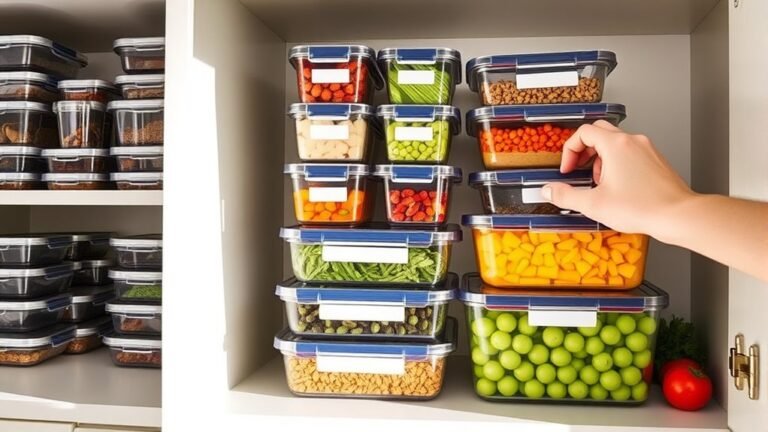
Look for matching lids that seal tightly and stack neatly, preventing spills and clutter. To stay organized, use an erasable label starter kit to mark contents and dates, ensuring you rotate items properly without permanent labels.
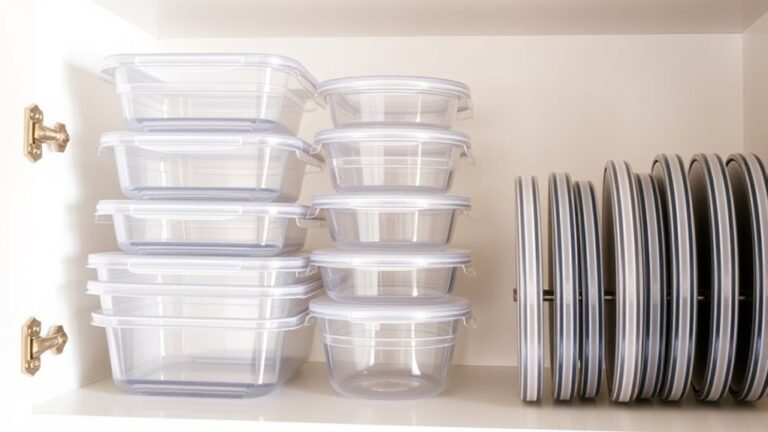
Store lids separately in an undershelf basket to avoid mismatched or warped lids. Before buying, check if a product has been rebranded and confirm features match the original durable build.
And don’t forget to review the company’s Privacy Policy when shopping online for peace of mind. It’s a small step that can save you hassle later!
Benefits of Glass Containers for Food Freshness

You’ll find that glass containers keep your food fresher longer by preventing odors and flavors from mixing. Because glass is non-toxic and nonporous, it won’t react with acidic ingredients or stain over time.
Using airtight glass storage helps slow spoilage, so your meals stay tasty and safe to eat. It’s a simple way to keep your food fresh without any hassle!
Improved Food Longevity
Because glass containers seal tightly and block odors, they keep your food fresher longer by reducing air exposure and preventing stains. This tight seal slows down quality loss, like drying out, helping your pantry and fridge items last well beyond typical storage times.
You can easily see what’s inside, so you won’t have to guess or forget about your food, which helps reduce waste. Using labeled, portioned glass containers supports a “first in, first out” system, making sure you use older items before newer ones.
Brands like GlassLock offer durable glass options you can rely on. Pairing these containers with erasable labels helps you track contents and dates accurately, maximizing the shelf life of your stored foods.
This makes your food storage system efficient and organized—and honestly, just easier to manage.
Non-Toxic Storage Benefits
Glass containers offer a trustworthy way to keep your food fresh without introducing unwanted chemicals or odors. Unlike some plastics, glass typically lacks reactive coatings that can leach flavors or odors into your food.
Its non-porous surface resists stains and won’t absorb strong flavors from items like garlic or onions, which helps preserve the original taste. Using airtight lids, such as SnapWare or GlassLock styles, you can minimize air exposure, slowing staling and flavor loss.
Glass is also easy to clean and disinfect, so you can maintain a hygienic storage setup free from residue that might affect taste. For best results, label your containers with dates and contents. That way, you always use your stored food within ideal freshness periods.
Organizing Food Storage Containers to Save Space
When organizing food storage containers, choosing clear glass options lets you spot contents quickly and stack them efficiently. Opt for containers like GlassLock, which were once sold as SnapWare, for uniformity and durability.
Label each container with an erasable label starter kit so you can update contents or dates without cluttering space with new stickers. Group similar container sizes or ingredient types together to maximize vertical stacking and minimize gaps.
Stick to a consistent labeling system naming both contents and storage location; this helps you find what you need fast and avoids unnecessary handling. By following these tips, you’ll streamline your storage, save valuable space, and maintain an orderly pantry that’s easy to manage every day.
Organizing Container Lids for Easy Access
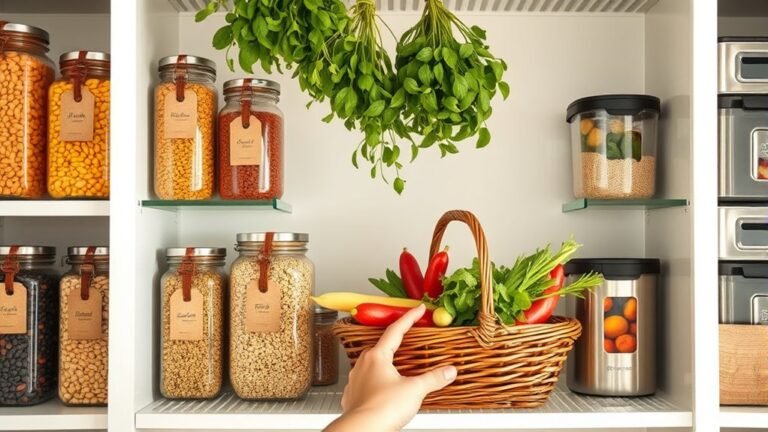
Although lids often appear like an afterthought, organizing them by size and type in a dedicated spot saves you time and frustration. Keep lids grouped in an undershelf basket or similar bin so flat lids stay together and are easy to grab.
This setup prevents lost or mismatched tops and helps you quickly pair lids with their containers. Store everything in a dry, clean area to avoid residue buildup and moisture problems that can make seals tricky.
Labeling Containers Clearly With an Erasable Kit
Keeping lids and containers organized is just the start—making sure you can quickly identify what’s inside each container takes your system to the next level. Use an erasable label starter kit to write clear notes on your glass containers, including what’s inside and the date stored.
Label containers before filling them, so you start with a clear system, then update labels as you refill. Keep your labeling consistent across all containers, using the same wording and format to help you scan shelves quickly and avoid confusion.
Always add a storage date that matches your plan, like the packing date, so you can track freshness at a glance. Store lids with containers as you label, and refresh the labels regularly to maintain accurate organization over time.
Manage Produce Freshness in Food Storage
To manage produce freshness effectively, you’ll want to chill items like broccoli, carrots, and green beans promptly. Refrigeration slows spoilage noticeably, so don’t wait too long to pop them in the fridge.
Use your fridge’s crisper drawers to control humidity and keep fruits separate from vegetables. This little trick helps everything last longer and stay tasty.
Store berries dry and wash them only right before eating. Excess moisture encourages mold, so keeping them dry is key to avoiding that yucky fuzz.
Be mindful of ethylene gas—remove any rotting produce quickly. Tomatoes, pears, and apples emit this gas, which speeds ripening in nearby items, so it’s best to keep them in check.
For leafy greens, store them in a plastic or paper bag to reduce wilting and maintain crispness. This way, they’ll stay fresh until you’re ready to use them.
These simple steps will keep your produce fresher and reduce waste. Give them a try, and you’ll notice the difference!
Frequently Asked Questions
How Often Should I Clean My Refrigerator to Prevent Contamination?
You should clean your refrigerator at least once a month to prevent contamination. Wipe spills immediately to keep things tidy and avoid any messes from sticking around.
Discard expired items weekly so your food stays fresh and safe. It’s a good habit that helps you avoid any unpleasant surprises.
Also, make sure to deep clean shelves and drawers regularly. This keeps your fridge fresh and safe for your food.
What Is the Best Way to Store Raw Meat to Avoid Cross-Contamination?
You should always store raw meat on the lowest shelf in a sealed container or plastic bag. This prevents juices from dripping onto other foods.
Can I Store Different Types of Produce Together Safely?
You can store some produce together, but be cautious. Keep ethylene-sensitive items separate from those that produce it, like apples and bananas.
It’s a good idea to use separate containers or bags to avoid spoilage and cross-contamination. That way, your fruits and veggies stay fresh longer!
How Do I Maintain Consistent Refrigerator Temperatures?
Picture your fridge like a cool, steady cave. You want to keep its temperature between 37°F and 40°F.
Make sure to check the thermostat regularly. Don’t overcrowd the fridge, and close the door quickly. This helps maintain that consistent chill.
When Should I Discard Food That Shows Signs of Spoilage?
You should discard food immediately when you see mold, off smells, slimy textures, or color changes. Don’t taste it to check.
Spoilage means harmful bacteria might be present, so it’s safer to throw it away. Better safe than sorry!
Conclusion
By mastering these seven essential food storage tips, you’re planting seeds for a kitchen that runs like clockwork. You’ll keep your leftovers safe, your containers durable, and your produce fresh as a morning breeze.
Organizing and labeling will become second nature, turning clutter into calm. So, embrace these habits, and watch your food storage transform from a chaotic puzzle into a well-oiled machine that saves you time and stress every day.
When you follow these essential food storage tips, you’re not just storing food—you’re creating a system that keeps your kitchen efficient and your meals fresh longer. Proper storage means less waste, more flavor, and easier meal prep. With organized containers and clear labels, your fridge and pantry will feel more spacious and manageable. Ultimately, these habits help you enjoy your food more and worry less, making your kitchen a place of calm and convenience every day.