
What Is the Ideal Food Storage Temperature for Canned Food?
You should store canned food between 50°F and 70°F to keep it safe, fresh, and tasty. This ideal food storage temperature helps prevent spoilage and maintains the best flavor and nutrition.
Temperatures above 85°F can cause spoilage, bacterial growth, and even damage cans, risking your health. Avoid freezing or rapid temperature changes, as these can also harm the cans and quality.
Keeping your storage environment stable and cool extends shelf life and preserves flavor and nutrition.
Want to know how temperature affects safety and shelf life more deeply?
Key Takeaways
– Store canned food between 50°F and 70°F to maintain quality, safety, and extend shelf life.
Temperatures above 85°F accelerate spoilage and increase the risk of harmful bacterial growth.
– Avoid freezing cans below 0°F to prevent can damage and compromised food safety.
Keep storage conditions stable to prevent condensation and microbial contamination.
– Proper temperature control preserves flavor, texture, nutrition, and prevents can swelling or rust.
Recommended Temperature Range for Storing Canned Foods
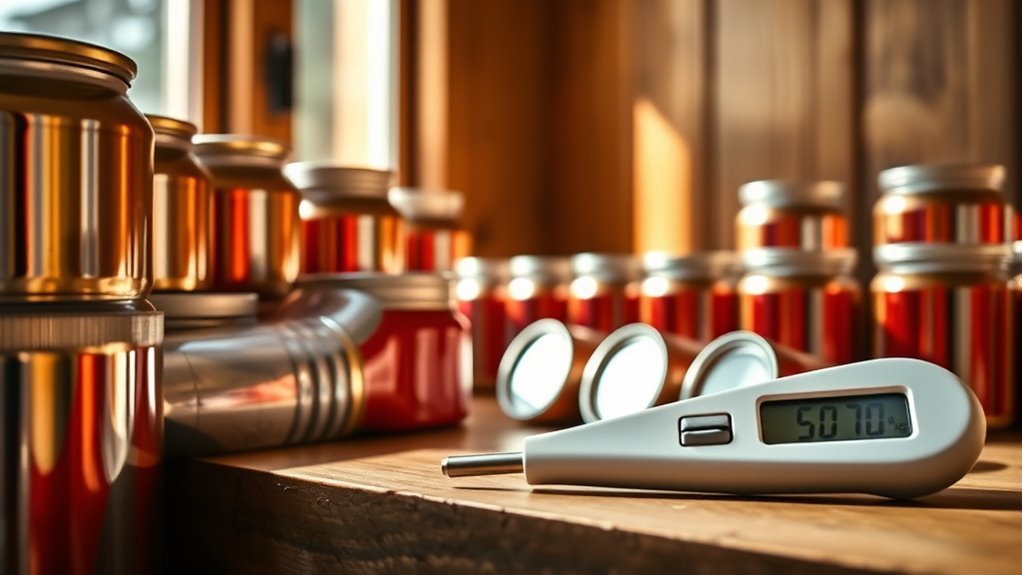
When you store canned foods, keeping the temperature between 50°F and 70°F helps maintain their quality and safety. This temperature range is ideal for food preservation and spoilage prevention.
By maintaining proper storage conditions in a cool environment, you protect canned foods from heat exposure that could compromise the can’s seal and lead to bacterial growth. Consistent storage temperature not only extends the shelf life of your canned goods—typically 1 to 5 years depending on the type—but also preserves their flavor, texture, and nutritional value.
Avoiding temperatures above 85°F is essential since higher heat accelerates spoilage and increases rust risks. For best food safety, always store canned foods in stable, cool settings that support proper storage and effective food preservation.
Effects of Improper Storage Temperatures on Canned Food Quality and Safety

If you store canned foods above 85°F, you risk accelerating spoilage and encouraging harmful bacterial growth, including botulism. Improper storage temperatures can compromise food safety by increasing microbial activity, leading to swelling, rust, or leaks in cans.
Temperature fluctuations worsen this by causing condensation inside storage conditions, promoting contamination. Signs of spoilage, like bulging cans or unpleasant odors, indicate compromised food preservation.
Keeping canned foods between 40°F and 70°F helps maintain quality and safety over time. Freezing below 0°F can halt microbial growth but may damage cans not designed for freezing.
To protect your canned foods, avoid high heat and sudden temperature changes. Proper storage temperatures are vital to prevent spoilage and ensure your food remains safe and nutritious.
Frequently Asked Questions
How Hot Is Too Hot to Store Canned Food?
You shouldn’t store canned food above 85°F because it risks spoilage, bacterial growth, and can damage cans.
Keep it between 50°F and 70°F to maintain safety and quality over time. It’s really best to find a cool, dry spot for your cans. That way, your food stays safe and tastes great when you’re ready to eat it.
Can You Eat 20 Year Old Canned Food?
Eating 20-year-old canned food is like rolling the dice with your health—you probably shouldn’t.
If the can’s bulging, rusty, or smells off, toss it. Don’t risk food poisoning; freshness matters more than nostalgia.
What Is the 2-2-2 Rule for Food Storage?
The 2-2-2 rule says you should refrigerate leftovers within 2 hours, or 1 hour if it’s above 90°F.
Then, eat refrigerated food within 2 to 4 days to avoid harmful bacteria growth.
It’s a simple way to keep your food safe and fresh!
How Long Can Food Sit in 100 Degree Weather?
You shouldn’t leave food sitting in 100-degree weather for more than two hours. After that, bacteria grow quickly, increasing spoilage and health risks.
Always move food to cooler spots to keep it safe and fresh. It’s better to be cautious when it comes to food safety!
Conclusion
To keep your canned food fresh, store it in a cool, dry place between 50°F and 70°F. Don’t let heat spoil the flavor, don’t let moisture cause rust, and don’t let freezing damage the cans.
By keeping the temperature just right, you safeguard the taste, preserve the nutrients, and ensure your food stays safe.
So, store smart, check often, and enjoy your canned goods with confidence every time. Remember, the ideal food storage temperature for canned food is key to maintaining quality and extending shelf life. Proper temperature control helps prevent spoilage and keeps your canned meals delicious and nutritious for longer.