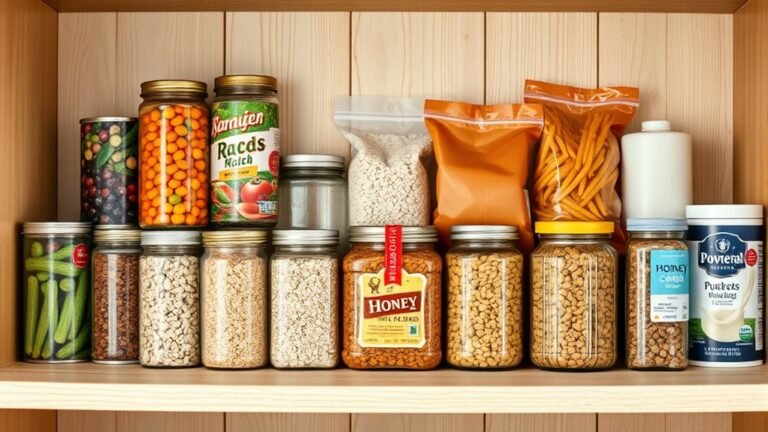
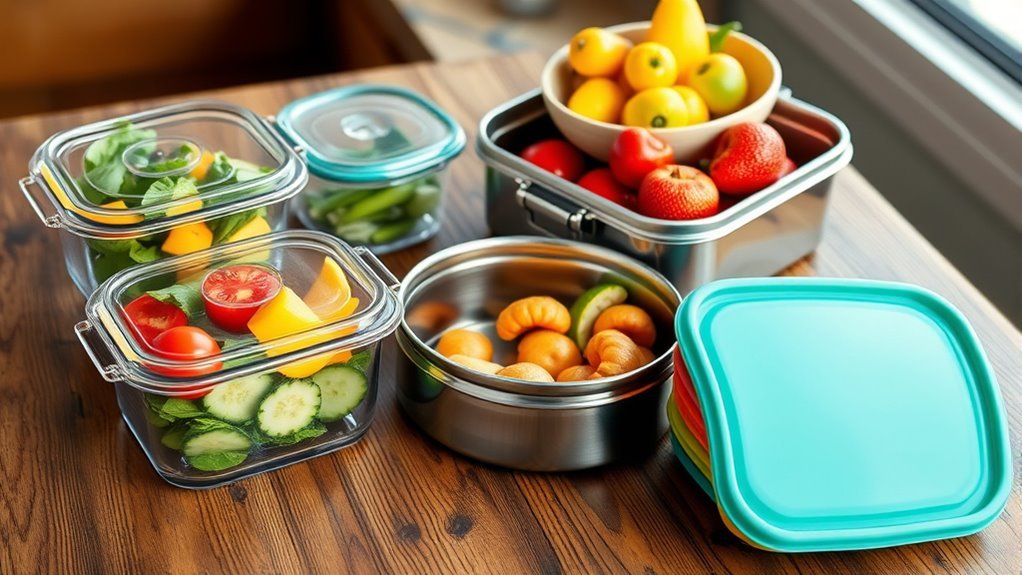
3 Items You Should Buy for Food Storage
You should buy long-lasting non-perishable foods like canned meats, grains, and dried fruits to keep your nutrition balanced. These items are essential because they store well and provide the energy and nutrients you need during emergencies.
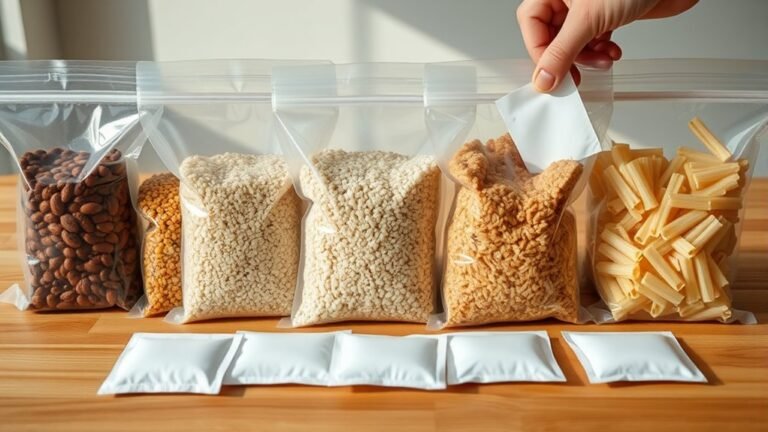
Next, get airtight containers such as Mylar bags or vacuum-sealed buckets to keep your food fresh and safe from pests. These containers help extend the shelf life of your food, so it stays edible for months or even years.
Finally, make sure you have a reliable water supply stored in food-grade containers, rotating it regularly to stay fresh. Water is just as important as food when it comes to storage, so don’t overlook it.
If you want to be fully prepared, understanding storage techniques and preservation methods will help you build a dependable food stockpile. It’s all about keeping your supplies safe, fresh, and ready when you need them.
Key Takeaways
- Purchase canned meats and staple grains like rice or pasta for long-lasting, nutritious food storage. These basics are super reliable when you need them the most.
- Invest in airtight, food-grade containers such as Mylar bags with oxygen absorbers to extend shelf life. Keeping air and moisture out really makes a difference.
- Buy a minimum three-day supply of water stored in opaque, food-safe containers for emergency hydration. Water is your top priority, so don’t skimp on this.
- Include dried fruits and nuts for durable, portable, and nutrient-dense snack options. They’re great for quick energy and won’t spoil easily.
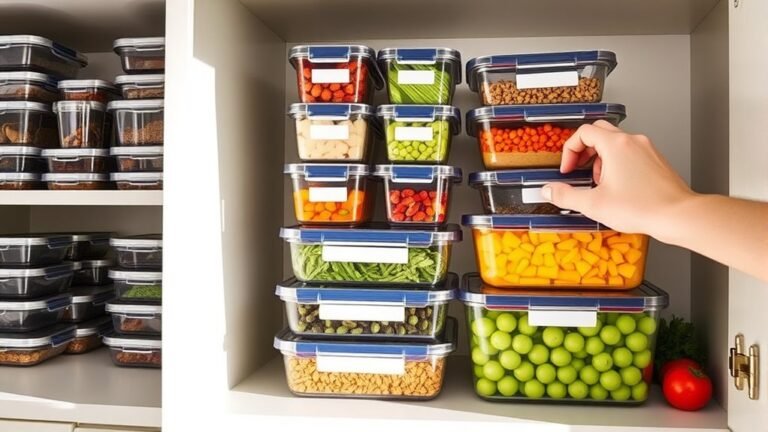
- Label all food packages with contents and expiration dates to organize and rotate your stock effectively. Staying organized helps you use everything before it goes bad.
Essential Non-Perishable Food Items
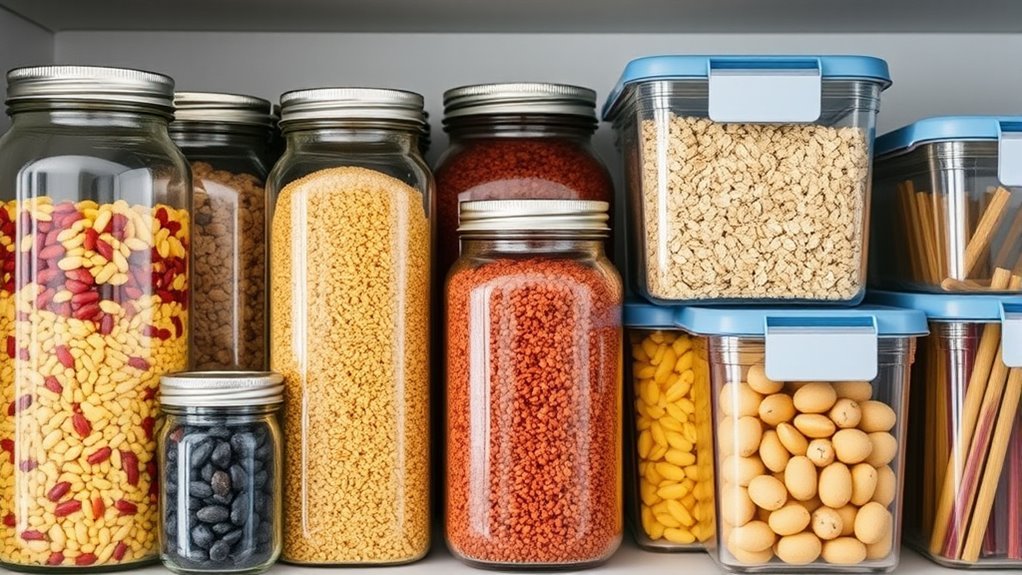
When you prepare your food storage, focus on essential non-perishable items like canned meats, staple grains, and vegetables to guarantee a balanced and lasting supply. Stock canned foods such as salmon, chicken, and turkey, which offer at least a two-year shelf life.
Include pantry staples like dry grains—rice, pasta, quinoa, and oats—known for their long-term food stability. Don’t forget canned vegetables and legumes like green beans, carrots, peas, chickpeas, and black beans to ensure nutrient variety.
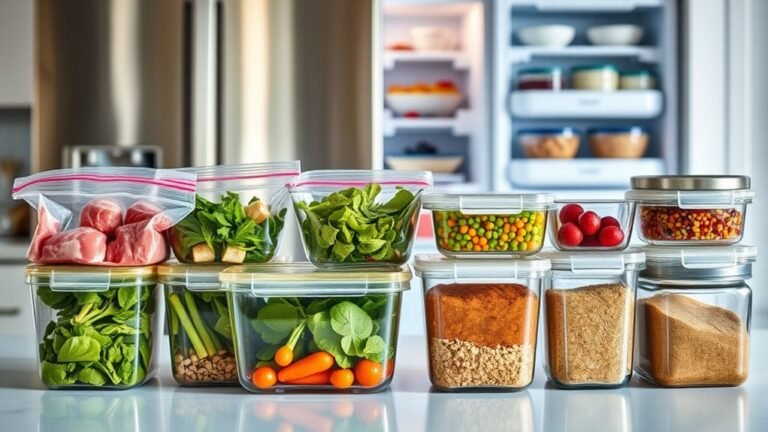
Dried fruits and nuts make excellent emergency foods due to their portability and durability. Keeping these non-perishable foods in proper food storage containers helps maintain freshness and extends shelf life.
Proper Containers and Packaging for Longevity
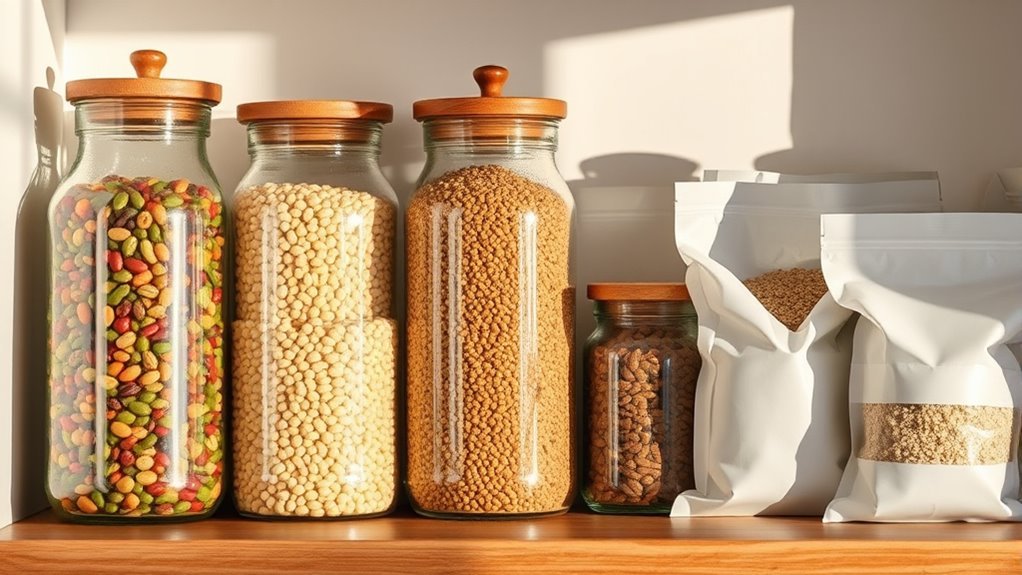
To keep your non-perishable food items fresh and safe for as long as possible, you need the right containers and packaging. Use food-grade packaging like airtight buckets, Mylar bags with oxygen absorbers, and vacuum-sealed bags to extend shelf life while preventing pests.
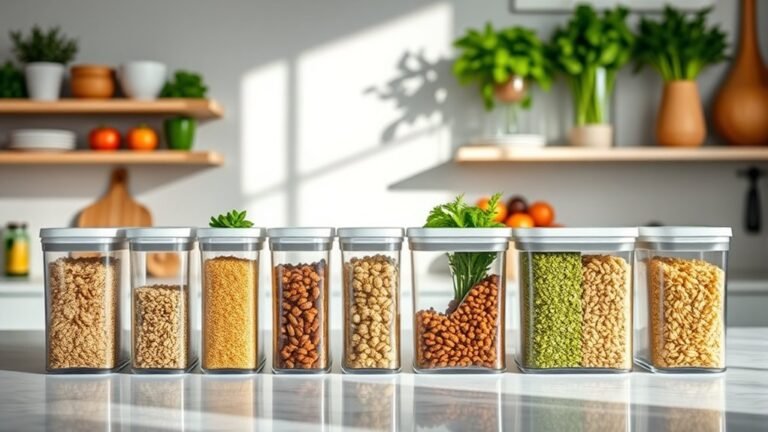
Store dry foods in opaque, moisture-proof containers made from BPA-free plastic or metal to avoid chemical leaching and protect against light and humidity. Proper sealing techniques, such as vacuum or heat sealing, eliminate air exposure and inhibit bacterial growth.
Don’t forget to label each package with contents and expiration dates—it helps you rotate stock efficiently and reduces waste. Choosing the right containers and mastering sealing techniques guarantees your stored foods stay safe, fresh, and ready whenever you need them.
Water Storage and Preservation Methods
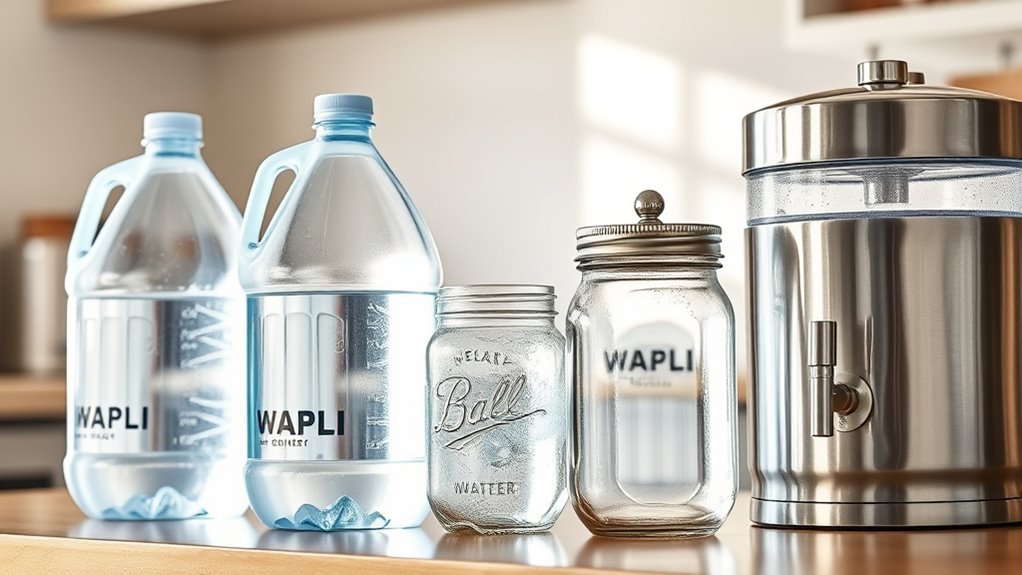
How much water should you store to stay prepared? Aim for at least one gallon per person per day, with a minimum three-day supply of emergency water. Use food-grade containers—opaque plastic bottles or buckets with sealed lids—to maintain water quality and guarantee water safety.
Store your water in a cool, dark, dry water storage location, away from chemicals and sunlight, to enhance water preservation. Bottled water is convenient, but if you store tap water, be ready to use water purification methods like boiling, chemical disinfectants, or portable filters if contamination occurs.
Don’t forget water rotation every six to twelve months; this keeps your supply fresh and prevents bacterial buildup. Proper water storage and preservation make all the difference when emergencies strike. So, it’s worth taking the time to do it right!
Frequently Asked Questions
What Is the 5 4 3 2 1 Rule for Groceries?
The 5-4-3-2-1 rule guides you to buy five fresh produce types, four protein sources, three dairy or alternatives, two healthy fats, and one staple carb.
It helps you create balanced, nutritious meals with variety and simplicity.
This way, you’re covering all your bases without overcomplicating your grocery list.
Plus, it makes meal planning a lot easier!
What Should I Stock up on if WW3 Happens?
If WW3 happens, you should stock up on canned proteins, bulk staples like rice and beans, freeze-dried fruits and veggies, water, and essential items like salt, sugar, oils, plus multivitamins to maintain health and energy.
Think about the basics first—food and water are key. Canned proteins and bulk staples like rice and beans will keep you going.
Don’t forget freeze-dried fruits and veggies—they last long and keep your diet balanced. Plus, having essentials like salt, sugar, and oils on hand is super important.
And hey, multivitamins can help fill in any nutritional gaps and keep your energy up when fresh food is scarce.
What Are 20 Foods That Should Be Stockpiled and Never Expire?
You might think nothing lasts forever, but honey, white rice, dried beans, salt, and vacuum-sealed spices defy time.
Stock those plus hardtack, canned tuna, and powdered milk for a reliable, long-lasting emergency food supply.
These foods are great to have on hand because they keep well and can be used in lots of different meals.
What Are Some Good Items for Storing Food?
You should use airtight containers, vacuum-sealed bags, Mylar bags with oxygen absorbers, and food-grade buckets. These keep moisture, pests, and air out, preserving your food’s freshness and extending shelf life effectively.
Trust me, these options really make a difference when it comes to storing food properly. Plus, they’re easy to find and use, which is always a bonus!
Conclusion
Now that you know the essentials—non-perishable foods, proper containers, and water storage—you’re all set to keep your supplies fresh and ready.
Think of it like packing your digital floppy disk with everything you need for the future: reliable, secure, and built to last. Don’t wait until the last minute; start stocking smartly today.
By investing in quality food storage containers, choosing long-lasting non-perishable foods, and ensuring you have ample water storage, you’re creating a solid foundation for your emergency preparedness. These three items are key to maintaining your food’s freshness and safety over time.
So, get started now on building your food storage supplies. Your future self will thank you for being prepared, organized, and ready for whatever comes your way!