How to Organize a Food Storage Room in 3 Simple Steps
Start by taking inventory of your food and available storage spaces. Measure closets, under beds, and cool, dry areas like basements to see what you’ve got to work with.
Next, choose the best spots that offer consistent temperature and low moisture for long-term storage. These conditions help keep your food fresh and safe.
Finally, label each box clearly with food type, quantities, and expiration dates. This makes managing rotation a breeze and avoids waste.
Organizing this way saves space and keeps your food fresh.
Keep going to uncover tips for maximizing storage and maintaining order. You’ll be surprised how simple it is to create a well-stocked, easy-to-navigate food storage room!
Key Takeaways
- Determine your long-term food storage goal to guide space and quantity planning before purchasing bulk food.
- Measure and inventory all potential storage spaces. Prioritize cool, dry, and climate-controlled areas like basements.
- Organize food by type and store consistently. Use clear labels with purchase and expiration dates for easy rotation.
- Use vertical and under-bed spaces efficiently. Place items on shelves or under hanging clothes to maximize storage.
- Maintain an updated inventory list or spreadsheet with storage locations. Use “first in, first out” for stock rotation.
Inventory Your Food and Storage Space

Before you buy any bulk food, start by deciding how much long-term food you want to store—whether it’s three, six, nine, or twelve months. Keep in mind, longer time frames need much more space than most homes have.
Next, inventory your available storage spots. Look under beds, on closet shelves, closet floors beneath hanging clothes, under stairs, and in spare bedrooms.
Don’t forget to check vertical space too. Avoid garages unless they’re climate-controlled; instead, prioritize cool, dry areas like basements.
Measure each space carefully—note shelf depth, clearance under beds, and how many boxes can stack. Use a simple inventory list to record where you can store food.
Organize by food type and label boxes clearly to track expiration dates efficiently before buying any bulk supplies.
Find the Best Indoor Spots for Long-Term Food Storage

After you’ve inventoried your food and storage spaces, focus on selecting the best indoor spots for long-term storage. Choose cool, dry areas like basements, which maintain consistent temperatures and low moisture better than most rooms.
Use closets efficiently by placing items on high fixed shelves and storing boxes or cans on the floor under hanging clothes for protection and space-saving. Don’t overlook under-bed storage; adding bed risers can increase clearance, allowing you to store a surprising amount of emergency food.
Specialty spots such as coat closets, laundry-room top shelves, or standing cabinets also work well for neatly stacked supplies. Just be careful about garages unless they’re climate-controlled, because temperature swings and humidity can reduce your food’s shelf life.
Label and Track Your Food Storage Boxes
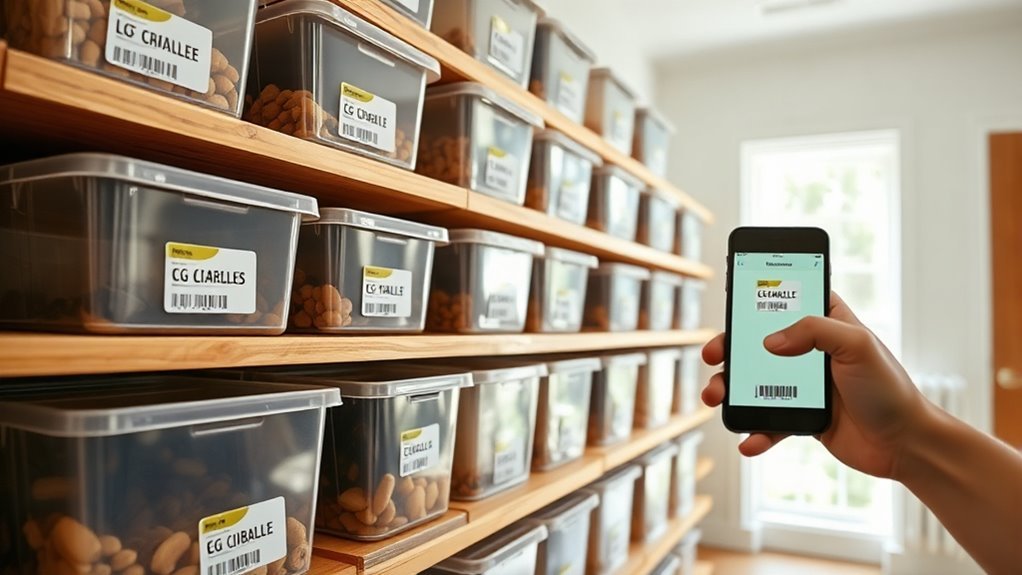
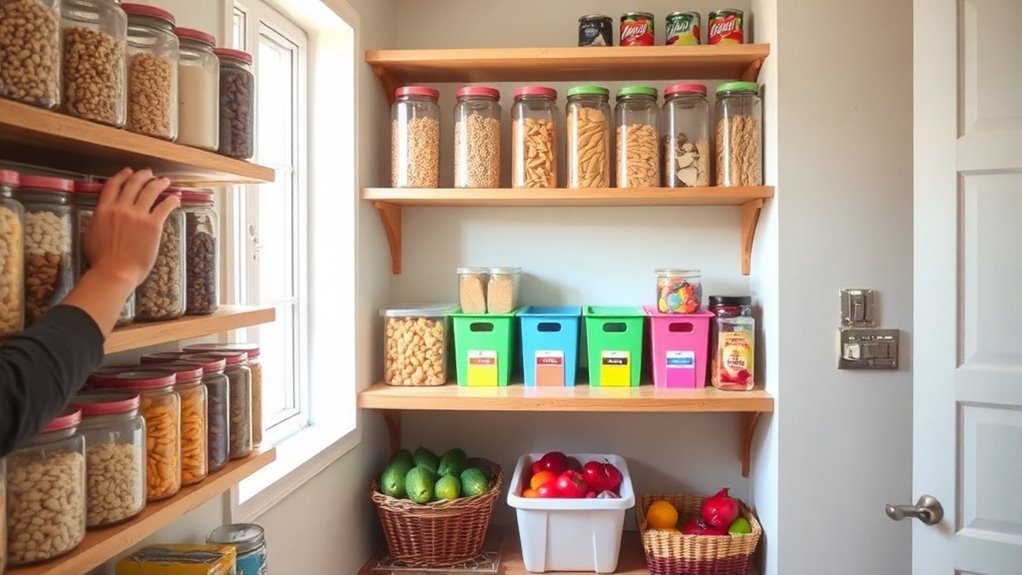
When you label and track your food storage boxes clearly, you’ll save time and prevent confusion later on. Start by marking each box with the food type, can size, and quantity inside.
Add purchase and expiration dates to help you rotate stock using the “first in, first out” method. Keep a simple inventory list or spreadsheet linking each label to its exact location, like “closet top shelf” or “basement shelf 2.”
Use consistent labeling across all boxes so you can quickly spot what’s running low and avoid duplicates. For boxes stored out of sight, like under beds or on high shelves, keep a small map or photo showing each box’s spot.
This way, you’ll stay organized and efficient in managing your food storage. It really makes finding what you need so much easier!
Frequently Asked Questions
How Often Should I Clean My Food Storage Room?
You should clean your food storage room at least every three months to prevent pests and spoilage.
It’s a good idea to check for expired items monthly. Wipe shelves regularly, too.
And don’t forget to keep the area dry to maintain freshness and hygiene. It really helps keep everything in good shape!
What Is the Best Way to Prevent Pests in Food Storage?
Pests hate a fortress, so seal every crack and use airtight containers for your food. You’ll keep them out by cleaning spills immediately, rotating supplies, and using natural repellents like bay leaves or peppermint oil.
It’s all about making your storage space uninviting. A little effort goes a long way in keeping those pesky critters away!
Can I Store Fresh Produce in the Food Storage Room?
You can store some fresh produce in your food storage room if it’s cool, dry, and well-ventilated. Avoid high humidity and heat, which spoil freshness quickly.
Also, keep fruits and veggies separate to prevent ripening issues. It really helps keep everything fresh longer.
How Do I Handle Storing Food During Power Outages?
When the lights flicker out, you’ll want to keep your fridge and freezer doors tightly shut, like sealing a treasure chest, preserving cold air.
Use coolers with ice for essentials, and plan meals around perishables quickly. It’s all about keeping things cold as long as possible to stay safe.
What Are the Best Containers for Airtight Food Storage?
You’ll want airtight containers made of BPA-free plastic, glass jars with rubber seals, or vacuum-sealed bags. These keep food fresh longer by preventing moisture, air, and pests from getting in.
This helps preserve your storage efficiently. So, choosing the right container really makes a difference!
Conclusion
By organizing your food storage room, you can reduce food waste—did you know the average household throws away 30% of its groceries? Taking time to inventory your food, find the best storage spots, and label your boxes not only saves money but also keeps your supplies fresh and easy to find.
With these simple steps, you’ll create a more efficient, stress-free space that supports your family’s needs. Start today and see the difference! Organizing your food storage room helps you keep track of what you have, so nothing goes to waste. Plus, it makes meal planning and grocery shopping a breeze. A well-organized food storage room is key to saving money, reducing waste, and making life a little easier every day. So why wait? Get started now and enjoy the benefits of a tidy, functional food storage space!