7 Ideal Thicknesses of Mylar for Food Storage
You’ll want to choose Mylar bags based on your food’s type and storage time. Picking the right Mylar thickness is key for keeping your food fresh and safe over time.
For light items like herbs, 2–3 mil is fine.
Everyday dry foods do well in 4–5 mil bags, balancing durability and cost.
For sharp or dense foods, go for 5.5–7 mil to avoid punctures and extend freshness.
Bags thicker than 7 mil offer extreme protection.
Picking the right thickness helps your food stay safe and fresh—there’s more to contemplate for perfect storage choices.
Key Takeaways
- Mylar thickness ranges from 2 mils to 7 mils, each suited for different food storage needs and durations.
- 2-3 mil bags are ideal for short-term storage of lightweight, non-sharp foods like spices and herbs.
- 4-5 mil thickness balances durability and cost, perfect for everyday dry food storage such as grains and nuts.
- 5.5-7 mil thick Mylar bags offer heavy-duty protection, suitable for sharp, dense foods and long-term storage.
- Selecting the right thickness depends on food type, storage time, and environmental conditions for optimal preservation.
Understanding Mylar Bags and Their Role in Food Storage
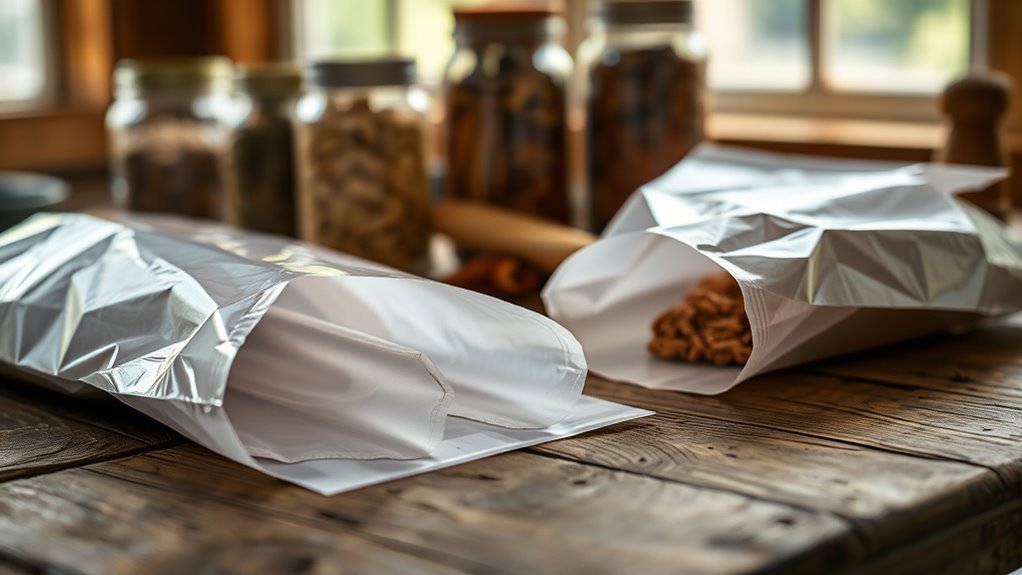
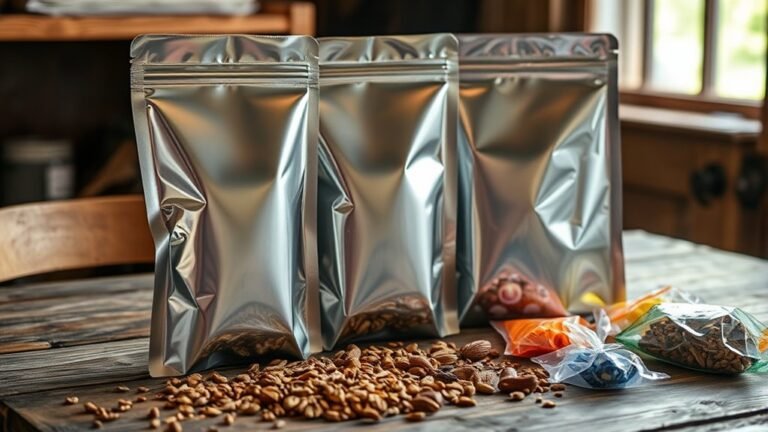
How do Mylar bags keep your food fresh for so long? These bags, made from biaxially-oriented polyethylene terephthalate (BoPET), create a strong barrier against oxygen, moisture, light, and odors.
The thickness of Mylar bags plays a vital role in their effectiveness; thicker bags offer better protection, especially for long-term storage. You’ll want to choose the right thickness based on the type of food and the environmental conditions where you store it.
Pairing Mylar bags with oxygen absorbers further extends shelf life by removing residual oxygen inside the sealed bag. By understanding these factors, you can confidently use Mylar bags to keep your food fresh and safe, ensuring it lasts as long as possible without spoiling.
Measuring Mylar Bag Thickness: Mils Vs Microns
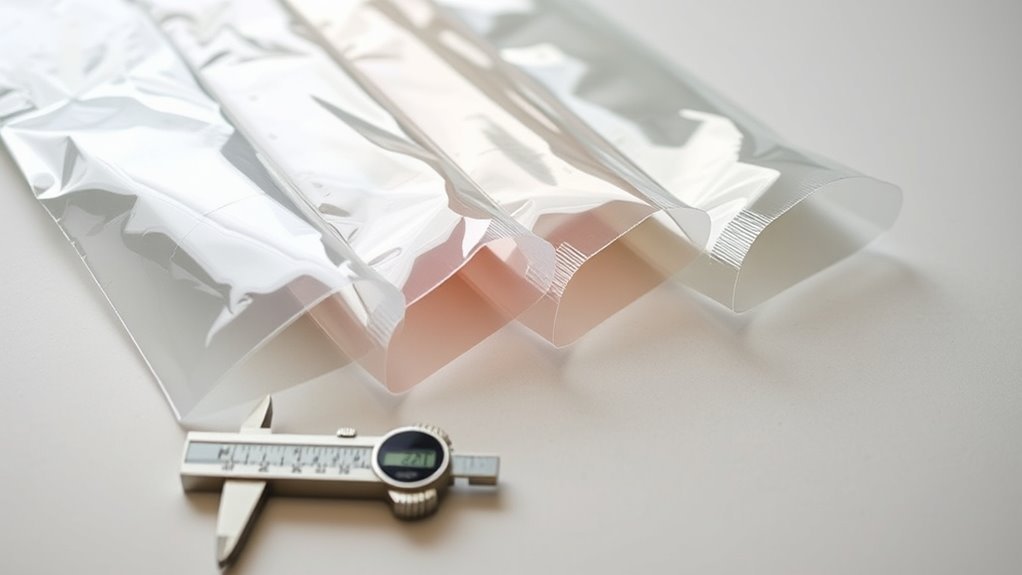
Although Mylar bag thickness is often expressed in mils, many industries prefer microns for greater precision. You’ll find that 1 mil equals one-thousandth of an inch, while 1 micron equals one-millionth of a meter.
When you’re working with storage bags, understanding this difference matters. To convert mils to microns, simply multiply the mil measurement by 25.4. For example, a 4.5 mil bag equals about 114.3 microns thick.
This thickness conversion helps you compare Mylar measurement standards accurately, especially since some specify thickness per side and others total thickness. By knowing how to measure Mylar bag thickness in both mils and microns, you can confidently choose the right storage bags to protect your food effectively.
Benefits of 2 to 3 Mil Mylar Bags for Light Food Storage
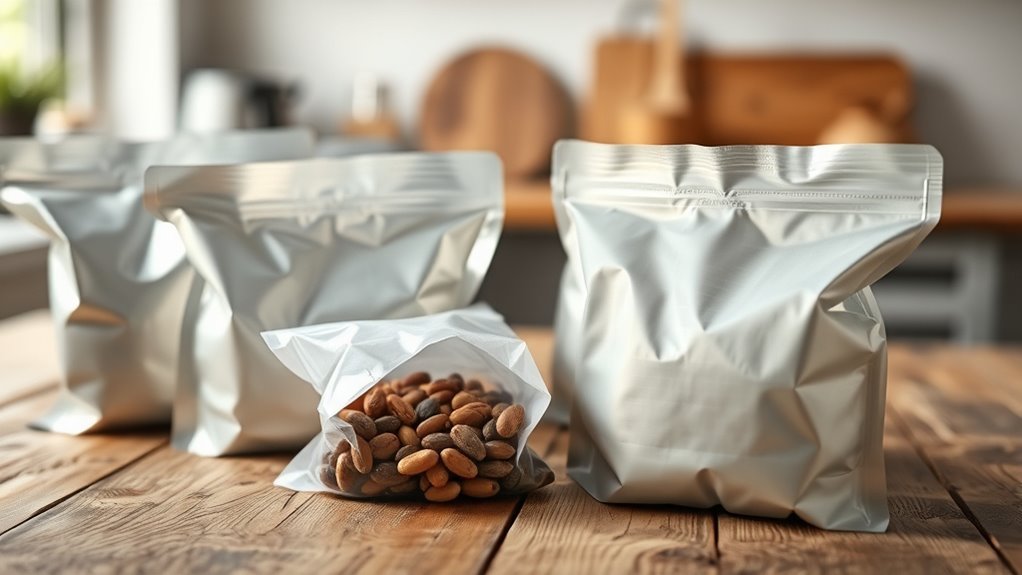
When you need lightweight and flexible packaging for short-term storage, 2 to 3 mil Mylar bags offer a cost-effective solution.
These 2-3 mil bags are perfect for storing dry foods like spices or dried herbs that don’t require heavy-duty protection. Their lightweight design makes handling and sealing easy, while providing a basic moisture barrier to keep contents fresh for limited periods.
However, keep in mind their lower puncture resistance means they’re not suited for sharp or heavy items. Since the moisture barrier isn’t as robust as thicker bags, 2-3 mil bags work best when you need temporary protection rather than long-term preservation.
If you want simple, flexible packaging for everyday, short-term storage needs, these thinner Mylar bags deliver convenience without breaking the bank.
Optimal Uses for 4 to 5 Mil Mylar Bags in Everyday Packaging
When you choose 4 to 5 mil Mylar bags, you’re picking a thickness that’s perfect for storing dry foods like grains, nuts, and spices with reliable protection.
These bags strike a great balance, making them durable enough to resist punctures while still easy to handle and seal.
Whether you’re organizing your pantry or prepping emergency food supplies, this thickness offers the right combination of flexibility and strength.
Suitable Food Types
Because 4 to 5 mil Mylar bags balance durability and cost, they work great for storing everyday dry foods like spices, nuts, and dried herbs. These storage bags offer the right Mylar thickness to protect against moisture and light, making them ideal for short-term storage of various food types.
You can also use them for coffee, grains, and beans, as they provide enough puncture resistance for these items. Thinner bags in this range suit lightweight, non-sharp foods, while the thicker side handles slightly more robust contents.
If you want reliable barrier properties without paying for ultra-thick films, 4 to 5 mil bags give you that practical balance for daily packaging and storage needs. They’re just right for keeping your foods fresh without breaking the bank.
Handling and Durability
Although 4 to 5 mil Mylar bags aren’t the thickest option available, they offer a reliable balance of flexibility and puncture resistance that suits everyday food storage. This thickness ensures the bags handle regular use without tearing, making them perfect for short- to medium-term storage of dry goods like grains and spices.
You’ll appreciate their durability when repeatedly opening, resealing, and transporting your food items. While thinner bags risk damage during handling, these 4 to 5 mil bags provide enough strength to prevent punctures while maintaining ease of use.
Keep in mind, though, that for long-term storage, thicker bags offer better barrier protection. Overall, the thickness and durability of 4 to 5 mil Mylar bags make them an excellent choice for light industrial and retail packaging needs.
Heavy-Duty Protection With 5.5 to 7 Mil Mylar Bags
You’ll get heavy-duty protection with 5.5 to 7 mil Mylar bags, which resist punctures and tears better than thinner options. These bags work great for dense or abrasive foods like jerky and grains that could damage lighter films.
Choosing this thickness helps keep your food fresh and safe during long-term storage and rough handling. It’s a smart choice if you want your goodies to stay protected no matter what.
Enhanced Durability Benefits
When you choose Mylar bags with thicknesses between 5.5 and 7 mils, you get heavy-duty protection that stands up to punctures, tears, and harsh environmental factors. This thick Mylar markedly boosts puncture resistance and tear resistance, ensuring your food stays safe during handling and transport.
Its durability reduces the risk of leaks and contamination, which is vital for long-term storage. You won’t have to worry about brittleness or sharp edges damaging the packaging, as these bags maintain their integrity over time.
Suitable Food Applications
The heavy-duty protection offered by 5.5 to 7 mil Mylar bags makes them perfect for storing sensitive or high-value foods. Their thickness provides excellent long-term protection by blocking light, moisture, and oxygen. This ensures your food stays fresh and safe.
You’ll appreciate using these Mylar bags for food storage when handling items that need extra care. Consider these suitable applications:
- Sharp-edged foods like dried meats that could puncture thinner bags.
- Grains and powders requiring airtight, moisture-proof seals for years of storage.
- Irregularly shaped or delicate items that demand durable packaging to prevent damage.
Extreme Durability Offered by Mylar Bags Over 7 Mil Thickness
Because Mylar bags over 7 mil thick offer exceptional puncture resistance, you can confidently store sharp or dense items without worrying about damage. Thicker Mylar bags enhance Mylar durability, providing superior environmental protection against moisture, light, and pests.
This protection extends shelf life substantially, making these bags ideal for long-term storage. Their puncture resistance also reduces tears during handling and transportation, ensuring your products remain safe under tough conditions.
| Thickness (mil) | Durability Level | Common Uses |
|---|---|---|
| 7.0 | High | Household food storage |
| 7.5 | Very High | Industrial & military use |
| 8.0 | Extreme | Heavy-duty industrial goods |
| 10+ | Ultra-Extreme | Harsh environmental storage |
Choosing bags over 7 mil guarantees unmatched protection and durability. It’s definitely worth considering if you want to keep your items safe for the long haul.
Factors to Consider When Selecting the Right Mylar Bag Thickness
Although Mylar bags come in various thicknesses, selecting the right one depends on your specific storage needs. This includes the type of food, storage duration, and environmental factors.
Choosing the right Mylar bag thickness depends on your food type, storage time, and environment.
You’ll want to factor in these key points when choosing Mylar bag thickness:
- If your food has sharp edges or is dense, go for thicker bags (at least 5 mils). This helps avoid punctures.
- For longer storage duration, thicker bags provide better protection against moisture, light, and pests.
- Take into account environmental factors like humidity and sunlight exposure. Thicker bags handle harsh conditions better.
Also, using a reliable heat sealer ensures a tight seal regardless of thickness, preventing contamination.
Thin bags might be tempting because they’re lighter or cheaper, but they risk tears—especially around sharp edges and rough handling. Choose wisely to keep your food fresh and safe.
Frequently Asked Questions
Is It a Good Idea to Store Food in Mylar Bags?
Yes, you should store food in Mylar bags because they keep moisture and air out, preserving freshness longer. Just make sure to seal them properly and store them in cool, dark places for the best results.
It’s a pretty straightforward way to extend the shelf life of your food. Plus, it’s not too complicated once you get the hang of sealing those bags right.
Which Is Thicker, Plastic, 2 Mil or 4 Mil?
You know what they say, “thicker is better” when it comes to durability. Between 2 mil and 4 mil plastic, 4 mil is definitely thicker.
It gives you twice the thickness and stronger protection for your needs. So, if you want something more durable, 4 mil is the way to go.
Does Mylar Give off Microplastics?
Yes, Mylar can release microplastics if it’s cut, punctured, or exposed to heat and friction.
You should keep bags intact, avoid damage, and handle them gently to minimize any microplastic contamination in your food.
What Are the Best Mylar Bags for Long-Term Food Storage?
You want Mylar bags at least 7 mil thick with a heat-sealable feature for airtight protection.
These bags resist moisture, oxygen, and pests, ensuring your food stays fresh and safe during long-term storage.
It’s all about keeping your food in the best condition possible, right? So, choosing the right thickness and seal really makes a difference.
Conclusion
Now that you know the ideal Mylar thicknesses for every food storage need, the real question is—which one will you choose to protect your precious supplies? Whether you want light protection or heavy-duty durability, the perfect option is waiting for you.
Don’t rush this decision—your food’s freshness depends on it. Choosing the right Mylar thickness can make all the difference in keeping your food safe from moisture, air, and light.
Ready to make the smart choice that keeps your food safe longer than you ever imagined? Remember, selecting the ideal Mylar thickness for food storage ensures your supplies stay fresh and usable for years. So take your time, weigh your options, and pick the Mylar thickness that best suits your needs. Your food storage game will thank you!