How to Safely Use Plastic Containers for Food Storage
To safely use plastic containers for food storage, it’s important to choose the right type of plastic. Look for food-grade plastics labeled with recycling codes 1, 2, 4, or 5. These are typically safer options for storing your meals.
Also, check if the containers are microwave-safe before heating your food in them.
Avoid using containers with recycling codes 3, 6, or 7. These plastics may contain harmful chemicals that can leach into your food.
Plus, if your containers are cracked or scratched, it’s best to discard them. Damage can increase the risk of harmful chemical migration and microplastic contamination.
Always cool hot foods before placing them in plastic containers. This simple step helps reduce chemical migration.
Following these tips can help keep your food safer and healthier. And remember, there are more ways you can protect your health when using plastic for food storage!
Key Takeaways
- Use food-grade plastic containers labeled with recycling codes 1, 2, 4, or 5 for safe food storage. These are generally considered safer options for keeping your food fresh.
- Always check if the containers are microwave-safe before heating anything. This helps minimize the risk of chemicals leaching into your food when heated.
- Try to avoid using plastics with recycling codes 3, 6, or 7. These types tend to have a higher chance of chemical migration, which isn’t great for your health.
- Take a moment to inspect your containers regularly. If you notice any cracks, scratches, or damage, it’s best to toss them out to prevent microplastic contamination.
- When storing hot food, let it cool down before popping it into plastic containers. Doing this reduces the chances of heat causing chemicals to leach into your food.
Choosing the Right Plastic Containers for Food Storage
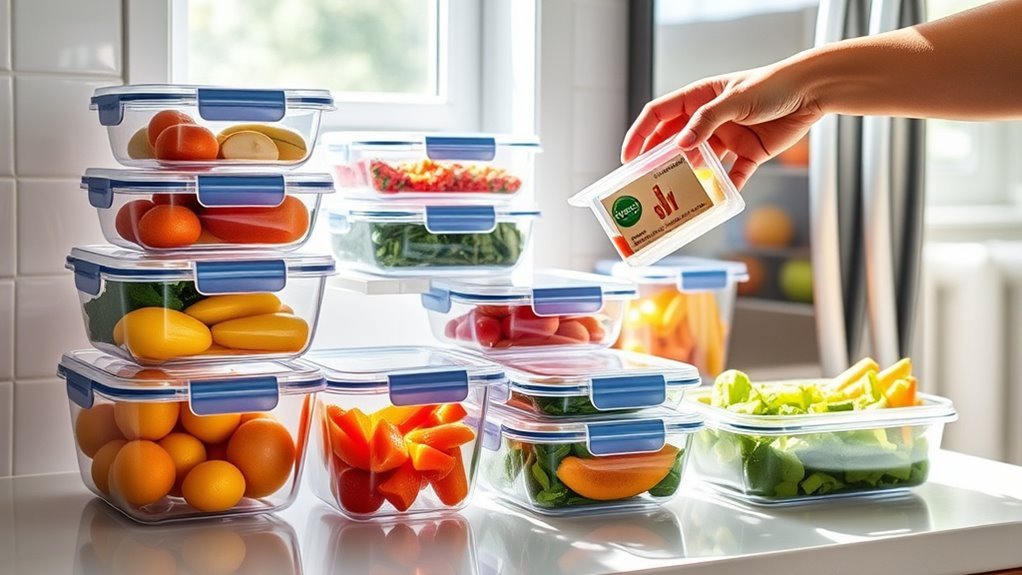
When selecting plastic containers for food storage, you should choose those labeled with recycling codes 1, 2, 4, or 5. These are food-grade and safer for your meals.
These safe plastics reduce the risk of chemical leaching, especially when heating food. Always check food safety labels to confirm if your containers are microwave-safe before use.
Choose safe plastics to minimize chemical leaching and always verify microwave safety before heating your food.
Avoid plastics marked with recycling codes 3, 6, or 7, as they pose higher leaching risks. Also, inspect your food storage containers regularly for plastic deterioration.
Cracked or scratched containers can release microplastics into your food. While plastic recycling helps reduce waste, selecting the right materials for food storage matters most for your health.
Whenever possible, opt for glass or stainless steel for hot or acidic foods to further minimize chemical exposure. It’s a simple step that can make a big difference.
Best Practices to Minimize Chemical and Microplastic Exposure
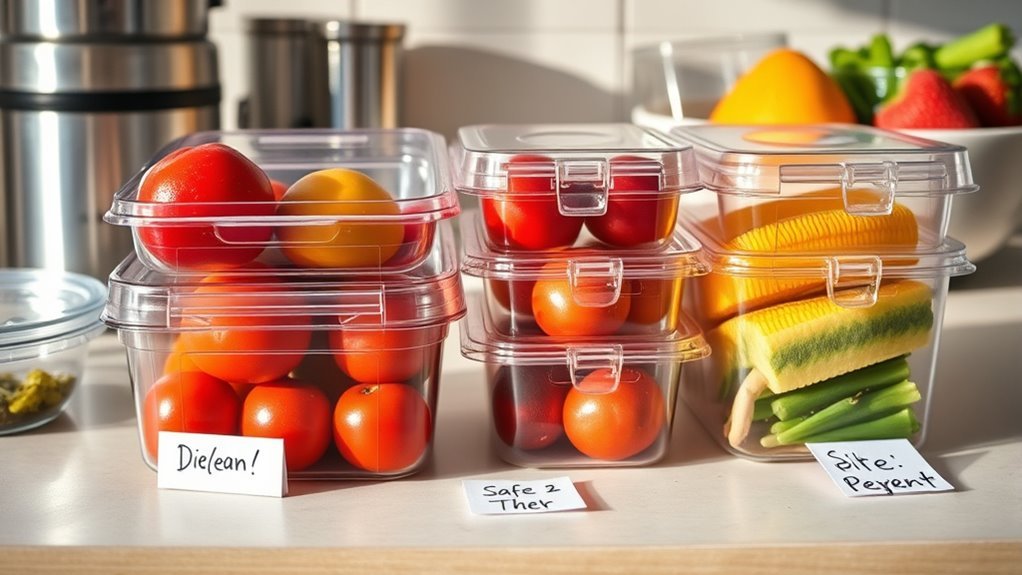
Although plastic containers are convenient, you can reduce chemical and microplastic exposure by following a few key practices. Use glass or stainless steel for hot or acidic foods to prevent microplastic leaching.
Let hot foods cool before placing them in plastic containers to minimize heat transfer that accelerates chemical migration. Only microwave food in containers labeled microwave safe to uphold food packaging safety.
Regular damage inspection is essential—discard scratched or cracked containers to avoid increased chemical migration. Limit reuse of single-use plastic containers to reduce microplastic shedding.
| Practice | Why It Matters | Tip |
|---|---|---|
| Use non-plastic for hot | Prevents microplastic leaching | Opt for glass or ceramic |
| Cool hot foods first | Reduces heat transfer effects | Wait before food storage |
| Microwave safe only | Limits chemical migration | Check container labels |
| Inspect for damage | Avoids microplastic release | Discard damaged reusable containers |
Frequently Asked Questions
Is It Okay to Use Plastic Containers for Food Storage?
Yes, you can use plastic containers for food storage, but make sure they’re food-grade, microwave-safe if heating, and free from cracks or odors.
Avoid reusing single-use plastics and consider BPA-free options or alternatives like glass for safety.
It’s all about keeping your food safe and fresh!
What Should You Never Store in Plastic Containers?
You should never store hot, acidic, greasy, or highly fatty foods in plastic containers. These types of foods can cause the plastic to break down or leach chemicals.
Also, avoid using damaged containers. They might not seal properly and could let bacteria in.
And definitely don’t store raw meats and dairy in plastic containers unless the container is specifically labeled safe for refrigeration or freezing. It’s better to be safe than sorry!
Do Ziploc Bags Leach Microplastics Into Your Food?
Yes, Ziploc bags can sneak microplastics into your food like tiny uninvited guests, especially if you heat or reuse them.
Stick to cold, dry storage to keep those particles at bay and your food safer.
Is 30 Year Old Tupperware Safe to Use?
You shouldn’t use 30-year-old Tupperware because it likely contains harmful chemicals and may have degraded over time.
It’s safer to replace it with modern, BPA-free containers to avoid chemical leaching and protect your health.
Better to be safe than sorry, right? Modern options are designed with your health in mind.
Conclusion
By choosing the right plastic containers and following simple best practices, you can keep your food fresh without turning your kitchen into a chemical minefield. Always look for BPA-free labels, avoid heating food in plastic, and replace worn-out containers regularly.
These small steps aren’t just smart—they’re lifesavers for your health. Remember, your food deserves the safest home possible, so don’t settle for anything less than plastic perfection!
Using plastic containers for food storage can be safe and effective if you follow these guidelines. Opt for BPA-free containers to reduce exposure to harmful chemicals. Never heat food directly in plastic containers, as heat can cause chemicals to leach into your meals.
Also, regularly inspect your containers for cracks or wear and replace them when needed. By prioritizing safety and quality in your food storage choices, you ensure that your stored food remains fresh and uncontaminated. This approach not only protects your health but also enhances the longevity of your plastic containers. In the end, safe plastic food storage is all about smart choices and consistent care.