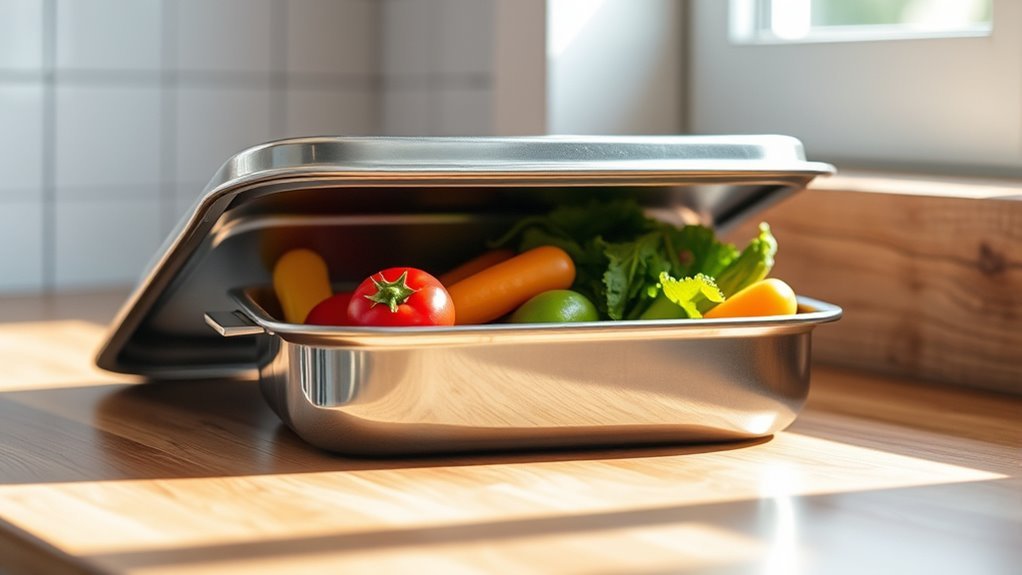
How to Safely Use Stainless Steel Containers for Food Storage
To safely use stainless steel containers for food storage, it’s important to start with a good cleaning. Wash them thoroughly using warm water and a mild detergent to remove any residues. This helps keep your food fresh and your containers in top shape.
Once washed, dry the containers immediately with a soft cloth. This prevents water spots and keeps the stainless steel looking shiny.
Avoid using abrasive cleaners—they can scratch the surface and damage the container over time.
Handle lids and containers gently, especially when heating food. This careful approach helps maintain the container’s integrity and ensures your food stays safe.
Also, make it a habit to regularly check for any odors or signs of damage. If you notice any, it’s best to replace the container.
By following these simple steps, you’ll keep your stainless steel containers in great condition and protect the quality of your food. Keep exploring to master their care and usage—it’s easier than you think!
Key Takeaways
- Thoroughly wash containers with warm water and neutral detergent before first use. This helps remove any residues and ensures your food stays safe.
- Always dry containers immediately with a soft cloth. Doing this prevents water spots and helps avoid corrosion.
- Use mild detergents and soft sponges for cleaning. This way, you won’t scratch the surface and the container’s corrosion resistance will be preserved.
- Remember to remove lids before heating stainless steel containers. Avoid using non-stainless steel or plastic lids in ovens or microwaves—they just aren’t built for that.
- Regularly check your containers for any odors, cracks, or damage. If you notice any issues, it’s best to replace them to keep your food safe.
Preparing and Cleaning Stainless Steel Containers for Use
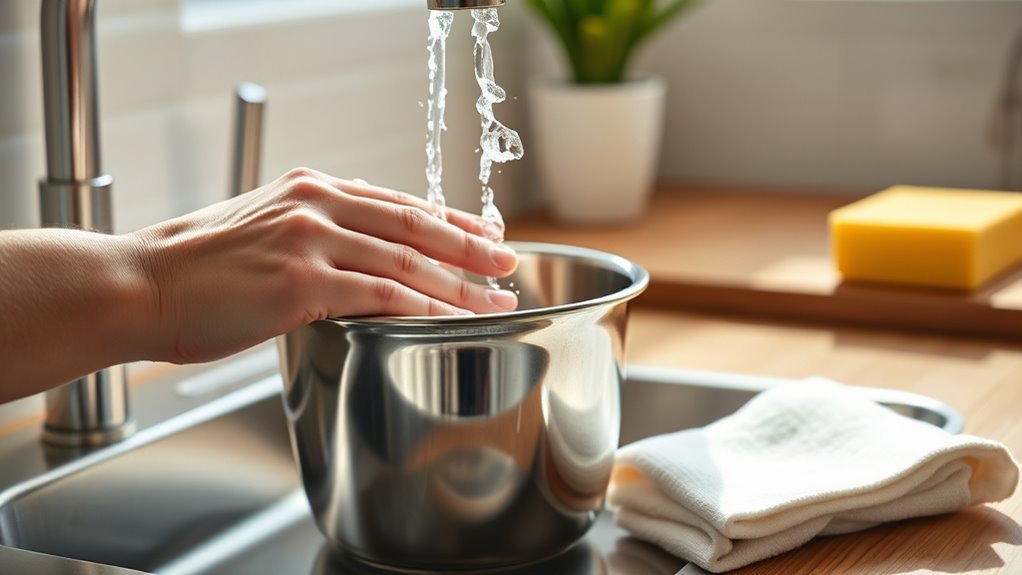
Before you use your stainless steel containers for the first time, make sure to clean them thoroughly with warm water and a neutral detergent. This helps remove any manufacturing residues. This initial cleaning is essential for food safety and makes sure your containers are ready for food storage.
Clean stainless steel containers thoroughly before first use to remove residues and ensure food safety.
After washing, rinse each container well to get rid of all detergent traces. To give the surface a nice finish, wipe the inside and outside with a soft cloth lightly coated with cooking oil.
If you come across stubborn stains, try using a mixture of water, vinegar, and detergent in a 2:1:1 ratio. This will help deep clean the containers effectively.
Finally, dry your stainless steel containers immediately with a soft cloth. Doing this prevents water spots and keeps them looking polished.
Proper cleaning not only helps maintain your containers’ durability but also ensures food safety. So, it’s worth taking the time to do it right!
Best Practices for Usage and Maintenance
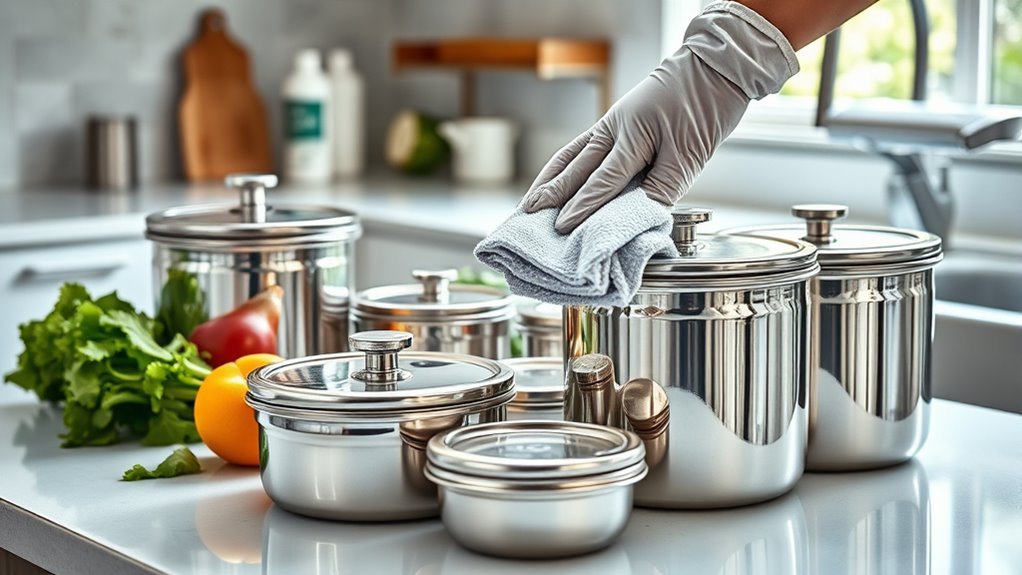
When you use stainless steel containers, handle them with care to preserve their durability and food safety. Always remove lids before heating to maintain temperature safety, and avoid plastic or non-stainless steel lids in ovens or microwaves.
For cleaning, use soft sponges with mild detergents to protect corrosion resistance and prevent scratches that can compromise seam integrity. Dry your stainless steel food containers immediately after washing to avoid water spots and potential corrosion, especially in humid environments.
Regular maintenance includes checking for odors or cracks that indicate seam deterioration or odor absorption, which can jeopardize food safety. Replace containers if you notice any damage.
Frequently Asked Questions
Is It Safe to Store Food in Stainless Steel Containers?
Yes, you can safely store food in stainless steel containers. Just avoid long-term storage of highly acidic or salty foods.
Also, clean them gently by hand to keep them in great condition and free from corrosion. This way, your containers will last longer and stay safe for your food.
What Foods Should Not Be Stored in Stainless Steel Containers?
You wouldn’t want to store acidic foods like tomato sauce or citrus in stainless steel, as they can cause corrosion.
Also, avoid salty, strong-smelling, or greasy foods to prevent damage, odors, and tough cleaning.
Is It Safe to Put a Stainless Steel Food Container in My Fridge?
Yes, you can safely put stainless steel containers in your fridge. Just cover them to avoid spills and odors, and make sure food cools before storing.
They resist stains, odors, and won’t leach chemicals. So, it’s a great option for keeping your food fresh and safe!
Does Stainless Steel Give off Microplastics?
Think of stainless steel like a sturdy rock by the river—it doesn’t crumble into tiny pieces. You won’t get microplastics from it because it’s metal, not plastic.
Conclusion
When you clean your stainless steel containers thoroughly and use them properly, you’re not just storing food—you’re preserving freshness and safety.
Imagine opening a lunchbox on a sunny day, the aroma untouched and vibrant, all because you took a moment to rinse and dry well.
By following these simple steps, you’ll enjoy meals that taste just right, every time.
It’s a small effort that makes a big difference, coincidentally turning routine into reliability.
Using stainless steel containers for food storage is a smart choice because they resist stains and odors better than plastic. Plus, they’re durable and eco-friendly.
Just remember to clean them well and dry them completely to keep your food safe and fresh.
With proper care, stainless steel containers help maintain your meals’ flavor and quality, making them a reliable option for everyday food storage.