How to Use Stainless Steel for Safe Food Storage
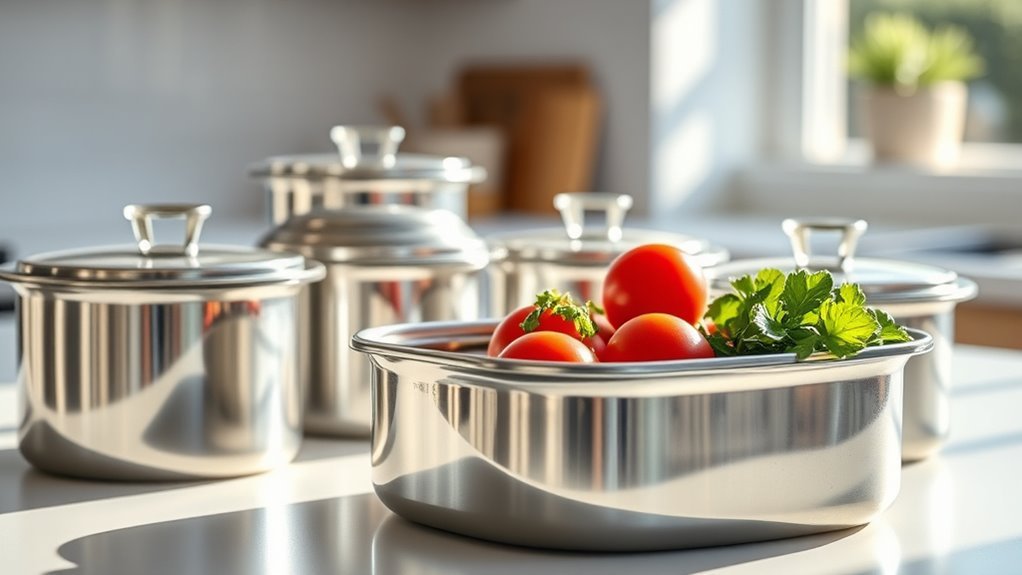
To store food safely in stainless steel, it’s important to choose food-grade types like 304 or 316. These grades resist corrosion and prevent harmful leaching, making them ideal for your kitchen needs.
Using containers with non-porous surfaces also helps avoid bacteria buildup and lingering odors.
After each use, clean your stainless steel containers with nonabrasive products. Then, make sure to dry them thoroughly to prevent water spots and corrosion. It’s a simple step that goes a long way in keeping your containers in great shape.
Try not to store highly acidic or salty foods for long periods, as this can damage the steel over time.
Also, regularly inspect your containers for scratches or any signs of wear. Keep them well cared for, and you’ll enjoy safe, fresh food storage every time without worry.
Key Takeaways
- Use food-grade stainless steel (grades 304 or 316) with ≥10.5% chromium for corrosion resistance and food safety. This type of stainless steel is best because it won’t react with your food or rust easily.
- Clean containers thoroughly with nonabrasive cleaners and dry completely to prevent bacteria and corrosion. Keeping them dry is super important to avoid any unwanted growth or damage.
- Avoid storing highly acidic or salty foods long-term to protect the stainless steel surface from damage. These kinds of foods can be tough on the metal over time, so it’s better to use other containers for them.
- Regularly inspect for scratches or discoloration and address damages promptly to maintain food safety. A quick look now and then can save you from bigger problems later.
- Consider electropolishing or surface treatments to enhance smoothness and reduce bacterial adhesion. These treatments make the surface smoother, which helps keep things extra clean.
Benefits of Using Food-Grade Stainless Steel for Storage
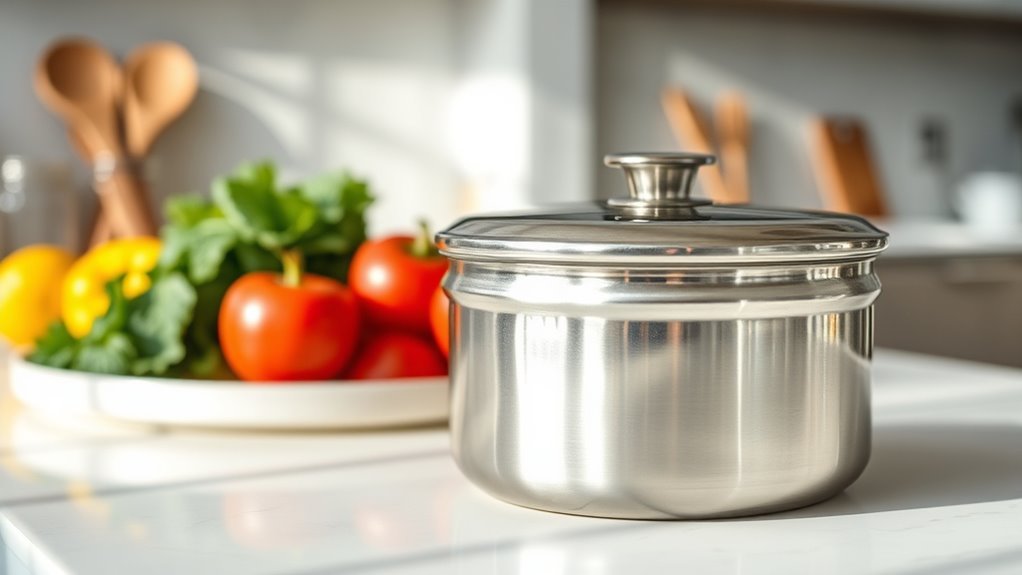
When you choose food-grade stainless steel for storage, you’re picking a material that actively protects your food’s safety and quality. Stainless steel contains at least 10.5% chromium, creating a passive oxide layer that ensures corrosion resistance and prevents harmful leaching.
Its non-porous surface makes it highly hygienic, resisting bacteria and stains better than many alternatives. FDA approved grades like 304 and 316 meet strict food safety standards, so you know your storage containers are safe for direct contact with food.
Additionally, stainless steel resists odors, scratches, and chemical reactions, preserving your food’s original taste. Durable and long-lasting, stainless steel offers an eco-friendly option for food storage.
Best Practices for Maintaining Stainless Steel Containers
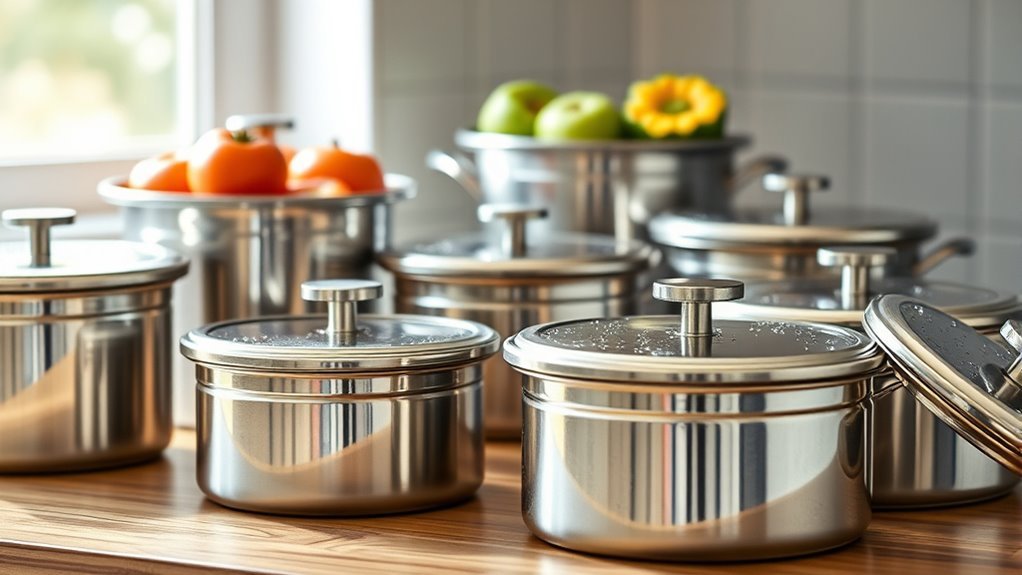
Properly maintaining your stainless steel containers guarantees they stay safe and durable for long-term food storage. Always use nonabrasive, stainless steel-safe cleaning products to protect the surface and preserve corrosion resistance.
After washing, dry containers thoroughly to prevent water spots, bacterial growth, and potential corrosion, especially in humid areas. Regular inspection is vital—check for pitting, scratches, or discoloration and address any damage promptly to uphold food safety.
Applying surface treatments like electropolishing can enhance smoothness and reduce bacterial adhesion, boosting overall durability. Also, avoid storing highly acidic or salty foods for long periods, as organic acids can compromise the corrosion resistance and cause metal leaching.
Following these maintenance tips ensures your food-grade stainless steel containers remain safe and effective for safe food storage. It’s a simple routine that really pays off in keeping your containers in top shape.
Frequently Asked Questions
How Safe Is Stainless Steel for Food Storage?
Stainless steel is very safe for food storage. You won’t risk harmful chemicals leaching into your food, especially if you choose food-grade types and clean them properly.
Just avoid storing acidic or salty foods for too long. That way, you keep your food safe and your containers in good shape.
What Food Cannot Be Stored in Stainless Steel?
Don’t store acidic or salty foods in stainless steel; they’re like a bull in a china shop, causing corrosion and metal leaching.
Avoid tomato sauce, vinegar, pickles, citrus juices, and salty cheeses to keep your food safe.
It’s best to keep these foods in glass or ceramic containers instead. That way, you won’t risk any unwanted flavors or health concerns.
Is It Safe to Store Food in Stainless Steel Overnight?
Yes, you can safely store most foods in stainless steel overnight. Just avoid highly acidic or salty foods in lower-grade containers.
And always clean your containers properly to prevent contamination and keep your food safe. It’s really that simple!
Does Stainless Steel Release Toxins When Heated?
Like a well-made lock, stainless steel won’t release toxins when heated if it’s food-grade and undamaged.
Just avoid scratched or corroded surfaces, and you won’t have to worry about harmful metal leaching into your food.
Conclusion
Using food-grade stainless steel for storage is a smart choice—you’ll keep your food safe and fresh without worrying about harmful chemicals.
Did you know that stainless steel is 100% recyclable, making it an eco-friendly option too? By following simple maintenance tips like regular cleaning and avoiding abrasive scrubbers, you’ll extend the life of your containers.
So, go ahead and switch to stainless steel—you’ll enjoy durable, safe, and sustainable food storage every day. Choosing stainless steel for food storage not only protects your meals from contamination but also supports a greener planet. Plus, with proper care, these containers can last for years, making them a cost-effective and reliable option. Start using stainless steel today and make your food storage safer and more environmentally friendly!