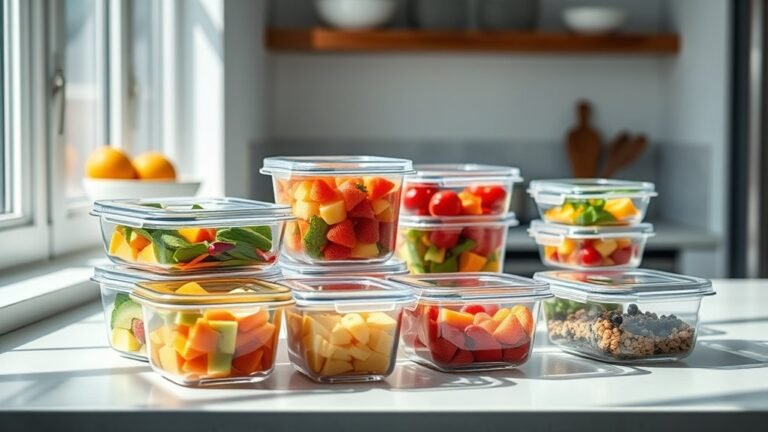
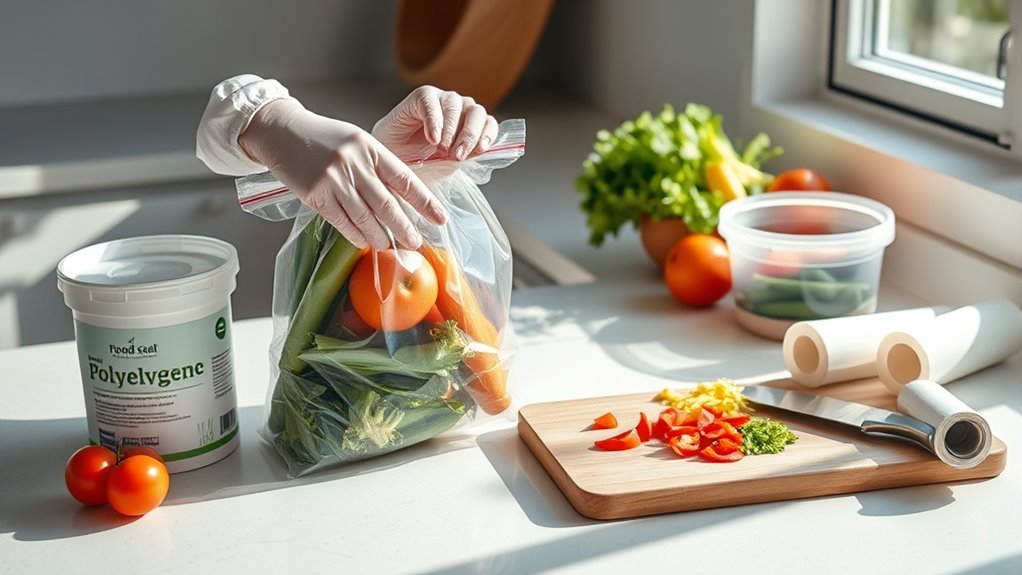
How to Use Polyethylene Safely for Food Storage
To use polyethylene safely for food storage, start by choosing food-grade types like HDPE (#2) or LDPE (#4). These materials are designed specifically for storing food and help keep your meals safe.
Make sure the containers are BPA-free and microwave-safe if you plan to heat food in them.
Before each use, check for cracks, odors, or any cloudiness in the containers. These signs could mean the polyethylene is breaking down or contaminated.
Also, try to avoid storing fatty or acidic foods in polyethylene containers, as these can cause chemical leaching over time.
Always clean your containers thoroughly after use, and replace any that show damage promptly.
By following these simple steps, you’ll keep your food safe and extend the life of your containers.
Stick around for more tips to help you get the most out of your food storage safely!
Key Takeaways
- Use food-grade HDPE (#2) or LDPE (#4) containers labeled BPA-free and microwave-safe for safe food storage and heating. These types are designed to keep your food safe and avoid harmful chemicals.
- Inspect containers regularly for cracks, odors, or cloudiness. If you spot any damage or wear, it’s best to toss them out to prevent chemical contamination.
- Clean containers thoroughly with hot water and soap before reuse. Also, store them in cool, dry places away from sunlight to keep them in good shape.
- Avoid storing fatty or acidic foods in polyethylene containers. This helps minimize the chance of chemicals leaching into your food.
- Always follow the manufacturer’s guidelines. And remember, never reuse single-use plastics for repeated food storage—they aren’t made to last and could be unsafe.
Choosing the Right Type of Polyethylene for Food Storage
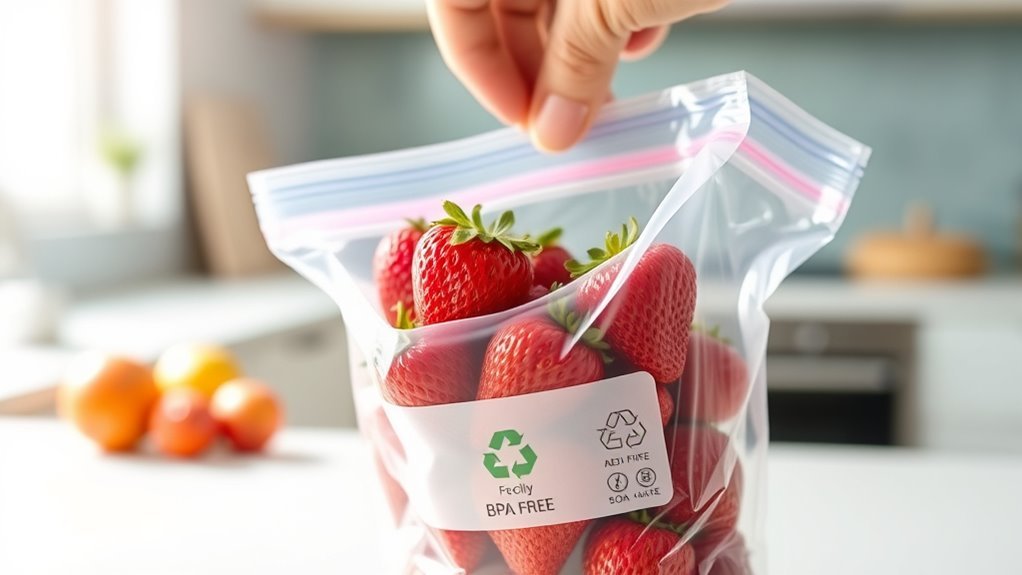
When choosing polyethylene containers for food storage, you should opt for high-density polyethylene (HDPE, #2) or low-density polyethylene (LDPE, #4) that are clearly labeled as food-grade. These types of food-safe plastics are identified by resin identification numbers 2 or 4 on polyethylene recycling symbols, guaranteeing they’re suitable for plastic food storage.
Always select BPA-free plastics to minimize health risks. Make sure your polyethylene containers are marked as microwave-safe plastics if you plan to heat food in them to avoid plastic leaching.
Avoid using scratched, cloudy, or odorous containers since they may release harmful chemicals. Also, stick to reusable polyethylene containers designed for food use rather than repurposing single-use plastics, which might not meet food-grade standards.
This way, you guarantee safety and durability in your plastic food storage. It’s all about choosing the right container to keep your food fresh and safe!
Best Practices for Using Polyethylene Containers Safely
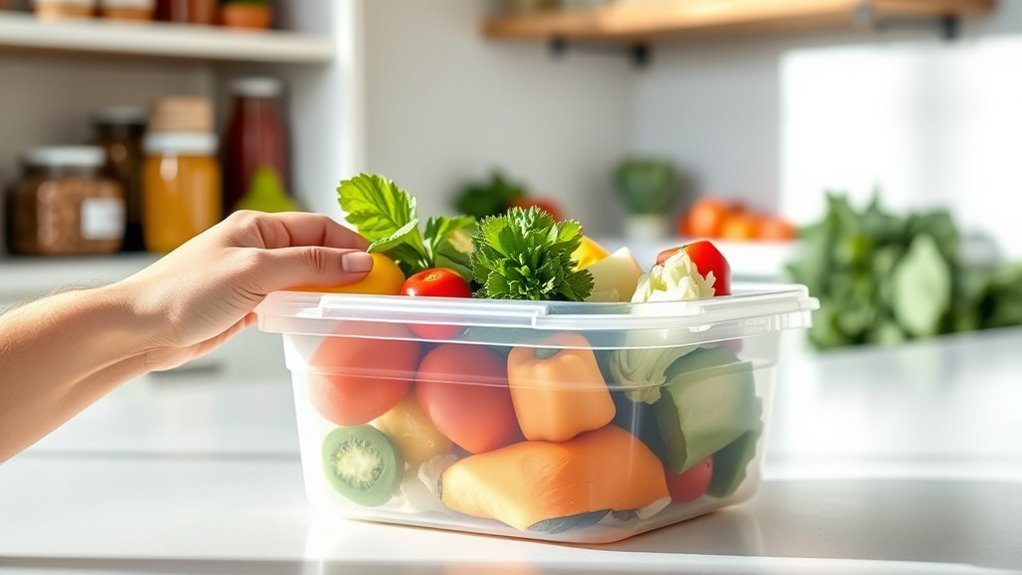
Although polyethylene containers offer convenience for food storage, you should always check that they bear recycling codes #2 or #4. These codes indicate they’re safe for food use.
For superior food safety, avoid heating or microwaving food in these containers to prevent chemical migration. Always inspect the container condition before reuse—cracks, stains, or odors mean it’s time to replace it.
Proper cleaning with hot water and soap is essential to ensure safe food contact. Also, be mindful of storage conditions; keep containers in a cool, dry place away from sunlight to maintain their integrity.
- Use only microwave safe containers to avoid chemical leaching.
- Limit storing fatty or acidic foods to reduce chemical migration.
- Replace containers showing damage or persistent odors.
Following these best practices helps guarantee polyethylene containers remain safe for your food storage needs.
Frequently Asked Questions
Is It Safe to Store Food in Polyethylene?
Yes, you can safely store food in polyethylene containers as long as you use them properly. Just make sure to avoid heating food in them, and always guarantee they’re clean and undamaged.
If you need to heat food, always choose microwave-safe options. That way, you keep things safe and convenient!
Does Polyethylene Leach Microplastics?
Yes, polyethylene can leach microplastics, especially when exposed to heat, mechanical stress, or aging.
To reduce risks, you should avoid high temperatures and prolonged storage. Also, choose high-quality containers designed for food use.
What Is the Safest Plastic to Store Food In?
Think of HDPE and LDPE as your food’s trusty armor—they’re the safest plastics to store food in.
You’ll want containers labeled #2 or #4, free from cracks or odors, to keep your meals fresh and safe.
Is a 20 Year Old Tupperware Safe to Use?
You shouldn’t use a 20-year-old Tupperware for food storage because it may have degraded, increasing chemical leaching risks.
It’s safer to replace it with newer, food-grade containers to protect your health and food quality.
Conclusion
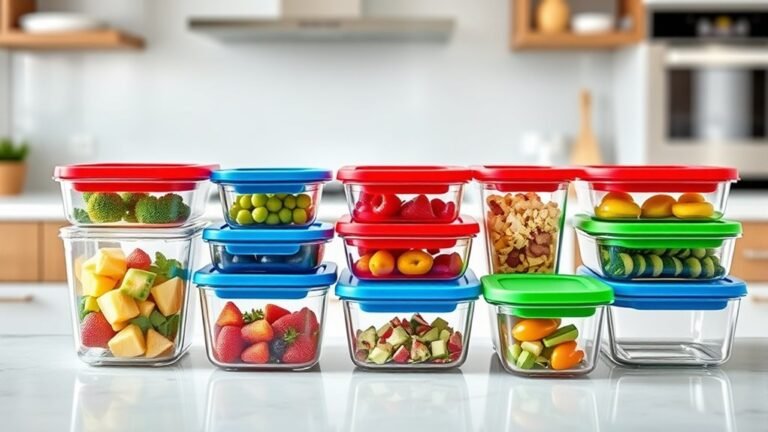
When you choose the right polyethylene, you’re wrapping your food in a gentle, safe hug. Picture fresh fruits and leftovers resting comfortably, shielded from spills and spills.
By following simple steps—like avoiding heat and checking for food-grade labels—you keep your meals fresh and worry-free. So, trust polyethylene as your kitchen’s quiet guardian, letting you store with ease and savor every bite.
Using polyethylene safely for food storage means paying attention to a few key details. Always select products marked as food-grade to ensure they’re designed for storing edibles. Keep polyethylene away from high heat, as excessive temperatures can cause harmful chemicals to leach into your food.
With these precautions, polyethylene becomes a reliable choice for keeping your food fresh and safe. It’s a practical, affordable option that helps you reduce waste and enjoy your meals with confidence. So go ahead—store, protect, and enjoy your food knowing polyethylene is working silently to keep it safe.