7 Reasons Glass or Plastic Is Better for Food Storage
When choosing food storage, glass keeps your meals safer by avoiding harmful chemicals and resisting stains, odors, and scratches. It handles heat and cold well, so you can use it in ovens, microwaves, and freezers without worry.
Plus, glass cleans easier and supports the environment through recycling.
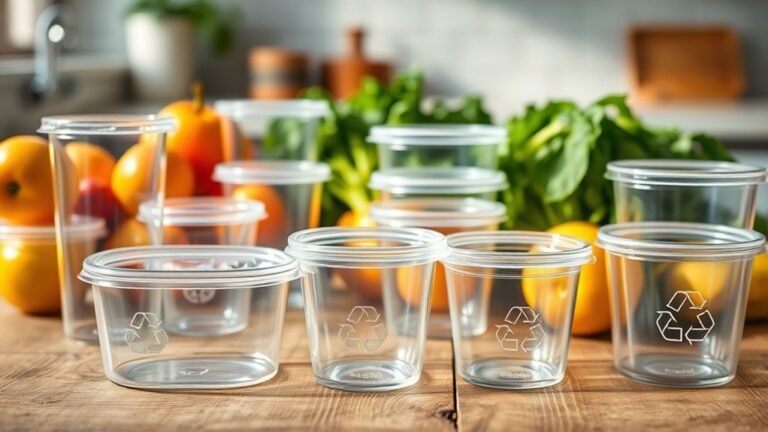
Plastic is lighter and often cheaper but can warp, stain, and release toxins, especially when heated.
So, while plastic might seem convenient, it comes with some downsides you should consider.
If you want to understand how these factors affect your everyday kitchen, there’s more to explore.
Knowing the benefits and drawbacks of glass and plastic helps you make smarter choices for your food storage needs.
Key Takeaways
- Glass containers do not leach harmful chemicals, ensuring safer food storage compared to plastic. This means your food stays pure and free from unwanted toxins.
- Glass withstands high and low temperatures without warping, making it ideal for oven, microwave, and freezer use. So, you can heat or chill your meals without a worry.
- Glass resists stains, odors, and scratches, which helps maintain food freshness and keeps the container looking clear over time. No more weird smells or discoloration.
- Glass is dishwasher-safe and easier to clean thoroughly. This reduces bacteria buildup compared to plastic, keeping your containers hygienic.
- Glass is fully recyclable and environmentally sustainable. Unlike most plastic, which is non-biodegradable and poorly recycled, glass is a greener choice for the planet.
Choosing Between Glass and Plastic Food Storage Containers
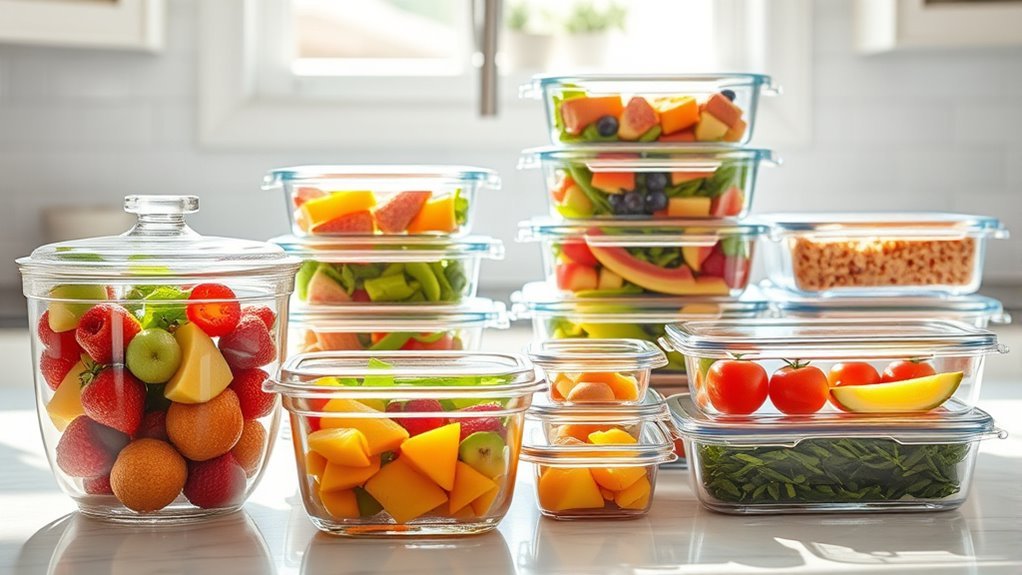
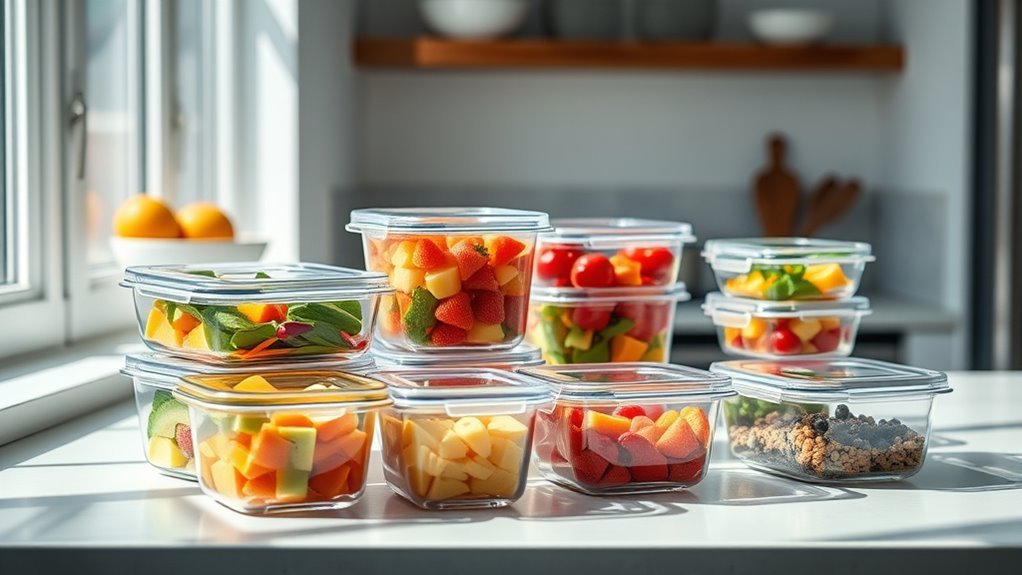
When choosing between glass and plastic food storage containers, you’ll want to weigh factors like safety, durability, and convenience. Glass containers offer a clear advantage in food safety because they don’t leach harmful chemicals. Unlike some plastics that can release BPA and other toxins, especially when heated or damaged.
Plus, glass is oven and microwave safe, so you can cook or reheat your food without worrying about chemical contamination. On the other hand, plastic containers are lightweight and often cheaper, making them convenient for carrying around or stacking in your fridge.
However, plastics’ tendency to absorb odors and stains may affect your food’s flavor and cleanliness over time. Ultimately, if you prioritize long-term durability and safety, glass containers are the better choice. But if cost and portability matter more to you, plastic might fit your needs better—just be aware of the potential risks connected to BPA and chemical leaching.
How Glass Containers Keep Your Food Healthier and Safer
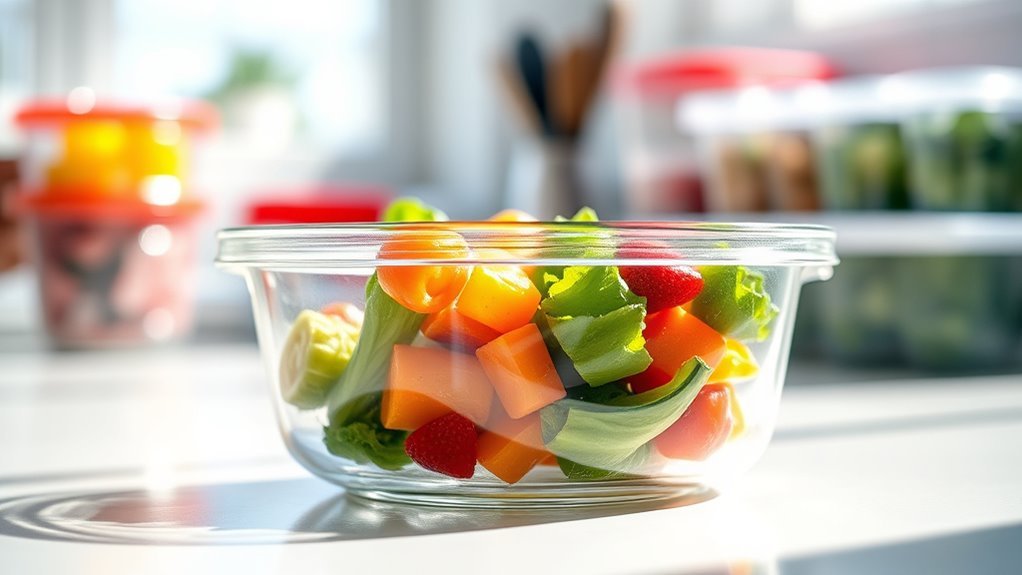
Because glass containers are non-porous and chemically inert, they keep your food safer by preventing the absorption of residues, bacteria, and odors. When you choose glass containers, you avoid chemical leaching that plastics can cause, especially harmful substances like BPA.
Glass containers protect your food by blocking residues, bacteria, odors, and harmful chemical leaching like BPA.
Here’s how glass enhances food safety:
- Non-porous surface: Glass doesn’t trap bacteria or odors, ensuring your food stays hygienic and fresh.
- BPA-free and chemical inertness: Unlike plastic, glass won’t release toxins into your food, even when heated or stored long-term.
- Preserves food integrity: Borosilicate glass resists staining and keeps flavors unaltered, so your meals taste just right.
Benefits of Plastic Food Storage Containers for Portability and Budget
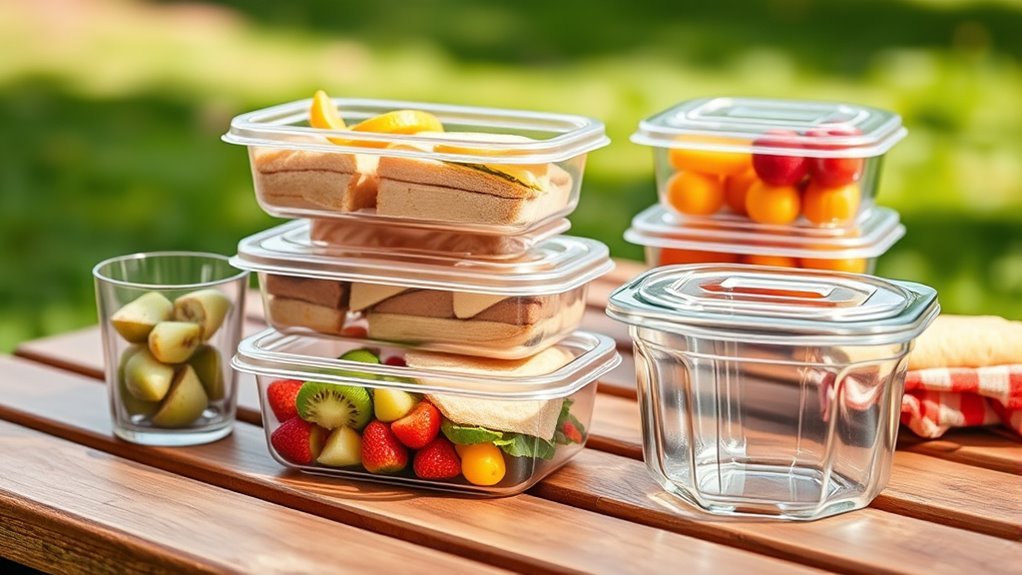
While glass containers offer excellent food safety and preservation, plastic containers bring their own set of advantages, especially if you need something lightweight and budget-friendly. Plastic containers are easy to carry, making them perfect for meals on the go.
Their lightweight nature enhances portability, whether you’re packing lunch for work or school. Plus, plastic options are generally more affordable than glass, helping you stick to a budget without sacrificing convenience.
Many plastic containers feature leak-proof and airtight lids, so you won’t worry about spills during transport. Their stackable designs save space in your cabinets and lunchboxes, making organization simpler.
You can also reuse plastic jars and containers from store-bought products, providing a zero-cost and sustainable storage solution. With plastic containers, you get a practical, budget-friendly option that’s designed for easy portability and everyday use.
Which Handles Heat and Cold Better: Glass or Plastic?
If you need containers that handle extreme temperatures, glass outperforms plastic by a wide margin. Its superior thermal resistance lets you move containers from freezer to oven without worry. Unlike plastic, which risks deformation or cracking.
Glass also stays stable through rapid temperature changes, preserving shape and safety. So, it’s a reliable choice when dealing with heat and cold.
Here’s why glass is better for heat and cold:
- Glass withstands thermal shocks up to 450°C, making it microwave safe and oven-friendly. Most plastics tolerate less than 100°C, so glass clearly has the edge.
- Plastic can warp or release chemicals through chemical leaching when heated. But glass remains inert and safe, so no worries there.
- Glass won’t become brittle in the freezer. Whereas plastic often loses integrity or deforms under extreme cold.
Choosing glass means avoiding the risks of deformation and chemical leaching associated with plastic when exposed to heat or cold. So, it ensures safer food storage under all temperature conditions.
Keeping Food Fresh: Which Containers Resist Stains and Odors?
Glass containers excel not only in handling heat and cold but also in keeping your food fresh by resisting stains and odors. Their non-porous surface prevents food particles and liquids from penetrating, so you won’t deal with lingering smells or discoloration, even after storing strongly colored dishes like curry or chili.
Borosilicate glass, in particular, offers excellent odor resistance and stain prevention due to its impermeable nature. It maintains clarity over long-term use, making it a great choice for everyday storage.
In contrast, plastic containers can absorb stains and odors, especially when scratched or cracked. These plastic scratches create tiny crevices where bacteria and smells hide, making it harder to keep your containers fresh.
You can try using baking soda or vinegar to reduce odors in plastic containers, but glass naturally resists them without any extra effort. So, if you want containers that stay clear and odor-free, glass—especially borosilicate glass—is your best bet for long-lasting freshness.
Cleaning Up: Are Glass or Plastic Containers Easier to Wash?
Because they have a smooth, non-porous surface, glass containers clean up quickly and easily, resisting stains, odors, and leftover food. When you wash glass, you benefit from:
- Stain and Odor Resistance – Glass won’t absorb food pigments or smells, so you avoid lingering odors.
- Durable Cleaning – Glass withstands dishwasher heat without warping or dulling, ensuring a thorough, lasting clean.
- Scratch-Free Surface – The smooth surface resists scratches that can trap bacteria, making cleaning more effective.
Plastic containers, on the other hand, often develop scratches over time, making them more porous and prone to staining and odor retention. This means you’ll spend extra effort scrubbing to remove stubborn residues.
Plus, plastic’s porous nature can harbor bacteria if not cleaned properly. So, when it comes to easy, hygienic cleaning, glass containers offer superior odor resistance and stain control, saving you time and effort in the kitchen.
Environmental Impact of Glass vs. Plastic Food Containers
How does your choice of food container affect the planet? When you pick glass over plastic, you actively reduce plastic waste and its harmful environmental impact. Glass containers are 100% recyclable and can be endlessly recycled without losing quality.
That means less resource depletion compared to plastic. Plastic production heavily relies on oil, which is a finite resource. Plus, most plastics aren’t biodegradable and take centuries to break down.
This leads to significant pollution in land and waterways, with over 91% of plastic bottles not being recycled globally. On the other hand, glass is made from abundant natural materials like sand and limestone. Its higher recycling rate means less landfill waste.
Frequently Asked Questions
Why Is Glass Better Than Plastic?
Glass is better because it’s safer, won’t absorb odors or stains, and you can heat it without worry.
You’ll also help the environment since glass is fully recyclable and doesn’t release harmful chemicals like plastic does.
What Is the Best Material for Food Storage?
You should choose glass for food storage because it’s safer, more durable, and eco-friendly. It won’t leach chemicals, handles temperature changes well, and you can reuse it without worrying about health risks or environmental harm.
Plus, glass containers are easy to clean and don’t retain odors or stains like some plastics do. So, it’s a smart choice if you want something reliable and good for the planet.
Is Glass Good for Storing Food?
Glass is like a trusty shield for your food—it keeps it fresh and safe. You’ll avoid chemical worries, easily clean it, and even reheat meals without hassle.
This makes glass a smart choice for food storage. Plus, it’s super durable and doesn’t hold onto smells or stains. You really can’t go wrong with glass!
What Are the Benefits of Glass Food Storage Containers?
You’ll enjoy glass containers because they’re safe, free of harmful chemicals, and won’t absorb odors or stains. They’re oven- and microwave-safe, durable, reusable, and eco-friendly.
That makes them perfect for keeping food fresh and healthy. Plus, using glass is a great way to reduce waste and help the environment.
Conclusion
When deciding between glass and plastic for your food storage, you’ll find both have distinct perks. Glass keeps your food healthier and resists stains and odors, while plastic shines in portability and budget-friendliness.
Glass handles heat like a pro, but plastic wins for convenience. Remember, your choice echoes beyond your kitchen—think of it as your own “steam-powered” step toward sustainability.
Whichever you choose, you’re making a smart, modern move. Using glass or plastic for food storage isn’t just about convenience—it’s about making a better choice for your health and the environment. Glass offers durability and safety, while plastic provides flexibility and affordability. So, whether you lean toward glass or plastic, you’re embracing a practical and eco-friendly way to keep your food fresh and your kitchen organized.