
Why Use Mylar Bags for Food Storage?
You use Mylar bags for food storage because they create a strong barrier against oxygen, moisture, and light. This helps keep your food fresh and safe for decades, making them ideal for long-term use.
Their 7-layer laminate is durable and puncture-resistant, so your food stays protected no matter what.
Pairing Mylar bags with oxygen absorbers really extends the shelf life by preventing spoilage and nutrient loss.
But remember, proper sealing is key to maintaining freshness. Keep exploring to discover how to maximize your food’s storage life with these bags.
Key Takeaways
- Mylar bags provide superior protection against oxygen, moisture, and light, preserving food quality and freshness longer. Their 7-layer laminate construction creates a durable, puncture-resistant barrier ideal for long-term food storage.
- When combined with oxygen absorbers, Mylar bags significantly extend shelf life by preventing oxidation and spoilage. It’s a simple way to keep your food fresh for way longer than normal.
- Mylar bags can preserve food for up to 30 years with proper sealing and storage conditions. That’s pretty impressive if you ask me!
- They simplify food storage by maintaining nutrients and preventing contamination in an airtight, moisture-proof environment. So, you can feel confident your food stays safe and tasty.
Benefits of Mylar Bags for Long-Term Food Preservation
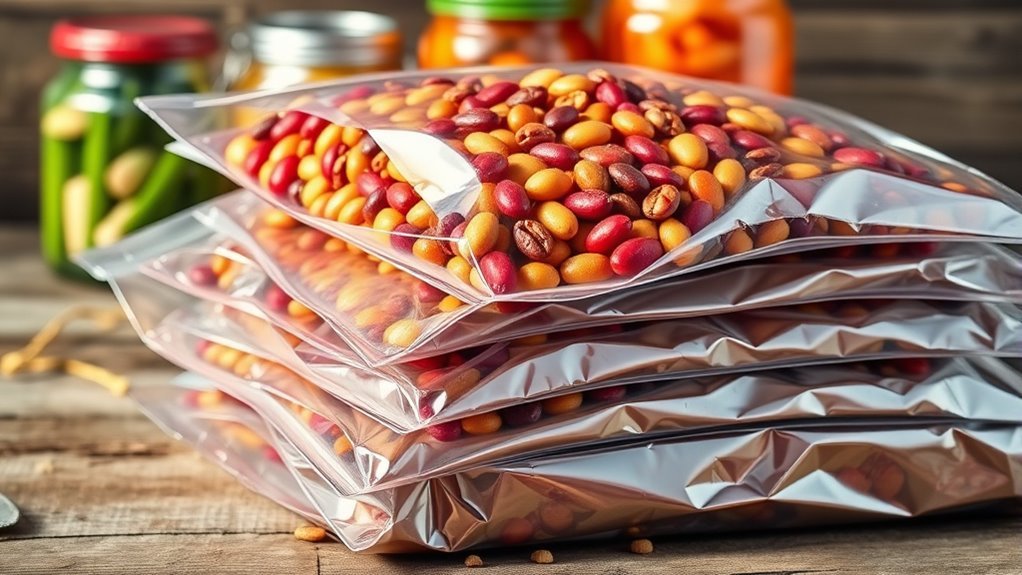
Although many storage options exist, Mylar bags stand out for long-term food preservation because they offer exceptional protection against oxygen, moisture, and light. Their 7-layer laminate creates a superior moisture barrier and light protection, notably reducing oxygen transmission to as low as 0.01 cc/100in²/day.
This sealed storage environment helps you extend shelf life and maintain food quality for decades. When paired with oxygen absorbers, Mylar bags enhance long-term food storage by preventing oxidation and spoilage, preserving nutrients effectively.
Their puncture resistance and durability protect your food from environmental damage and pests better than traditional containers. Using Mylar bags means you can confidently store food for up to 30 years, ensuring reliable food preservation with minimal risk of degradation or contamination.
How to Maximize Shelf Life Using Mylar Bags and Oxygen Absorbers
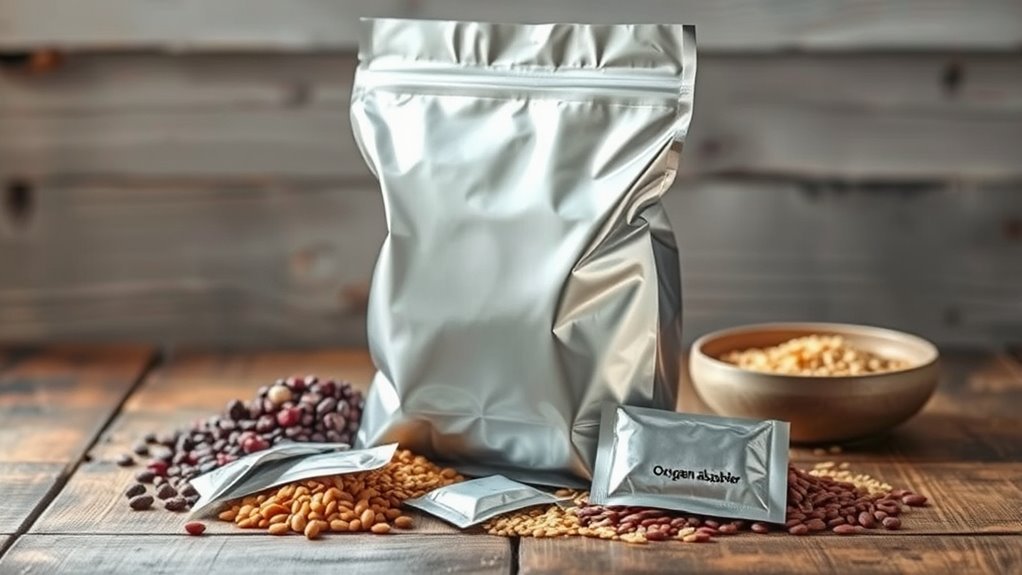
To maximize your food’s shelf life using Mylar bags, you need to pair them correctly with oxygen absorbers and seal them promptly. Choose oxygen absorbers with the right capacity for your bag size and contents to ensure effective oxygen removal.
After placing the absorbers inside the Mylar bags, seal them within 10-20 minutes to prevent oxygen from re-entering. This helps maintain low oxygen levels, which are essential for food longevity.
Seal Mylar bags within 10-20 minutes after adding oxygen absorbers to keep oxygen out and preserve your food.
Look for a vacuum sealing effect or slight crinkling as confirmation of a proper seal. Mylar bags provide excellent moisture protection, but regular checks on seals help avoid leaks that compromise shelf life.
Combining these steps optimizes your food storage, extending shelf life by preventing spoilage and insect growth through reliable oxygen removal and airtight sealing. It’s a simple process that really makes a difference!
Frequently Asked Questions
What Foods Cannot Be Stored in Mylar Bags?
You shouldn’t store fresh produce, dairy, meats, oily nuts, moist foods, or anything needing refrigeration in Mylar bags. These items spoil quickly, so keep them in appropriate containers or use other storage methods for safety and freshness.
Basically, Mylar bags are great for dry goods and long-term storage, but not for stuff that can go bad fast. So, if it needs to stay cold or has moisture, it’s best to find a different way to store it. That way, your food stays safe and tasty!
Is It a Good Idea to Store Food in Mylar Bags?
Think of Mylar bags as a fortress for your food—you’ll find they’re a great choice. They lock out oxygen and moisture, keeping your supplies fresh and safe for years when you seal and store them properly.
It’s pretty simple really. Just seal them up tight, and you’re good to go!
What Foods Should You Not Use Oxygen Absorbers With?
You shouldn’t use oxygen absorbers with sugar, high-moisture foods, oily or fatty items, fresh meats, dairy, or delicate spices.
They can cause hardening, rancidity, discoloration, or spoilage in these types of foods. So, it’s best to avoid pairing them together to keep your food fresh and tasty.
How Long Will Food Last in Mylar Bags?
You can store white rice or dried beans in Mylar bags for up to 30 years if properly sealed with oxygen absorbers.
Just remember, high-fat foods like nuts won’t last nearly as long, usually 1 to 2 years.
Conclusion
Using Mylar bags for food storage is a smart choice to keep your food fresh longer. Did you know that when combined with oxygen absorbers, Mylar bags can extend shelf life up to 25 years? That’s decades of preserved meals and peace of mind.
By sealing out light, air, and moisture, you’re protecting your food from spoilage and waste. So, if you want to maximize your food’s lifespan, Mylar bags are definitely worth it.
In short, Mylar bags are an excellent option for anyone looking to store food efficiently and safely. Their ability to block out environmental factors ensures your food stays fresh for years. When paired with oxygen absorbers, these bags provide an unbeatable food storage solution. If you’re serious about long-term food preservation, Mylar bags should be at the top of your list.