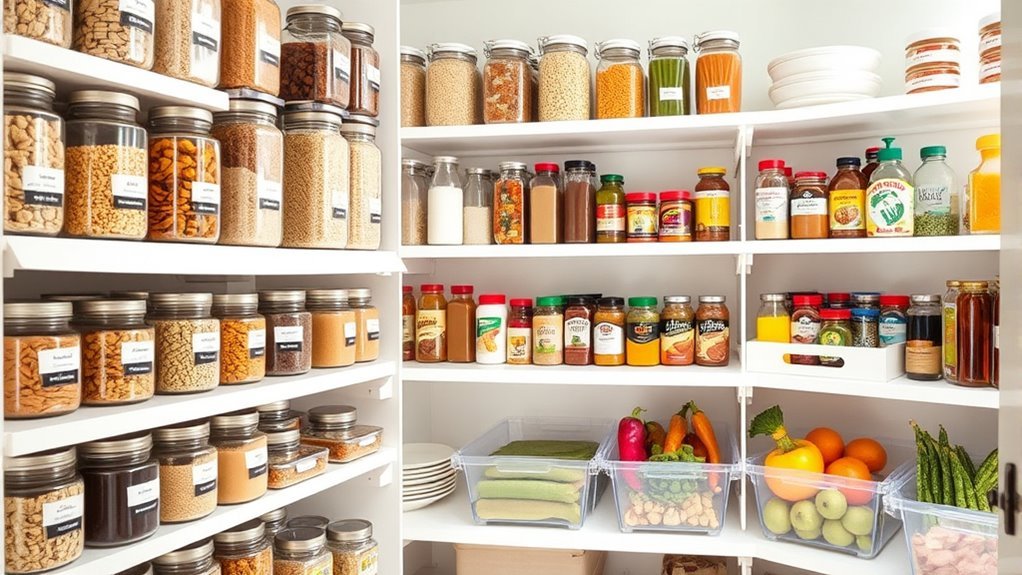
10 Tips to Organize Food Storage Efficiently
To organize your food storage efficiently, start by decluttering and tossing broken or unused containers. It’s amazing how much space you can free up by simply getting rid of what you don’t need.
Separate lids from containers and group everything by size and shape for easy nesting.
Using shallow cabinets or adjustable baskets and drawers near your prep area helps keep frequently used containers within reach. This way, you save time during busy cooking sessions and avoid hunting for lids or containers.
Don’t forget to leave some space for new items as you shop or receive groceries.
Regularly reviewing your setup is key to maintaining order and flexibility in your kitchen. Keep this approach consistent, and you’ll discover smarter, faster ways to manage your kitchen storage that make meal prep more enjoyable.
Key Takeaways
– Declutter and remove unused containers to free up space and improve storage efficiency.
It’s amazing how much space you can save by simply getting rid of what you don’t need.
– Separate and nest containers and lids by shape and size for easier matching and compact storage.
This way, finding the right lid won’t be a hassle anymore.
– Label containers and designate accessible spots for frequently used items to speed up retrieval.
Labels really help keep things clear, and putting everyday items within easy reach saves time.
– Use adjustable dividers, baskets, and pull-out shelves for flexible, organized, and visible storage.
These tools make your storage adaptable and keep everything in plain sight.
– Reserve space for new items and regularly review storage to maintain order and accommodate growth.
Think ahead—make room for new groceries and check your setup often to keep it tidy.
Declutter Your Food Storage Containers
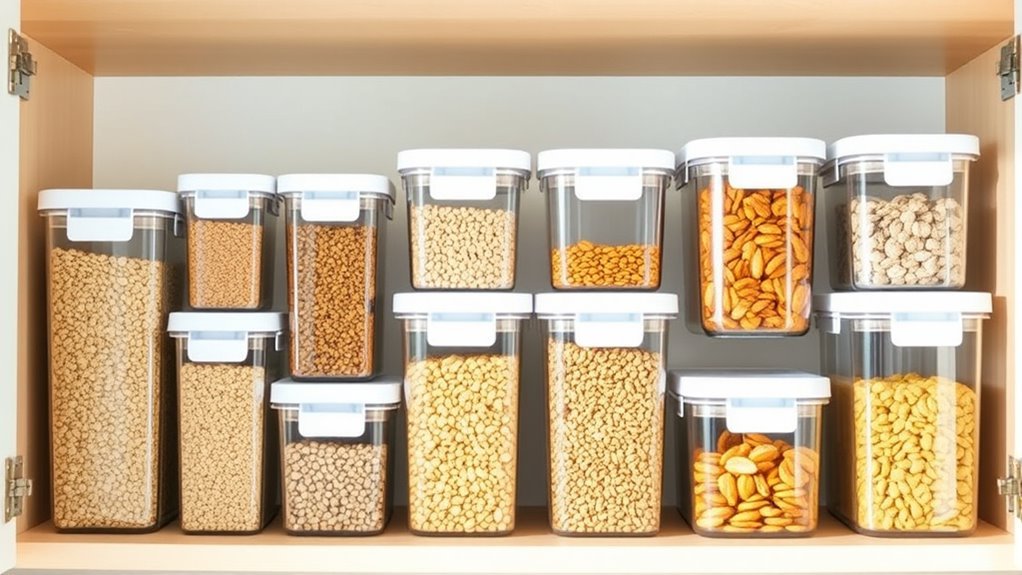
Before reorganizing your kitchen, take everything out of your cabinets to see what containers you have. This gives you a clear view of your food storage containers and helps identify broken, mismatched, or unused pieces.
Tossing these items reduces clutter and frees up valuable space. When organizing food storage, group containers by size and shape to make retrieval easier and keep your kitchen tidy.
Discard any lids or containers that no longer fit or serve a purpose, streamlining your collection further. Regularly reviewing your containers guarantees you maintain an efficient, clutter-free storage area.
Separate Containers From Lids for Better Nesting
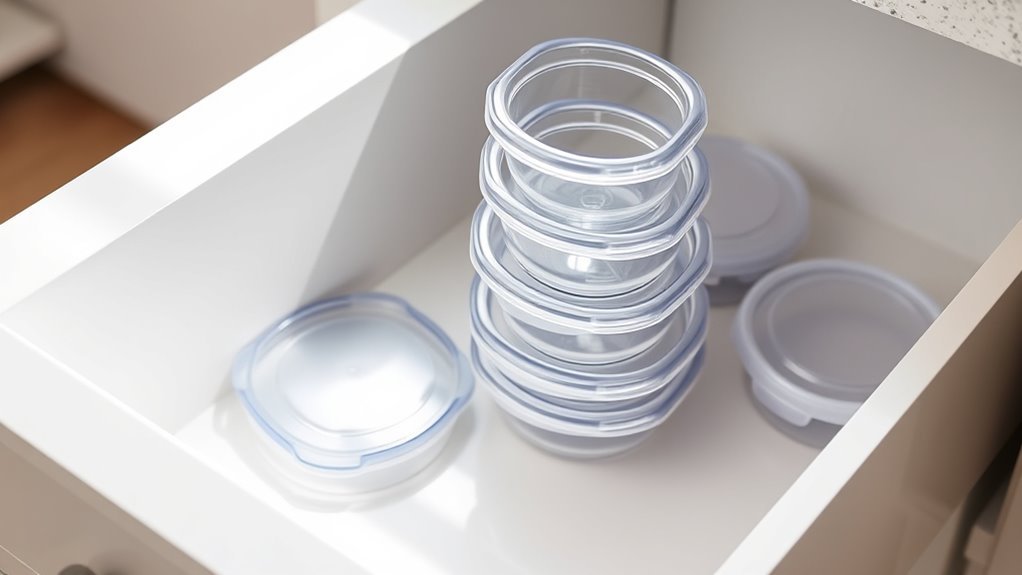
Once you’ve sorted through your containers and lids, try separating them to maximize space. By keeping containers and lids in separate piles, you allow the bases to nest more compactly, which saves valuable cabinet room.
This approach also reduces clutter, making it easier to locate matching lids when you need them. When lids are stored separately, you can stack containers securely without worrying about them toppling over.
Plus, grouping all lids together prevents mismatched or lost lids from cluttering your storage area. Separating lids from containers speeds up the process of finding the right-sized container for your food storage needs, making your kitchen organization more efficient and stress-free.
Give nesting a try—it’s a simple change that makes a big difference.
Group Containers by Shape and Size
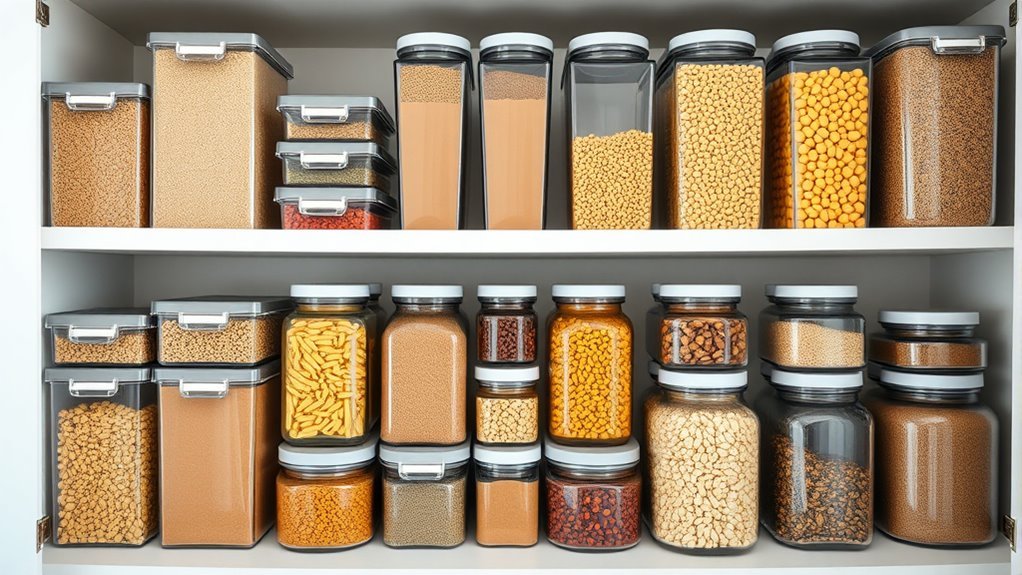
Start by sorting your containers by shape and size before you stack them. Keep lids separate to make matching them easier when you need them.
This way, you’ll save space and find what you want without the hassle. It’s a simple trick that really makes a difference!
Sort Containers First
Grouping your containers by shape and size makes organizing your kitchen much easier and more efficient. Start by sorting all your containers into groups based on their shape—round, rectangular, or square.
This helps you recognize which containers nest or stack together, reducing clutter. Next, arrange each shape group by size, from smallest to largest, to maximize your storage space.
Use designated piles or sections to keep these sorted containers together, so you can quickly find the one you need. Consistently sorting containers this way prevents mismatched clutter and streamlines your food storage system.
Match Lids Separately
Although sorting containers by shape and size helps, you’ll find it much easier to match lids when you keep them separate. Separating lids from containers streamlines your food storage organization by reducing clutter and speeding up the search for the right fit.
When lids are grouped independently, you can nest containers more compactly, saving space and preventing stacks from toppling. Plus, this method keeps lids from getting lost among containers.
Here’s how to optimize your organization:
- Group all lids by size and shape in one spot
- Nest containers separately for compact storage
- Match lids and containers only when you need to use them
Choose Flexible Storage Solutions Like Drawers and Baskets
When you choose flexible storage solutions like drawers and baskets, you make it easier to organize and access your food items quickly. Baskets with handles let you group and pull out related items effortlessly, while adjustable drawer dividers keep containers, lids, and snacks neatly separated.
Using baskets in deep cabinets prevents items from getting lost and allows you to rearrange as needed. These solutions accommodate different container sizes and adapt as your needs change.
| Benefit | Feeling it Brings |
|---|---|
| Easy item grouping | Relief |
| Quick access | Satisfaction |
| Adjustable dividers | Control |
| Flexible reorganization | Confidence |
These storage solutions make your kitchen feel calm and under control, helping you enjoy cooking more. It’s amazing how a little organization can change the whole vibe of your space!
Use Shallow Cabinets for Easier Access
You’ll find shallow cabinets, typically 7.5 to 11 inches deep, make it easier to spot and grab your food quickly. With less digging and reaching, you save time and reduce strain during daily use.
Plus, better visibility means you won’t forget items tucked away at the back. It just makes everything simpler to access, don’t you think?
Benefits of Shallow Cabinets
Since shallow cabinets are typically only 7.5 to 11 inches deep, they make it much easier for you to spot and grab items quickly without digging through cluttered shelves. This improved visibility means you can find what you need at a glance, speeding up meal prep and reducing frustration.
Shallow cabinets also enhance organization by preventing containers from getting lost or pushed to the back. With less depth to navigate, you’ll enjoy quicker access to frequently used items and maximized space efficiency for neat arrangement.
Plus, they’re easier to clean and maintain thanks to their limited depth. So, overall, shallow cabinets just make life in the kitchen a bit simpler and more efficient.
Ideal Cabinet Depths
Shallow cabinets don’t just make your kitchen more organized—they also set the standard for ideal cabinet depths. Opting for shallow cabinets, typically 7.5 to 11 inches deep, helps you avoid the hassle of digging through cluttered storage.
Unlike standard deep cabinets, which can create blind spots and force you to move items around, shallow cabinets keep everything within easy reach. This design boosts kitchen organization by allowing you to neatly arrange containers, spices, and small appliances without wasting space.
With shallow cabinet depths, you maximize storage efficiency and maintain a clear overview of your pantry. Choosing the right cabinet depths makes a significant difference in how smoothly your kitchen runs and how quickly you find what you need.
Improved Visibility Access
How easily can you access the items in your kitchen cabinets? Shallow cabinets, ranging from 7.5 to 11 inches deep, markedly improve both visibility and accessibility. They prevent you from digging through layers or moving containers to find what you need.
With shallow cabinets, you’ll notice enhanced visibility as blind spots are minimized, letting you identify contents at a glance. It’s way easier to grab what you want without the usual hassle.
Plus, access to frequently used items gets simpler since stacking is reduced. And organization? It gets a big boost because items won’t get lost or buried anymore.
Label Containers and Storage Areas Clearly
Why does clear labeling matter when organizing your food storage? Labels are essential for keeping your storage neat and efficient. Use clear, durable labels made from waterproof materials like laminated tape or vinyl to avoid smudging, especially in humid areas.
Place labels on the front of containers and shelves at eye level so you can quickly identify contents without digging through everything. Include important details such as the item name, date stored, or expiration date to manage your inventory better.
To speed up organization, try color-coded labels for different food groups like grains, snacks, or spices. Remember to regularly update and replace labels to keep your system accurate and functional.
Clear labeling saves time and reduces waste, making your food storage more effective overall. It really makes a difference when you’re trying to find things quickly!
Store Frequently Used Containers Within Reach
You’ll save time by keeping your daily essentials in spots that are easy to reach, like drawers or shelves near your prep area. Store containers you use often at eye level or close to the stove for quick access.
Identify Daily Essentials
Keep at least five of your daily essentials—like measuring cups, frequently used containers, and small prep tools—within easy reach near your main workspace. This simple step boosts kitchen organization and speeds up meal prep.
Focus on storing these items in accessible drawers or on shelves close to where you cook. To identify and organize daily essentials effectively, consider:
- Keeping most-used food containers and lids within arm’s reach
- Using clear, labeled containers for common ingredients like salt and oils
- Designating a shallow tray or bin for everyday tools to avoid clutter
Regularly reassess your setup to keep your daily essentials handy and aligned with your cooking habits. This keeps your kitchen organized and efficient, saving you time and effort every day.
Optimal Storage Location
Although organizing your kitchen can feel overwhelming, placing frequently used containers within easy reach simplifies meal prep and saves time. For effective kitchen organization, store your storage containers at eye level or in easily accessible drawers to reduce retrieval time.
Keep everyday containers near cooking and prep areas, so you can grab what you need without interrupting your workflow. Always keep lids and their bases together in a designated, reachable spot to avoid scrambling when matching sets.
Arrange containers based on how often you use them—place the most frequently used ones at the front of shelves or drawers. Avoid hiding essential storage containers behind rarely used items to maintain a smooth, efficient storage location that supports quick access during daily kitchen tasks.
Easy Access Techniques
When meal prep moves quickly, having your most-used food containers within easy reach guarantees you valuable time. By prioritizing easy access in your kitchen organization, you streamline your cooking routine and reduce frustration.
Store frequently used storage containers at eye level or in accessible drawers to grab them without hassle. To maximize efficiency:
- Group everyday essentials like snacks, cereals, and baking supplies in a designated spot.
- Use shallow pull-out shelves or labeled baskets for quick retrieval.
- Regularly update your setup to keep popular items front and center.
This approach ensures your kitchen stays organized and functional. When you keep your storage containers within arm’s reach, meal prep becomes smoother and more enjoyable.
Leave Space for New Containers and Growth
As your collection of food containers grows, you’ll want to leave at least 10-15% of your storage space empty to accommodate new items and larger containers. Planning cabinet organization with intentional space for growth means designing shelves and drawers that can easily adjust or expand.
Use adjustable organizers or dividers to keep things flexible as your needs change. Avoid packing your cabinets too tightly; overfilled spaces make it harder to find what you need and limit room for new storage containers.
Regularly reassess your setup to clear out unused items and create space for seasonal or bulk additions. By keeping this space open, you’ll maintain an efficient, clutter-free system that adapts as your food storage collection evolves.
Rotate and Inventory Your Food Storage Regularly
To keep your food fresh and minimize waste, you should regularly rotate and inventory your food storage. Implementing a systematic rotation guarantees older items get used first, preventing spoilage and reducing waste.
Keep clear labels on every container to track expiration dates easily. Maintaining an accurate inventory helps you monitor stock levels and plan replenishments efficiently.
Here’s how to stay on top of your food storage:
- Place new items behind older ones to maintain proper rotation.
- Schedule monthly or bi-weekly audits to update your inventory and check expiration dates.
- Use clear containers with visible labels to quickly identify contents and quantities.
Optimize Vertical and Sideways Container Placement
Although vertical stacking saves space, placing tall containers on their sides lets you use shelf depth more efficiently and prevents them from toppling.
When you optimize vertical and sideways container placement, you enhance shelf utilization and improve container organization.
Store smaller jars and bottles horizontally to maximize space and keep labels visible for quick identification.
Arrange containers of similar height and shape side-by-side to create a uniform, accessible storage surface.
Nest smaller containers or lids side-by-side to save vertical space while maintaining order.
Using adjustable or turntable shelving makes both vertical placement and sideways arrangement easier, letting you access items without hassle.
Frequently Asked Questions
What Are 5 Important Food Storage Tips?
You should use airtight containers and label everything with dates. This helps keep your food fresh and lets you know when things need to be used up.
Also, group similar items together. It makes finding what you need way quicker and easier.
Don’t forget to rotate your stock by placing new items behind old ones. This way, nothing goes to waste.
And try to maximize space by stacking and using organizers. Keeping things tidy saves room and reduces clutter.
These habits not only keep your food fresh but also make it super easy to find what you’re looking for.
What Should Not Be Stored in Kitchen Cabinets?
Did you know 60% of foodborne illnesses come from improper storage? You shouldn’t store perishable items, leftovers, or hazardous materials in kitchen cabinets—they risk spoilage, contamination, and safety hazards.
Keep those elsewhere for your safety. It’s better to use the fridge or a safe storage spot instead. That way, you avoid any nasty surprises and keep your kitchen safe and clean!
Should You Store Tupperware With Lids on or Off?
You should store Tupperware with lids on to save space and keep them clean.
But if you want quick lid access, stack containers separately and store lids vertically.
Choose what fits your routine best!
What Items Should You Remove From Your Pantry Immediately?
You should remove expired foods, spoiled items, broken containers, duplicates, unused products, and open packages that can’t be properly sealed or have lost freshness.
Doing this clears space and keeps your pantry safe and organized. It’s a simple way to make sure you only keep what’s good and useful.
Conclusion
By decluttering and grouping your containers like puzzle pieces, you’ll transform chaos into calm in your kitchen. Think of your storage as a well-tuned orchestra, where every drawer and basket plays its part perfectly.
Keeping frequently used containers within reach is like having your favorite tools at your fingertips. With a little rotation and room for growth, you’ll keep your food storage humming smoothly.
This approach not only saves time but also reduces waste and frustration. Efficient food storage means everything has a place, making meal prep easier and your kitchen more enjoyable.
So, take these tips to organize food storage efficiently and turn your kitchen into a space that’s both functional and inviting. Your containers, drawers, and baskets will thank you for the order and ease you create every day.