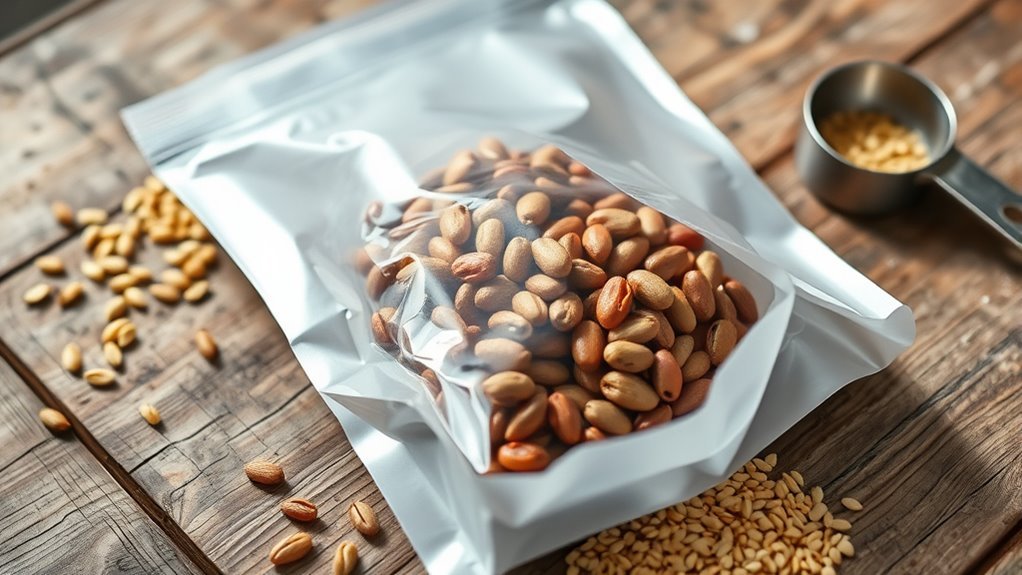
Why Use Mylar Bags for Food Storage?
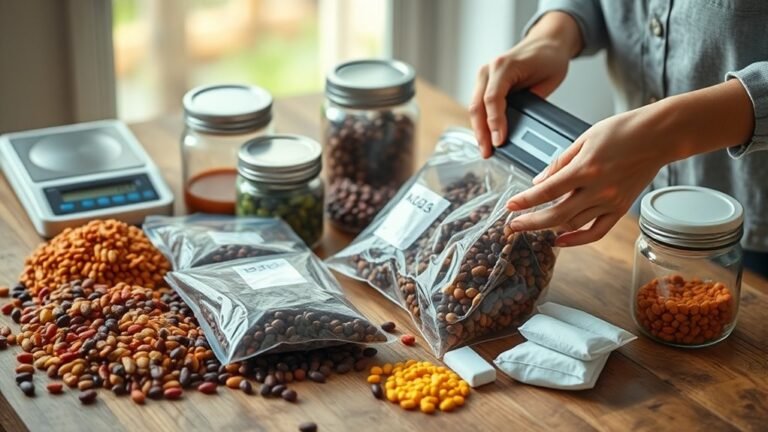
You should use Mylar bags for food storage because they offer excellent protection against oxygen, moisture, and light. These elements are the main culprits that cause food to spoil or lose its freshness over time.
By blocking them out, Mylar bags help keep your food fresh and safe for years.
Their strong, multi-layer construction resists tears and punctures, which means your food is well-protected even in tough conditions.
Plus, when you add oxygen absorbers inside the bags, it significantly reduces the amount of oxygen, extending your food’s shelf life even further.
This combination not only prevents spoilage but also helps maintain the food’s nutrition, making Mylar bags perfect for long-term storage.
Keep reading to learn how to get the most out of your Mylar bags and keep your food stash in great shape!
Key Takeaways
- Mylar bags offer superior protection with multi-layer barriers against moisture, light, and oxygen to prevent food spoilage. They really help keep your food safe and fresh.
- Their extremely low oxygen transmission rate preserves food freshness and nutritional quality for years. So, your stored food stays tasty and nutritious longer.
- Made from durable, puncture-resistant materials, Mylar bags maintain integrity during long-term storage. You don’t have to worry about tears or holes ruining your stash.
- When combined with oxygen absorbers, Mylar bags significantly extend shelf life by reducing internal oxygen levels. This combo is a game-changer for keeping food fresh.
- Proper sealing and absorber use in Mylar bags create an optimal environment to prevent spoilage and insect infestation. It’s like giving your food its own little protective bubble!
Key Benefits of Mylar Bags for Preserving Food Quality
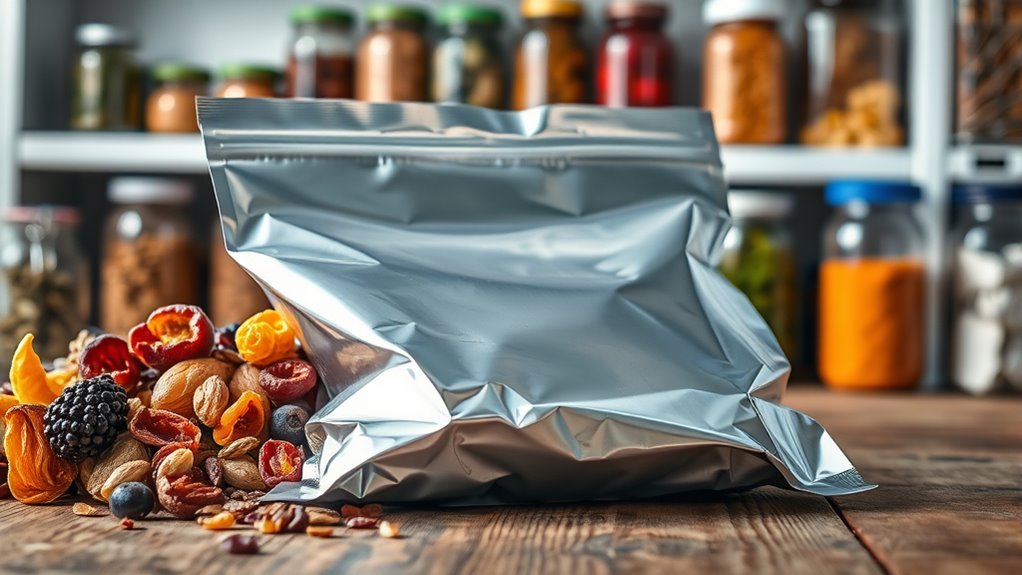
Although many storage options exist, Mylar bags stand out because they offer exceptional protection against oxidation and spoilage. These storage bags feature a multi-layer 7-barrier construction that provides an effective moisture barrier, light protection, and extremely low oxygen transmission rates—as low as 0.01 cc/100 in²/day.
This combination helps you maintain food quality over long-term storage. Made from durable materials like PET, aluminum foil, and polyethylene, Mylar bags are also puncture resistant, so you don’t have to worry about accidental tears compromising your food.
When paired with oxygen absorbers, they become even more powerful for food preservation, considerably extending shelf life by blocking oxygen and moisture. Using Mylar bags ensures your stored foods stay fresh, nutritious, and safe for years to come.
How Oxygen Absorbers Enhance Long-Term Food Storage
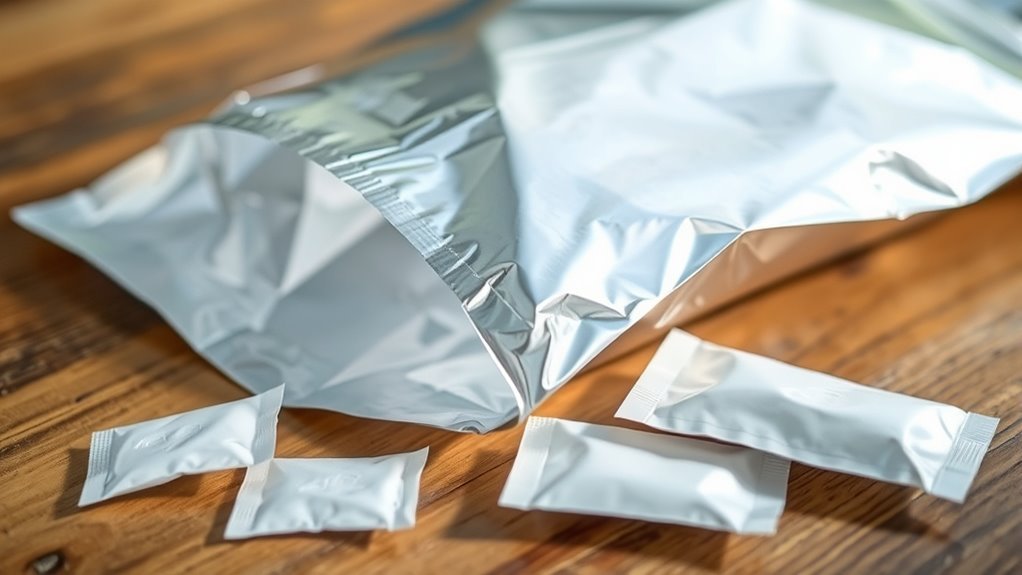
When you use oxygen absorbers with Mylar bags, you actively eliminate nearly all the oxygen inside. This creates an environment that drastically slows food spoilage.
These absorbers contain powdered iron that reacts with residual oxygen. They reduce oxygen levels to as low as 0.1%, which is far better than vacuum sealing alone.
Oxygen absorbers use powdered iron to lower oxygen to 0.1%, surpassing vacuum sealing effectiveness.
This oxygen removal enhances food preservation and supports long-term food storage by preventing spoilage and rancidity.
To maximize shelf life extension, you need to:
- Match absorber capacity to bag size and contents for effective oxygen removal
- Seal bags airtight within 15-20 minutes to activate absorbers properly
- Use the correct amount of absorbers to prevent insect hatch and spoilage
Frequently Asked Questions
What Foods Cannot Be Stored in Mylar Bags?
You can’t store fresh fruits, vegetables, meats, oily nuts, or any moist foods in Mylar bags.
Avoid high-fat or wet foods since they spoil or mold quickly without proper dehydration or sealed packaging.
Basically, if the food isn’t dry and shelf-stable, Mylar bags won’t keep it fresh for long.
It’s best to stick with dry goods like grains, beans, and dehydrated foods.
Is It a Good Idea to Store Food in Mylar Bags?
You’ll find Mylar bags keep food fresh for up to 30 years when paired with oxygen absorbers. They’re durable, flexible, and protect against moisture, light, and oxygen.
This makes them an excellent choice for long-term food storage. Plus, they’re pretty easy to use, which is a big bonus if you’re just getting started with storing food.
What Foods Should You Not Use Oxygen Absorbers With?
You shouldn’t use oxygen absorbers with high-moisture or fatty foods like fresh produce, meats, oily nuts, or soft fruits.
Avoid them with sugar, salt, dairy, eggs, or cooked foods unless fully dehydrated and frozen first.
It’s all about keeping things dry and stable to make sure the absorbers work properly. So, if the food isn’t prepared right, the absorbers might not be effective.
How Long Will Food Last in Mylar Bags?
You’ll find food lasts anywhere from 1 to over 30 years in Mylar bags, depending on the type.
Low-moisture foods keep longest, while high-fat items spoil sooner, so store accordingly with oxygen absorbers and proper sealing.
Conclusion
So, you could ignore Mylar bags and watch your food turn into a science experiment, or you could use them and actually enjoy your snacks later. Sure, oxygen absorbers sound like tiny vacuum cleaners for your food, but who doesn’t want their chips crisp and beans edible years down the line?
Embrace Mylar bags—you’ll save money, avoid mystery mold, and maybe even become the hero of your own pantry saga. These bags provide an airtight seal that keeps moisture, oxygen, and pests away, which is exactly what your food needs to stay fresh. Plus, they’re perfect for long-term food storage, making them a smart choice for anyone wanting to preserve bulk goods or emergency supplies.
Who knew food storage could be this thrilling? Using Mylar bags with oxygen absorbers not only extends the shelf life of your food but also protects its taste and nutritional value. So next time you’re stocking up, don’t just stash your food away—store it smart with Mylar bags. Your future self will thank you!