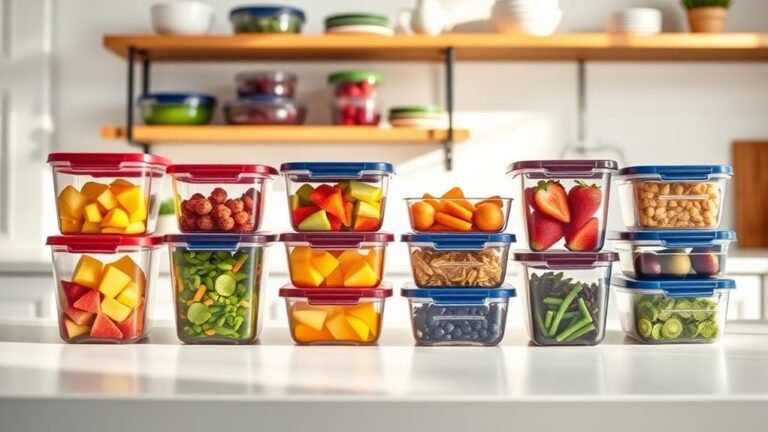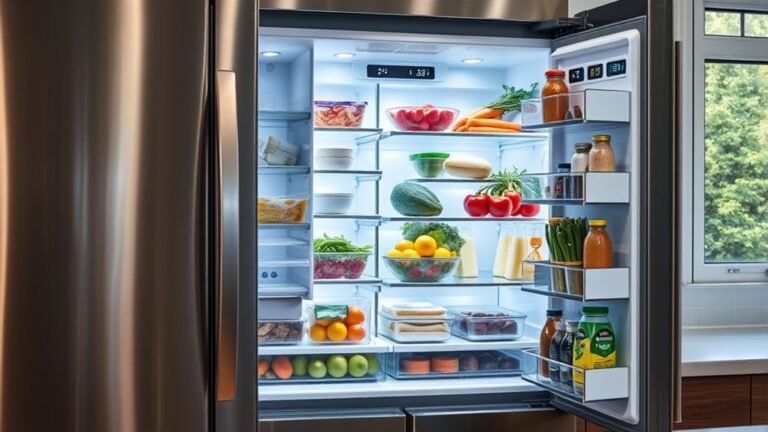
10 Essentials You Need for Proper Food Storage
To store food safely, keep your fridge at or below 40°F. Cool leftovers in shallow containers within two hours to prevent bacteria growth.
Use airtight, moisture-resistant packaging to prevent freezer burn. For leafy greens, wrap them in paper to keep them crisp.
Keep fruits and veggies separate to avoid premature spoilage. It’s a simple trick that really helps extend their freshness.
Don’t forget to clean and sanitize containers before use. Label and date leftovers, so you know exactly when to use them.
And always reheat food to 165°F to ensure it’s safe to eat. Following these essentials keeps your food fresh and safe—there’s more to discover for perfect storage!
Key Takeaways
- Maintain refrigerator temperature at or below 40°F (4°C). This helps limit bacterial growth and keeps your food safe.
- Store leftovers in shallow, sealed containers. Make sure to refrigerate them within 2 hours. This ensures rapid cooling and prevents spoilage.
- Use moisture- and vapor-resistant packaging when freezing. This reduces freezer burn and helps maintain food quality.
- Keep ethylene-producing fruits separate from vegetables. Doing this prevents premature spoilage and helps your produce stay fresh longer.
- Always clean and sanitize containers before use. Then, dry them thoroughly to avoid bacteria growth and cross-contamination.
Control Temperature to Keep Food Storage Safe and Fresh
When you ensure temperature properly, you keep your food safe and fresh. In food storage, always maintain perishables at 40°F (4°C) or below in the refrigerator to limit bacterial growth.
Cool leftovers quickly by spreading them into shallow containers before refrigerating. This helps them reach safe temperatures more quickly, preventing spoilage.
Spread leftovers in shallow containers to cool them quickly and prevent spoilage before refrigerating.
Refrigerate leftovers or any perishable food within 2 hours—or within 2 hours after removing from an appliance holding food above 140°F. For freezing, store foods at 0°F (-18°C) and avoid placing warm leftovers in a fully loaded freezer to hold that temperature.
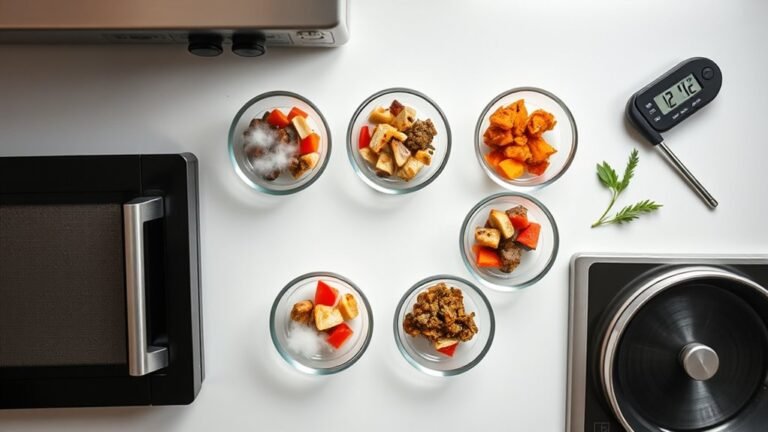
When reheating, heat food to at least 165°F, checking the thickest part with a food thermometer. Following these temperature guidelines guarantees safe, fresh food storage every time.
Manage Moisture for Safe Food Storage
Because excess moisture encourages bacteria and mold growth, you need to clean and thoroughly dry your produce and storage containers before putting them away.
For leafy greens, absorb extra moisture with paper towels and wrap them in paper before storing in a cool spot (34°F–40°F) to keep them crisp.
Keep fruits and vegetables separate to avoid moisture transfer and faster spoilage, since ethylene from fruits accelerates deterioration.
Use containers or bags that reduce humidity exposure but allow ventilation, ensuring food safety.
Rapidly cool leftovers in shallow, sealed containers to prevent condensation and moisture buildup.
| Item Type | Storage Tip |
|---|---|
| Leafy Greens | Wrap in paper, store cool |
| Fruits | Store separately, allow ventilation |
| Vegetables | Use paper towels to absorb moisture |
| Leftovers | Cool quickly in shallow containers |
Clean and Sanitize Surfaces and Containers Before Storing Food
Before storing food, make sure you clean and sanitize all containers thoroughly. This helps prevent leftover bacteria from spoiling your meals.
Don’t forget to wipe down countertops and cutting boards, especially after handling raw meat or poultry. It’s a simple step that makes a big difference.
Keeping your work surfaces and storage containers spotless really helps keep your food safe and fresh. So, take a little extra time to do it right!
Sanitizing Containers Properly
To keep your food safe and fresh, you’ll want to thoroughly clean and sanitize containers, lids, cutting boards, and utensils before storing any leftovers. Start by washing them with hot soapy water to remove food residues.
Then, use a food-safe sanitizer at the correct concentration and contact time, as specified on the product label, to effectively reduce germs. Avoid merely wetting surfaces—proper sanitizing helps prevent contamination and supports effective food preservation methods.
Once sanitized, air-dry containers or use clean, unused paper towels to avoid reintroducing bacteria. Always handle sanitized containers with fresh, clean towels, never those used around room-temperature food residues.
Following these steps ensures your food stays fresh longer and reduces the risk of foodborne illness, making your storage practices safer and more reliable.
Cleaning Work Surfaces
When you handle leftovers, washing your hands and thoroughly cleaning work surfaces like cutting boards and counters helps stop bacteria from spreading to your stored food. Make sure you wash these surfaces with hot, soapy water before and after use.
After cleaning, sanitize all food-contact items, including utensils and storage containers, to reduce germs to safe levels. Avoid using towels or wipes that have contacted room-temperature food residues; always use clean ones to prevent re-contamination.
Keep your work areas dry because excess moisture encourages mold and bacterial growth during storage. Finally, make sure your storage containers and wraps are clean and properly sealed to protect your food.
Following these steps helps keep your leftovers safe and fresh longer. It’s a simple routine that really pays off!
Separate Fruits and Vegetables to Prevent Ripening Issues
Since fruits like apples and pears release ethylene gas, you should store them separately from vegetables to prevent premature spoilage. Ethylene speeds up ripening, causing vegetables such as broccoli and carrots to spoil faster.
By separating fruits and vegetables, you reduce ethylene exposure, preserving food quality and freshness longer. This also prevents moisture and texture issues that happen when different produce types share storage.
For effective preserving food, place ethylene-producing fruits in one crisper drawer and vegetables in another.
| Produce Type | Ethylene Production | Storage Tip |
|---|---|---|
| Apples & Pears | High | Store separately in crisper |
| Broccoli & Carrots | Low | Keep away from ethylene gas |
| Lettuce | Low | Store in a separate drawer |
Handle Leafy Greens With Proper Wrapping and Ventilation
Separating fruits and vegetables helps keep them fresh, but leafy greens need a bit more attention to stay crisp and last longer.
Before storing, trim off any wilting leaves—that way, you can prevent faster spoilage. And try not to leave greens out at room temperature; it’s best to store them cool, ideally between 1°C and 4°C.
To handle leafy greens properly, here’s what you can do:
- Line the leaves with paper towels to soak up extra moisture and cut down on mold risk.
- Wrap the greens loosely in paper, or paper inside a bag, so you get a good balance of humidity and airflow.
- Then, put the wrapped greens in a ventilated container or bag to keep moisture from getting trapped.
Doing this will keep your leafy greens fresher and crisper, helping them last longer without getting soggy or going bad.
Set Up Your Fridge to Keep Food Safe and Fresh
You’ll want to set your fridge temperature at 40°F or below to keep food safe and fresh.
Organize fruits and vegetables separately to prevent ethylene gas from speeding up spoilage.
When storing leftovers, cool them quickly by spreading them out in shallow containers before refrigerating.
Optimal Refrigerator Temperature
A properly set refrigerator is key to keeping your food safe and fresh. To maintain the ideal refrigerator temperature, aim for 40°F (4°C) or below. This range slows bacterial growth and preserves freshness efficiently.
Here’s how to manage it effectively: Set your fridge control around 38°F if it struggles to stay at 40°F, ensuring all zones remain safe. Avoid placing warm leftovers directly into an overcrowded fridge, as this raises the internal temperature.
Also, store leftovers in shallow, tightly sealed containers to help food cool faster and maintain the ideal temperature. Keeping leafy greens around 34°F to 40°F also helps retain their freshness. Mastering these steps guarantees your food stays safe and tasty longer.
Organize Foods Separately
Maintaining the right refrigerator temperature is just one part of keeping your food fresh and safe. To organize foods separately, store fruits and vegetables apart since fruits like apples release ethylene gas that speeds up vegetable ripening.
Keep leafy greens in their own zone: trim wilting leaves, wrap them in paper towels and a vented bag, then refrigerate at 34°F–40°F. Onions, garlic, and potatoes do better outside the fridge in a cool, dry place away from sunlight.
Pack leftovers and ready-to-eat foods in sealed containers to prevent moisture transfer and cross-contamination, storing them at 40°F or below. Avoid overcrowding your fridge to maintain a cold chain.
This way, each food group stays cold and fresh longer by organizing foods separately. It really helps keep everything tasting great and safe to eat!
Rapid Cooling Techniques
To keep your food safe and fresh, set your refrigerator to 40°F (4°C) or below, ideally stabilizing around 38°F. Rapid cooling prevents foodborne illness by limiting the time food spends in the danger zone (40°F–140°F).
Follow these steps to cool food quickly:
- Divide large portions into shallow containers or slice large roasts and turkeys to speed cooling.
- Avoid placing warm leftovers in a crowded fridge; tightly seal packages but spread them out for air circulation.
- Freeze bulk hot food quickly using freezer-safe, moisture-vapor-resistant packaging to preserve quality and safety.
Always refrigerate perishable foods within two hours after cooking or removing them from warm holding. These rapid cooling techniques reduce bacteria growth and help keep your food safe and fresh.
Use Shallow Containers to Cool Leftovers Quickly
When you want to cool leftovers quickly and safely, spread them into shallow containers so they reach refrigerator temperature (40°F or 4°C) within two hours. Large portions like roasts or whole turkeys should be sliced into smaller pieces and stored in shallow containers to reduce cooling time and reduce waste.
Thick stacks or deep dishes cool slowly, keeping food longer in the danger zone where bacteria grow. Also, if you’re freezing food, place shallow containers spread out to avoid warming the freezer. After cooling, seal containers tightly to preserve quality and moisture.
| Food Type | Container Depth | Cooling Time Goal |
|---|---|---|
| Roasts/Hams | ≤ 2 inches | ≤ 2 hours to 40°F |
| Whole Turkeys | Sliced/shallow | ≤ 2 hours to 40°F |
| Casseroles | Spread out | Avoid thick layers |
| Frozen Foods | Spread shallow | Prevent freezer heat |
| Leftovers | Small portions | Reduce waste & spoilage |
Choose Packaging That Prevents Freezer Burn and Preserves Quality
After cooling your leftovers in shallow containers to speed up chilling, the next step is choosing the right packaging to protect your food in the freezer. To prevent freezer burn and preserve quality, focus on these essentials:
First, use moisture- and vapor-resistant freezer-weight bags or containers. These help reduce ice-crystal formation and keep odors from transferring.
Next, remove as much air as possible by sealing your food tightly. Trapped air speeds up surface dehydration, which leads to freezer burn.
Finally, pick containers made specifically for freezing, like labeled glass jars with airtight lids. These avoid cracking and keep a strong seal to protect your food better.
Label and Date Leftovers to Track Freshness
You should consistently label and date your leftovers to keep track of freshness and safety. Use clear, moisture-resistant labels with the cooking date and time, particularly when freezing or portioning.
This really helps you reheat food properly and makes sure nothing gets forgotten or spoiled. It’s a simple step that goes a long way in keeping your meals safe and tasty!
Importance Of Date Labels
Labeling and dating leftovers helps you make sure freshness and ensures you follow important safety rules, like refrigerating within two hours of cooking. Every day, you handle food that can spoil quickly without proper tracking.
Date labels help you monitor how long leftovers have been stored and prevent waste or foodborne illness.
To keep your food safe and fresh, remember these key points:
- Write the day (and time, if possible) the food was cooked and note the storage location—refrigerator at ≤40°F or freezer at 0°F.
- Label each container separately; smaller portions cool faster and are easier to track.
- Mark leftovers “reheated” with the date when warming to at least 165°F, ensuring continued safety.
Using clear, moisture-resistant labels makes checking dates simple before eating.
Proper Labeling Techniques
Keeping track of leftovers goes beyond just noting the date; how you label each container can make all the difference in maintaining freshness and safety. Label every container with the food name and the date or time it was cooked or packaged to follow the “use within 2 hours” cooling rule.
Add a clear “refrigerate by” or “freeze by” date once the food reaches 40°F/4°C or below. If you freeze leftovers, include the freeze date and use freezer-safe packaging to prevent freezer burn.
For reheated food, mark “reheated” with the date if you plan to reheat it multiple times. Use concise, legible labels, and include portion sizes when helpful.
These food storage tips help you track freshness and avoid spoilage efficiently. It’s a simple step that makes a big difference!
Tracking Leftover Storage
Although leftovers can be a handy option for quick meals, keeping track of their storage correctly is essential to make certain freshness and safety. Label each container with the food name and exact cooking date/time so you can rotate by age and reduce waste.
When storing, remember these key steps:
- Refrigerate leftovers within 2 hours and keep your fridge at 40°F (4°C) or below to maintain safe freshness.
- Use freezer-safe packaging and label frozen leftovers with the date to monitor quality over time.
- Always check the stored date before reheating, and discard any leftovers past their safe holding time—even if they look fine.
Reheat and Thaw Foods Safely to Prevent Foodborne Illness
When you thaw frozen foods, make sure to do it in the refrigerator so they stay at 40°F (4°C) or below. This prevents bacteria from multiplying in the “danger zone.”
It’s really important to handle food carefully, especially since supply chain delays can affect food quality.
After thawing, reheat leftovers until they reach at least 165°F (74°C) in the thickest part. Use a food thermometer to make sure it’s safe.
For soups, sauces, and gravies, just bring them to a rolling boil before serving.
Always package and refrigerate leftovers within two hours. Store them in shallow, sealed portions so they cool quickly and slow down bacterial growth.
Following these steps helps you manage your food safely and avoid foodborne illness.
Frequently Asked Questions
How Long Can Canned Foods Be Safely Stored Unopened?
You can safely store unopened canned foods for 1 to 5 years, depending on the type. Just keep them in a cool, dry place.
Always check for dents, rust, or bulging before using. It’s a simple step that helps keep you safe.
What Are the Best Practices for Storing Dry Goods Like Rice and Pasta?
You should store rice and pasta in airtight containers. Keep them in a cool, dry place to prevent any moisture or heat from spoiling them.
Also, label your containers with dates. This way, you can use the older supplies first and keep everything fresh and tasty.
Can I Freeze Eggs or Dairy Products Safely?
Freezing eggs and dairy is safe if you do it right. Like a snow globe preserving a scene, freezing locks freshness.
Crack eggs, whisk, then freeze; dairy stays best in airtight containers to avoid freezer burn.
It’s pretty simple once you get the hang of it! Just make sure to keep things sealed tight.
How Do I Know if Food Stored in a Pantry Is Still Safe to Eat?
You know pantry food is safe if it’s within the expiration date and shows no signs of spoilage like mold or strange smells. Also, check that the packaging isn’t damaged or swollen.
When in doubt, trust your senses and toss it. It’s better to be safe than sorry!
What Are Signs of Pest Contamination in Stored Food?
Finding tiny holes, webbing, or strange powder in your food is like spotting shadows in sunlight—they signal pest contamination.
You’ll also notice odd smells or live bugs, so check carefully before you consume anything stored.
Conclusion
If you want your food to last longer than forever, these essentials are your secret weapons. Control temperature and moisture, keep everything clean, and separate fruits from veggies to avoid spoilage disasters.
Wrap leafy greens right, cool leftovers fast, and choose packaging that fights freezer burn like a champ. Don’t forget to label and date, and always reheat and thaw safely.
Follow these tips, and you’ll never waste food—or money—again! Proper food storage is all about keeping things fresh and safe while cutting down on waste. By managing temperature, moisture, and packaging, you can extend the life of your groceries and enjoy your meals longer. So, make these food storage essentials part of your routine, and watch your kitchen become a place where food stays fresher, longer, and your budget stays happier!