7 Steps for Safely Reheating Leftover Food That Has Been in Cold Storage
To safely reheat leftovers from cold storage, it’s important to start by thawing them properly. Always thaw your food in the refrigerator—not at room temperature. This helps prevent bacteria growth and keeps your food safe to eat.
Next, use reheating equipment that heats food evenly and reaches an internal temperature of 165°F. This ensures any harmful germs are killed. Remember to stir or rotate your food during heating to avoid cold spots where bacteria can survive.
After heating, let the food rest covered for two minutes. This helps the heat distribute evenly throughout the dish.
If you plan to hold your food hot before serving, keep it above 140°F to stay safe.
Finally, store any leftovers promptly and properly after reheating. Following these simple steps guarantees safe, tasty results every time. And don’t worry—there’s more useful info ahead to help you master safe reheating!
Key Takeaways
- Thaw leftovers safely in the refrigerator at or below 40°F to prevent bacterial growth before reheating.
- Reheat leftovers to an internal temperature of at least 165°F for 15 seconds, verifying with a calibrated thermometer.
- Stir or rotate food during reheating, especially in microwaves, to ensure even heating and eliminate cold spots.
- Cover food during reheating to retain moisture and promote uniform heat distribution.
- Allow reheated food to rest covered for at least two minutes to stabilize temperature and complete even heating.
Choose the Right Thawing Method
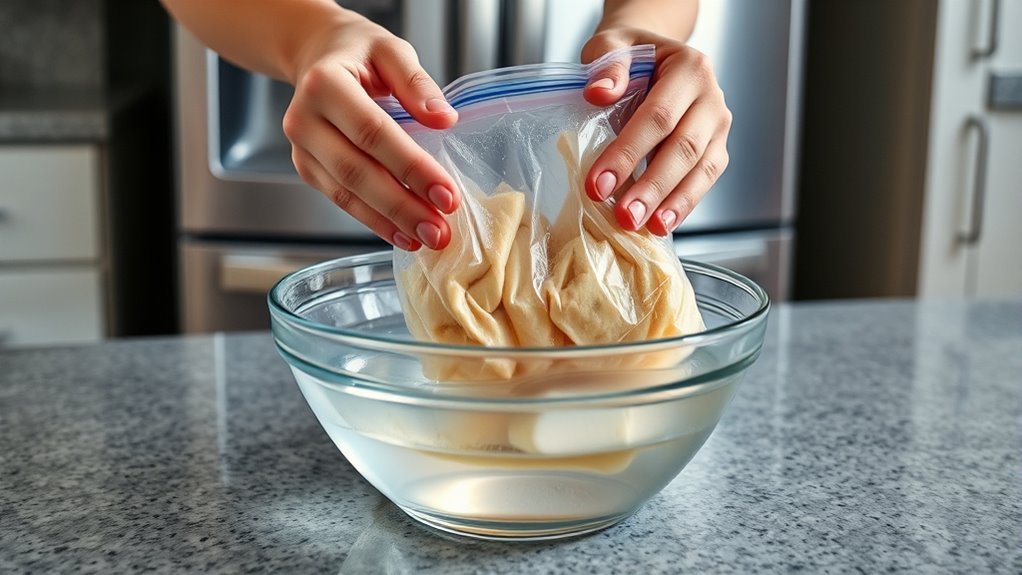
When reheating leftovers, you should choose the right thawing method to keep your food safe. Start with refrigerator thawing by placing your food in cold storage at 40°F (4°C) for several hours or overnight. This slow thawing keeps the food temperature out of the temperature danger zone, preventing bacterial growth.
If you’re short on time, microwave thawing works, but only if you cook the food immediately afterward to maintain food safety. Avoid thawing at room temperature, as bacteria multiply rapidly above 40°F.
For safe handling, never refreeze leftovers thawed in warm water or the microwave unless cooked right away. Selecting the proper thawing method guarantees your leftovers stay safe and tasty when you reheat them.
Select Appropriate Reheating Equipment
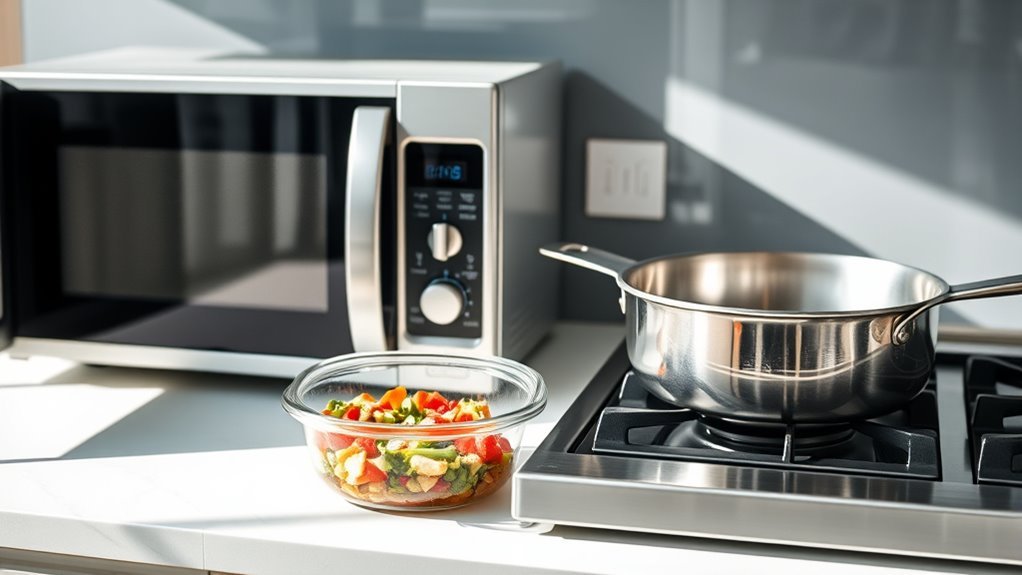
Since properly reheating leftovers is essential for safety, you should choose equipment that can quickly and evenly heat food to at least 165°F (74°C). Use reheating equipment like ovens, microwaves, toaster ovens, air fryers, or instant pots, all capable of reaching and maintaining this safe temperature.
Avoid hot-holding devices since they don’t raise internal temperature fast enough. When using a microwave, make sure to stir or rotate food during reheating to ensure even heating.
Always confirm the appliance has a calibrated thermometer to accurately monitor the internal temperature. Pick reheating methods that can heat your food within two hours to prevent bacterial growth.
Heat Food to the Correct Internal Temperature
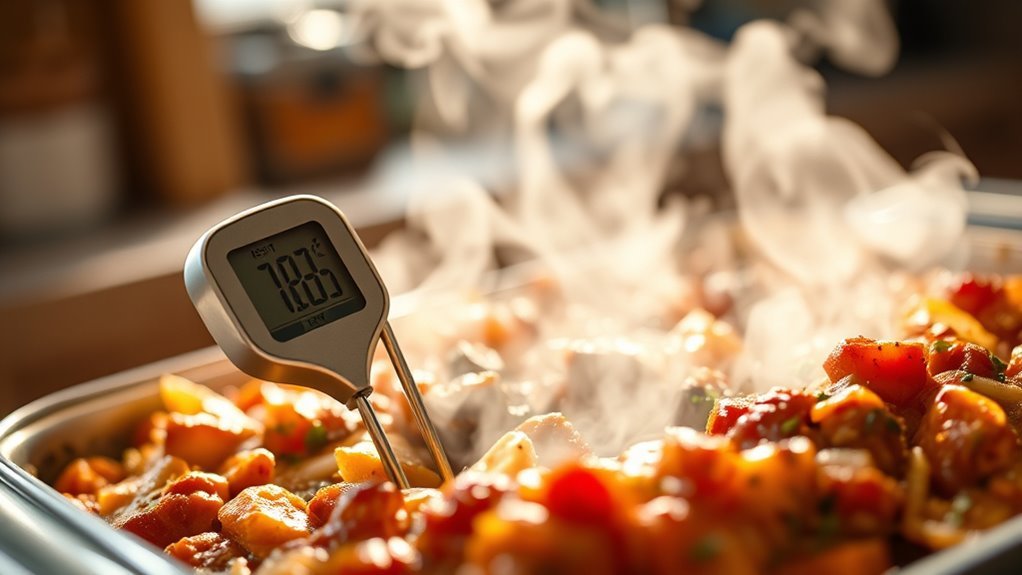
How can you be sure your leftovers are safe to eat? Always reheat them to an internal temperature of at least 165°F (74°C) for 15 seconds to kill harmful bacteria. Use a calibrated food thermometer to verify the temperature accurately.
Cover your food during reheating—it’s coversafe and helps distribute heat evenly while preventing contamination. Especially when using a microwave, stir midway through reheating to eliminate cold spots where bacteria can survive.
After reaching the safe temperature, allow the food to rest covered for two minutes; this hot holding period ensures the heat spreads evenly throughout. Following these steps guarantees your leftovers reach the proper safe temperature, keeping you and your family protected from foodborne illness.
Stir or Rotate Food for Even Heating
When reheating leftovers, make certain you stir or rotate the food to heat it evenly. This helps avoid cold spots where bacteria can hide and keeps your meal safe.
Whether you’re using a microwave or oven, moving the food ensures every bite reaches the right temperature. It’s a simple step that really makes a difference!
Importance of Stirring
Although reheating food might seem straightforward, stirring or rotating it midway is essential to guarantee even heating. Stirring helps eliminate hot spots, areas where food remains cold and bacteria can survive, posing food safety risks.
Whether you’re using a microwave, stovetop, or oven, stirring or rotating ensures uniform heating so the entire dish reaches a safe internal temperature of at least 165°F. Using a food thermometer can help you confirm this.
With microwaves, stir every 1-2 minutes; on stovetops or ovens, rotate the dish periodically. Consistent stirring not only promotes food safety but also shortens reheating time by distributing heat evenly.
Your chosen reheat method benefits greatly from stirring, making sure leftovers are safe and delicious every time.
Benefits of Rotation
Because uneven heating can leave cold spots where bacteria thrive, you should always stir or rotate your food during reheating. Rotation ensures even heat distribution, minimizing hot spots and reducing bacterial growth.
When using microwave reheating, rotating food every few minutes promotes uniform heating. This helps the entire portion reach the safe internal temperature of 165°F (74°C).
Following proper food safety practices by stirring or turning food midway prevents underheated areas that can cause foodborne illnesses. Here’s why rotation is essential:
- Promotes even heat distribution throughout the food.
- Eliminates cold spots that encourage bacterial growth.
- Helps reach the safe internal temperature uniformly.
- Supports USDA recommendations for microwave reheating safety.
Allow Food to Rest After Reheating
To guarantee your reheated leftovers are safe to eat, let them rest covered for at least two minutes after heating. Resting allows the internal temperature of your food to stabilize, ensuring it reaches a safe 165°F (74°C) throughout.
When you cover the food, it retains moisture and heat, preventing uneven warming that could leave bacteria alive in cooler spots. Always let your food stand; this simple step completes the reheat process safely.
| Step | Action | Reason |
|---|---|---|
| Reheat | Heat thoroughly | Kills most bacteria |
| Cover | Use a lid or wrap | Maintains moisture, temperature |
| Rest | Stand 2+ minutes | Ensures even, safe temperature |
| Serve | Eat promptly | Avoids bacterial growth |
Maintain Safe Temperatures During Hot Holding
To keep your reheated leftovers safe, always hold them at or above 140°F using reliable equipment like steam tables or warmers. Use a calibrated food thermometer to regularly check that the food stays at the ideal hot holding temperature.
If food drops below this range for over two hours, it’s best to discard it to avoid risks. Better safe than sorry when it comes to food safety!
Ideal Hot Holding Temperature
When you keep leftover food hot, make sure it stays at or above 140°F (60°C). This helps stop bacteria from multiplying.
Maintaining the ideal hot holding temperature is essential for foodborne safety after reheating. Use a calibrated food thermometer to check internal temperatures regularly.
Here are some key steps to follow:
- Reheat leftovers to at least 165°F (74°C) for 15 seconds before hot holding.
- Keep hot holding equipment, like steam tables or warming trays, set above 140°F (60°C).
- Use a calibrated food thermometer to verify hot holding temperature frequently.
- Avoid leaving food in the temperature danger zone (40°F to 140°F) for more than two hours.
Monitoring Food Temperature
Maintaining the right temperatures during hot holding means you have to keep a close eye on your food’s internal heat. Use a calibrated food thermometer to monitor temperature and guarantee leftovers reach the proper reheating temperature of at least 165°F (74°C).
Once heated, keep food above 140°F (60°C) during hot holding to avoid the temperature danger zone where bacteria thrive. Regularly check the internal temperature and record it to maintain safe temperature levels until serving.
Cover reheated food and let it rest for two minutes so heat distributes evenly. By consistently monitoring food temperature with a reliable, calibrated thermometer, you prevent unsafe conditions and keep your leftovers safe and delicious every time.
Equipment for Hot Holding
Although hot holding equipment can’t safely reheat cold food, it plays a crucial role in keeping your leftovers at safe temperatures after reheating. Hot holding units like steam tables and warming trays help maintain above 140°F, the minimum hot-holding temperature for food to be safe to eat.
To reheat food safely, first bring it to a temperature of 165°F using ovens or microwaves before placing it in hot holding equipment. Use calibrated food thermometers to regularly check temperatures.
Follow these tips for effective hot holding:
- Reheat leftovers to 165°F before hot holding
- Keep hot holding units at or above 140°F
- Monitor temperatures with calibrated food thermometers
- Clean and sanitize hot holding equipment regularly
This ensures your food stays safe and delicious.
Store and Handle Leftovers Properly After Reheating
Since reheating food can create an ideal environment for bacteria to grow, you need to refrigerate leftovers within two hours to keep them safe. Always refrigerate leftovers promptly, maintaining temperatures at 40°F or below to prevent bacterial growth.
Refrigerate leftovers within two hours at 40°F or below to prevent bacteria growth and keep food safe.
Store leftovers properly in airtight, shallow containers to promote rapid cooling and minimize contamination risks. Using a calibrated food thermometer helps make sure leftovers have cooled to safe temperatures before placing them in the fridge.
Remember, you should reheat leftovers to 165°F before serving to keep everything safe. Also, avoid leaving food out at room temperature for more than two hours—that’s when foodborne illnesses can sneak in.
Following these simple food handling tips will help you keep your leftovers fresh and safe to eat. It’s all about being careful and smart in the kitchen!
Frequently Asked Questions
What Is the 2 2 4 Rule for Leftovers?
The 2-2-4 rule means you should refrigerate leftovers within 2 hours, keep them at or below 40°F for no more than 2 days, and discard any leftovers stored longer than 4 days to stay safe.
It’s a simple way to make sure your food stays fresh and you avoid getting sick. Just remember, when in doubt, throw it out!
What Are Some Common Mistakes to Avoid When Reheating Food?
Don’t skip stirring your food, or you risk cold spots where bacteria hide. Avoid reheating leftovers multiple times and never neglect using a thermometer to guarantee it hits 165°F.
Also, don’t use dirty containers or wait too long. These simple steps can really help keep your food safe and tasty!
How Do I Reheat Refrigerated Food Safely?
You should reheat refrigerated food until it reaches 165°F, stirring or rotating it for even heat.
Cover the dish, use a thermometer to check, and reheat promptly within two hours to keep it safe.
This way, you make sure your food is hot all the way through and safe to eat. Just remember, don’t leave it sitting out too long before reheating!
Do I Wait for Leftovers to Cool Down Before Refrigerating?
Don’t toss hot leftovers straight into the fridge—it’s like starting a battle with bacteria! You should let them cool to about 70°F within two hours.
Then, refrigerate to keep your food safe and tasty. This little pause helps avoid raising the fridge’s temperature and keeps your leftovers fresh longer.
Conclusion
Reheating leftovers safely might seem like a hassle, but it’s worth it to avoid foodborne illness. By following these simple steps—thawing correctly, using the right equipment, heating evenly, and storing properly—you’ll keep your meals tasty and safe.
Don’t worry if you think reheated food loses flavor; stirring and resting it actually helps maintain taste and texture. So, take a little extra care—it’s a small effort for great, safe leftovers!
Remember, safely reheating leftover food that has been in cold storage isn’t just about convenience; it’s about protecting your health. With the right techniques, you can enjoy your meals without worrying about germs or spoilage. So next time you’re ready to reheat, follow these steps carefully to keep your food delicious, safe, and satisfying every time.