7 Steps for the Order Food Should Be Placed Into Storage
First, clean and sanitize your storage areas thoroughly. This step is crucial to keep your food safe and prevent contamination. A clean space means fresher and healthier food.
Next, check and adjust your refrigerator to keep it at or below 40°F. This temperature slows bacterial growth and helps preserve your food’s quality.
Organize foods by safety hierarchy—ready-to-eat items at the top and raw meats lower down. This prevents cross-contamination and keeps everything in order.
Label and date all items clearly, placing older products upfront. This way, you use food before it expires and reduce waste.
Avoid overcrowding your storage to ensure proper airflow. Good air circulation keeps the temperature even and food fresher.
Finally, inspect and maintain storage conditions regularly. Keeping an eye on things helps catch issues early and prolongs food freshness.
Following these simple steps helps keep your food fresh and safe. Ready to dive deeper into each step? Let’s go!
Key Takeaways
- Store ready-to-eat foods on the top shelf to prevent contamination from raw items below.
- Place raw seafood and fish on the third shelf, maintaining proper temperature control.
- Store ground and injected meats on the fourth shelf to avoid drips onto other foods.
- Keep poultry and casseroles on the bottom shelf to contain any leakage safely.
- Organize items using FIFO by placing older products in front and labeling all with dates.
Clean and Sanitize Storage Areas
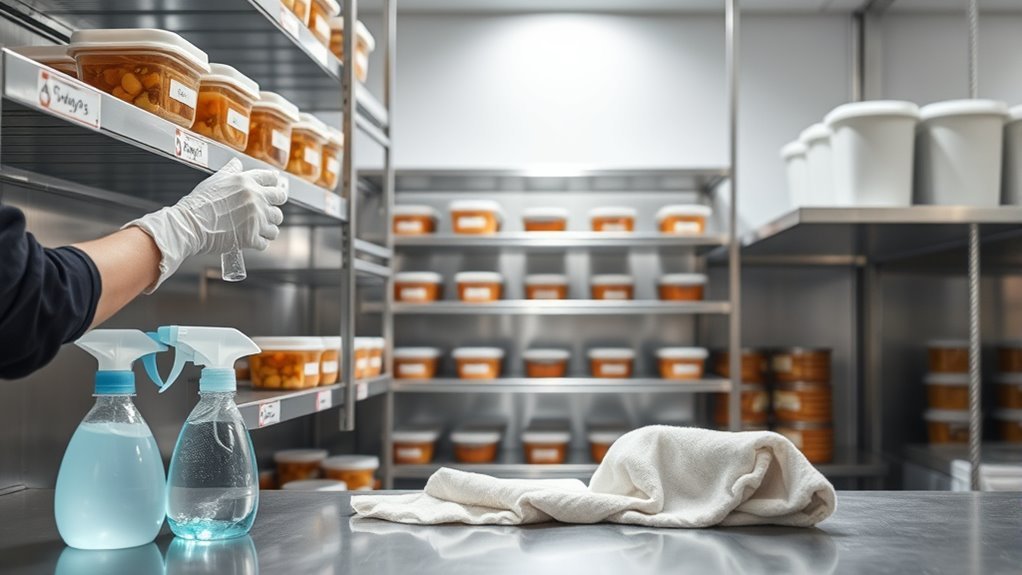
Before you store any food, make sure you clean all shelves, drawers, and containers thoroughly with hot water and a food-safe detergent to remove dust, spills, and bacteria.
Clean shelves, drawers, and containers with hot water and food-safe detergent before storing food to ensure safety.
After cleaning, sanitize storage surfaces using a bleach solution—1 tablespoon bleach per gallon of water—to kill any lingering germs and prevent cross-contamination.
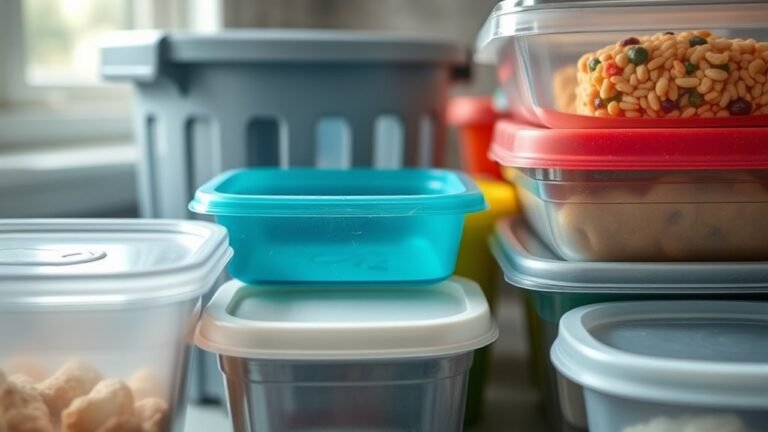
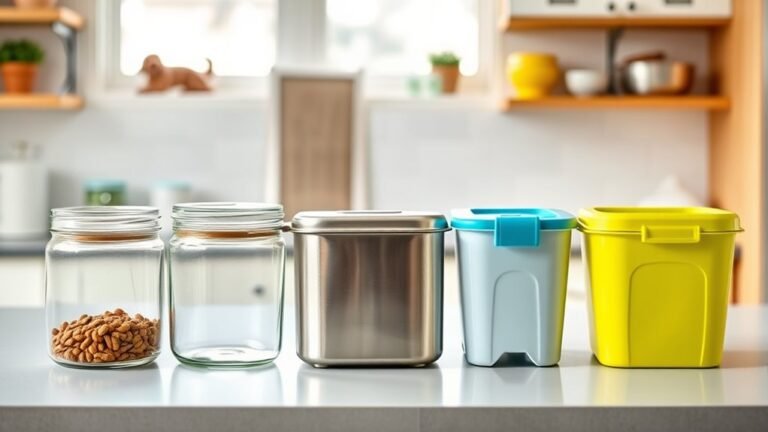
Always use clean, food-grade containers to keep your food safe and avoid contamination.
Don’t forget to inspect your storage areas routinely to spot spoiled or expired items and remove them promptly.
Implement a routine cleaning schedule, ideally weekly, to maintain hygiene and prevent mold, bacteria, or pest infestations.
Check and Adjust Refrigerator Temperature
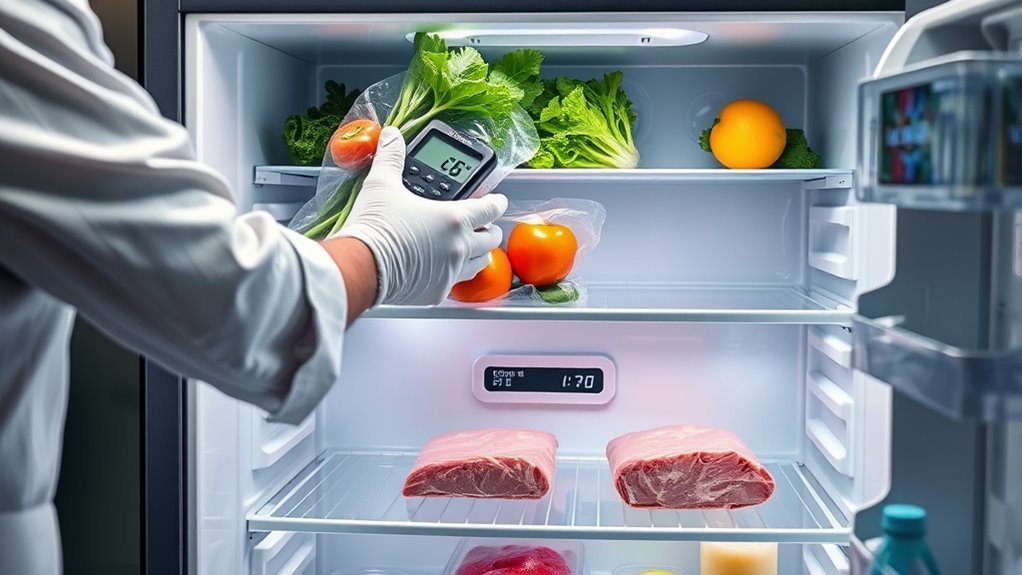
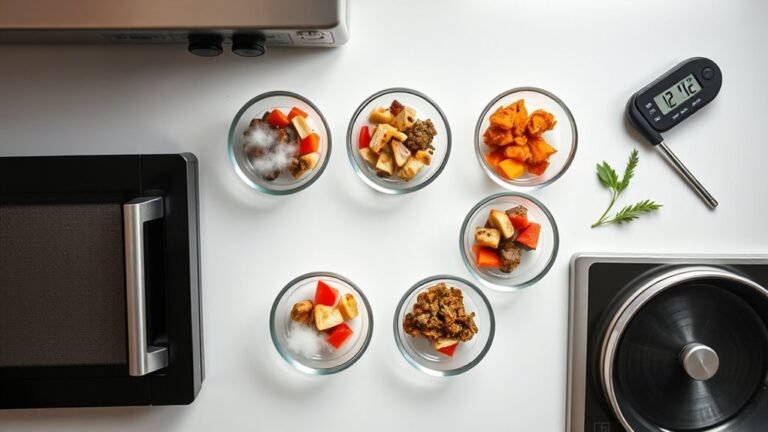
You’ll want to keep your refrigerator at or below 40°F (4°C) to make certain food stays fresh and safe. Use an accurate appliance thermometer placed near the center of the fridge—not the door—to get a true temperature reading.
Check the temperature regularly and adjust your settings as needed to maintain the ideal range. It’s a simple step, but it really helps keep your food in the best shape possible.
Ideal Temperature Ranges
Although it might seem simple, maintaining your refrigerator at or below 40°F (4°C) is vital to prevent bacterial growth and keep your food safe. To guarantee proper food storage, you need to keep the refrigerator temperature consistently within this safe temperature range.
Always keep cold food cold by avoiding overpacking the fridge. This allows cold air to circulate freely around your items.
Even though you won’t get into appliance thermometers here, regularly checking your refrigerator’s settings and adjusting them as needed is essential. Placing an appliance thermometer near the fridge’s center (away from the warm door area) helps you verify the temperature is right.
Staying on top of these steps guarantees your food remains fresh and safe every time you store it.
Using Appliance Thermometers
Since maintaining the right temperature is essential, using an appliance thermometer helps you monitor and adjust your refrigerator accurately. Proper temperature control guarantees food safety and ideal food storage conditions.
To keep your refrigerator temperature in check, follow these tips:
- Place the appliance thermometer near the center shelf, away from the door’s warm area, for accurate readings.
- Check the thermometer weekly to confirm the temperature stays at or below 40°F (4°C).
- Adjust your refrigerator settings if readings exceed 40°F, aiming for 35-38°F for safe food storage.
- Verify the freezer maintains 0°F (-18°C) or lower and adjust as needed.
- Record temperature readings regularly to track long-term performance and maintain food safety.
These steps help you maintain consistent temperature regulation essential for food storage. It’s a simple way to make sure your food stays fresh and safe.
Temperature Monitoring Tips
When you want to keep your refrigerator at the right temperature, regularly checking and adjusting it is key. Use an accurate thermometer placed in the center of the fridge, away from the door, to get a true reading.
Keep the temperature at or below 40°F (4°C) to ensure food safety and maintain the cold chain. Check the refrigerator temperature daily, especially after door openings or power outages.
Adjust the control dial as needed and avoid placing hot foods near the thermometer to prevent false readings. Proper temperature control helps extend storage times and prevents spoilage.
| Task | Tip |
|---|---|
| Thermometer placement | Center of fridge, away from door |
| Temperature target | At or below 40°F (4°C) |
| Frequency of checks | At least once daily |
| Adjustment advice | Use control dial; avoid hot foods near thermometer |
Organize by Food Safety Hierarchy
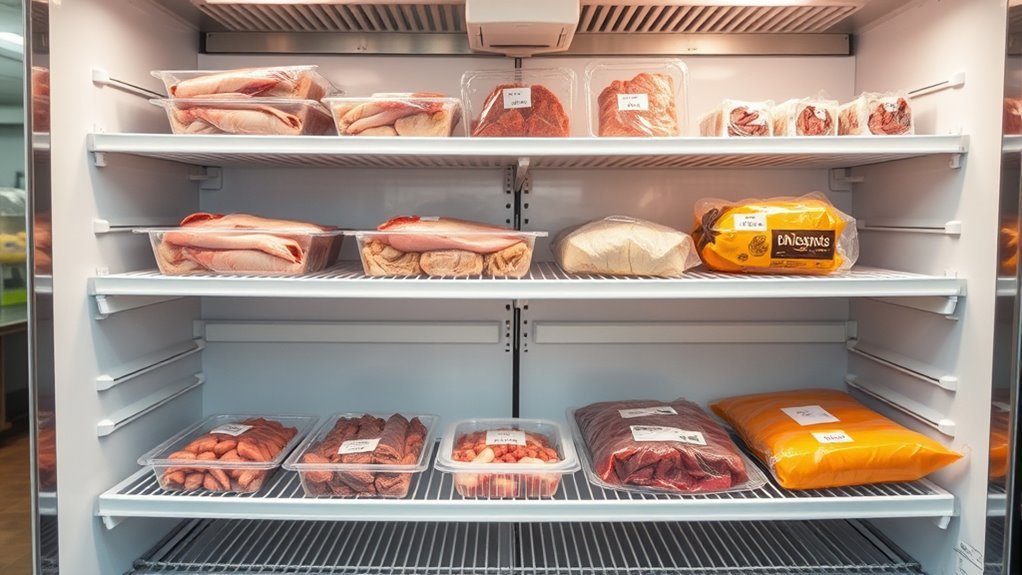
How should you arrange your refrigerator to keep food safe? Following a food safety storage hierarchy helps prevent contamination and keeps your raw meats and cooked foods properly separated.
Organize items by their cooking temperature needs, placing those requiring the lowest temperature at the top and highest at the bottom.
- Store ready-to-eat foods like salads and desserts on the top shelf to avoid contamination.
- Place raw seafood and fish on the third shelf, maintaining at least 145°F.
- Keep ground meats and injected meats on the fourth shelf with a 155°F minimum temperature.
- Store poultry and casseroles on the bottom shelf to prevent drips contaminating other foods.
Always arrange foods to reduce cross-contamination by respecting their required cooking temperatures.
This storage hierarchy ensures ideal food safety and reduces health risks.
Label and Date All Items Clearly
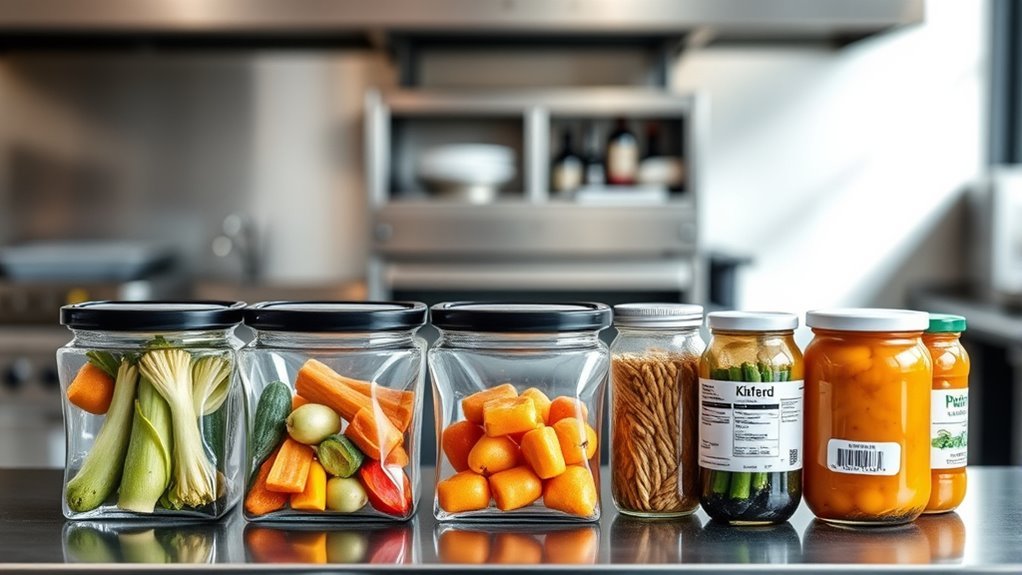
You should always label and date your food items to keep track of freshness and avoid waste. Use waterproof markers or pre-printed labels for clear, lasting information.
It’s best to consistently place labels where you can easily see them, like on the top or side of containers. That way, you won’t have to guess what’s inside or when you put it there.
Importance of Labeling
Why does labeling your food items clearly matter so much? Proper labeling is vital for food safety and helps you maintain proper storage.
When you label and date items, you prevent spoilage and keep your kitchen running smoothly. Use waterproof, permanent markers or pre-printed labels to guarantee information stays legible.
Here’s why labeling plays a fundamental role:
- Helps you follow expiration dates accurately
- Ensures proper storage and rotation of food
- Supports inventory management by tracking items easily
- Minimizes the risk of cross-contamination
- Provides clear guidance on safe consumption
Effective Date Marking
When exactly should you label your food items? You should always label them immediately after purchase or preparation to track freshness and prevent spoilage. Use clear, legible labels showing the date and, if needed, the use-by or expiration date.
This helps you apply the FIFO method effectively, using older items first to minimize waste and maintain food safety. Regularly check your labels to ensure they’re visible and replace any faded ones. Proper date marking keeps your storage organized and compliant with regulations.
| Labeling Time | Purpose | Benefit |
|---|---|---|
| At purchase/prep | Monitor freshness | Prevent spoilage |
| Use clear labels | Show dates clearly | Ensure FIFO use |
| Check regularly | Maintain visibility | Reduce food waste |
Consistent Label Placement
How can you guarantee quick identification of food items without unnecessary handling? Consistent labeling and date marking are key. Always place labels on the top or front of containers to maximize visibility in storage.
Use waterproof, smudge-proof labels or markers so labels stay clear over time. Date all perishable items upon receipt or preparation to follow the FIFO system effectively. Regularly check and update labels to avoid expired or spoiled items.
To ensure consistent label placement:
- Write item names and dates clearly on each label
- Affix labels where they’re easily seen without moving containers
- Use durable labels that resist water and smudging
- Date items promptly to keep storage organized
- Review labels regularly to maintain accuracy
This method keeps your storage efficient and safe.
Place Older Products at the Front
To keep your food fresh and reduce waste, always place older products at the front of your shelves or drawers. This practice supports the first-in, first-out inventory method, ensuring you use items in the order you received them.
Position new stock behind older products to maintain proper rotation. Use clear labels with purchase or receive dates on every item to quickly identify what needs to be used first.
Regularly check your inventory and move older products forward so they don’t get overlooked or expire. Organizing your storage this way not only improves efficiency but also reduces spoilage.
Avoid Overcrowding for Proper Airflow
Keeping older products at the front helps you use food efficiently. But it’s just as important to avoid overcrowding your storage space.
Overcrowding blocks air circulation, which reduces airflow and messes with temperature control. For ideal storage efficiency and refrigerator organization, follow these tips:
- Leave 1-2 inches of space between items to promote proper air circulation.
- Avoid packing foods tightly so cold air can reach all surfaces.
- Keep open pathways inside the refrigerator for even cooling and to prevent hot spots.
- Don’t overload shelves beyond weight limits to avoid blocking vents.
- Regularly organize and rotate stock to prevent congestion and maintain airflow.
Regularly Inspect and Maintain Storage Conditions
Since proper storage conditions directly affect food safety and quality, you should regularly inspect your refrigerators, freezers, and pantry areas. Check the refrigerator temperature daily with an accurate thermometer to keep it at 40°F (4°C) or below, and freezers at 0°F (-18°C) or below.
Look for signs of spoilage, leaks, mold, or pests, and remove any compromised items immediately. Practice proper storage by covering and labeling foods with dates, organizing them to avoid cross-contamination, and rotating stock.
Maintain sanitation by cleaning shelves and compartments weekly with suitable sanitizers. Also, keep an eye on humidity and ventilation to prevent moisture buildup, which causes mold and spoilage.
Frequently Asked Questions
In What Order Should Food Be Placed Into Storage?
You should store raw meats and seafood on the bottom shelf first, then place cooked foods on middle shelves. Ready-to-eat items go on the top shelves.
Keep produce in crisper drawers. And don’t forget to always rotate stock using FIFO. It helps keep everything fresh!
What Are the Correct Procedures for Storing Food?
You should store perishable foods quickly at 40°F or below. Keep raw meat sealed on the bottom shelf to prevent any drips from contaminating other foods.
Label everything with dates so you know when it was stored. Using airtight containers helps keep your food fresh longer.
And don’t forget to regularly monitor fridge and freezer temperatures. This way, you guarantee safety and freshness every time.
What Are 5 Important Food Storage Tips?
Think of food storage like a well-choreographed dance: you’ve got to keep it cold, seal it tight, label dates clearly,
avoid overcrowding, and rotate items wisely to keep freshness spinning perfectly every day.
It’s all about staying on your toes so nothing goes to waste!
What Is the Correct Order for Storing Food in a Fridge?
You should store ready-to-eat foods on top, cooked items below, then seafood and whole cuts. After that, put ground meats, and raw poultry at the bottom.
This order helps prevent cross-contamination and keeps your fridge safe and organized. It’s a simple way to make sure everything stays fresh and hygienic!
Conclusion
By following these seven steps, you’ll keep your food fresher than a mountain breeze and your storage safer than Fort Knox. Don’t underestimate the power of organization—clean, label, and arrange your items carefully to avoid spoilage and waste.
Remember, a well-maintained fridge is your best defense against foodborne illnesses. Keep checking temperatures and airflow regularly, and you’ll always have peace of mind knowing your food’s stored perfectly every single time.
Proper food storage is essential to extend freshness and prevent contamination. When you place food into storage the right way, you reduce waste and save money. So, keep your fridge organized, monitor conditions, and follow these steps consistently. That’s how you ensure your food stays safe and delicious longer—making your kitchen a healthier, more efficient place every day.