Is Silicone Safe for Food Storage?
You can trust silicone for food storage because it’s FDA- and LFGB-certified, ensuring it meets strict safety and hygiene standards. Made from inert, chemical-free silica, it won’t leach harmful substances or affect your food’s taste. This makes silicone a safe and reliable option for keeping your food fresh.
Silicone handles both hot and cold temperatures safely, so whether you’re storing leftovers or freezing fruits, it works well. Plus, it resists bacteria buildup and cleans easily, which is a big win for kitchen hygiene.
Compared to plastic, silicone is more stable and environmentally friendly.
Curious about how silicone stacks up against plastic and why it’s such a reliable choice? There’s definitely more to explore!
Key Takeaways
- Silicone is FDA and LFGB certified, so it meets strict food safety and hygiene standards. That means it’s been tested and approved for use with food.
- It’s made from inert silica, which means it’s chemical-free and won’t leach harmful substances into your food. You can trust it to keep your food safe.
- Silicone handles temperature changes really well. It’s safe for both hot and cold food storage without any contamination risks.
- Plus, it’s BPA-free and chemically stable. Unlike some plastics that might leach toxins, silicone stays safe no matter what.
- And because silicone containers are reusable, they support food safety while also being kind to the environment. They’re durable and built to last.
Why Food-Grade Silicone Is Safe for Food Storage
Because food-grade silicone is certified by organizations like the FDA and LFGB, you can trust it’s passed strict safety and hygiene tests. This certification means the silicone meets rigorous standards for food contact safety.
Made from inert materials such as silica, food-grade silicone is non-reactive and won’t leach chemicals or alter the taste of your food. You’ll appreciate that it’s completely chemical-free, containing no BPA, phthalates, or other harmful substances.
Crafted from inert silica, food-grade silicone is non-reactive and free from BPA, phthalates, and harmful chemicals.
Its temperature stability lets you store food safely, whether hot or cold, without worrying about contamination. Plus, the material is hygienic and easy to clean, resisting bacteria buildup with minimal effort.
When you use food-grade silicone for food storage, you’re choosing a reliable, safe option designed to keep your food fresh and uncontaminated. Its combination of FDA certification, inert materials, and convenience makes it an excellent choice for everyday use.
How Silicone and Plastic Compare for Food Storage Safety
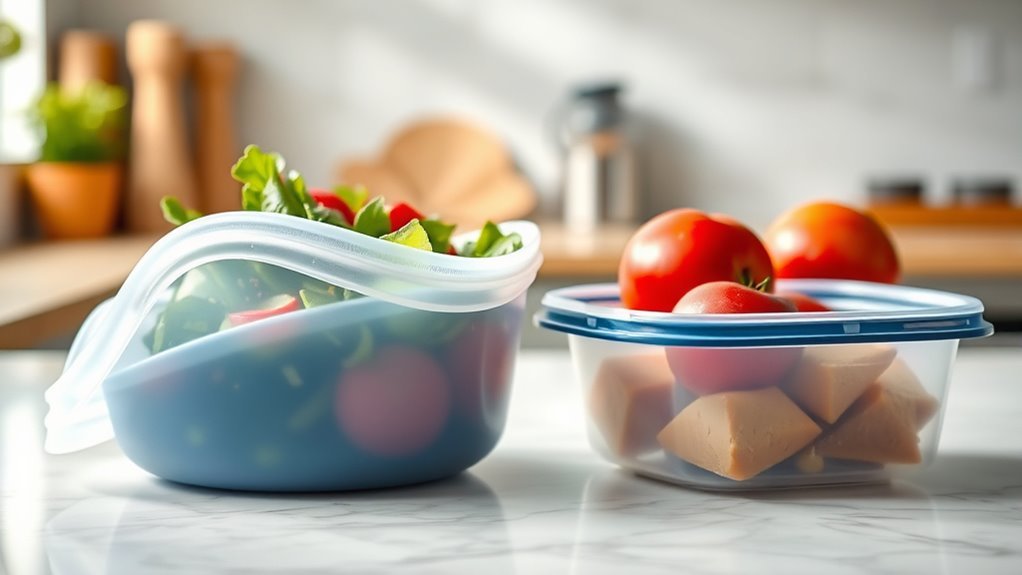
While food-grade silicone offers many safety benefits, you might wonder how it stacks up against plastic containers for storing your food. Food-grade silicone is BPA-free, chemically stable, and FDA certified, meaning it’s tested to avoid leaching chemicals into your food.
In contrast, plastic safety varies widely. Plastics with recycling codes 2, 4, and 5 are generally safer, but code 7 plastics may contain BPA and pose health risks.
Unlike some plastics, silicone remains inert during storage or heating, reducing chemical exposure. Additionally, reusable containers made from silicone have a better environmental impact than many single-use plastics, which degrade and can release harmful substances over time.
While plastics can be convenient, their safety depends on type and quality, whereas food-grade silicone offers consistent chemical stability and reduces your risk of contamination.
Choosing silicone food storage containers not only protects your health but also supports environmental sustainability through durable, reusable design.
Frequently Asked Questions
What Is the Safest Material for Food Storage?
The safest material for food storage is glass, stainless steel, or ceramic. You’ll avoid harmful chemicals, safely heat your food, and keep it fresh.
Plus, these materials last longer and are eco-friendly. It’s a smart choice for both your health and the planet!
Do Silicone Food Storage Containers Have Microplastics?
You won’t find microplastics sneaking out of silicone containers; they’re like smooth, sturdy shields made from sand’s pure essence.
When you store food, they hold strong without breaking down or shedding tiny plastic particles over time.
Does Silicone Leach Microplastics When Frozen?
No, silicone doesn’t leach microplastics when frozen. You can trust high-quality, food-grade silicone to stay stable and safe, even at freezing temperatures.
It won’t break down or contaminate your food with harmful particles. So, feel confident using your silicone containers or molds in the freezer without any worries!
Is Silicone Safer Than Ziploc Bags?
Yes, silicone is safer than Ziploc bags because it’s reusable, free from harmful chemicals, and doesn’t leach toxins when heated or frozen.
Plus, you’ll reduce waste and avoid microplastics by choosing silicone over single-use plastics. It’s a smarter choice for both you and the planet.
Conclusion
You might think storing food in silicone is like inviting a chemical circus into your kitchen, but it’s actually as safe as a fortress. Food-grade silicone doesn’t leach harmful toxins, unlike some plastics that could turn your snacks into a science experiment.
So go ahead—trust silicone to keep your food fresh without turning your fridge into a hazardous zone.
In the battle of food storage, silicone is your unbeatable, safe champion. It’s durable, non-toxic, and resistant to heat, making it perfect for everything from freezing leftovers to reheating meals. Plus, silicone won’t absorb odors or stains, so your food tastes just as it should.
When it comes to food storage safety, silicone is a smart, reliable choice that protects both your health and your food’s quality.