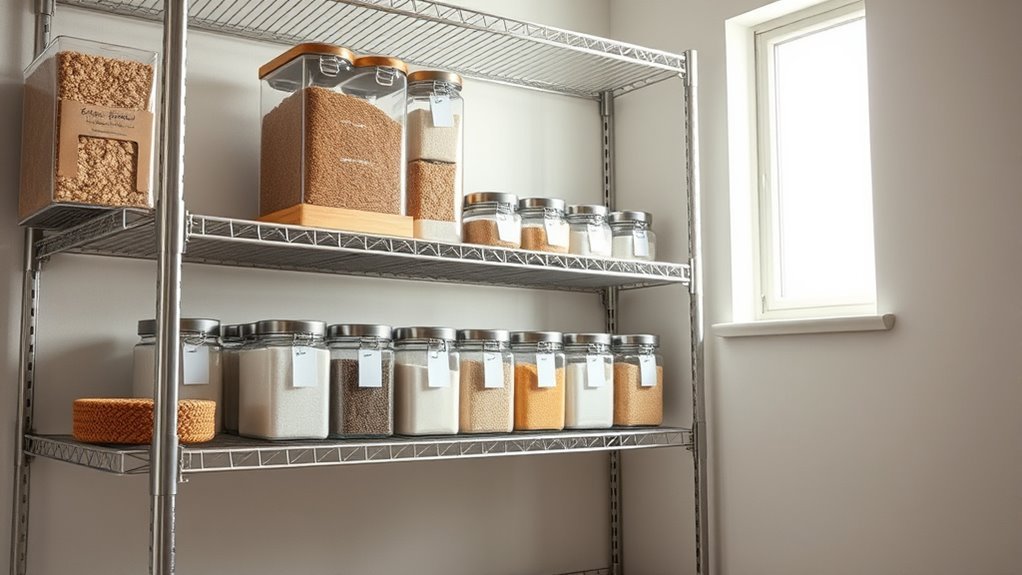
5 Key Requirements for Food Shelving Storage
You need food shelving that’s strong enough to hold heavy loads without bending or collapsing. Choose materials like stainless steel that resist rust and are easy to clean, preventing bacteria buildup.
Make sure your shelves allow proper air circulation to keep food fresh and avoid moisture. Following food safety rules is key—store items off the floor and maintain cleanliness to keep everything hygienic.
Adjustable designs let you customize your space efficiently, making your food storage setup more versatile. Keep going to discover how to optimize your food storage setup.
Key Takeaways
- Shelving must support heavy loads with corrosion-resistant, durable materials like stainless steel or galvanized steel.
- Surfaces should be non-porous, smooth, and easy to clean to prevent bacterial buildup and ensure hygiene.
- Open, ventilated shelving design promotes proper air circulation to maintain temperature and reduce moisture.
- Shelves must comply with food safety standards, including keeping items off the floor and away from walls.
- Adjustable, modular shelving allows customization for different food types and optimizes storage efficiency.
Durability and Load Capacity
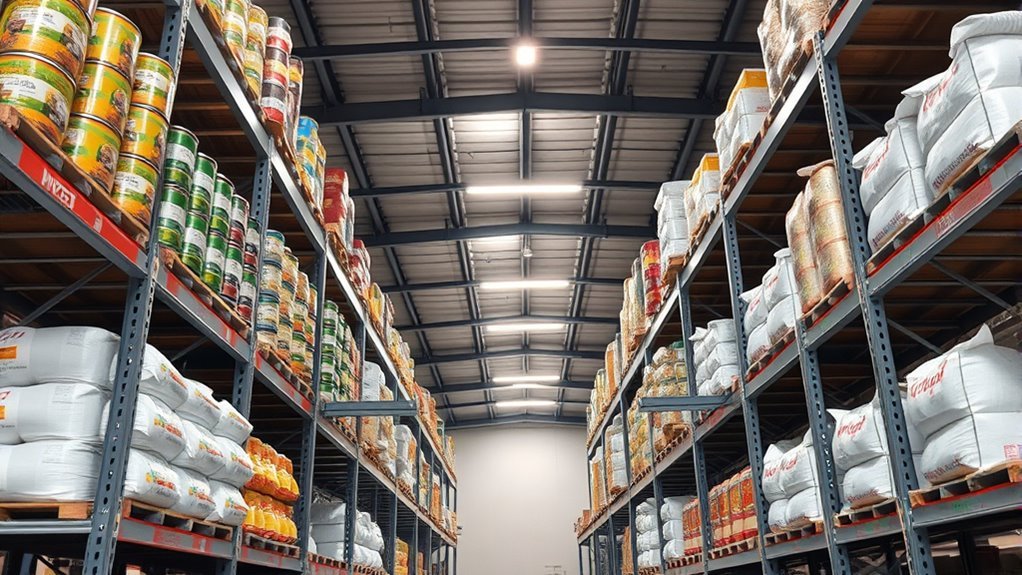
Although you might not always see it, food shelving must handle heavy loads—often between 150 and 300 kg per shelf—without collapsing. You need shelves designed for durability, made from materials like galvanized or stainless steel that offer corrosion resistance and long-term support.
Proper shelving support comes from reinforced supports and adjustable levels, which help you evenly distribute weight and maintain structural integrity. Pay attention to load capacity and load ratings to ensure your shelving can withstand daily use and impacts without warping or breaking.
Regular inspections help you verify that the weight distribution stays balanced and that the shelving maintains its strength over time. By focusing on these factors, you can rely on your food shelving to safely hold heavy items day after day.
Hygienic and Easy-to-Clean Surfaces
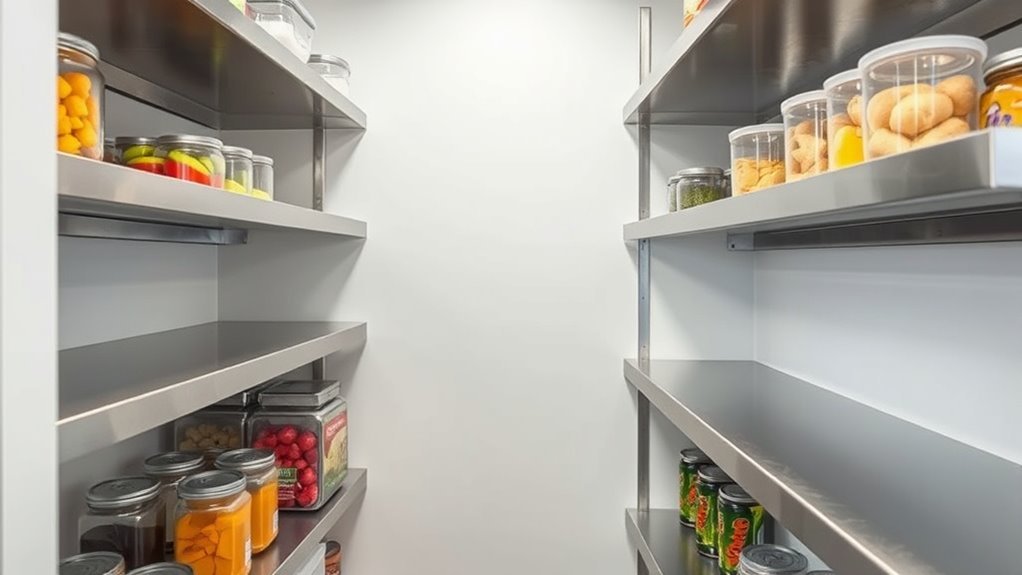
Durable shelving is important, but you also need surfaces that stay clean and safe for food storage. Choose non-porous, smooth materials like stainless steel or epoxy-coated wire to prevent dirt accumulation and bacterial growth.
Opt for non-porous, smooth materials like stainless steel for clean, safe, and durable food storage surfaces.
Here’s how you can maintain hygienic and easy-to-clean surfaces:
- Use open wire shelving to enhance air circulation. This reduces moisture buildup and makes cleaning easier.
- Regularly disinfect surfaces using food-safe cleaning agents such as mild detergents or vinegar.
- Avoid shelves with cracks, crevices, or sharp edges where dirt and bacteria can hide.
- Inspect and maintain shelves to prevent rust or damage that can compromise sanitation.
Proper Air Circulation and Ventilation
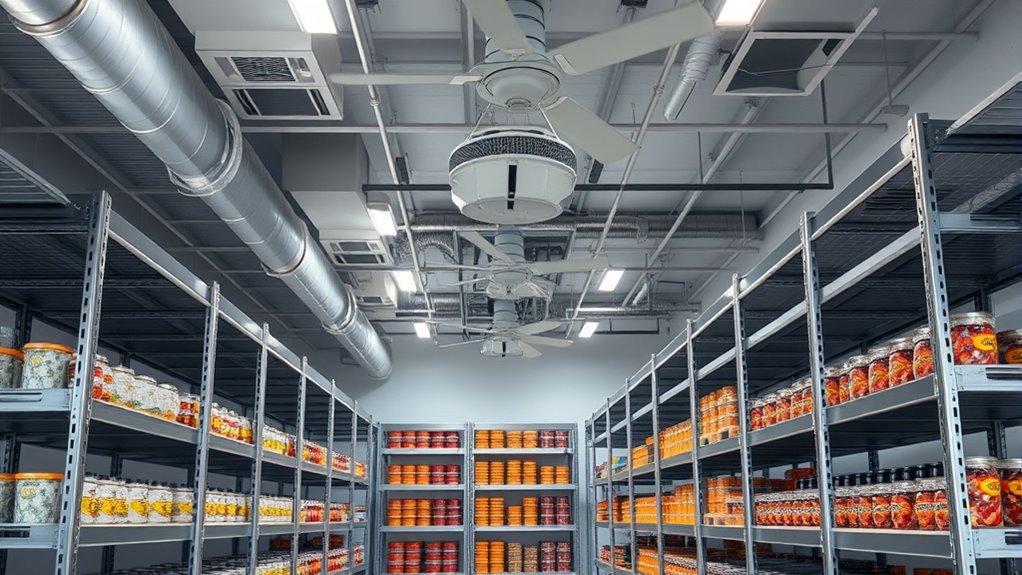
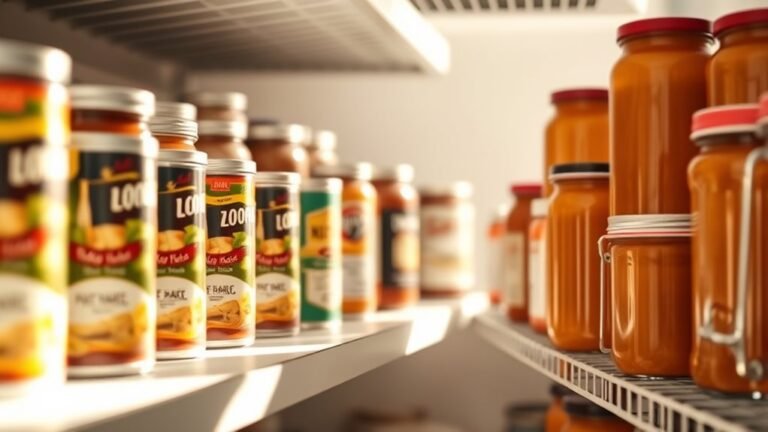
When you guarantee proper air circulation and ventilation in your food storage areas, you help maintain consistent temperatures and reduce moisture buildup, which lowers the risk of spoilage. Use open shelving with slotted designs to promote airflow around stored items, especially in dry and refrigerated storage.
Keep at least 6 inches of clearance from walls and 12 inches below the ceiling to ensure adequate ventilation. This setup prevents condensation that can damage packaging and encourage mold growth.
Regularly check your airflow systems to maintain ideal storage conditions and avoid moisture buildup. Proper air circulation not only preserves food quality but also supports a safer environment by minimizing the risk of mold growth and spoilage caused by poor ventilation.
Compliance With Food Safety Standards
To guarantee your food storage remains safe and compliant, you must follow local and national food safety standards like the FDA Food Code or relevant UK regulations. Meeting these regulations ensures contamination prevention and proper storage practices.
Adhering to FDA Food Code and UK regulations ensures safe, contamination-free food storage practices.
Here’s what you need to focus on:
- Use food-safe materials such as stainless steel or coated wire shelving to avoid contamination.
- Maintain proper clearance—store items at least six inches off the floor and away from walls to allow air circulation and pest control.
- Implement strict cleaning protocols to prevent microbial buildup and pest infestations on shelving units.
- Ensure temperature control is consistent by allowing airflow around stored products to inhibit bacterial growth.
Following these steps helps you comply with food safety standards and keep your storage environment safe.
Adjustable and Sector-Specific Design
Although food storage needs vary widely, adjustable and sector-specific shelving lets you tailor your setup precisely. With adjustable shelving, you can customize the height to fit various food items, optimizing space and guaranteeing proper organization.
Sector-specific design incorporates features like antimicrobial coatings for healthcare or heavy-duty supports for industrial food processing. This way, you meet strict food safety and hygiene standards without any hassle.
Modular systems provide flexibility, allowing easy reconfiguration and expansion as your storage demands change. Material selection and load capacity are vital to support different food types safely while promoting durability.
Open wire shelving enhances air circulation, preventing moisture buildup and debris accumulation. By focusing on customization through these elements, you make certain your food storage setup remains compliant, efficient, and hygienic across diverse sectors.
Frequently Asked Questions
What Is the 2-2-2 Rule for Food Storage?
The 2-2-2 rule means you should refrigerate perishable foods within 2 hours of cooking or buying them.
If it’s hotter than 90°F, you’ve got just 1 hour before chilling to keep food safe.
What Are the Proper Guidelines for Food Storage?
Of course, you want food chaos—so don’t store raw meats on top or let items touch the floor.
Instead, keep things six inches up, label everything, and guarantee good airflow between shelves.
Easy, right?
What Are the FDA Food Storage Requirements?
You must store food at least six inches above the floor. Keep perishables at 40°F or below to ensure they stay fresh and safe.
Also, make sure to separate raw meats from ready-to-eat items. Use clean, ventilated, corrosion-resistant shelving to meet FDA requirements.
What Two Foods Never Expire?
You’ll find that honey and white rice never expire when you store them properly. Their natural properties and low moisture keep them safe indefinitely.
Conclusion
Now that you know the 5 key requirements for food shelving storage, you might think the hardest part is over.
But what if overlooking just one detail could compromise your entire setup? Imagine investing in shelves that look perfect but fail when it matters most.
Don’t settle for less—ensure durability, hygiene, airflow, compliance, and flexibility all work together.
Your food’s safety depends on it, and the right choice in food storage shelving makes all the difference. When you prioritize these key requirements, you create a reliable system that keeps your food safe, fresh, and accessible.
Remember, proper food shelving storage isn’t just about holding items—it’s about protecting your inventory, meeting health standards, and maximizing efficiency. Choose wisely and see how the right shelves can transform your food storage experience.