7 Steps for the Correct Storage Order of Food
You should start by identifying temperature zones, keeping your fridge between 34–40°F and the freezer below 0°F to control bacterial growth. Proper temperature control is key to safe food storage and preventing spoilage.
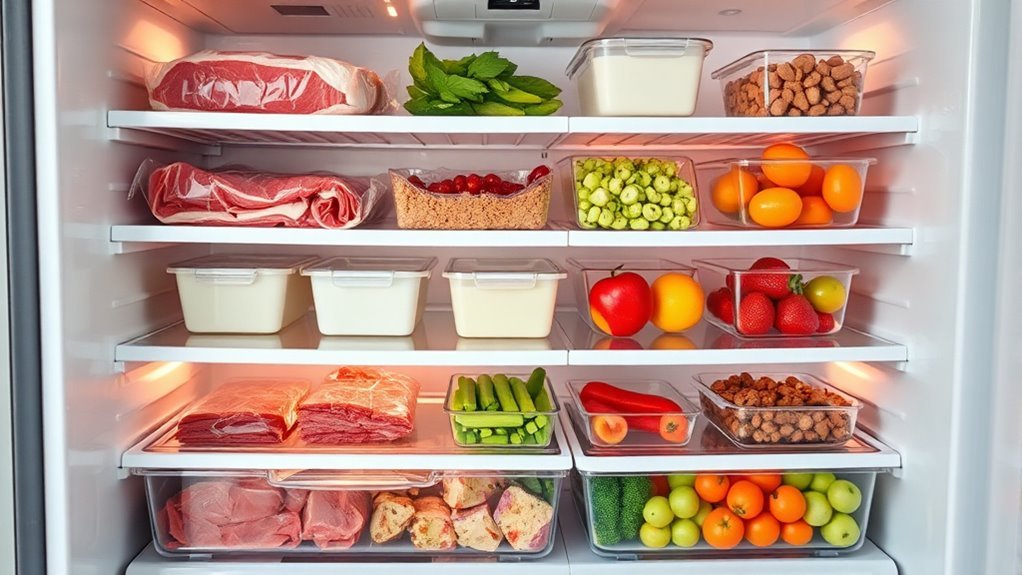
Store raw meat, poultry, fish, and shellfish sealed on the lowest shelf to prevent drips from contaminating other foods. Always seal and label raw foods to avoid leaks and mix-ups.
Place ready-to-eat items above raw ones to keep them safe from cross-contamination. Don’t forget to rotate stock using FIFO (first in, first out) to use older items before newer ones.
Monitor temperatures regularly to ensure your fridge and freezer stay within safe ranges. Finally, remove expired or spoiled food promptly to keep your storage clean and safe.
Following these basics sets you up for deeper food safety practices and helps keep your kitchen a healthier place.
Key Takeaways
- Store raw meat, poultry, fish, and shellfish sealed on the lowest shelf. This helps prevent drips from contaminating other foods.
- Place ready-to-eat foods on shelves above raw items. That way, you avoid any cross-contamination from leaks.
- Use leak-proof, moisture-resistant packaging and containers. This securely contains raw foods and any potential drips.
- Label all stored items with the product name and date. It makes it easier to keep proper rotation using the FIFO method.
- Regularly monitor and maintain refrigerator temperatures between 34–40°F. Also, keep freezer temperatures at or below 0°F to ensure food stays safe.
Identify Food Storage Temperature Zones
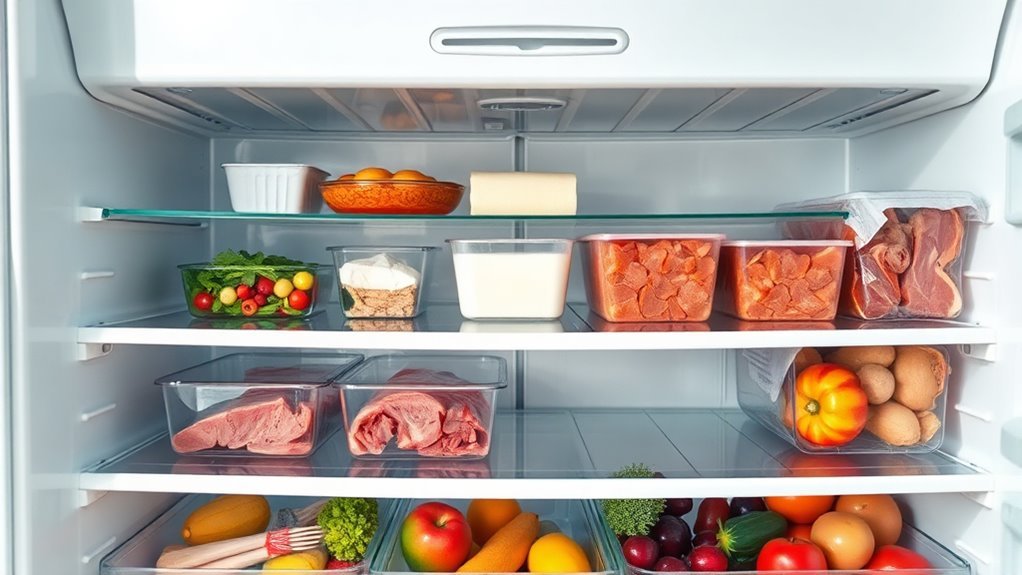
Although it might seem simple, identifying the correct food storage temperature zones is important to keep your food safe and fresh. You need to be aware of the DANGER ZONE, which ranges from 40 to 140°F (4 to 60°C), where bacteria multiply rapidly, doubling every 20 minutes.
To prevent spoilage, keep your refrigerator between 34 and 40°F and use a thermometer to check the temperature regularly. Frozen foods must stay at 0°F or below, remaining solid to maintain quality.
Keep your fridge between 34-40°F and frozen foods at 0°F or below to ensure freshness.
Avoid leaving perishable items out too long, especially in the DANGER ZONE. If you’re transporting food, use a cooler with ice and limit the time food spends above 40°F.
Staying vigilant with food storage temperature zones helps protect your meals and your health. It’s a simple step that makes a big difference!
Organize Storage Areas to Prevent Cross-Contamination
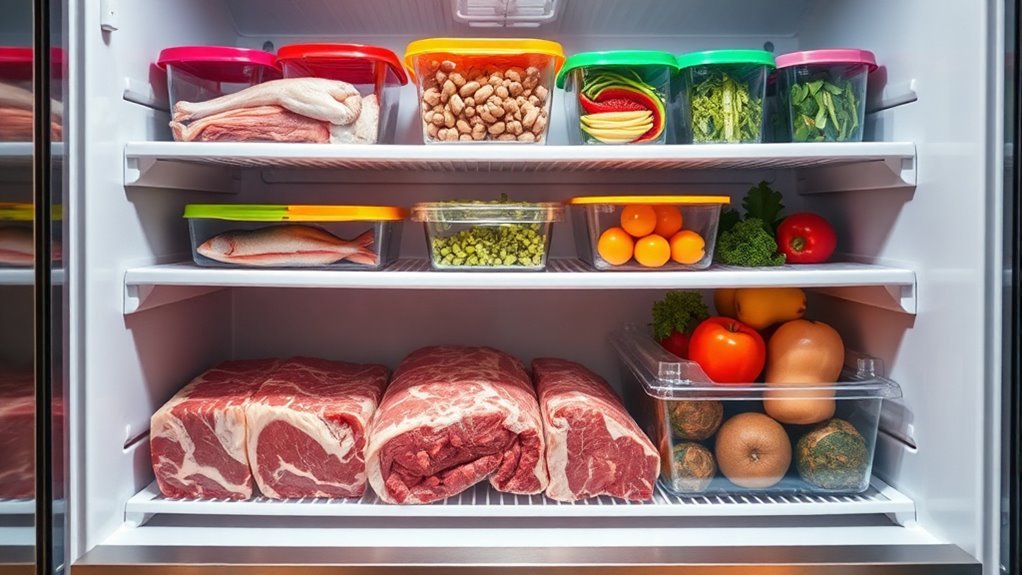
When you organize your storage areas properly, you greatly reduce the risk of cross-contamination between raw and ready-to-eat foods. Always store raw meat, poultry, fish, and shellfish sealed and securely on the lowest shelf to prevent drips from contaminating other foods.
Keep raw items in plastic bags while shopping and place them last in your car to minimize handling before refrigeration. Separating storage areas for produce, especially leafy greens, helps keep food fresh and uncontaminated.
Clean any leaks immediately with warm soapy water, then sanitize with a bleach solution. Use clean, organized containers and rotate stock using the FIFO method.
Seal and Label Raw Foods to Prevent Leaks
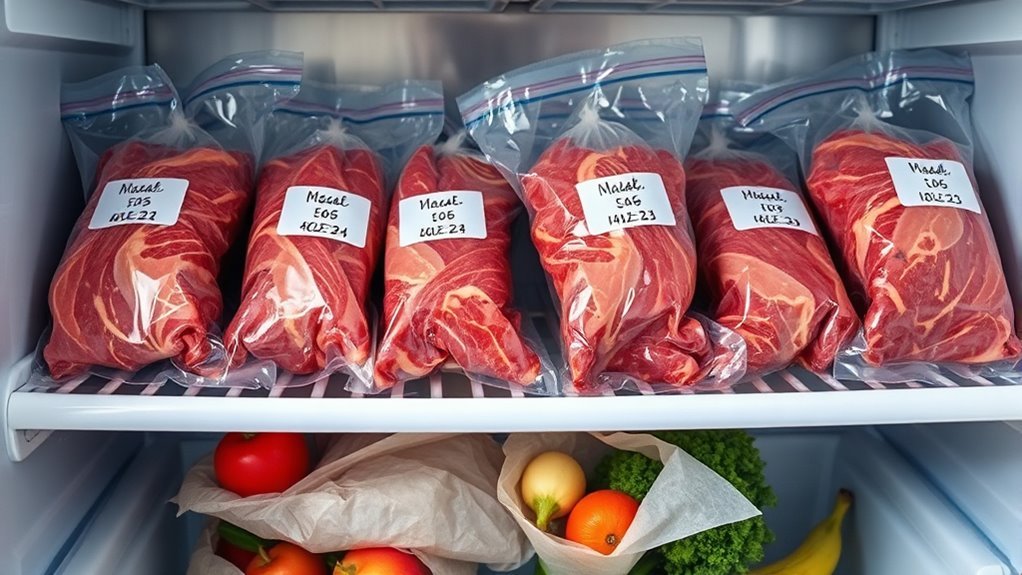
Make sure you wrap raw foods tightly using leak-proof packaging to keep juices contained and avoid cross-contamination. Always store these items on the lowest shelf to prevent drips from reaching other foods.
Don’t forget to label and date each package clearly, so you use older items first and reduce waste. It really helps keep your fridge organized and your food safe!
Secure Packaging Techniques
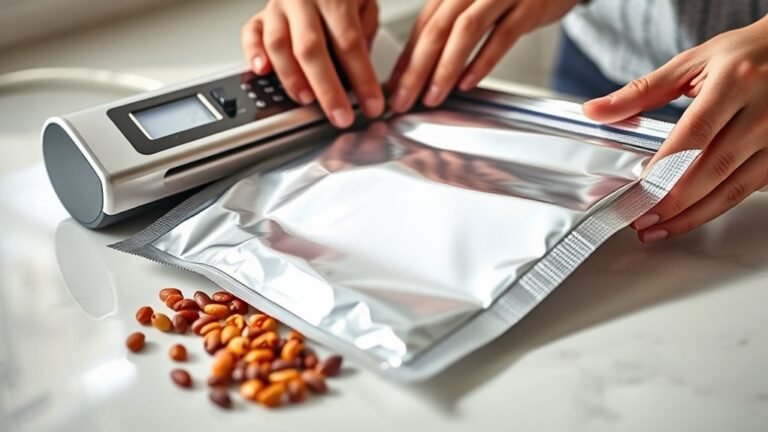
To prevent leaks and cross-contamination, you should wrap raw meat, poultry, fish, and shellfish securely using moisture-proof, leak-resistant materials. These secure packaging techniques ensure that food is stored safely, preventing juices from dripping onto other foods and reducing contamination risks.
Always keep raw items sealed tightly and place them in containers or bins to capture any potential leaks. This protects ready-to-eat foods from contamination.
Label each package clearly with the product name and date before refrigeration or freezing. That way, you can follow the FIFO method, which helps maintain quality and freshness.
If leaks do happen, clean the area immediately with warm, soapy water. Then sanitize using a bleach solution.
Following these steps is essential to uphold proper Food Safety and ensure your kitchen stays clean and organized. It’s all about keeping things safe and tidy!
Leak Prevention Methods
Securing raw meat, poultry, fish, and shellfish with proper packaging sets the foundation for preventing leaks. You should wrap these items tightly and place them in leak-proof packages to avoid drips contaminating ready-to-eat foods.
Always store sealed raw products on the lowest refrigerator shelf to prevent harmful bacteria from spreading through leaks. If any spills occur, clean and sanitize the area immediately.
When storing food, keep raw packages separate and handle them with care to reduce leak risks. It’s all about keeping things clean and safe!
| Action | Reason |
|---|---|
| Use leak-proof packages | Prevents drips and contamination |
| Store on lowest shelf | Avoids dripping onto other foods |
| Separate in shopping cart | Prevents leaks during transport |
| Clean spills immediately | Stops harmful bacteria growth |
| Label and follow FIFO | Minimizes handling time |
Clear Labeling Importance
When handling raw meat, poultry, fish, and shellfish, you should ensure and label each package clearly to prevent leaks and cross-contamination. Use moisture-proof, freezer-safe wrapping to make sure your food stays secure and doesn’t drip onto other items.
Label each package with the product name and date, so you can rotate stock using the “first in, first out” method. This helps maintain the quality of the food and reduces the risk of spoilage.
Store raw packages on the lowest refrigerator shelf to avoid contaminating ready-to-eat foods. If you notice any leaks, clean the area immediately with warm soapy water and sanitize it properly.
Finally, keep your freezer temperature steady to preserve freshness and quality, ensuring your food stays safe and tasty longer. It’s a simple step that makes a big difference!
Place Ready-to-Eat Foods Above Raw Items
Since ready-to-eat foods won’t be cooked again, you should make sure you always store them on shelves above raw meat, poultry, fish, and shellfish. This prevents any drips or leaks from raw items contaminating foods that are safe to eat without further cooking.
Always keep raw meat, poultry, and fish wrapped securely on the lowest refrigerator shelf to avoid leaks. If a leak occurs, clean it right away with warm soapy water, then sanitize with a chlorine bleach solution.
Maintaining refrigerator temperatures between 34–40 °F also helps limit bacterial growth, ensuring your food is always fresh and safe. By placing ready-to-eat foods above raw items, you reduce the risk of cross-contamination and ensure your food remains safe for consumption.
Use FIFO to Rotate Food Stock Efficiently
Rotate your food stock using the FIFO method—first in, first out—so you use older items before newer ones. Arrange new stock behind or under older items to maintain the correct order. Also, make sure to check labels for open-date, use-by, or expiration dates before restocking.
Keep refrigerated foods at 34–40 °F and frozen items at or below 0 °F to preserve quality during the entire time they’re stored. It’s important to avoid placing raw meat, poultry, or fish above ready-to-eat foods to prevent contamination. That can really undermine FIFO’s benefits.
Label and date all packages, especially freezer wraps, to help you keep track of how long items have been stored. Following FIFO ensures you maintain food quality and reduce waste by always using the oldest stock first. Plus, doing this under the right temperature conditions makes all the difference.
Monitor and Document Food Storage Temperatures
At all times, you should ensure keep refrigerator temperatures between 34 and 40°F and use a reliable thermometer to verify this range. Maintaining this ensures ice cream, frozen food, and other perishables stay safe and high-quality.
Remember, food in the 40–140°F danger zone can develop harmful bacteria in just 20 minutes. So, it’s really important to keep an eye on those temperatures regularly.
Monitor temperatures regularly and document every reading, especially if they rise above acceptable limits. Keep logs of these checks and note any corrective actions taken to protect your stock.
It might seem like a lot, but it’s worth it to keep your food safe and fresh.
| Time | Temperature (°F) |
|---|---|
| 8:00 AM | 38 |
| 12:00 PM | 39 |
| 4:00 PM | 41 (Corrected) |
| 8:00 PM | 37 |
Remove Expired or Spoiled Food From Storage
Before storing new items, you should regularly check labels and dates, removing any food that’s past its use-by or expiration date. This step is essential to keep your storage safe and organized.
Here’s what you need to do:
- Inspect dairy products and other perishables for spoilage signs like off odors or mold. Discard any that show these, even if the dates are still current.
- Use FIFO to pull the oldest items first. This helps prevent expired goods from being overlooked.
- If refrigerated items have experienced temperature issues, remove any suspect food rather than relying solely on dates.
- After clearing out expired or spoiled food, clean shelves with damp paper towels to prevent contamination. It’s a simple step that really helps keep things fresh.
Frequently Asked Questions
Which Food Item Is Being Stored Safely?
You’re storing raw meat safely by sealing it and placing it on the bottom shelf to prevent drips. This keeps ready-to-eat foods uncontaminated and maintains a proper temperature to avoid the danger zone between 40–140 °F.
It’s all about keeping things clean and cool. When you do this, you’re making sure everything stays safe to eat!
In What Order Should You Put Things in the Fridge?
Imagine you just bought salmon, lettuce, and milk. You’ll store raw salmon on the lowest shelf, lettuce in the crisper drawer, and milk on the middle shelf.
This keeps everything safe and fresh longer. It’s all about putting things where they belong!
What Are the Correct Procedures for Storing Food?
You should store food promptly at safe temperatures and seal raw items tightly. Also, place them on the lowest shelf to avoid cross-contamination.
Make sure to use FIFO to rotate stock, which helps keep things fresh. Wrap freezer items properly and label everything clearly.
And remember, try not to leave food in the danger zone for too long. It’s all about keeping your food safe and fresh!
How Do I Organize My Food Storage?
Organize your fridge by placing raw meat on the lowest shelf. Keep produce separate to avoid cross-contamination.
Use FIFO by putting new items behind older ones. Label and date everything to track freshness and prevent waste efficiently.
It’s a simple way to keep your food safe and your kitchen running smoothly!
Conclusion
Did you know that 48 million people in the U.S. get sick from foodborne illnesses each year? It’s a staggering number, but the good news is you can do a lot to prevent it.
By following these 7 steps, you can drastically reduce that risk in your kitchen. Properly organizing and storing your food not only keeps it fresh but also protects your health.
So, take charge—seal, label, rotate, and monitor your food storage. These simple habits help keep everything safe and delicious every time you open the fridge.
Remember, correct storage order of food isn’t just about tidiness; it’s about food safety, preventing contamination, and making your meals last longer. When you store food properly, you’re protecting yourself and your family from harmful bacteria. So, stick to these steps, and you’ll enjoy fresher, safer food every day.