5 Key Features to Look for in Glass Food Storage Containers
Look for glass food storage containers with leakproof lids and strong silicone seals to keep spills at bay. This feature is essential if you want to avoid messy bags and fridge shelves. Plus, it ensures your food stays fresh longer.
Choose durable borosilicate or tempered glass for safety and lasting clarity. These materials resist cracks and chips better than regular glass, so your containers will look great and perform well for years.
Pick versatile sets that withstand microwaving, freezing, and oven use to simplify meal prep. When your containers are multi-functional, it’s easier to cook, store, and reheat without switching dishes.
Opt for stackable, space-saving shapes that fit neatly in your kitchen. Saving space means less clutter and more room for other essentials.
Finally, select containers that clean easily—dishwasher safe with smooth edges—to save time. Easy cleanup means less hassle and more time enjoying your meals. Keep exploring to uncover how each feature can fit your lifestyle perfectly.
Key Takeaways
- Leakproof lids with silicone seals and secure locking mechanisms prevent spills and ensure safe transport. So, you don’t have to worry about messy leaks when you’re on the go.
- Durable borosilicate glass resists thermal shocks, scratches, and stains for long-lasting use and safety. It’s tough enough to handle whatever you throw at it.
- Versatile containers are microwave, freezer, and oven safe, with steam-release vents to prevent pressure buildup. That means you can heat, store, and cook all in one container without any hassle.
- Stackable, space-saving rectangular or square shapes maximize storage efficiency and keep kitchens organized. They fit neatly in your fridge or cabinets, saving you valuable space.
- Easy-to-clean designs feature smooth corners, dishwasher-safe glass, and removable lids to maintain hygiene. Cleaning up is quick and simple, which makes your life easier.
Leakproof Lid Design and Seal Quality
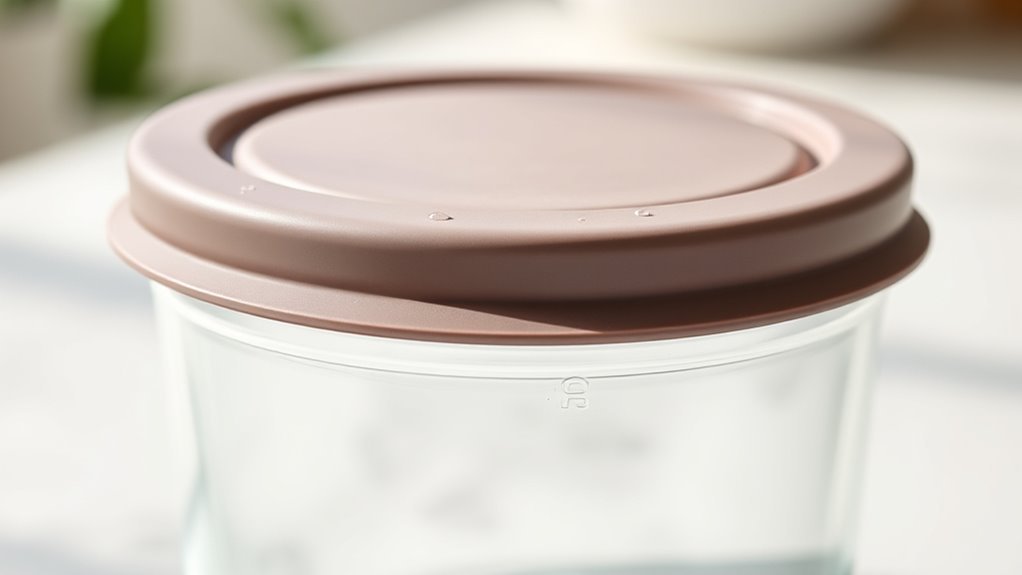
When you choose glass food storage containers with leakproof lids, you get silicone seals and locking mechanisms that keep spills at bay. These leakproof lids rely on high-quality seal design to create a secure seal, ensuring container security during transport or storage.
Silicone seals fit snugly, enhancing spill prevention by blocking any liquid escape routes. Locking mechanisms, especially those with multiple tabs or snap-on features, add an extra layer of leak resistance, outperforming basic screw-on or press-fit lids.
This lid design maintains its integrity even when containers are tipped or shaken, making them truly spill-proof. By prioritizing seal quality and robust locking mechanisms, you ensure your glass containers keep food fresh and mess-free wherever you go.
Durability and Glass Material Type
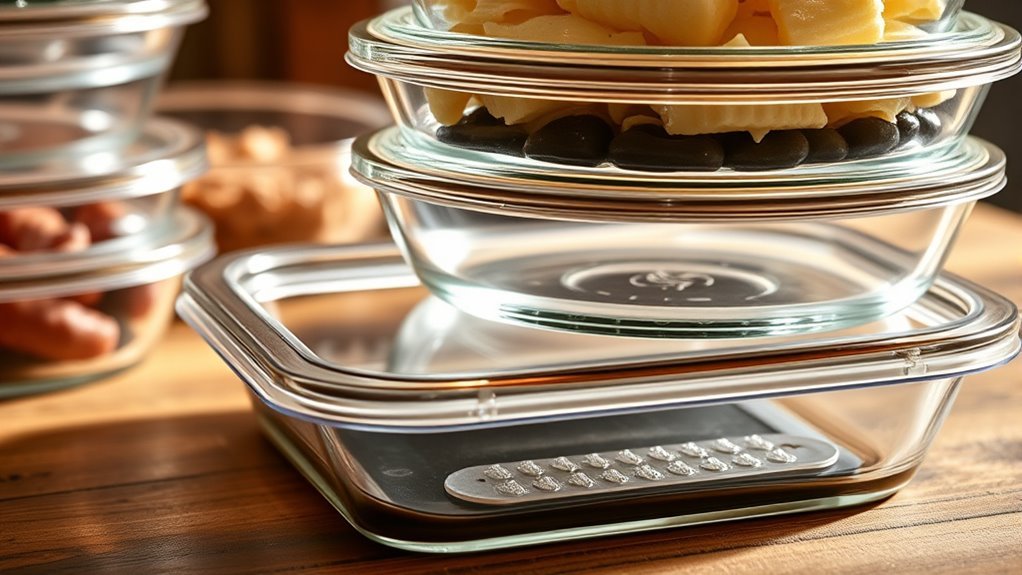
Beyond leakproof lids, the durability of your glass food storage containers depends largely on the type of glass used. Borosilicate glass offers exceptional thermal shock resistance, making it highly durable and ideal for everyday use.
Tempered glass, while also durable, is designed to be shatter-proof by breaking into blunt pieces. This feature enhances safety in your kitchen, so you don’t have to worry about sharp glass shards.
Choosing containers made from high-quality glass ensures excellent stain resistance and scratch resistance. This keeps them clear and reliable over time, so they look great and perform well.
Plus, borosilicate glass is chemical-free and recyclable. That means it supports both your health and the environment.
Avoid untreated soda-lime glass, as it’s less durable and more prone to breaking. Picking the right glass material means you get lasting performance, safety, and peace of mind every time you store your food.
Versatility for Microwaving, Freezing, and Oven Use
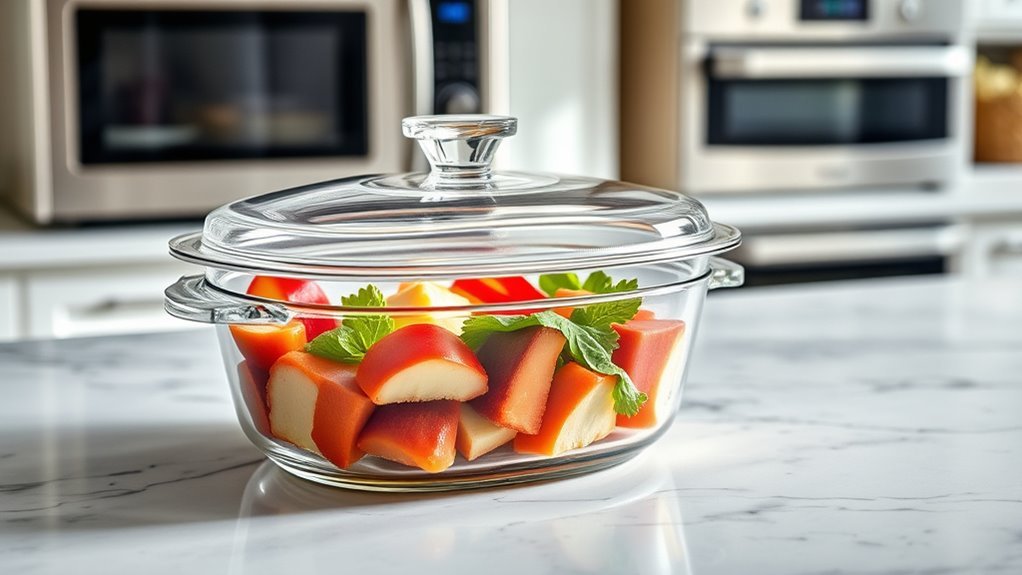
Although not all glass containers handle extreme temperatures well, you can find options labeled microwave, oven, and freezer safe. These let you move seamlessly from storage to cooking or reheating.
Choose containers made of borosilicate glass for excellent thermal shock resistance. This way, you can transfer them safely between freezer, microwave, and oven without cracking.
Look for oven-safe containers rated up to at least 450°F to expand your cooking options. Also, lids should be BPA-free with airtight seals to prevent leaks during freezing and reheating.
Steam-release vents on lids are essential for microwave-safe use. They allow steam to escape and avoid pressure buildup.
This temperature versatility means your containers double as cookware. It simplifies meal prep and storage while ensuring durability and safety across diverse kitchen tasks.
Stackability and Space-Saving Shapes
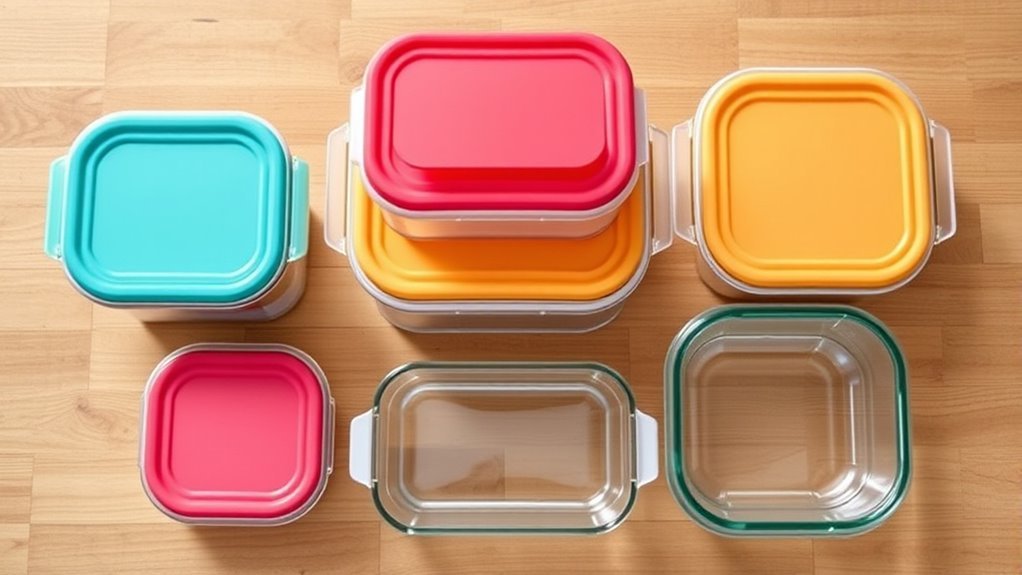
Because space is often limited in kitchens, choosing stackable glass containers with uniform shapes helps you maximize storage efficiency. Rectangular and square shapes are ideal since they fit snugly side-by-side, preventing wasted gaps.
Look for modular sets with stackable lids to build stable, compact towers that simplify organization. Nesting designs with tapered sides let you nest containers inside each other when not in use, saving even more storage space.
| Feature | Benefit |
|---|---|
| Stackable shapes | Space-efficient stacking |
| Nesting design | Compact storage when unused |
| Rectangular form | Maximizes horizontal storage |
Opt for containers combining these space-saving features to keep your kitchen orderly and utilize every inch effectively. You’ll be surprised how much more room you can free up!
Ease of Cleaning and Maintenance
When you choose glass food storage containers, you’ll appreciate how their smooth, rounded inner corners make cleaning quick and thorough. This design helps prevent any residue buildup, which is a real time-saver.
Many containers are dishwasher safe, so you can clean them easily without much scrubbing. Plus, removable lids with silicone seals make it simple to clean both parts separately. This not only helps prevent mold but also extends the life of your containers.
Glass, especially borosilicate, is stain and odor resistant, which means it stays fresh and easy to clean over time. While the containers themselves are dishwasher safe, some lids are best hand-washed to protect the silicone seals from damage.
All these features combined make sure your containers stay hygienic and durable. You’ll save time and effort, keeping your food storage safe and odor-free without any hassle.
Frequently Asked Questions
How to Choose Glass Food Storage Containers?
Choose glass food storage containers by picking durable, borosilicate glass with airtight, leakproof lids. Make sure they’re microwave, oven, freezer, and dishwasher safe.
Opt for stackable shapes and sizes that fit your storage needs comfortably. This way, you’ll save space and keep your kitchen organized.
What to Avoid in Food Storage Containers?
You should avoid containers with flimsy lids since 60% of spills happen from poor seals. Don’t pick BPA plastics or thin materials that crack or warp.
Also, skip containers not safe for microwave, freezer, or oven use. It’s better to choose something durable and versatile to keep your food fresh and safe.
Which Glass Food Storage Container Is the Best?
You’ll find the Rubbermaid Brilliance 14-piece set is the best overall—it’s leakproof, durable, and stain-resistant.
Plus, its secure locking lids and versatile design make meal prep and storage hassle-free for your busy lifestyle.
How to Tell if a Glass Container Is Food Safe?
Oh, you just guess, right? Actually, check for BPA-free, food-grade labels and certifications.
Avoid cracks or cloudiness, and make sure the glass can handle heat. If it passes these, you’re good to go!
Conclusion
When choosing glass food storage containers, you want leakproof lids that seal like a fortress. Durable glass is a must, so your containers can handle anything life throws at them.
Versatility is key too—look for containers that are safe for the microwave, freezer, and oven. This way, you can use them for cooking, storing, and reheating without any hassle.
Don’t forget stackability; it saves precious space in your kitchen cabinets. Plus, ease of cleaning is essential to keep your kitchen hassle-free and your containers looking great.
With these features, your glass food storage containers won’t just store food—they’ll transform your storage game. They make kitchen organization a breeze, helping you keep everything neat and accessible every single day. Investing in quality glass containers is a smart move for anyone who wants durable, versatile, and space-saving food storage solutions.