How Do You Package Food for Long Term Storage in 5 Essential Steps
To package food for long-term storage, start by choosing non-perishable items like white rice and dried beans. These staples last a long time and are perfect for emergency supplies or bulk storage.
Using the right packaging method is key to keeping food fresh and safe.
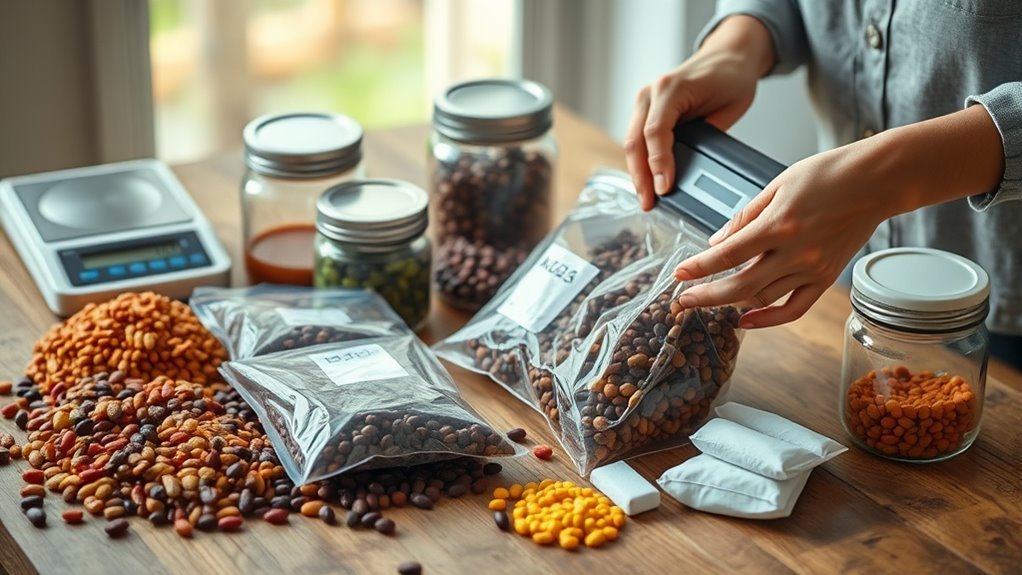
Next, use airtight containers such as Mylar bags placed inside 5-gallon buckets to protect against moisture. Adding oxygen absorbers helps prevent spoilage by removing oxygen that causes food to go bad.
Seal the packages tightly with a heat sealer or even a hair iron if you don’t have one.
Store your food in a cool, dark, and dry place with low humidity to maximize shelf life.
Don’t forget to label your packages with dates and rotate your supplies regularly to keep everything fresh.
Follow these simple steps, and you’ll be a pro at preserving food effectively for the long haul!
Key Takeaways
- Choose non-perishable, low-moisture foods like white rice, dried beans, and sugar for long shelf life. These kinds of foods last much longer without spoiling.
- Use airtight, food-grade containers or Mylar bags combined with 5-gallon buckets. This setup helps keep moisture and pests out, which is super important.
- Add appropriate oxygen absorbers inside sealed bags to prevent mold, bacteria, and insect growth. These little packets make a big difference in keeping your food safe.
- Seal packages tightly with heat sealers or alternatives to maintain an airtight environment. A good seal means your food stays fresh for much longer.
- Store food in a cool, dark, dry place with stable temperature and low humidity. This is key for maximum preservation and keeping your food in great shape.
Choose the Best Foods for Long-Term Storage
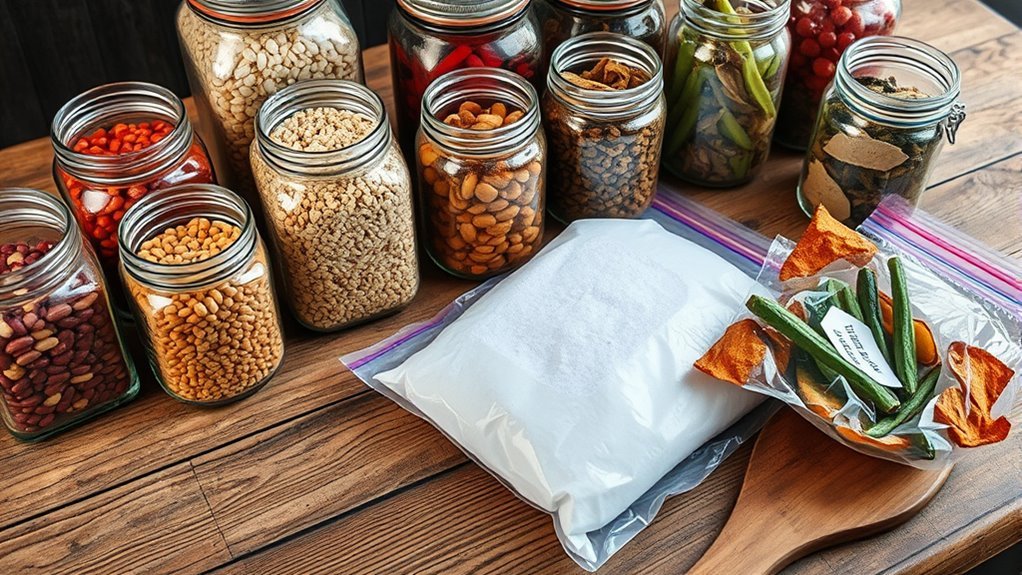
When selecting foods for long-term storage, what should you prioritize? Focus on non-perishable foods with a long shelf life and low moisture content to prevent spoilage.
High-quality grains like white rice, wheat berries, and oats can last over 30 years when properly stored. Legumes such as dried beans, lentils, and split peas are also excellent choices because of their nutritional value and durability.
You’ll want to avoid high-fat items like brown rice or whole-wheat flour, which can go rancid. Including shelf-stable baking staples like sugar, salt, honey, and baking soda is smart since they last indefinitely.
For maximum preservation, these foods pair well with airtight storage containers like food-grade buckets and Mylar bags, especially when you add oxygen absorbers. Canned foods also serve as reliable backups.
Pick the Right Containers and Packaging for Long-Term Storage
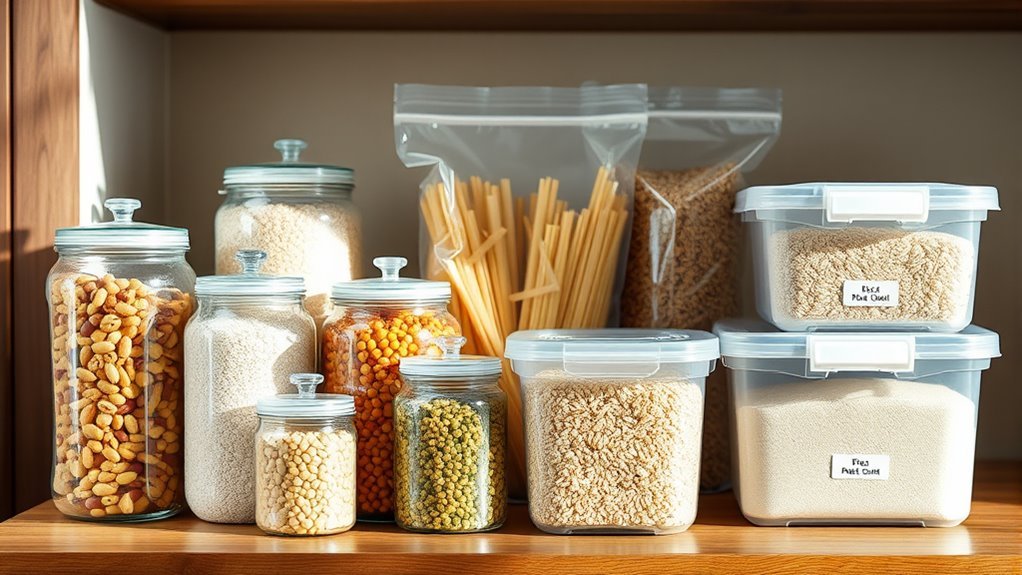
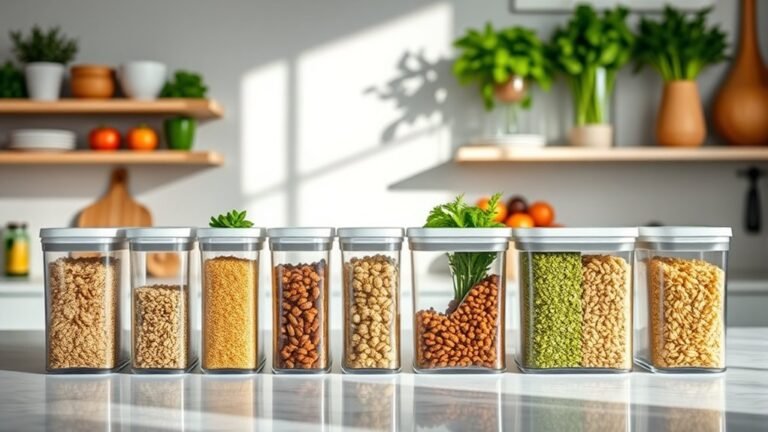
Although choosing the right foods is essential, selecting proper containers and packaging plays an equally important role in preserving your supplies. Use airtight containers made from food-grade plastic or Mylar bags for long-term preservation.
Mylar bags, combined with 5-gallon storage buckets, provide excellent moisture-proof packaging that prevents oxygen and humidity from spoiling your food. When filling Mylar bags, leave about 3 inches of headspace before sealing. This helps ensure you create an airtight seal using appropriate sealing methods like a heat sealer or even a hair iron.
This airtight seal is vital to maintaining freshness and extending shelf life. Don’t forget to label each package with contents and date to help with food rotation. That way, you’ll always use older supplies first.
Use Oxygen Absorbers and Seal Packages to Prevent Spoilage
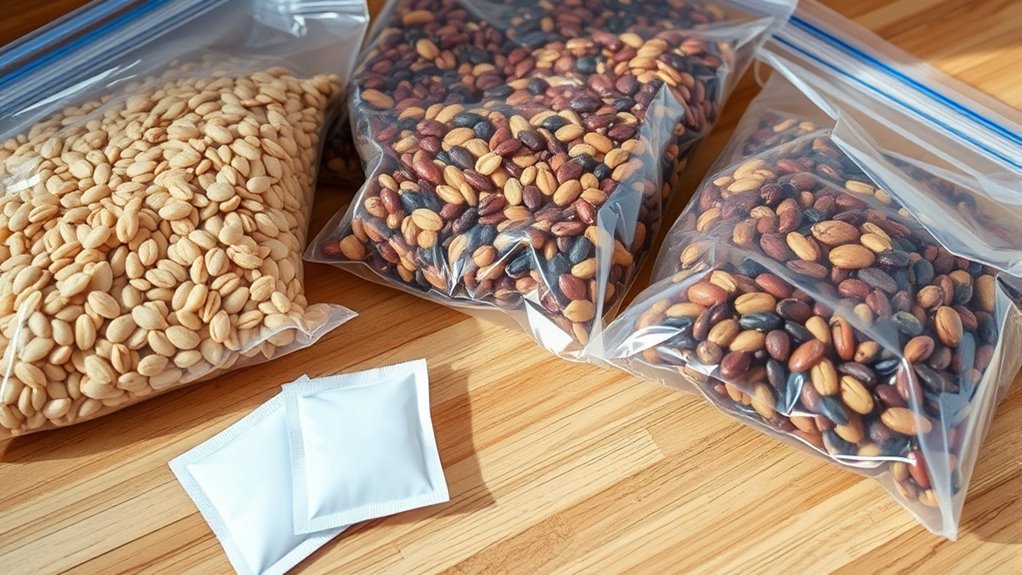
Because oxygen promotes mold, bacteria, and insect growth, you’ll want to remove it from your food packages using oxygen absorbers. These small packets pull oxygen out of Mylar bags, creating an anaerobic environment that’s essential for spoilage prevention.
Oxygen absorbers remove oxygen from food packages, preventing mold, bacteria, and insect growth for better preservation.
When you use the right amount—like 2000cc absorbers for grains and beans—you markedly reduce residual oxygen, which is key for long-term storage success.
After adding oxygen absorbers, seal your packages with heat sealers or even a hair iron to guarantee an airtight seal. This airtight seal not only keeps oxygen out but also acts as a moisture barrier, protecting your food from humidity that can cause spoilage.
Properly sealed packages combined with oxygen absorbers maximize food preservation, helping your stored goods maintain a long shelf life. By paying attention to these details, you effectively extend your food’s usability and safeguard your supplies for years to come.
Store Food in Cool, Dark, Dry Conditions for Maximum Shelf Life
To maximize your food’s shelf life, store it in a cool, dark, and dry place where temperature and humidity stay consistent. Aim for a temperature between 40°F and 60°F to slow spoilage and chemical reactions.
Choose a dark storage area like a basement or pantry to prevent light from degrading nutrients and causing fats to go rancid. Keep humidity below 10% to avoid mold and bacteria growth.
Use airtight containers such as Mylar bags combined with oxygen absorbers to shield food from moisture, light, and pests. These storage conditions create an ideal environment for long-term preservation.
Regularly check your storage space to maintain steady temperature and humidity levels, and guarantee proper ventilation to prevent fluctuations. By following these steps, you’ll effectively extend your food’s shelf life while safeguarding against pest infestation and spoilage.
Organize and Rotate Food Supplies to Keep Them Fresh
When you organize and rotate your food supplies properly, you guarantee that older items get used before newer ones, keeping everything fresh and reducing waste. Use the FIFO method to rotate supplies effectively, ensuring you consume items in the order you purchased or packaged them.
Label each package with a clear date using a labeling system to track expiration dates easily. Store your food storage in airtight packaging like Mylar bags combined with oxygen absorbers to extend shelf life and prevent spoilage.
Keep a detailed inventory for smart inventory management, allowing you to monitor expiration dates and plan replenishment efficiently. Regularly inspect your supplies for signs of spoilage or pest infestation, supporting pest prevention and maintaining food quality.
Frequently Asked Questions
How to Package Food for Long Term Storage?
You’ll want to use food-grade buckets lined with Mylar bags. Add oxygen absorbers, then seal the bags tightly with heat.
Make sure to label each container clearly. Store everything in a cool, dark, dry place for the best results.
This way, your food stays fresh and safe for the long haul!
What Is a Step by Step Plan for Organizing Food Storage Containers?
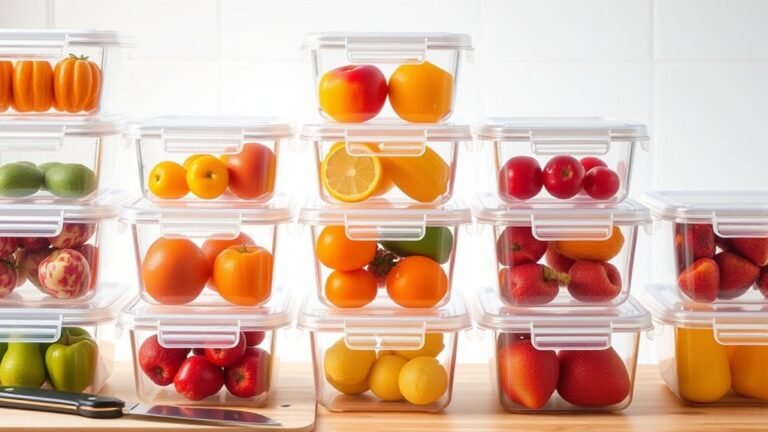
Did you know 30% of stored food goes to waste? Start by sorting items and labeling containers by date. Using airtight bins helps keep everything fresh.
Next, stack your containers in a cool, dry spot. Don’t forget to regularly rotate your food to make sure nothing goes bad. This way, you’ll keep your food fresh and organized efficiently.
How to Store 5 Gallon Buckets Long Term?
You should keep 5-gallon buckets in a cool, dark, dry place between 40°F and 60°F.
Stack them carefully with boards between layers to protect lids and maintain stability during long-term storage.
This way, you’ll avoid damage and keep everything in good shape for when you need it.
What Is the Best Food to Stockpile Long Term?
You should stockpile grains like white rice and wheat berries, legumes such as dried beans and lentils, sugar, honey, salt, freeze-dried fruits and vegetables, plus powdered dairy for a long-lasting, nutrient-rich food supply.
These foods last a long time and give you a good mix of nutrients to stay healthy. Plus, they’re easy to store and can help you get through emergencies or tough times without worrying about running out.
Conclusion
Just like a skilled alchemist turning simple ingredients into gold, you can transform ordinary food into a treasure trove that lasts. By choosing the right foods, sealing them carefully, and storing them in cool, dark places, you’re creating your own modern-day pantry of plenty.
Keep your supplies organized and rotated, and you’ll always be ready for whatever comes your way. With these steps, you’re not just storing food—you’re preserving peace of mind.
Proper food packaging for long term storage is key to maintaining freshness and preventing spoilage. Using airtight containers or vacuum sealing helps protect your food from moisture and air. Store your packaged food in a cool, dark space to extend shelf life even more.
By following these essential steps, you ensure your food remains safe and nutritious for months or even years. This way, you build a reliable food storage system that supports your emergency preparedness and everyday convenience. In the end, packaging food correctly isn’t just about saving food—it’s about securing your peace of mind and having a dependable supply when you need it most.