Are Plastic Food Storage Containers Recyclable?
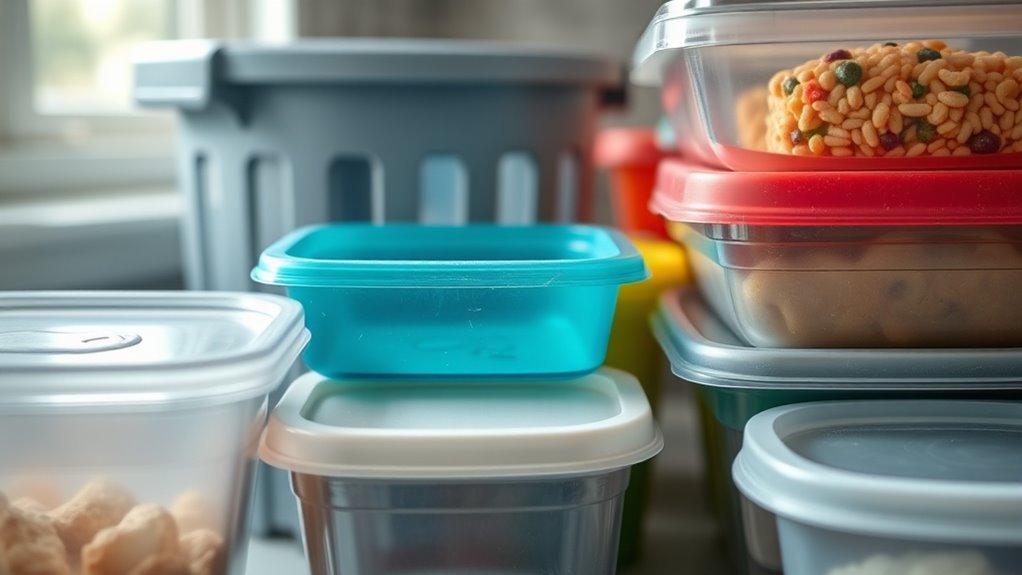
You can recycle many plastic food storage containers, but it depends on the plastic type and your local program. Look for recycling numbers 1, 2, 4, or 5 on the container—that’s usually a good sign they’re accepted. Make sure you rinse them well to avoid contamination.
Avoid plastics marked 3, 6, or 7, as they’re often not recyclable curbside.
Want to know how to identify and prepare containers correctly? Keep exploring for helpful tips.
Key Takeaways
- Check the recycling symbol and number on plastic food containers to identify if they are recyclable (#1, #2, #4, #5 are usually accepted).
- Rinse containers thoroughly to remove food residues before recycling to avoid contamination.
- Plastics #3, #6, and #7 are typically not accepted in curbside recycling due to chemical risks and processing challenges.
- Black plastics and multi-layered packaging often lack recycling codes and are usually non-recyclable in curbside programs.
- Always verify local recycling guidelines, as acceptance of plastic food containers varies by region and recycling infrastructure.
Understanding Plastic Recycling Symbols and Numbers
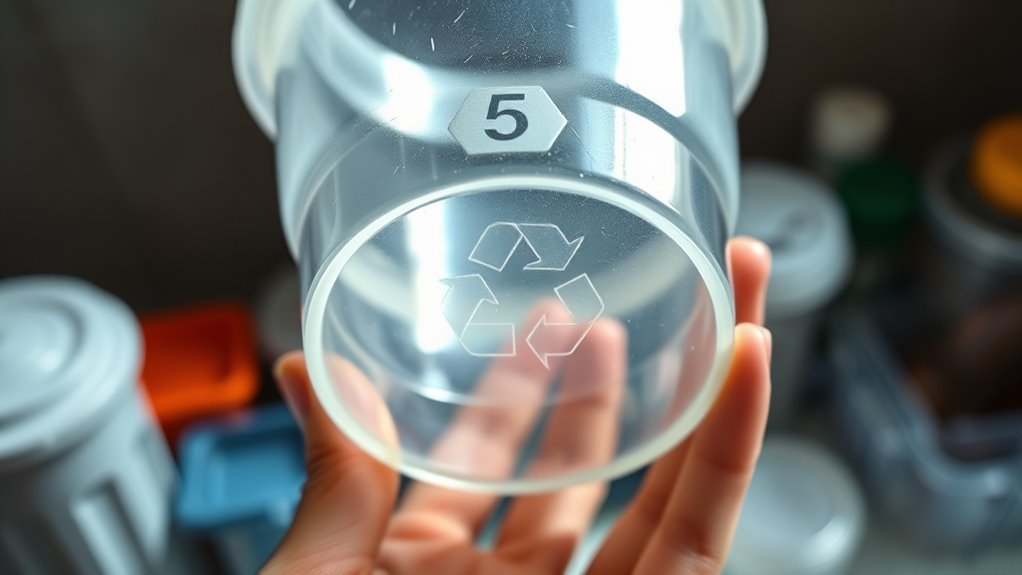
How do you know if your plastic food storage containers are recyclable? Start by checking the recycling symbols stamped on them. These symbols feature recycling numbers 1 through 7 inside a triangle, which help with plastic identification by revealing the types of plastic used.
Plastics labeled #1 (PETE), #2 (HDPE), #4 (LDPE), and #5 (PP) are generally accepted in most curbside recycling programs. However, plastics #3 (PVC), #6 (Polystyrene), and #7 (Other) often aren’t recyclable through typical recycling programs and may require special disposal.
Keep in mind that the recycling number alone doesn’t guarantee recyclability; you should always consult your local recycling guidelines. Some plastic containers, especially black plastics or multi-layered packaging, might lack plastic recycling codes and won’t be accepted in curbside recycling.
Best Practices for Recycling Plastic Food Containers
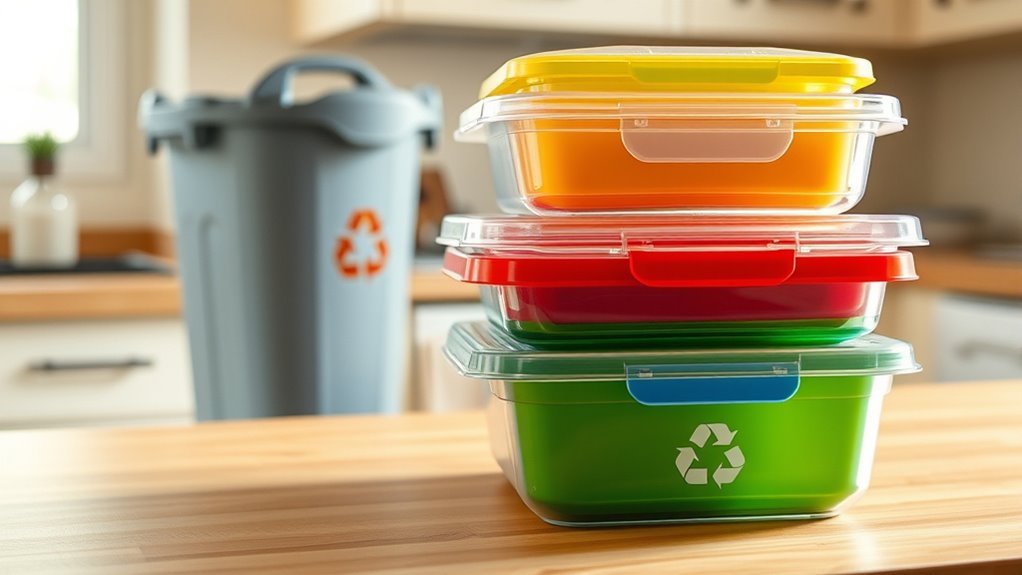
Identifying the recycling symbol on your plastic food containers is just the first step toward proper recycling. Focus on plastics #1, #2, #4, and #5, as these are recyclable containers.
Always rinse to remove food residue, preventing contamination that can ruin recycling batches. Avoid plastics #3, #6, and #7 since they often leach harmful chemicals and aren’t widely accepted.
Check your local recycling guidelines because acceptance varies by region. When possible, reuse containers made from safer plastic types to reduce waste.
| Plastic Type | Recyclable? | Notes |
|---|---|---|
| #1, #2, #4, #5 | Yes | Rinse well before recycling |
| #3, #6, #7 | No | May plastic leach chemicals |
| All Types | Variable | Follow local recycling guidelines |
Frequently Asked Questions
What Food Containers Are Not Recyclable?
You won’t be able to recycle Styrofoam containers, multi-layered packaging, plastic meat trays, or food containers with grease stains.
Also, avoid containers made from mixed materials or with foil linings—they’re usually rejected by recycling programs.
What to Do With Old Plastic Food Storage Containers?
You should clean old plastic food containers thoroughly, then recycle them through local programs or TerraCycle.
If they’re damaged, it’s best to replace them to guarantee safety.
Alternatively, you can repurpose containers for storage or crafts to minimize waste.
It’s a simple way to give them new life instead of just tossing them out.
How to Tell if a Plastic Container Is Recyclable?
You can tell if a plastic container’s recyclable by checking the recycling symbol on the bottom. Look for numbers 1, 2, 4, or 5.
Then, confirm with your local recycling guidelines to see if they accept that type. It’s a quick way to know what you can recycle!
Should I Throw Away My Old Tupperware?
Don’t toss your old Tupperware like a fading photograph; if it’s cracked or stained, replace it.
Otherwise, reuse or recycle it responsibly—like preserving memories, keep what serves you well and let go of what doesn’t.
Conclusion
Think of plastic food containers as puzzle pieces in the bigger picture of recycling. When you check those little numbers and symbols, you’re holding the key to revealing their next life.
By rinsing and sorting them properly, you’re not just tossing away waste—you’re giving these containers a second chance to shine. So next time you reach for that bin, remember: every small action helps complete the circle of sustainability.
Recycling plastic food storage containers is more than just a habit; it’s a meaningful step toward reducing landfill waste and conserving resources. Your choices truly make a difference in promoting eco-friendly practices and protecting our environment.