Top 10 Best Mylar Bags for Food Storage in 2026
If you want the best Mylar bags for food storage in 2026, look for thick, durable bags that offer excellent protection. These bags should have secure seals and resealable zippers for added convenience.
Choosing the right size is important too—pick sizes based on your food quantities and make sure there’s enough headspace.
Pair each bag with the right amount of oxygen absorbers to keep your food fresh longer. Mylar bags are fantastic at blocking air, moisture, and light, which helps preserve dry goods for up to 30 years.
They’re a top choice for anyone serious about long-term food storage.
Keep reading to discover helpful tips on selecting and using these bags effectively. It’s easier than you think to protect your food supplies with the right Mylar bags!
Key Takeaways
– Best Mylar bags feature multi-layer BoPET with metallic coating and thickness between 5-7.5 mil for durability and protection.
Choose your bag size based on the type of food, its weight, and volume. Don’t forget to leave about 10% headspace and use size charts to get it right.
- Seal Mylar bags with a heat sealer set between 375-400°F. Make sure you seal just above the zipper to create an airtight seal. Also, use the right amount of oxygen absorbers for the best results.
- Store only dry, low-moisture foods like rice, beans, and pasta. Avoid putting high-fat, fresh, or perishable items inside Mylar bags.
- Mylar bags outshine vacuum seal bags when it comes to durability, blocking light, and long-term storage. They can preserve food for up to 30 years.
What Are Mylar Bags and Why Use Them for Food Storage?
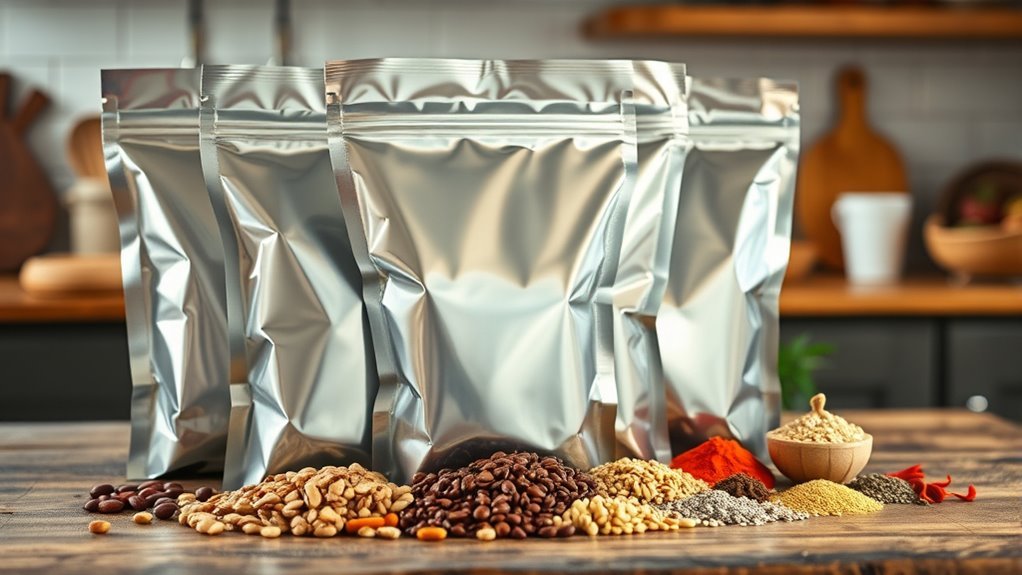
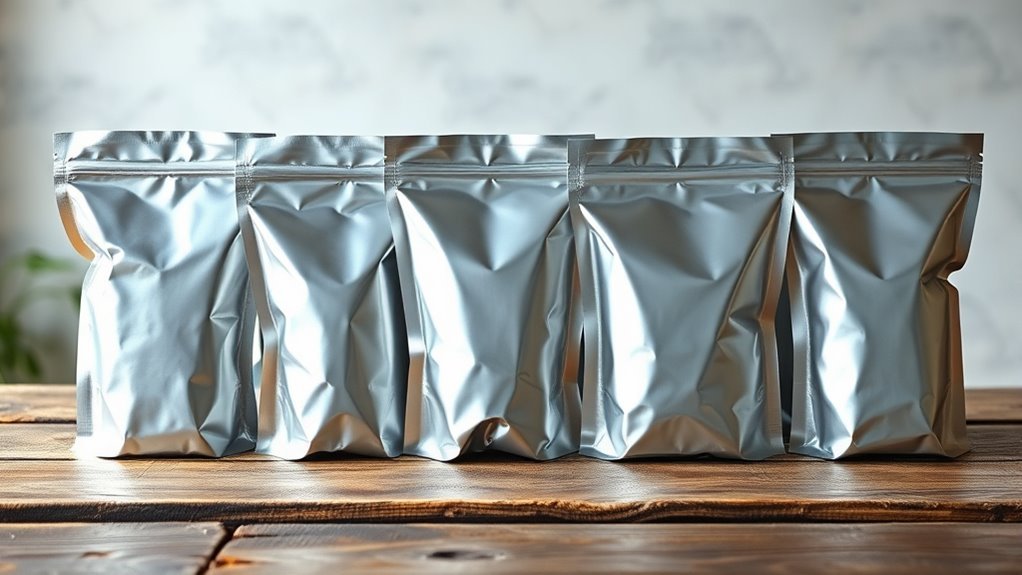
What makes Mylar bags a popular choice for food storage? You’ll find that Mylar bags offer a durable, food-grade, and lightproof storage solution perfect for long-term preservation. Made from multi-layer BoPET with a metallic layer, they block out light, moisture, and oxygen, preventing spoilage and pests.
When you pair these bags with oxygen absorbers, you create an airtight seal that markedly extends the shelf life of your dry foods, like grains and beans. This airtight environment is essential for maintaining freshness over years.
Mylar bags are cost-efficient and reliable, making them ideal whether you’re prepping for emergencies or simply want to keep your pantry items fresh longer. By choosing Mylar bags, you’re investing in a proven method to protect your food effectively.
Benefits of Using Mylar Bags With Oxygen Absorbers
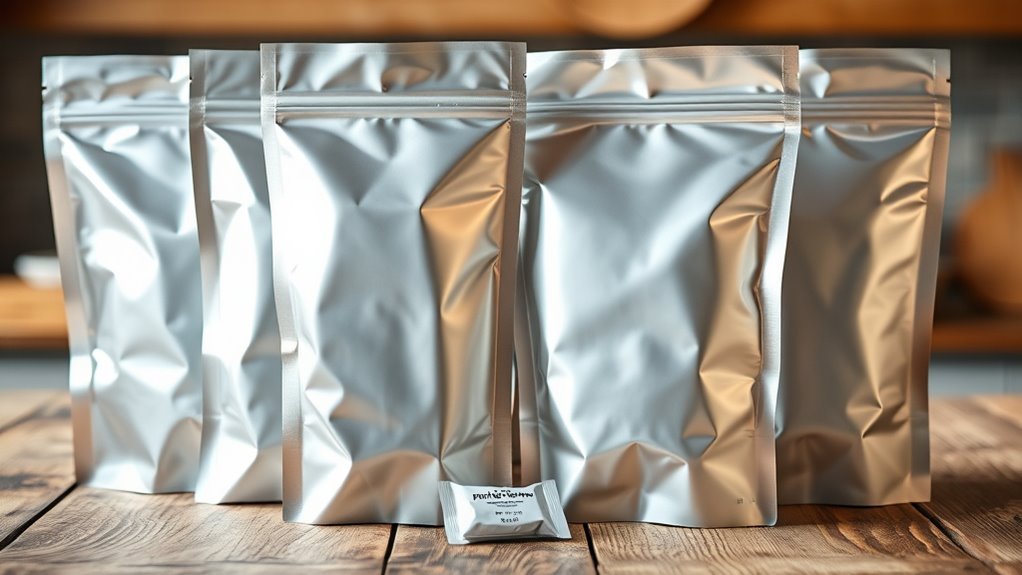
When you combine Mylar bags with oxygen absorbers, you considerably extend the shelf life of your stored dry foods by removing residual oxygen. This oxygen-free environment created inside the bag prevents mold, spoilage, and pest infestation, ensuring food freshness and long-term preservation.
Using oxygen absorbers with Mylar bags minimizes oxidation and keeps flavors and nutrients intact, maximizing your storage duration. It’s a smart way to keep your food safe and tasty.
Here’s a quick comparison of benefits:
| Benefit | Impact on Food Storage |
|---|---|
| Oxygen absorbers | Remove residual oxygen |
| Mylar bags | Provide airtight, durable seal |
| Pest prevention | Blocks insects and rodents |
| Food freshness | Maintains flavor and nutrients |
| Storage duration | Extends shelf life up to 30 years |
Pairing these two is essential for ideal food safety and effective long-term preservation. It’s definitely worth the effort if you want your food to last and stay fresh!
Top Features to Consider When Choosing Mylar Bags
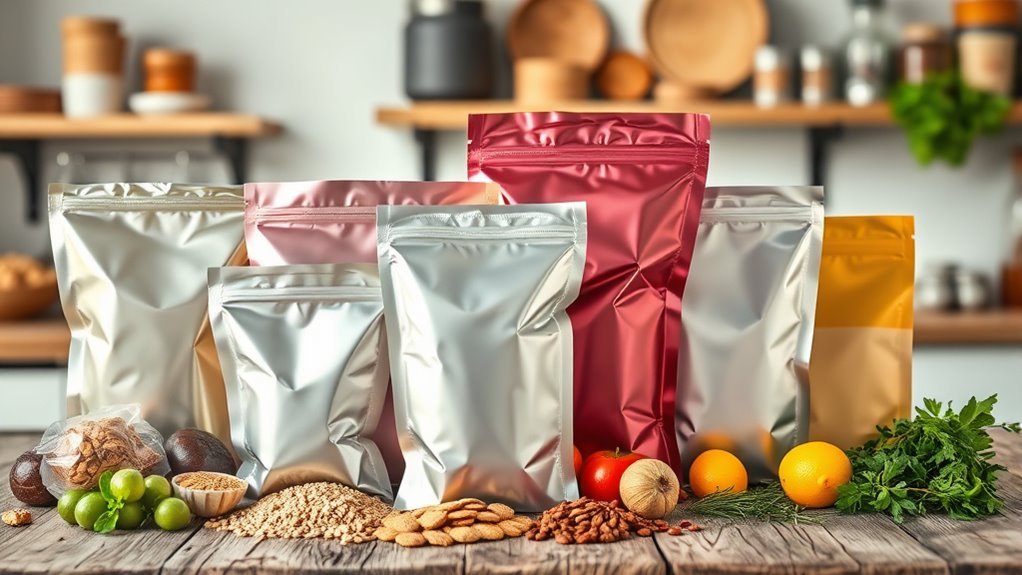
Although Mylar bags come in various types, choosing the right features can make a significant difference in how well your food stays fresh and protected. Focus on thickness—bags with at least 5 mil thickness offer essential durability, while those up to 7.5 mil provide superior puncture resistance.
Selecting Mylar bags with 5 to 7.5 mil thickness ensures optimal durability and protection for your stored food.
Check the quality of seams and ensure the seal is reliable to prevent air leaks. A good closure, like a resealable zipper, adds convenience without compromising protection.
Size matters too; pick bags that fit your food quantity for an airtight seal. Including oxygen absorbers extends shelf life by removing harmful oxygen.
Features like tear notches and printed labels improve usability and organization. By prioritizing these elements, you’ll secure your food effectively for long-term storage.
Best Mylar Bags for Long-Term Food Storage in 2026
Choosing the right Mylar bag features sets the foundation for effective long-term food storage, but selecting the best product means balancing durability, convenience, and cost.
Wallaby 7.5 Mil Mylar Bags stand out for long-term food storage with their thick 7.5-mil bag thickness, providing excellent protection when combined with oxygen absorbers.
These food grade Mylar bags offer a 1-gallon storage capacity and include resealable zippers that let you seal Mylar bags easily for repeated use.
Their reinforced seams prevent punctures, ensuring reliable food preservation by blocking light, moisture, and oxygen.
At about $1 per bag, they deliver strong durability and convenience without breaking the bank.
If you want dependable, easy-to-use Mylar Bags for decades of food preservation, Wallaby’s 7.5 Mil bags are a smart choice in 2026.
How to Select the Right Size Mylar Bag for Your Needs
You’ll want to pick a Mylar bag size that fits the amount of food you plan to store without overfilling it. Make sure the bag’s dimensions allow for easy sealing and match your available storage space.
Thinking about portion sizes and how you rotate your food can help you choose between smaller or larger bags. It’s all about finding what works best for your needs.
Consider Food Quantity
When selecting the right Mylar bag size, start by matching the bag to the total weight and volume of your food. Make sure there’s enough space for oxygen absorbers and a proper seal.
Think about how much food you actually have. Small amounts like spices need tiny bags. But if you’re storing grains or beans in bulk, you’ll want 1-gallon bags or even bigger.
Pay attention to the storage capacity and bag dimensions to avoid too much headspace. Too much space can mess with oxygen absorber placement and sealing. Leaving about 10% headspace is ideal for a good seal.
Also, pick thicker bags if you’re storing dense foods to prevent punctures. When you match bag size to food volume, you’re not just protecting your food—you’re also making the most of your storage space. That way, your Mylar bags will keep your food airtight and fresh for the long haul.
Match Bag Dimensions
Matching your Mylar bag’s size to your food volume helps reduce excess air and extends shelf life. To select the right Mylar bag, use a bag size chart to compare Mylar bag dimensions with your food quantity.
For example, a 1-gallon bag (10 x 14 inches) holds about 30 pounds of dried beans. Consider the size of Mylar bags based on the food’s moisture and weight—dry items fit larger bags, while delicate foods need smaller ones.
Also, think about bag dimensions and food to ensure your bags fit your storage setup. Using the right Mylar bag improves preservation and ease of access.
Always match bag size to your food volume and storage needs for ideal results when storing food.
Evaluate Storage Space
Although selecting the right Mylar bag size depends on your food quantity, you must also evaluate your available storage space to guarantee the bags fit comfortably. Start by measuring your storage space and noting the maximum bags dimensions that fit, like a 1-gallon bag (10 x 14 inches) for pantry shelves.
Consider the capacity you need: smaller bags suit spices and snacks, while larger bags handle bulk staples. Factor in storage containers—5-gallon buckets accommodate big Mylar bags up to 20×30 inches. Matching bag size to portion sizes helps avoid waste and sealing issues.
Effective space management means balancing bag size and quantity with your storage area, preventing overcrowding and ensuring easy access. This approach optimizes your food storage with Mylar bags tailored to both capacity and space constraints.
Proper Sealing Techniques for Mylar Bags at Home
Properly sealing Mylar bags is essential to preserve the freshness and extend the shelf life of your food. Use a dedicated heat sealer set between 375°F and 400°F to seal with heat, creating a strong, airtight seal.
Be sure to seal across the top in one continuous pass, avoiding gaps or wrinkles that could compromise seal integrity. If you’re working with resealable bags, seal just above the zipper to maintain both airtight protection and reusability.
After sealing, let the bag cool completely before handling or storing to prevent weak seals or accidental openings. To confirm you’ve sealed the bag properly, gently tug the sealed edge—it should resist separation without tears or gaps.
This seal technique ensures a secure seal for food storage at home.
Recommended Oxygen Absorber Quantities for Different Bag Sizes
You’ll want to match the oxygen absorber size to your Mylar bag’s volume to keep your food fresh. Smaller bags need less absorption capacity, while larger bags require more to remove residual oxygen effectively.
Let’s look at the recommended absorber quantities for different bag sizes so you can get it just right. This way, you’ll ensure your food stays fresh for as long as possible.
Oxygen Absorber Guidelines
When storing food in Mylar bags, choosing the right amount of oxygen absorbers is essential to keep your items fresh. The oxygen absorber size must match the bag size to effectively eliminate residual oxygen, ensuring ideal preservation and extending shelf life.
For quart-sized bags, 100 to 200cc oxygen absorbers work well, while 1-gallon bags need 300 to 500cc. Larger 5-gallon bags require 2,000 to 3,000cc for long-term storage.
Using too many oxygen absorbers won’t improve storage but wastes resources, so select the correct size based on your food and bag volume. Properly matched oxygen absorbers reduce oxidation and spoilage, maximizing the freshness and longevity of your stored grains or dried foods.
This careful balance guarantees your Mylar bag storage performs at its best.
Bag Size Considerations
Although selecting the right oxygen absorber size might seem straightforward, matching it precisely to your Mylar bag volume is crucial for effective food preservation.
Different Mylar bag sizes—from quart to 5-gallon—require varying oxygen absorber capacity to ensure long-term preservation. For example, quart-sized bags typically need 100-200cc absorbers, while 1-gallon bags require 300-500cc.
Larger 5-gallon bags demand 1,500-2,500cc to effectively remove residual air. Using a bag size chart can help you determine the correct absorber amount based on your storage bag dimensions and food storage capacity.
Proper sealing combined with the right oxygen absorber ensures your food stays fresh, preventing mold and spoilage. Matching absorber capacity to your Mylar bag sizes is a key step in reliable food storage solutions.
Absorber Capacity Recommendations
Since selecting the right oxygen absorber size directly impacts how well your food stays fresh, you need to match absorber capacity carefully to your Mylar bag size.
For 1-quart bags, 100-200cc oxygen absorbers are enough to remove residual oxygen and maintain freshness.
Moving up, 1-gallon bags require 300-500cc absorbers for effective oxygen removal, ensuring suitable food preservation.
If you’re using larger 5-gallon bags, choose 2,000-3,000cc absorbers to guarantee complete oxygen elimination for long-term storage.
Keep in mind, overusing oxygen absorbers beyond recommended amounts doesn’t improve preservation and only adds unnecessary cost.
Always align oxygen absorber capacity with your bag volume and the type of food you’re storing to maximize shelf life and maintain ideal food storage conditions.
Foods That Should and Should Not Be Stored in Mylar Bags
What kinds of foods should you store in Mylar bags? Mylar bags excel at food storage for dry, low-moisture items like rice, beans, pasta, and dehydrated vegetables—foods with moisture content below 10%. Using oxygen absorbers in these bags creates an airtight seal that enhances long-term preservation.
However, avoid high-fat foods such as nuts, cheese, and dairy products, since they can turn rancid in Mylar bags. Also, fresh produce, perishable items, and oily or high-moisture foods like fresh meats don’t belong in these storage solutions because they spoil quickly without refrigeration.
Additionally, sugar, baking powder, baking soda, and salt don’t benefit much from airtight Mylar storage. So, stick to dry, low-moisture foods with Mylar bags for the best preservation results.
Comparing Mylar Bags to Vacuum Seal Bags for Food Storage
When choosing between Mylar bags and vacuum seal bags, you’ll notice Mylar’s thicker material offers better protection against light, oxygen, and moisture.
Vacuum seal bags work well for short-term storage but aren’t as durable for long-term use.
If you want food to last for years, Mylar bags are the smarter choice.
Durability and Protection
Although vacuum seal bags offer convenience, Mylar bags provide far greater durability and protection for long-term food storage. Their thick Mylar construction delivers superior puncture resistance and high barrier protection against moisture, oxygen, and light.
Using oxygen absorbers inside light-proof bags creates an airtight environment, preserving food for decades. Vacuum seal bags, which are thinner and prone to pinholes, just can’t match this level of defense.
| Feature | Mylar Bags | Vacuum Seal Bags |
|---|---|---|
| Durability | Thick Mylar, tear-resistant | Thin, prone to punctures |
| Protection | Light-proof, moisture-resistant | Limited barrier properties |
| Long-Term Storage | Up to 30 years with oxygen absorbers | Shorter shelf life |
Storage Duration Differences
Because you want your stored food to last as long as possible, choosing the right packaging is essential. Mylar bags, especially when paired with oxygen absorbers, markedly extend storage duration, preserving dry foods for up to 30 years.
Their superior bag thickness and multi-layer design provide an excellent barrier against oxygen, light, and moisture—key factors in long-term food storage. In contrast, vacuum seal bags are thinner and more prone to punctures, limiting their shelf life to about 2-5 years.
While vacuum seal bags work well for short- to medium-term storage, Mylar bags offer unmatched food preservation for decades. If you’re serious about maximizing shelf life and ensuring food security, Mylar bags with oxygen absorbers remain the top choice over vacuum seal bags.
Best Practices for Storing Filled Mylar Bags Safely
To keep your food fresh for the long term, you’ll need to seal your Mylar bags carefully using a heat sealer set between 375 and 400°F to prevent air leaks. Incorporate oxygen absorbers before sealing to extend shelf life.
Store filled bags in a cool, dark, dry storage environment, ideally inside food-grade buckets for light and air protection. Following proper storage practices by labeling bags and using a bag size chart helps avoid overfilling.
Regular inspection and replacement of bags with punctures maintain food quality. It’s a good idea to check your bags often to catch any damage early. This way, your food stays fresh and safe for longer.
Frequently Asked Questions
What Are the Best Mylar Bags for Food Storage?
You want 7.5 mil thick Mylar bags from trusted brands like Wallaby or Symynelec. Choose resealable, food-grade, multi-layer bags with oxygen absorbers, tear notches, and gussets for long-term, secure food storage up to 20+ years.
These features help keep your food fresh and protected. Plus, the resealable option makes it easy to open and close the bags without compromising the seal.
Gussets allow the bags to stand up, which is super handy for storing and organizing your pantry. Overall, picking quality Mylar bags means your food stays safe and tasty for the long haul.
Which Mylar Bag Company Is the Best?
You’ll find Wallaby and Symynelec lead the pack. Wallaby offers durable, resealable bags, while Symynelec provides versatile sizes with oxygen absorbers.
Both deliver great quality and support, making either a smart choice for long-term storage. So, you really can’t go wrong with either one!
What Is the Best Thickness of Mylar Bag for Food Storage?
You’ll want Mylar bags that are at least 5 mils thick for durability. But honestly, 7 to 7.5 mils work best to resist punctures and keep your food safe and fresh for up to 30 years.
Thicker bags give you peace of mind, especially if you’re storing food long-term. So, if you can, go for the thicker option!
What Are the Best Bags to Preserve Food In?
You want thick, 5-mil Mylar bags with resealable zippers and tear notches.
Choose FDA-compliant, aluminum foil-lined bags from trusted brands to block light, oxygen, and moisture. This way, you ensure your food stays fresh for decades.
Conclusion
Now that you know the top mylar bags for 2026, it’s time to protect your food like it’s the Great Depression all over again. With the right bag and oxygen absorbers, you’ll keep your supplies fresh and safe for years.
Remember to pick the size that fits your needs and store your bags properly. By doing this, you’re not just preparing for the future—you’re preserving peace of mind today.
Using high-quality mylar bags for food storage is one of the smartest ways to extend the shelf life of your emergency supplies. Whether you’re prepping for long-term storage or just want to keep your pantry organized, these bags are a game changer. So go ahead, invest in the best mylar bags and oxygen absorbers to keep your food fresh, safe, and ready when you need it most.