Are Plastic Food Storage Containers Safe to Use?
You can safely use plastic food storage containers if you pick the right types and handle them properly. Choosing the right plastic is key to keeping your food safe and avoiding harmful chemicals.
Look for plastics labeled 1, 2, 4, or 5, as these are generally safer and food-grade.
Avoid those marked 3 or 6, because they can contain harmful chemicals like phthalates or styrene. It’s a good idea to always let hot foods cool before storing them in plastic containers.
Plus, don’t microwave plastics, since heat can cause chemicals to leach into your food.
Also, keep an eye on your containers and replace any that are worn, cracked, or stained.
By keeping these essentials in mind, you’ll find even more ways to protect your health with smart, safe storage choices. It’s all about making informed decisions to keep your food fresh and your body healthy.
Key Takeaways
- Use food-grade plastics labeled 1, 2, 4, or 5 for safer food storage to minimize chemical risks. These types are generally considered safer for storing food.
- Avoid plastics labeled 3, 6, and some 7 types because they can contain harmful chemicals like phthalates, styrene, and BPA. It’s better to steer clear of these to keep things healthy.
- Never store hot or acidic foods in plastic containers. This helps prevent chemicals from leaching into your food, which you definitely want to avoid.
- Also, do not microwave plastic containers. And if your containers are damaged or stained, it’s a good idea to replace them to reduce any health hazards.
- Whenever you can, opt for glass or stainless steel containers. Plus, always follow the manufacturer’s guidelines for safer food storage. It’s the best way to keep your food safe and fresh!
Understanding Plastic Types and Their Safety Profiles
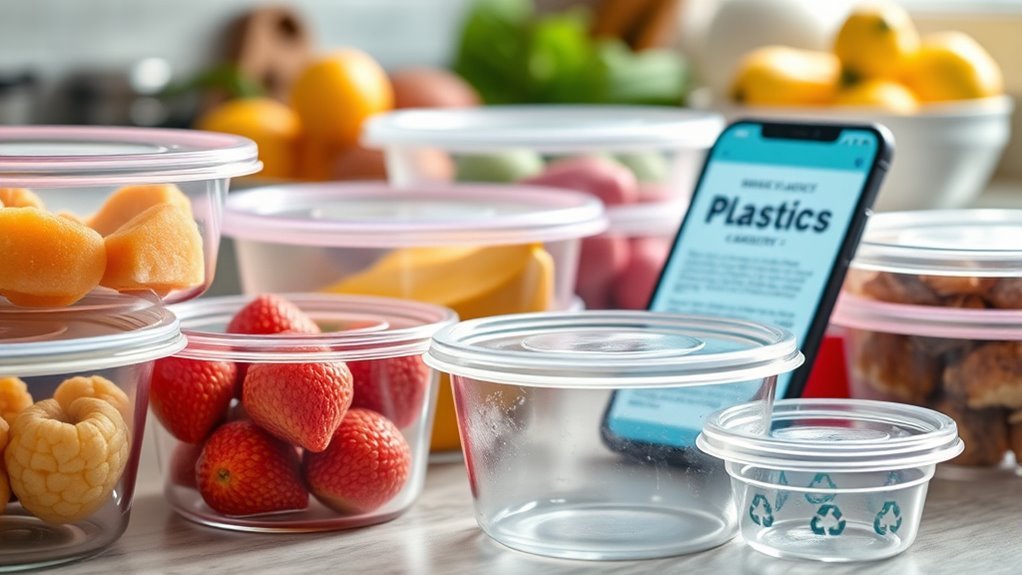
When you choose plastic food containers, understanding their resin identification numbers (1-7) is essential because these numbers reveal their chemical makeup and safety levels. Each resin identification corresponds to specific plastic types with distinct chemical compositions and recyclability.
Food-grade plastics marked 1, 2, 4, and 5 generally offer better food contact safety, minimizing risks. However, plastics labeled 3 contain phthalates, linked to health issues, while number 6, polystyrene, can leach styrene, a potential carcinogen.
Choose plastics marked 1, 2, 4, or 5 for safer food storage; avoid 3 and 6 due to harmful chemicals.
Number 7 includes polycarbonate, often containing BPA, suspected of endocrine disruption. Knowing these safety profiles helps you select containers that avoid harmful chemicals.
Keep in mind, the container’s manufacturing quality and food-grade certification also matter for safe use. Understanding resin identification guides you in choosing safer, recyclable plastics for food storage.
Best Practices to Minimize Health Risks From Plastic Food Storage
Although plastic containers offer convenience, you should take specific steps to minimize health risks associated with their use. To guarantee food safety, use food-grade plastics only for cold or room-temperature items.
Avoid storing hot or acidic foods in plastic containers to reduce chemical leaching and microplastic release. It’s a good idea to let hot foods cool before transferring them.
Limit reuse and avoid microwaving plastics, as heat increases chemical migration. Regular container replacement is essential to prevent contamination from wear and tear or stains.
| Practice | Reason |
|---|---|
| Use glass or stainless steel | Prevent chemical leaching with hot/acidic foods |
| Cool foods before storing | Minimize microplastic release |
| Avoid microwaving plastics | Reduce chemical migration |
| Replace worn containers | Ensure safe storage practices |
Frequently Asked Questions
Should I Stop Using Plastic Food Storage Containers?
Yes, you should consider stopping or reducing plastic food container use. Chemicals can leach into your food, especially when heated or scratched.
Switching to safer materials like glass or stainless steel protects your health in the long run. It’s a simple change that can make a big difference!
What Is the Healthiest Container to Store Food In?
You should use glass, stainless steel, or ceramic containers to store food. They don’t leach chemicals and handle heat well.
Plus, they are safer for your health and the environment than plastic options. It’s a smart switch if you want to keep things natural and simple.
What Are the Safest Plastic Containers for Food Storage?
You should choose plastic containers labeled 2, 4, or 5, especially polypropylene (5).
Look for BPA-free and microwave-safe labels to avoid harmful chemicals. This helps keep your food storage safer and healthier every day.
What Storage Containers Do Not Have Microplastics?
Over 90% of microplastics in food come from plastic containers. You’ll avoid them by choosing glass, stainless steel, ceramic, or food-grade silicone containers.
They’re durable, inert, and won’t shed harmful particles into your food. So, these options are much safer for your health.
Switching to these materials can make a big difference in reducing microplastic intake. It’s a simple change that really pays off!
Conclusion
You might think all plastic food containers are safe, but some can leach harmful chemicals, especially when heated.
On the other hand, choosing BPA-free, food-grade plastics and avoiding microwaving can protect your health. It’s a simple balance: convenience versus caution.
By understanding plastic types and following best practices, you’ll keep your meals fresh without risking your well-being.
So, next time you store food, remember—smart choices make all the difference when it comes to safe plastic food storage containers. Staying informed about which plastics are food-grade and BPA-free helps you avoid harmful chemical exposure. Plus, being careful about heating food in plastic containers keeps your meals safe and healthy. Ultimately, knowing about plastic food storage containers safety lets you enjoy convenience without compromising your health.