Top 5 Best Food Storage Containers for 2026
For 2026, choose food storage containers that combine leakproof seals and durable materials like tempered glass or impact-resistant plastic. You want containers that keep your food fresh and secure, no matter where you store them.
User-friendly lids with secure snaps or latches make accessing your meals easy without any spills or mess.
Look for versatile sets that stack and nest neatly to save space in your kitchen. Containers that are oven- and freezer-safe add extra convenience for meal prep and storage.
Airtight designs are key to extending the freshness of your leftovers and snacks. If you’re after containers that balance durability, airtight seals, and smart storage solutions, there are definitely top options worth checking out this year!
Key Takeaways
– Rubbermaid Brilliance 14-piece set offers leakproof, stain-resistant, and odor-resistant plastic containers with secure snap-on lids for reliable food storage.
These containers are perfect if you want something that keeps your food fresh without any spills. Plus, the clear design makes it easy to see what’s inside.
– Pyrex Freshlock 10-piece glass containers provide airtight seals, shatter resistance, and microwave and freezer safe versatility.
They’re great for people who like using glass because it’s durable and safe for reheating or freezing. You’ll love how easy they are to clean, too.
– Lille Home 6-piece stainless steel set ensures durable, rust-proof, and impact-resistant storage but lacks airtight locking lids.
Stainless steel is super tough and long-lasting, but keep in mind these don’t have airtight lids, so they’re better for dry goods or short-term storage.
– Amazon Basics 20-piece plastic set is budget-friendly, lightweight, stackable, and ideal for pantry organization and everyday use.
If you want lots of containers that won’t break the bank, this set is a solid choice. They’re easy to stack and store, making your pantry neat and tidy.
– Choose containers with user-friendly locking lids, durable materials, and stackable designs to maximize kitchen space and maintain food freshness.
Think about what’s most important for your kitchen—whether it’s airtight seals or space-saving features—and pick containers that fit your lifestyle.
Leakproof and Durable Materials
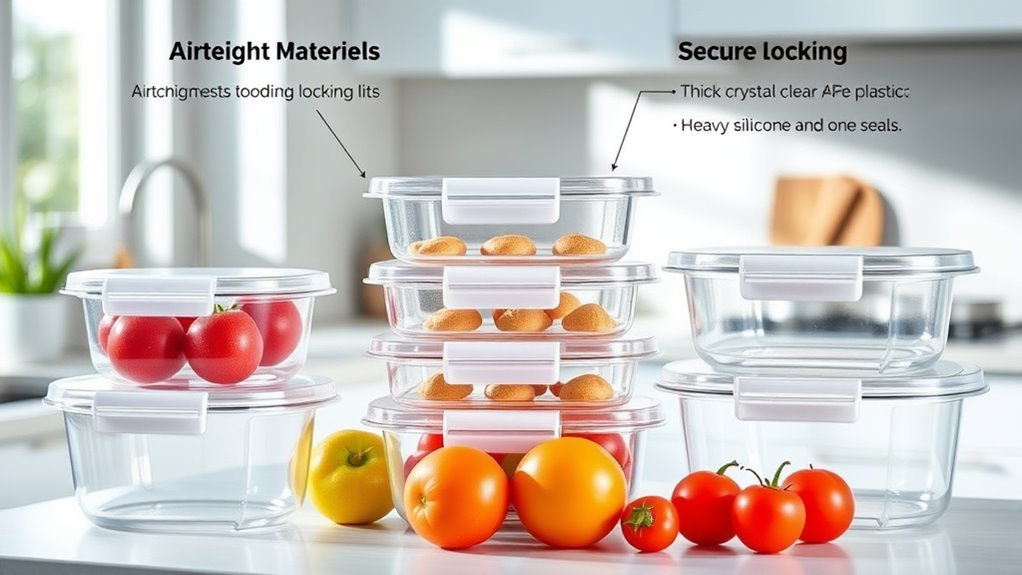
When you choose food storage containers, materials that combine durability with leakproof design matter most. Opt for impact-resistant plastic like Rubbermaid Brilliance, which resists stains, odors, and breaking, or tempered glass options such as Pyrex that offer shatter-resistant and stain-resistant qualities.
Look for containers with reinforced seals and silicone gaskets to guarantee a reliable leakproof experience. Stainless steel containers add rust-proof durability and impact resistance, making them ideal for daily use.
Avoid plastic containers with non-removable gaskets prone to staining or degradation over time, as they reduce long-term durability. By selecting storage containers made from durable materials featuring impact-resistant plastic, tempered glass, rust-proof finishes, and stain and odor resistant properties, you’ll safeguard your food while enjoying practical, lasting performance.
Lid Design and User Experience
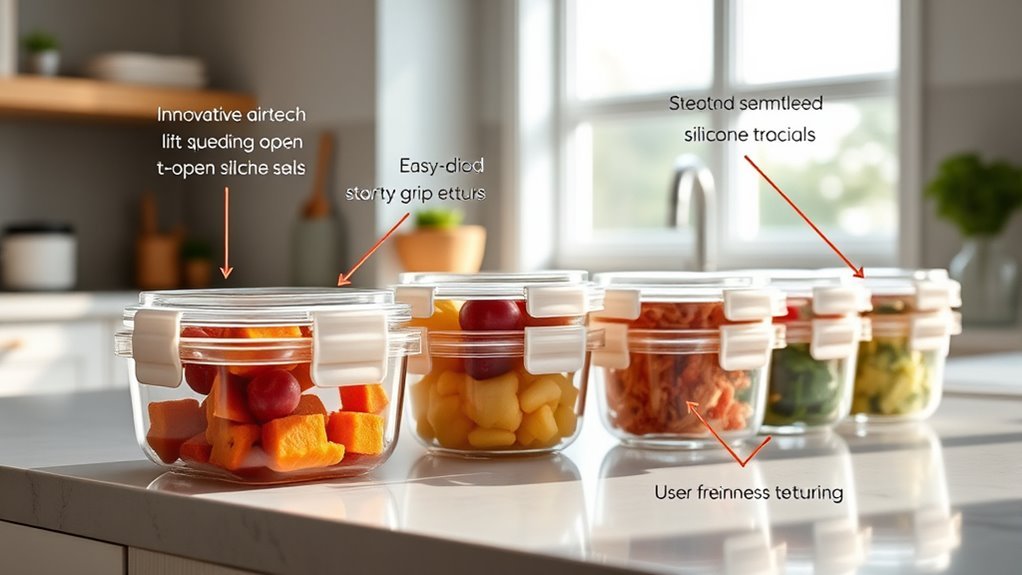
How easily can you open and close your food storage container lids? User-friendly lids with a reliable sealing mechanism make all the difference. Look for containers featuring locking lids or snap-on lids that provide a secure closure without extra effort.
The Rubbermaid Brilliance, for example, offers snap-on lids that are both leak-proof and easy-to-open, enhancing your experience. Pay attention to latch durability; poorly designed latches, like those on the Yeti Dash & Dine, can break and compromise the seal.
A well-thought-out tab design reduces strain, making frequent use simpler and faster. Some lids, such as Caraway’s ceramic-coated glass, seal well but lack a clicking sound, which might leave you unsure about closure.
Prioritizing these features ensures your lids stay secure and your food stays fresh. It really pays off when your containers are easy to handle and keep your meals safe.
Versatility and Storage Solutions
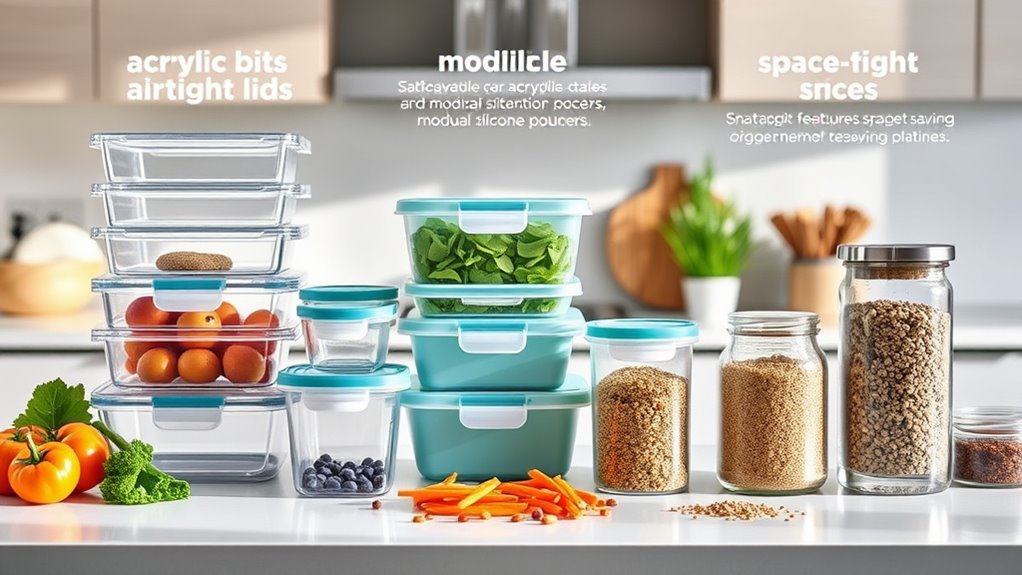
Although you might focus on lid design, choosing versatile food storage containers can transform your kitchen routine by handling everything from freezer storage to oven reheating. Look for multi-purpose containers that are oven-safe and leakproof, letting you cook, store, and reheat in one vessel.
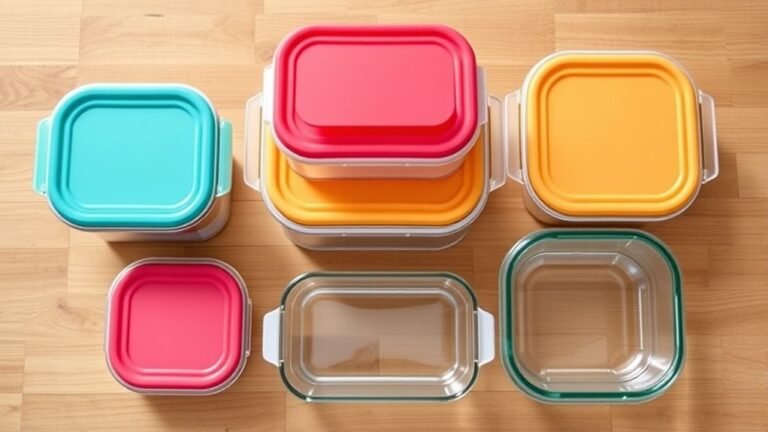
Modular sets with stackable and nesting features help keep your kitchen space-efficient and organized. Interchangeable lids add convenience, allowing you to mix and match without searching for exact pairs.
Opt for airtight containers to maintain freshness, whether in the fridge or freezer. Including a variety of shapes and sizes—round, square, rectangular—maximizes storage options and fits different foods perfectly.
Selection Criteria for Food Storage Containers
Choosing versatile containers is a great start, but knowing what to look for will help you pick the best ones for your needs. Focus on leakproof designs with high seal quality to avoid spills during transport.
Check for ease of sealing—user-friendly lids with locking or snapping mechanisms make a huge difference. Prioritize durable materials like tempered glass or thick plastics that offer impact resistance and resist stains and odors.
Material durability ensures your containers last through microwaving, freezing, and dishwashing. Also, consider stacking ability for efficient storage and versatility in your kitchen.
Top Food Storage Container Recommendations
When you want reliable and practical food storage, several top container sets stand out for their features and durability. You’ll find options that suit meal prep, fridge safe needs, and more:
- Rubbermaid Brilliance 14-piece set: Leakproof, durable, stain and odor resistant, with plastic lids that seal tightly.
- Pyrex Freshlock 10-piece glass containers: Airtight seal, shatter-resistant, perfect for long-term storage.
- Lille Home 6-piece stainless steel: Extremely durable and impact-resistant, though lacks airtight locking.
- Amazon Basics 20-piece plastic set: Budget-friendly, stackable, lightweight for pantry use but less durable long-term.
Each choice balances airtight seal, durability, and convenience. So, you can count on your food staying fresh and organized.
Frequently Asked Questions
What Is the Best Brand for Food Storage Containers?
You’ll find Rubbermaid and Pyrex are the best brands for food storage containers. They offer durable, leakproof designs with high-quality materials.
What Are the Latest Trends in Food Storage Containers?
Imagine snapping lids onto stackable containers that sync with your phone to track freshness.
You’ll love how smart, sustainable, and space-saving designs are making food storage leakproof, odor-resistant, and perfect for reheating in ovens or microwaves.
What Are the Best Containers for Storing Food to Keep It Fresh?
You’ll want airtight, leakproof containers made from glass or high-quality plastic. Look for secure locking lids with silicone gaskets to keep air out.
Stackable designs help organize and maintain your food’s freshness longer. Plus, they save space in your kitchen. It’s all about keeping things fresh and tidy!
Which Container Is Best for Storing Food?
Like choosing Excalibur, you want glass containers for storing food—they’re leakproof, oven-safe, and resist stains and odors.
They keep your meals fresh and ready, making them the ultimate kitchen champion for you.
Trust me, once you switch to glass, you won’t look back!
Conclusion
Picture your kitchen shelf neatly lined with containers that lock in freshness and keep every meal perfect. With leakproof lids and durable materials, you’ll never worry about spills or soggy leftovers again.
Choosing versatile containers means more space and less clutter, making your daily routine smoother and more enjoyable. As you pick your ideal set from our top recommendations, imagine the peace of mind and ease you’ll gain—your food, safe and ready whenever hunger strikes.
When it comes to the best food storage containers for 2026, durability, airtight seals, and versatility are key. These containers not only keep your food fresh longer but also help organize your kitchen efficiently. So, upgrade your storage game with our top picks and enjoy hassle-free meals every day!