How Should Food Be Rotated in Storage: 3 Essential Tips
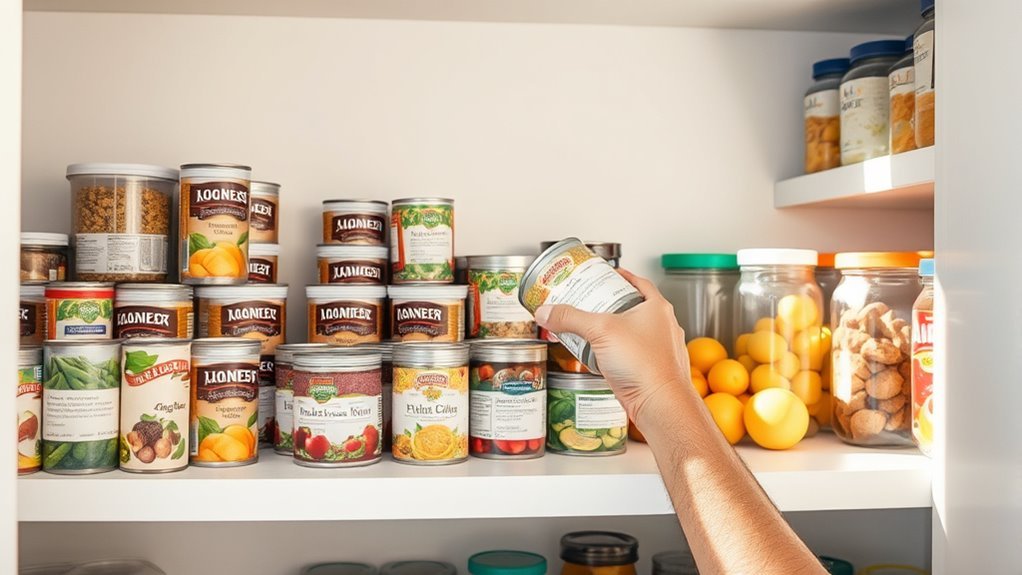
You should rotate food by practicing the First In, First Out (FIFO) method, placing older items in front so you use them before newer ones. This simple technique helps keep your food fresh and reduces waste.
Regularly checking expiration dates is just as important to ensure everything stays safe to eat.
Promptly discard anything spoiled to avoid contamination. Organize your storage so everything is accessible and visible. This makes it easy to spot what needs using soon.
Following these easy tips helps reduce waste and guarantees freshness. Exploring a bit further will reveal even smarter ways to manage your food storage.
Keeping your kitchen organized this way saves money and time, making meal prep a breeze!
Key Takeaways
- Use the FIFO method by placing newer food behind older stock to ensure older items are used first and reduce waste.
- Label all food items with received or prepared dates to track freshness and manage rotation effectively.
- Regularly check expiration dates and prioritize using items that expire soonest to maintain food safety.
- Organize storage so items with the shortest shelf life are at the front and easily accessible for quick use.
- Promptly discard expired or spoiled food to prevent contamination and maintain overall quality and safety.
Practice the First In, First Out (FIFO) Method
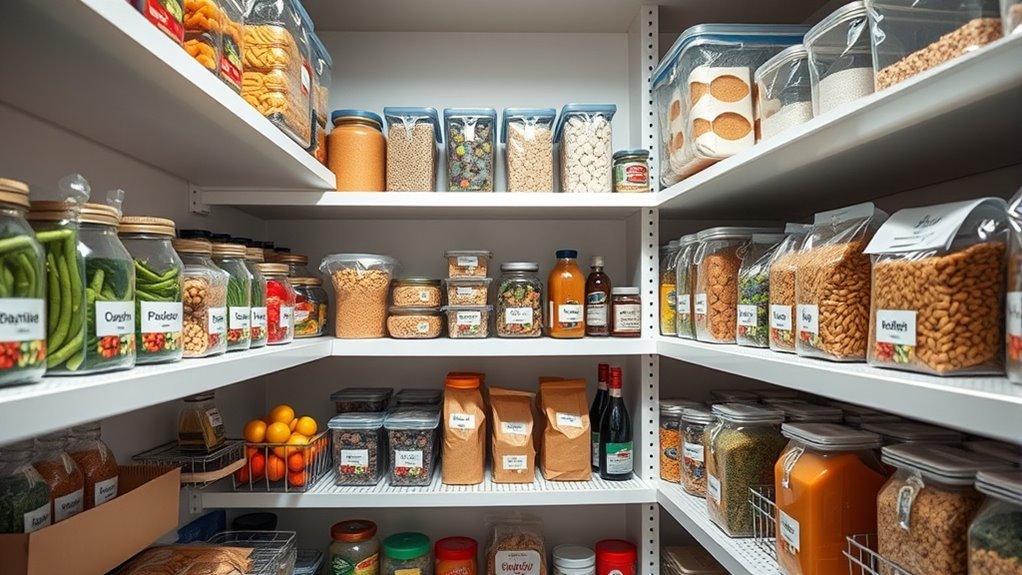
When you practice the First In, First Out (FIFO) method, you guarantee that older food gets used before newer items, reducing waste and spoilage.
To follow this first-in, first-out approach effectively, always place newly purchased or prepared food behind older stock. This simple food rotation technique ensures you use items in the right order, supporting proper stock management.
Label each food item with its received or prepared date to track its age easily and maintain food safety. Position foods with the shortest shelf life toward the front of your storage area, making them more accessible and easier to rotate.
Regularly Check Expiration Dates and Discard Expired Items
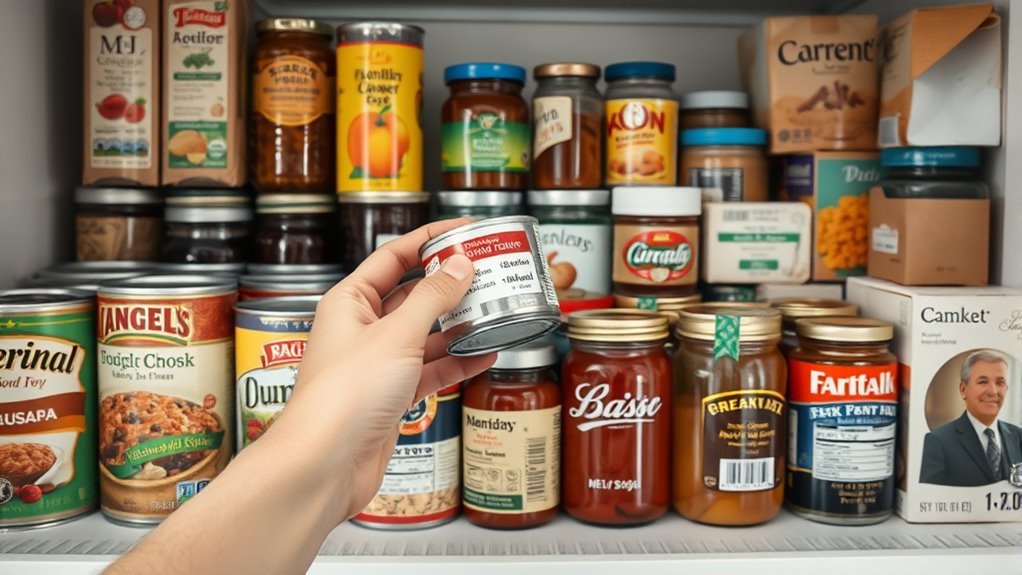
How often do you check the expiration dates on your food items? Regularly inspecting these dates is vital for effective food rotation and ensuring food safety.
By keeping track of expiration dates, you can prioritize using older items first and avoid consuming spoiled food. Implementing proper inventory management helps you monitor your food storage systematically, allowing you to discard expired products promptly.
Tracking expiration dates lets you use older items first and discard expired products promptly for safety.
This not only prevents foodborne illnesses but also frees up space for fresh supplies. Marking the date when items are stored or opened further supports timely use.
Make it a habit to review your supplies frequently and discard spoiled food immediately to maintain the quality and safety of your stored food. Consistent checks are key to successful food rotation and safe food storage practices.
Organize Storage for Easy Access and Visibility
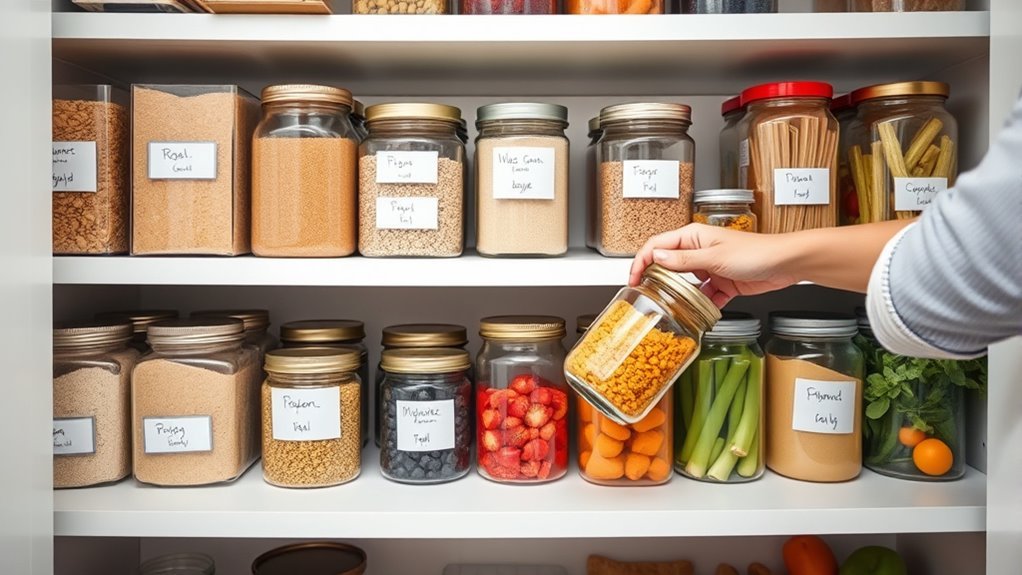
Although organizing your food storage might seem time-consuming, arranging items for easy access and visibility saves you effort in the long run. To maintain proper food rotation and ensure food safety, always place items with the earliest expiration date at the front of shelves.
Label new stock with the date received or opened to help with inventory management. Use the FIFO (First-In, First-Out) method by storing newer products behind or below older ones. This way, you avoid accidental overlooking and spoilage.
Regularly inspect your storage area, removing expired or spoiled items promptly to promote safe handling and prevent cross-contamination. By following these steps, you’ll streamline food rotation, enhance food safety, and make inventory management more efficient.
Frequently Asked Questions
What Are 5 Important Food Storage Tips?
You should label foods with dates and use the FIFO method. This helps you keep track of what needs to be used first and reduces waste.
Also, store perishables at proper temperatures to keep them fresh longer. It’s important to regularly rotate stock by moving older items forward.
Don’t forget to keep storage areas clean and dry. This prevents spoilage and keeps your food safe to eat.
What Are Three Types of Food Storage?
You’ll find three main types of food storage: refrigeration, freezing, and dry storage. Each serves a purpose—refrigeration slows spoilage, freezing preserves long-term, and dry storage keeps nonperishables safe in a cool, dry place.
Refrigeration is great for stuff you want to use soon. It keeps things fresh by slowing down bacteria.
Freezing, on the other hand, locks in freshness for a longer time. It’s perfect when you want to store food for weeks or even months.
Then there’s dry storage. This is where you keep items like grains, canned goods, and spices. Just make sure it’s cool and dry so everything stays good.
What Is Food Rotation?
Food rotation means you use older food items before newer ones to prevent spoilage. You’ll label dates, place older products upfront, and follow FIFO so nothing expires.
This way, you keep your food fresh and safe to eat. It’s a simple trick but really effective!
What Are Some Tips for Safely Storing Food?
You should label foods with dates, store newer items behind older ones, and organize by type. Also, make sure to check expiration dates regularly.
Following FIFO helps keep things fresh. Don’t forget to discard spoiled items promptly.
Keep your storage clean to guarantee safety and freshness every time. It really makes a difference!
Conclusion
By using the First In, First Out method, you can reduce food waste by up to 30%, saving both money and resources. It’s a simple system that helps you use older items before newer ones, keeping your storage organized and efficient.
Don’t forget to regularly check expiration dates and toss anything expired to keep your storage safe. This step is crucial to avoid consuming spoiled food and maintain a healthy pantry environment.
Organizing your pantry for easy access makes it simple to grab what you need without digging around. When everything is visible and accessible, you’re less likely to overlook items that need to be used soon.
With these tips, you’ll keep your food fresh longer and cut down on unnecessary waste effortlessly. Proper food rotation in storage not only saves money but also reduces environmental impact by minimizing discarded food. So, adopting the First In, First Out method, routinely checking expiration dates, and maintaining an organized pantry are essential steps for effective food storage management.