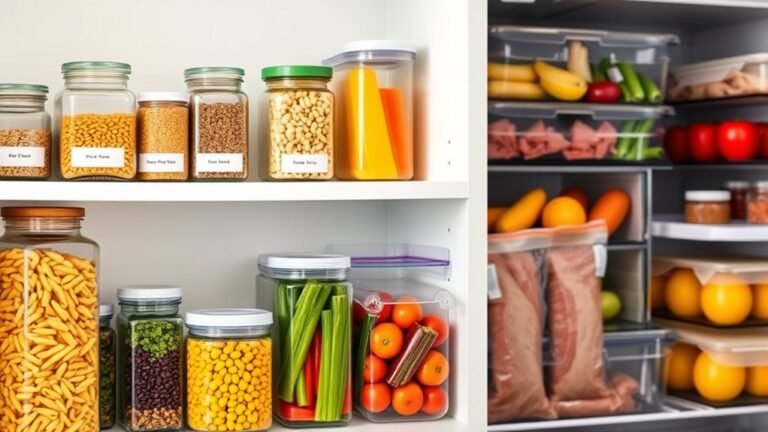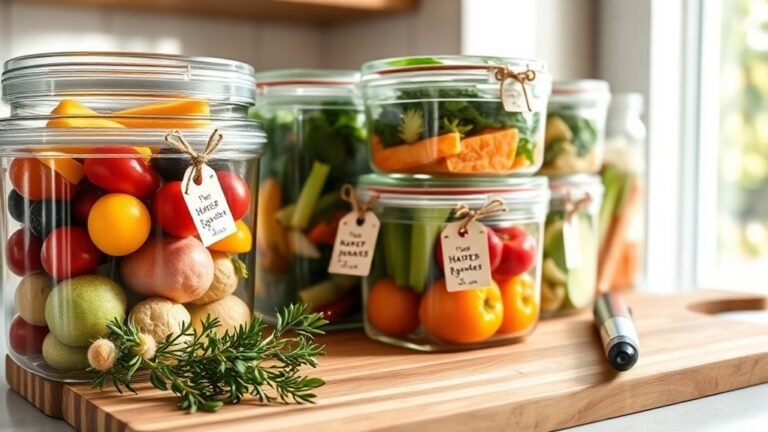

5 Good Food Storage Items You Need
You need five essential food storage items that last long, provide nutrition, and keep your emergency pantry ready. These key staples help you stay prepared for any situation, whether it’s a power outage or unexpected event. It’s all about choosing foods with a long shelf life that still pack a nutritional punch.
Start with basics like white rice and rolled oats. They have low moisture content, which means they last a long time without spoiling. Plus, they’re versatile and easy to cook.
Add dried beans or lentils for protein and fiber. These are great for keeping you full and energized when fresh food isn’t available.
Don’t forget powdered milk for extra nutrients, and freeze-dried fruits to get your vitamins. Both are lightweight and shelf-stable.
Also, keep seasonings and airtight containers handy to maintain freshness. Learning how to store, rotate, and organize your stockpile effectively will help you stay prepared and reduce waste.
Key Takeaways
- White rice is a long-lasting staple with low moisture. It’s ideal for emergency food storage.
- Dried beans and lentils provide protein and fiber. They also store well for decades.
- Rolled oats offer great nutrient density. When properly sealed, they can last 30+ years.
- Freeze-dried fruits and powdered milk help maintain nutrition. They’re great for filling dietary gaps.
- Mylar bags with oxygen absorbers keep foods fresh. They also extend shelf life significantly.
Start Your Emergency Food Storage Journey
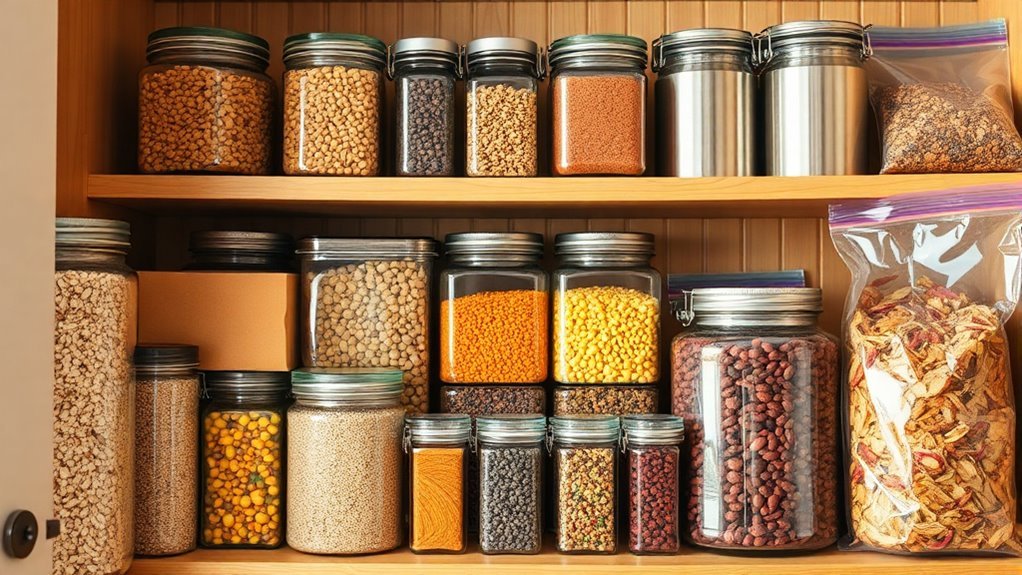
Even if you’re new to emergency preparedness, you can start your food storage journey by simply buying one extra shelf-stable item than usual—like rice, rolled oats, or canned beans—and gradually build a manageable stockpile from there.
Start your emergency food storage by adding one extra shelf-stable item each time you shop.
To enhance your emergency food storage, focus on long-lasting basics with low moisture that stay stable at room temperature.
Pack dry goods in Mylar bags with oxygen absorbers, seal them tightly, and store in sturdy bins or food-grade buckets kept in a cool, dark, dry spot.
Label each container with contents and date, so you can rotate stock regularly using FIFO (first in, first out) method.
Taking these steps will improve your food security by ensuring your emergency supplies remain fresh and ready when you need them most.
Choose Staples With Long Shelf Life
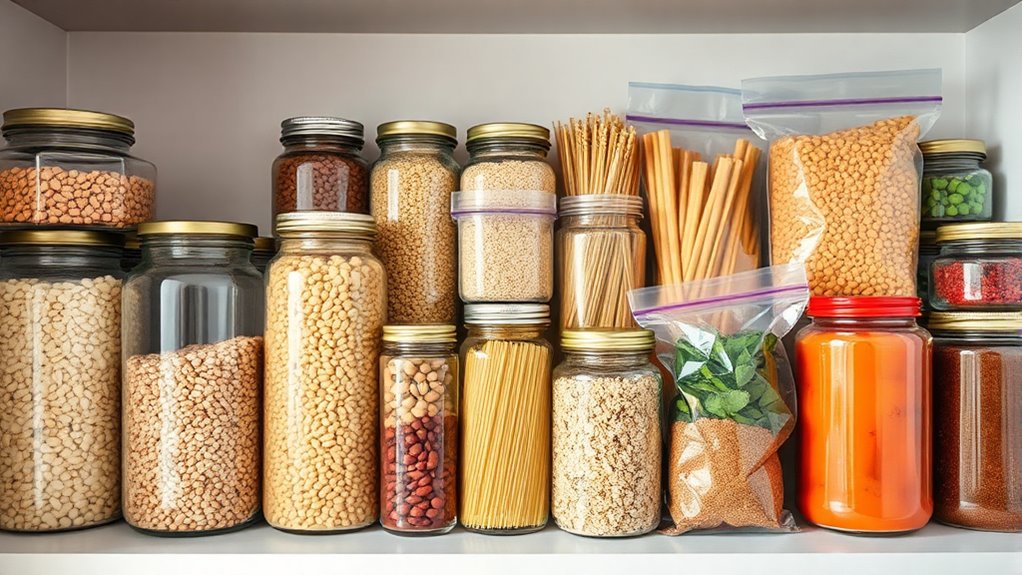
When selecting staples for your emergency food storage, focus on items with low moisture content—ideally under 10%—to minimize spoilage and microbial growth. Choose grains like white rice, rolled oats, quinoa, pasta, lentils, and dried beans. These are all known for their long shelf-life when stored in Mylar bags with oxygen absorbers.
These staples can last 30+ years, making them ideal for long-term storage. Don’t forget powdered milk, salt, and sugar, as they hold up well and complement your staples. Always check expiration dates but keep in mind that proper packaging extends usability far beyond those dates.
Including freeze-dried fruits and dehydrated vegetables adds variety and balance without sacrificing durability. By selecting these staples, you’re building a reliable, long-lasting food supply that’s ready when you need it most. It’s all about being prepared without the stress.
Pick Nutrient-Packed Foods to Stay Healthy

Building on your selection of long-lasting staples, focus on picking nutrient-packed foods that keep you healthy during extended storage. Choose staples like white rice, rolled oats, dried beans, lentils, and powdered milk—all nutrient-dense with long shelf life when stored properly.
Avoid foods with short shelf life; instead, prioritize low-moisture options like dehydrated vegetables and freeze-dried fruits to preserve calories and micronutrients. It’s a smart way to make sure your food lasts and stays nutritious.
Include protein and fiber sources such as quinoa and legumes for balanced nutrition, not just grains. Adding variety helps keep your meals interesting and wholesome.
Don’t forget fortified items like powdered milk and freeze-dried meals to support daily needs. These extras can fill in nutritional gaps during longer storage.
Finally, tailor your food storage to your dietary preferences and allergies to maintain healthy eating patterns. This way, your stored food truly sustains you during disruptions without compromising your health.
Gather Cooking Basics and Seasonings for Storage
Since having the right ingredients on hand can make all the difference in meal preparation, start by stocking your pantry with cooking basics and seasonings that store well over time. Use food-grade containers to keep your staples fresh and sealed.
Food is still safe to use when stored properly, so keep track of contents and packed dates to maintain quality. Include long-lasting carbs, proteins, and essential seasonings to ensure versatility.
| Item | Storage Tips |
|---|---|
| Rice | Mylar bags + oxygen absorbers |
| Powdered Milk | Cool, dry, dark place |
| Vinegar | Sealed bottles, room temp |
| Freeze-dried Veggies | Airtight, avoid moisture |
Gather kitchen tools like a manual can opener and heat sealer to make meal prep smooth during outages. These little things can really help when you need them most.
Store, Rotate, and Track Your Food Properly
Proper storage and organization of your food supplies help ensure that your stocked ingredients stay fresh and usable for as long as possible.
The two main steps in emergency preparedness are storing your food in cool, dark, and dry places—like closets or basements—and using airtight containers such as Mylar bags with oxygen absorbers.
Label everything with packing dates for easy identification. Rotating your stock using FIFO (First In, First Out) ensures older items get used first, preventing waste.
Tracking your inventory with a notebook or phone note helps you monitor pack dates and expiration estimates. Remember, food is important not only for survival but also for maintaining morale.
Frequently Asked Questions
How Do I Store Food Safely in Extreme Temperatures?
You should use insulated containers or coolers with ice packs in extreme heat, and airtight, moisture-proof containers in extreme cold. Keep food off the ground, check regularly, and avoid temperature fluctuations to maintain safety and freshness.
It’s really important to keep things consistent. So, try not to let the temperature bounce around too much. That way, your food stays safe and fresh for longer!
What Are the Best Containers for Airtight Food Storage?
You’ll want glass jars with rubber seals, BPA-free plastic containers with locking lids, or vacuum-sealed bags. These options keep air and moisture out, preserving freshness and preventing spoilage effectively in your airtight food storage.
They’re super handy because they create a tight seal that locks in flavor and keeps your food safe. Plus, using the right containers can save you money by extending the life of your groceries!
Can I Store Frozen Foods Without a Freezer?
You can’t store frozen foods without a freezer because they’ll thaw and spoil quickly.
Instead, try using coolers with ice packs for short-term storage. But for long-term preservation, a proper freezer is essential.
How Often Should I Replace My Stored Food Supplies?
You should replace your stored food supplies at least every six months to a year—like swapping out old treasure chests before they crumble.
Check expiration dates regularly and rotate items to keep everything fresh and safe.
It’s a simple way to make sure your stash stays ready for whatever comes next. Just a little effort now saves you from food surprises later!
What Are Natural Preservatives for Homemade Food Storage?
You can use natural preservatives like salt, sugar, vinegar, lemon juice, and honey. These help prevent spoilage and extend shelf life in homemade food storage without chemicals.
They keep your food fresh and safe longer, which is great if you want to avoid artificial additives. Plus, using these natural options is pretty simple and effective!
Conclusion
Starting your emergency food storage journey is like planting a garden—you’ll want to choose staples with long shelf lives and nutrient-packed foods to keep you healthy. Also, don’t forget the essential cooking basics to make meals enjoyable.
It’s important to store, rotate, and track your supplies regularly to keep everything fresh and ready. Staying organized and thoughtful helps you avoid waste and ensures your food stays safe to eat.
By building a well-rounded food storage, you’ll be prepared for whatever comes your way. With a reliable supply of long-lasting staples, nutritious options, and cooking essentials, your emergency food storage becomes a safety net you can truly count on. Being proactive about your food storage means peace of mind and readiness in any situation.