5 Essential Tips for Food Storage
You should keep your fridge at or below 40°F and your freezer at 0°F to stop bacteria growth.
Always store raw meat on the bottom shelf, separate from cooked foods to avoid cross-contamination.
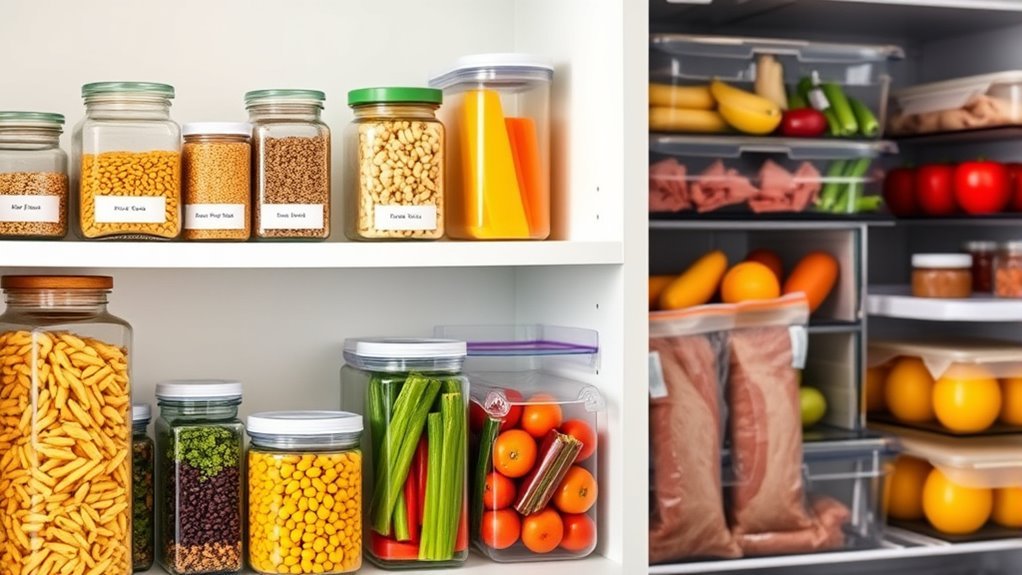
Use airtight, labeled containers to lock in freshness. Track storage times and expire expired or spoiled items promptly.
During power outages, keep doors closed and toss perishables above 40°F over 4 hours.
Want to discover more ways to keep your food safe and fresh longer?
Key Takeaways
- Keep your refrigerator at or below 40°F and the freezer at 0°F. This helps prevent bacterial growth and spoilage.
- Store raw meats on the bottom shelf. Make sure they’re separate from cooked foods to avoid any cross-contamination.
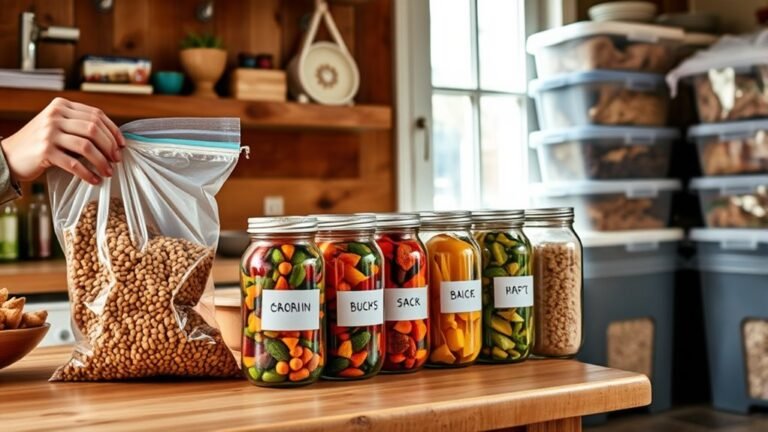
- Use airtight, leak-proof containers for storage. Don’t forget to label them with storage dates so you can keep track and rotate your food properly.
- Always keep an eye on expiration dates. If something looks or smells off, it’s best to discard it promptly to maintain safety and quality.
- During power outages, try to keep the doors closed as much as possible. If perishable foods have been held above 40°F for over 4 hours, it’s safer to toss them out.
Keep Your Refrigerator and Freezer at the Right Temperatures
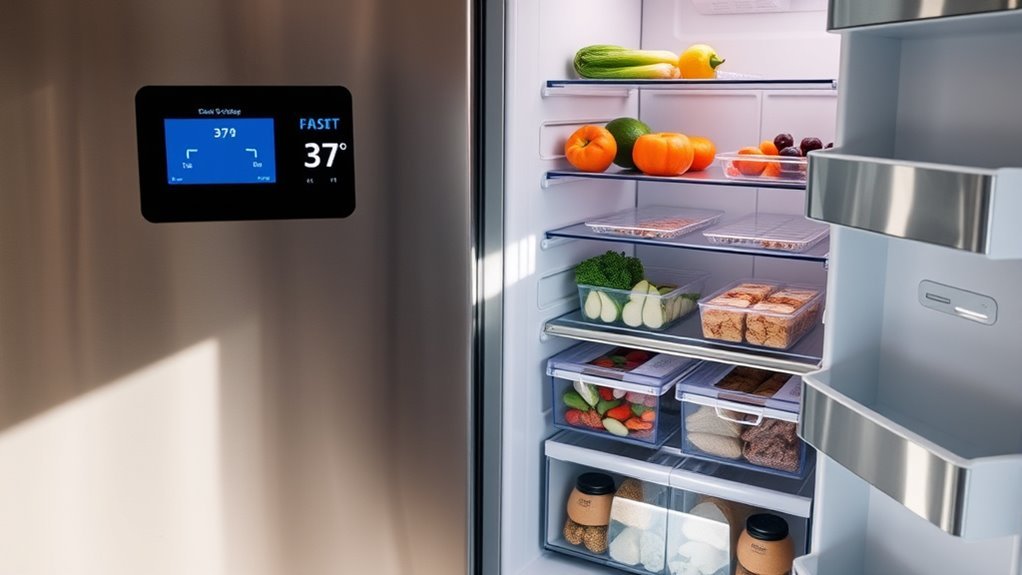
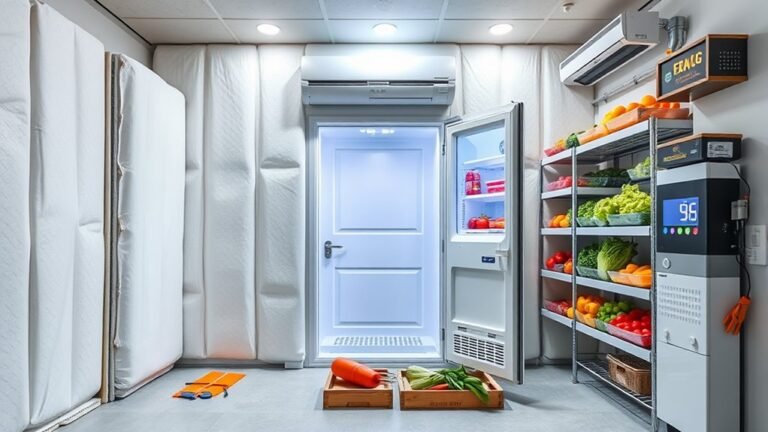
To keep your food safe, set your refrigerator at or below 40°F (4°C) and your freezer at 0°F (-18°C). Maintaining the right refrigerator temperature is vital to keep food fresh and prevent bacteria from multiplying, which can lead to foodborne illness.
Use a temperature monitor to regularly check both appliances and guarantee they’re stored properly. A freezer temperature at 0°F not only prevents bacterial growth but also preserves food quality during freezer storage.
Try to avoid opening the doors too often, as it disrupts the temperature balance and wastes energy. By consistently monitoring and maintaining your refrigerator and freezer temperatures, you support food safety and extend the shelf life of your groceries effectively.
Store Raw and Cooked Foods Separately
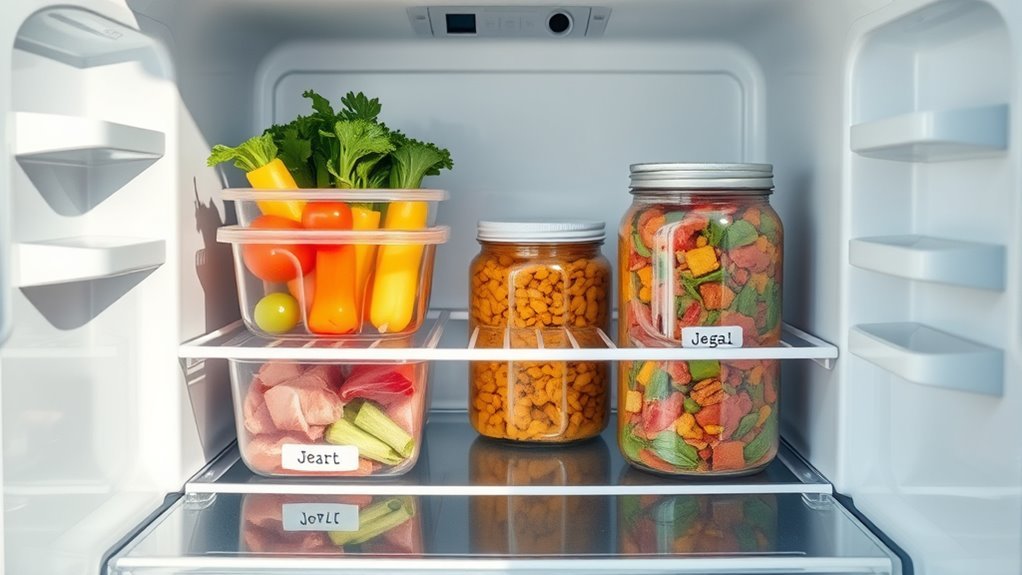
Because raw and cooked foods carry different risks, you should always store them separately to prevent cross-contamination. In your refrigerator, place raw meats on the bottom shelf to stop drips from contaminating cooked foods.
Use separate storage containers clearly labeled for raw foods and cooked foods. Never put cooked foods back into containers that held raw meats unless they’re thoroughly cleaned.
Always wash your hands and utensils after handling raw foods to maintain food safety. It’s a simple step that makes a big difference!
| Food Type | Storage Location | Key Tip |
|---|---|---|
| Raw Meats | Bottom shelf | Prevent drips |
| Cooked Foods | Upper shelves | Keep separate from raw |
| Storage Containers | Clearly labeled | Avoid accidental mixing |
| Utensils | Washed after raw contact | Prevent cross-contamination |
Use Proper Containers and Packaging
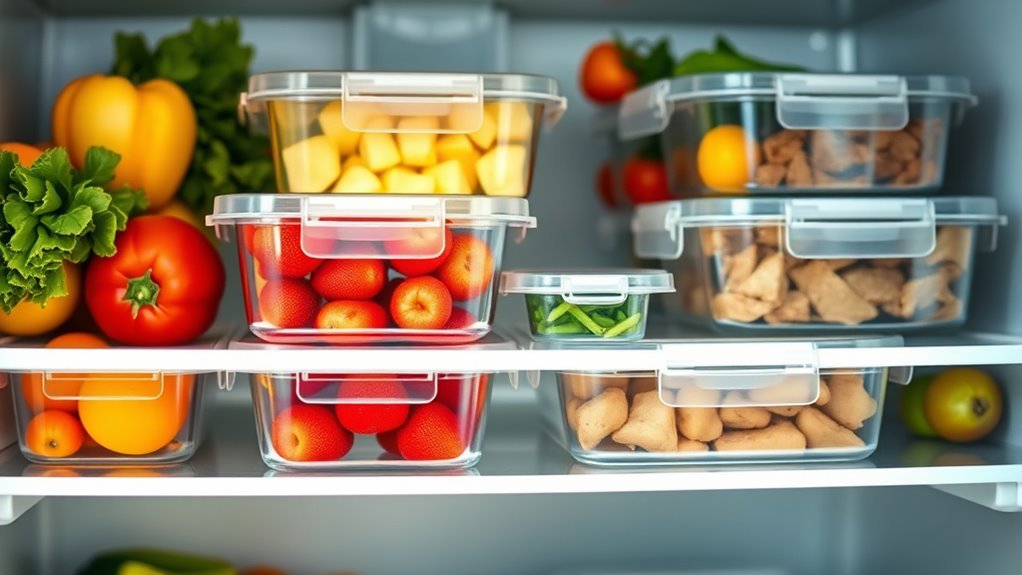
Keeping raw and cooked foods separate is just one part of safe storage; choosing the right containers and packaging plays a big role in preserving freshness and preventing spoilage.
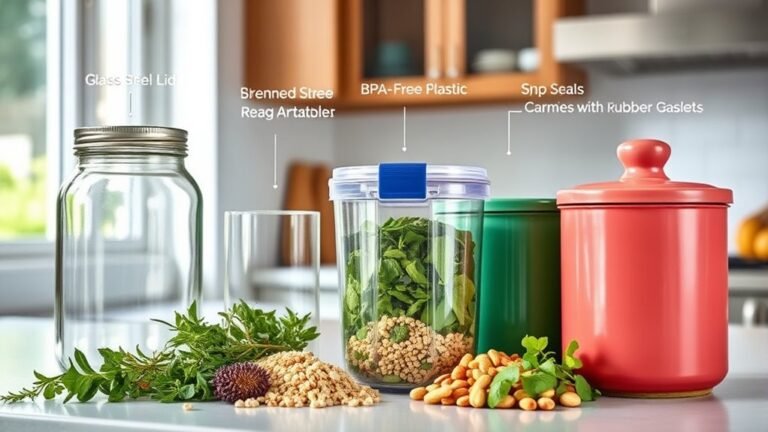
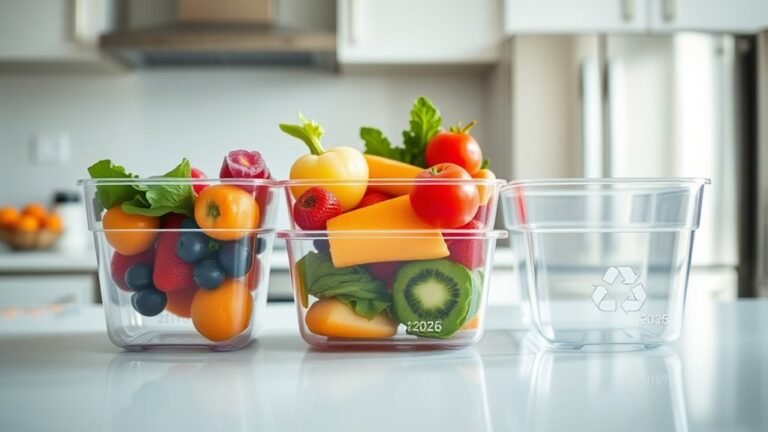
Use airtight containers made of BPA-free materials to keep moisture and contaminants out, ensuring your food stays fresh longer. Opt for leak-proof, shallow containers to help leftovers cool evenly and reduce spoilage risk.
Wrap foods tightly in plastic wrap or foil before placing them inside containers to prevent freezer burn and avoid odor transfer between items. Clear containers let you identify contents quickly without opening, minimizing unnecessary exposure.
Don’t forget to label containers with the storage date so you can keep track of freshness and rotate your food properly. Proper packaging protects your meals and saves you money.
Monitor Food Storage Times and Expiration Dates
Although proper containers help preserve your food, you still need to monitor storage times and expiration dates closely. Always check the use-by date and consume before it expires to guarantee safe storage.
Label leftovers with the storage date and stick to recommended food storage times to avoid spoiled food. Discard spoiled food promptly to prevent health risks.
Here’s a quick guide to storage duration:
| Food Type | Storage Duration | Action Required |
|---|---|---|
| Leftovers | 3-4 days | Consume before |
| Frozen meats | Up to 1 year | Monitor expiration |
| Fresh produce | 1-2 weeks | Check use-by date |
| Canned goods | 1-4 years | Discard if damaged |
| All foods | Always check labels | Discard spoiled food |
Keep track to maintain quality and safety. It’s easier than you think to stay on top of it!
Handle Power Outages to Maintain Food Safety
When the power goes out, you should keep your refrigerator and freezer doors closed to maintain safe temperatures. A full freezer can keep food frozen for about 48 hours, while a refrigerator stays cold for approximately 4 hours.
Once power returns, check the temperature before deciding to store or discard food. It’s important to use a thermometer to ensure the freezer temperature is at or below 40°F (4°C) before you refreeze food.
Discard perishable food from the refrigerator if it’s been above 40°F for more than 4 hours. And when it comes to refreezing, only do it if the food still contains ice crystals.
Don’t refreeze food that’s completely thawed, especially if it thawed at room temperature or in the microwave. Following these steps really helps keep your food safe during outages.
Frequently Asked Questions
What Are 5 Important Food Storage Tips?
You should refrigerate perishables below 40°F and freeze at 0°F. Using airtight containers for leftovers is a smart move to keep food fresh.
Also, be sure to label and date items. It helps you keep track of what needs to be eaten first.
Remember to store raw meat below cooked food to avoid cross-contamination. And don’t forget to keep produce in crisper drawers to maintain its freshness.
What Is the 2-2-2 Rule for Food Storage?
Don’t let your food gather dust—follow the 2-2-2 rule: eat perishables within 2 days.
Consume leftovers within 2 hours if left out, and use frozen foods within 2 months to keep everything fresh and safe.
What Two Foods Never Expire?
Honey and white rice never expire. You can store honey indefinitely because of its low moisture and acidity.
White rice stays edible for decades if kept airtight and dry. Just keep them sealed tightly.
What Are the 5 C’s of Food Safety?
You might not know this, but the 5 C’s of food safety are Clean, Cook, Chill, Cross-contamination, and Combat bacteria.
If you follow these, you’re protecting yourself from harmful germs and keeping your food safe every time. It’s really that simple! Just a few habits can make a big difference.
Conclusion
By keeping your fridge and freezer cozy at the right temperatures, separating raw and cooked foods, and choosing the best containers, you’re giving your meals the VIP treatment they deserve. Don’t forget to keep an eye on those storage times and expiration dates—they help you enjoy your food at its freshest.
And if the power takes a little nap, you’ll know just how to keep things safe. With these gentle habits, you’re set for delicious success!
Proper food storage is key to maintaining freshness and preventing waste. Using the right containers and keeping foods at safe temperatures not only preserves flavor but also protects your health. By following these essential tips for food storage, you can extend the life of your meals and enjoy every bite safely. So, keep your kitchen organized, stay mindful of storage times, and treat your food with care. That’s the recipe for tasty, safe meals every time!