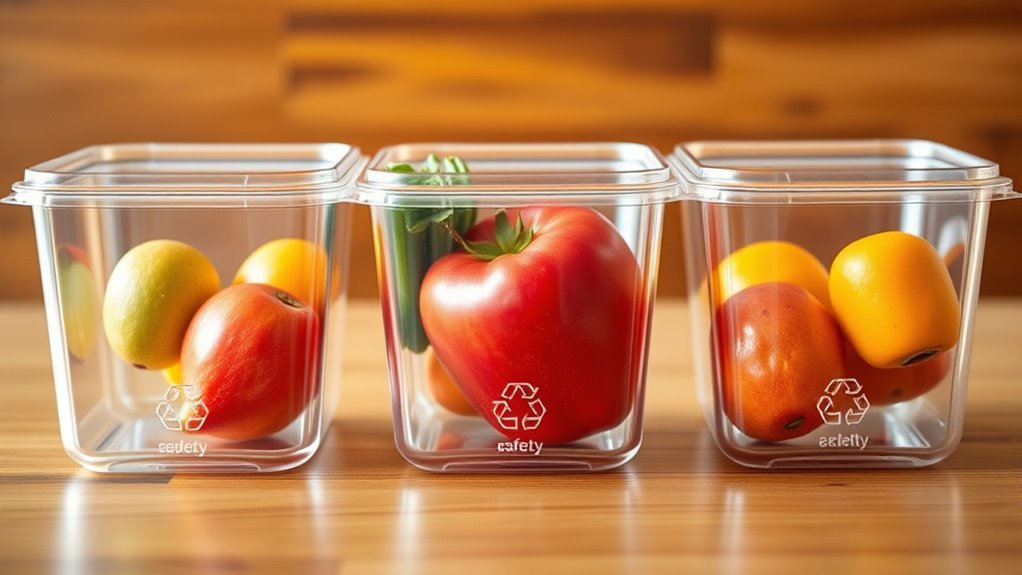
3 Plastics Safe for Food Storage
You can safely store food using three common plastics: HDPE, LDPE, and PP. These plastics are popular choices because they are durable, safe, and versatile. Each one has unique properties that make it suitable for different types of food storage needs.
HDPE is tough and microwave-safe, which makes it perfect for jugs and containers you might use daily.
LDPE offers more flexibility and works great for short-term storage, like produce bags, but keep in mind it’s not microwave-safe.
PP stands out with its high melting point, making it ideal for reusable, microwave-safe dishes.
All three provide excellent chemical resistance and are recyclable, so they not only protect your food but also help the environment.
Keep exploring to discover how these materials can keep your food fresh and safe while being eco-friendly.
Key Takeaways
- High-Density Polyethylene (HDPE, recycling code #2) is durable and chemically resistant. It’s also microwave-safe and commonly used for milk and juice containers.
- Low-Density Polyethylene (LDPE, recycling code #4) offers flexibility and low chemical migration. It’s suitable for short-term food storage but not microwave-safe.
- Polypropylene (PP, recycling code #5) has a high melting point and excellent chemical resistance. It’s microwave-safe when labeled accordingly.
- All three plastics provide high chemical resistance and low contamination risk. This makes them safe for food contact and storage.
- HDPE and PP are highly recyclable and reusable. They support environmental sustainability while maintaining food safety.
High-Density Polyethylene (HDPE)
Although you might not always notice it, High-Density Polyethylene (HDPE) plays a big role in food storage. You’ll find HDPE in many food storage containers and plastic jugs because it offers excellent chemical resistance and is one of the safest food-grade plastics available.
High-Density Polyethylene (HDPE) is a key player in safe, durable food storage solutions.
With low migration of chemicals into food, HDPE guarantees your meals stay uncontaminated. It’s also microwave safe, so you can reheat leftovers without worry.
Identified by recycling code #2, HDPE ranks high among recyclable plastics, making it environmentally friendly. Most municipal recycling programs accept HDPE, helping reduce waste.
Whether it’s milk bottles or juice containers, HDPE’s durability and safety make it a reliable choice for food contact applications. You can trust HDPE to keep your food fresh and safe.
Low-Density Polyethylene (LDPE)
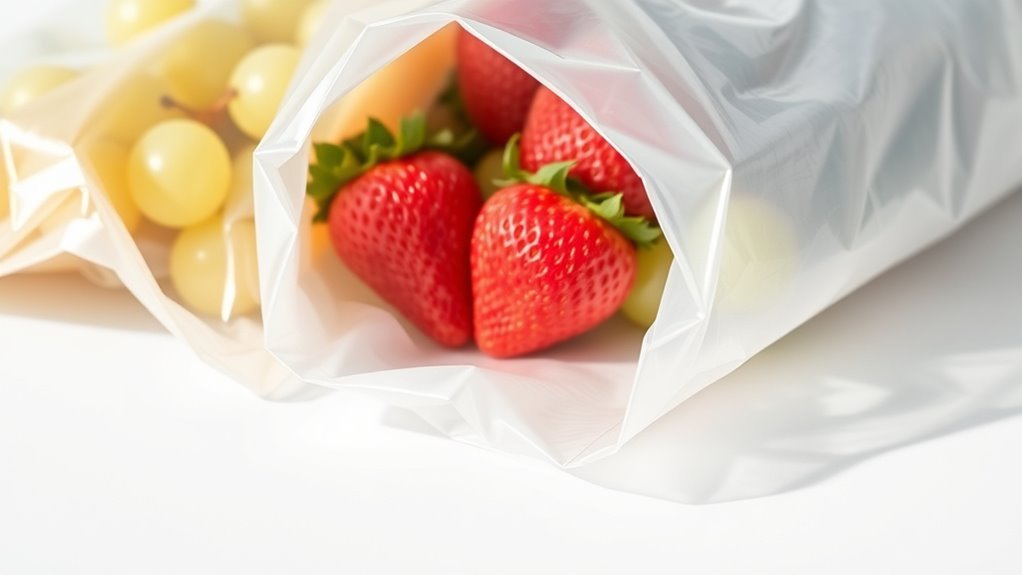
While HDPE offers rigidity and durability for food storage, Low-Density Polyethylene (LDPE) provides flexibility that suits different packaging needs. Recognized by recycling code #4, LDPE is a popular food-safe plastic used in produce bags, bread wraps, and flexible plastic containers.
It has low chemical migration, making it suitable for short-term food storage and food packaging. However, avoid microwaving LDPE containers, as they lack microwave safety and high temperatures may increase chemical leaching.
You can reuse LDPE containers, but frequent reuse risks chemical leaching. Its resistance to moisture and chemicals helps preserve freshness.
| Feature | LDPE Details |
|---|---|
| Recycling Code | #4 |
| Flexibility | High |
| Chemical Migration | Low |
| Microwave Safety | Not Recommended |
| Reusability | Yes, with caution |
Polypropylene (PP)
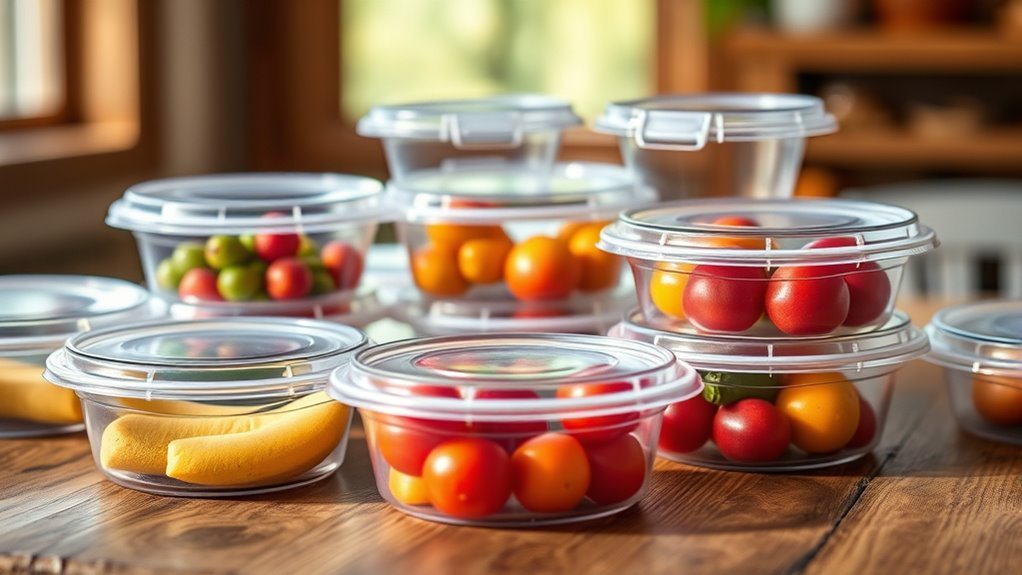
What makes Polypropylene (PP) a popular choice for food storage? Polypropylene, identified by resin code #5, stands out as a food-safe plastic commonly used in yogurt cups, margarine tubs, and microwave-safe dishes.
You’ll appreciate its high melting point of around 130°C (266°F), which lets you safely reheat food without worrying about leaching chemicals. PP is one of the most durable plastics available, offering excellent chemical resistance and moisture protection.
This toughness makes reusable containers made from polypropylene ideal for everyday food storage. Just remember, only use containers labeled microwave-safe to avoid increased chemical migration.
Frequently Asked Questions
What Is the Safest Plastic to Store Food In?
You should use plastics labeled #2 (HDPE), #4 (LDPE), or #5 (PP) for storing food safely. They’re BPA-free and have low chemical leaching risks, making them your best choice for everyday food storage.
These types of plastics are generally considered safe because they don’t break down easily or release harmful chemicals. So, when you’re picking containers, look for those numbers to keep your food fresh and safe.
Do Ziploc Bags Give off Microplastics?
Yes, Ziploc bags release microplastics like a worn-out sweater shedding fibers.
When you reuse or heat them, tiny plastic fragments can break off. This could potentially contaminate your food and the environment with microplastic particles.
What Plastics Should Be Avoided in Food Storage?
You should avoid plastics like PVC (#3), polystyrene (#6), and polycarbonate (#7) because they can leach harmful chemicals.
Also, steer clear of single-use foam trays and wraps not meant for food storage to keep your food safe. It’s better to stick with safer options to protect your health.
Is a 20 Year Old Tupperware Safe to Use?
Using 20-year-old Tupperware is like trusting a vintage car for daily drives—it might fail.
If it’s cracked, cloudy, or smells off, toss it. You’ll want safer, BPA-free containers for your food.
Conclusion
Now that you know HDPE, LDPE, and polypropylene are safe choices for food storage, why settle for less? These plastics not only protect your food but also keep harmful chemicals at bay.
By choosing the right materials, you’re ensuring freshness and safety every time you store leftovers or pack snacks. So next time you reach for a container, remember—making a smart choice is easier than you think.
When it comes to food storage, selecting plastics like HDPE, LDPE, and polypropylene means you’re prioritizing both safety and quality. These materials are designed to keep your food fresh without leaching harmful substances. So why wouldn’t you want the best for your food? Choosing the right plastic container is a simple step that makes a big difference every day.