How to Make Long Term Food Storage in 3 Simple Steps
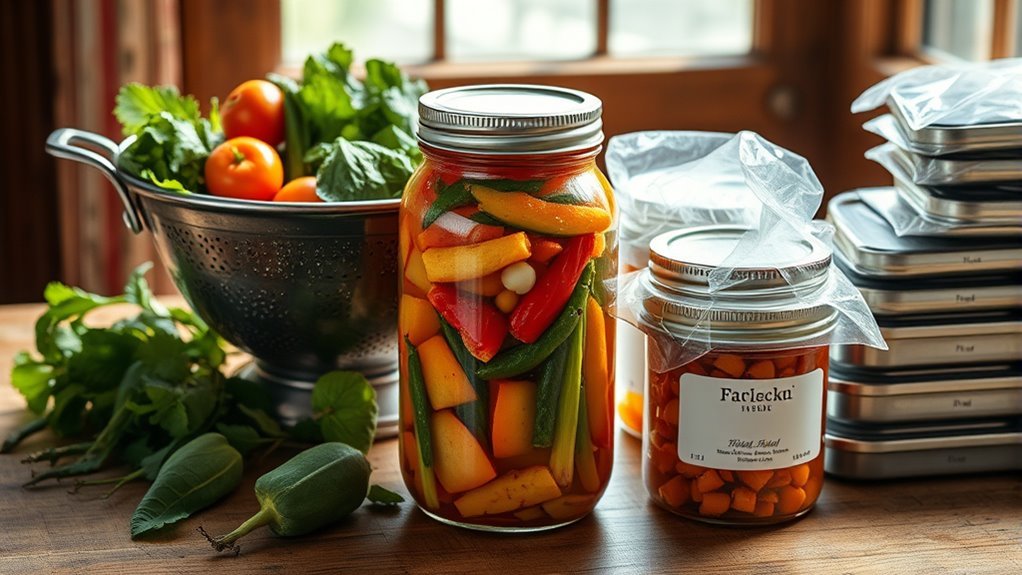
To make long-term food storage easy and effective, start by choosing shelf-stable foods like dried beans, rice, and canned goods. Store them in a cool, dry place such as a basement or closet to keep them fresh for extended periods.
Next, organize your inventory with clear labels. Rotating your stock regularly helps you use older items first and prevents spoilage. This simple habit saves money and reduces waste.
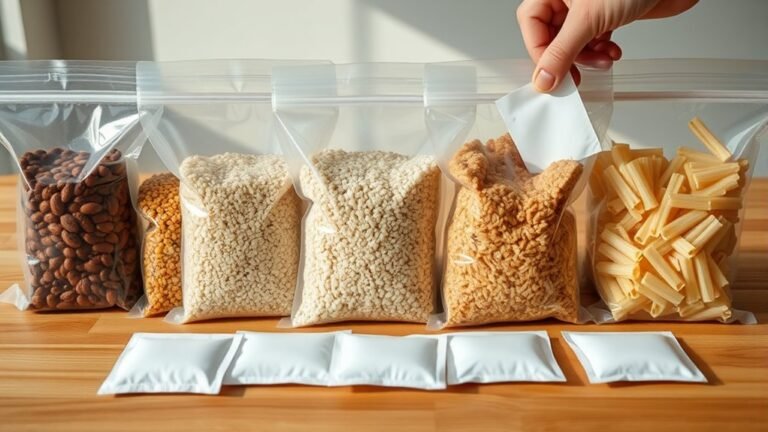
Finally, repackage food in airtight containers using oxygen absorbers. This step is crucial to keep your food fresh for years and maintain its nutritional value.
Follow these steps, and you’ll be set to maintain a reliable food supply.
Along the way, you might even discover more expert tips to enhance your long-term food storage game. It’s easier than you think!
Key Takeaways
- Store food in cool, dry, and dark places to prevent spoilage and extend shelf life. This helps keep your food fresh for longer.
- Use airtight containers or Mylar bags with oxygen absorbers to remove oxygen and preserve freshness. It’s a simple trick that really makes a difference.
- Label and date all stored items to ensure proper rotation and use of older supplies first. This way, nothing goes to waste.
- Regularly inspect stored food for signs of spoilage, such as puffed packaging or discoloration. Catching problems early can save you a lot of trouble.
- Repackage bulk foods into smaller, sealed containers to maintain quality and simplify inventory management. It makes it easier to keep track of what you have.
Select and Store Shelf-Stable Foods Properly
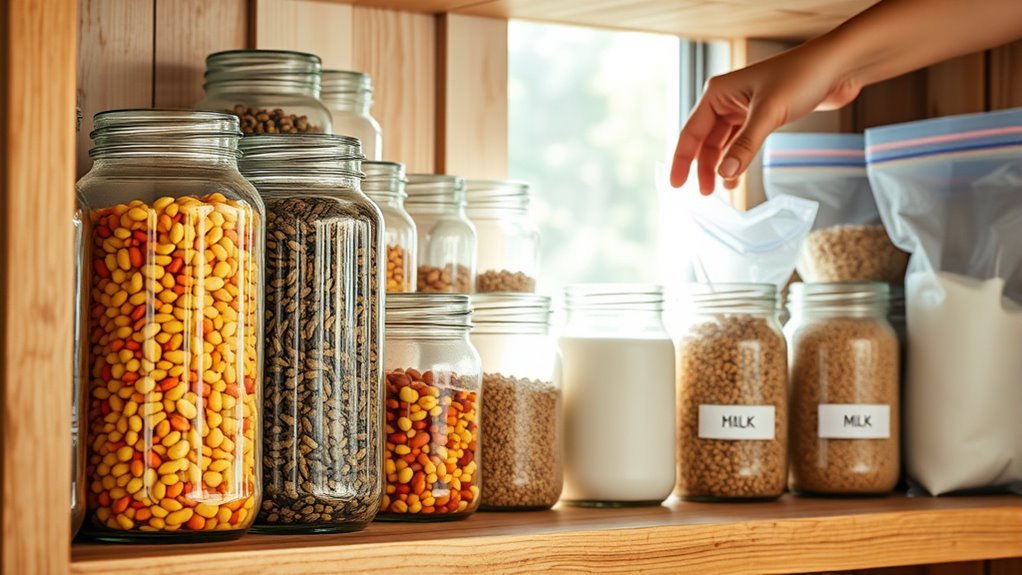
Although it might seem straightforward, selecting and storing shelf-stable foods properly is essential to preserving their longevity. You should store food in cool, dry, and dark places like basements or closets to maximize shelf life.
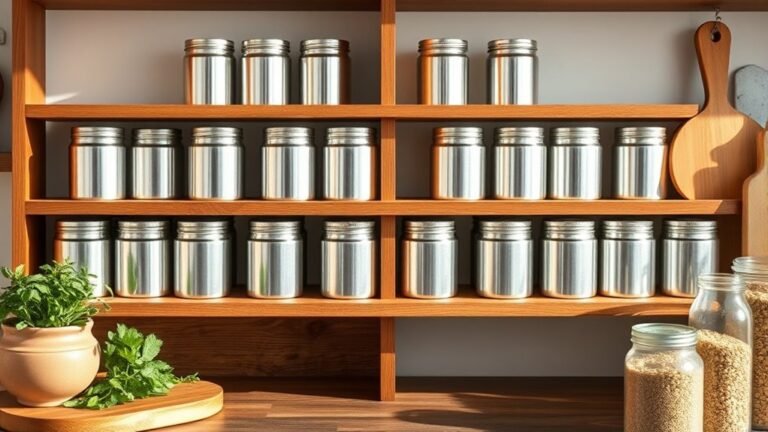
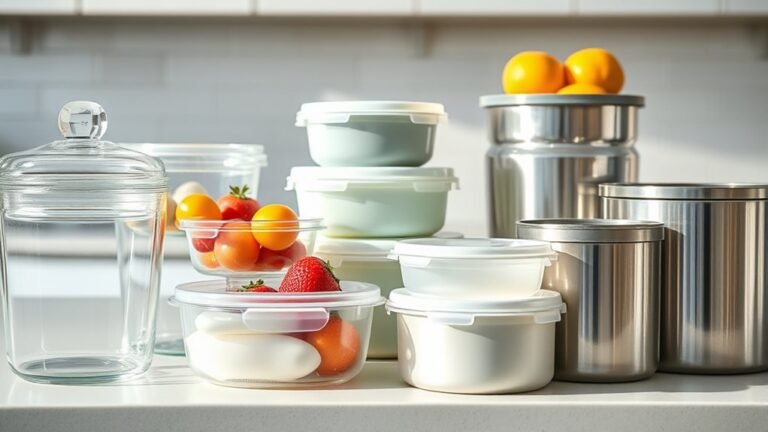
Whenever possible, keep foods in their original packaging, especially if it’s MAP (modified atmospheric packaging), which uses gases like nitrogen to extend freshness. For bulk items, transfer them to clear or dark airtight containers with oxygen absorbers; this can prolong shelf life up to 20 years.
Make it a habit to regularly check your stored food for signs of spoilage or oxygen exposure, such as puffed packaging or discoloration. By carefully storing food and monitoring your supplies, you’ll ensure your long-term food storage remains safe and effective.
Organize Inventory and Rotate Stock Regularly
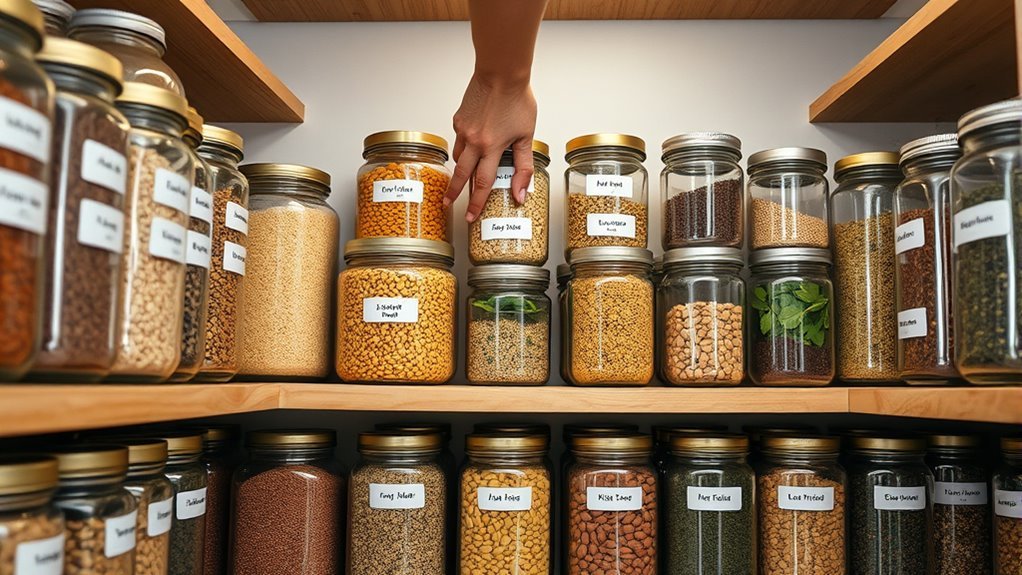
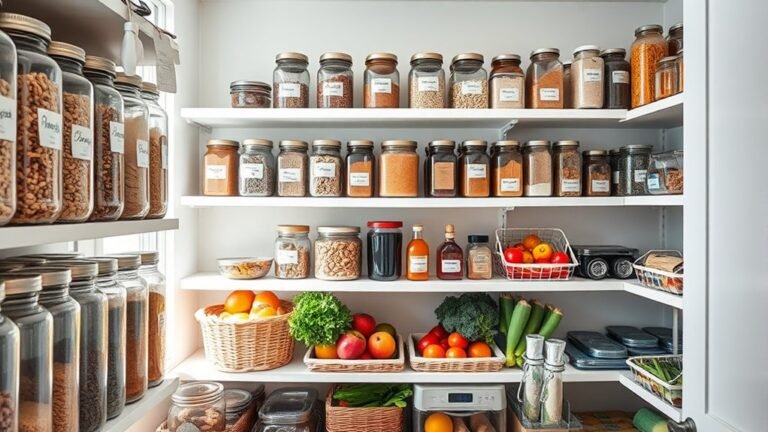
When managing your long-term food storage, keeping a detailed inventory and regularly rotating your stock guarantees your supplies stay fresh and usable. To organize your inventory effectively, record purchase and expiration dates for every item.
Use clear containers with labels to quickly identify contents and track freshness during checks. Make it a habit to assess your inventory weekly or monthly, ensuring no food surpasses its ideal shelf life.
Rotate your stock by using older items first and replacing them with new purchases. This practice prevents spoilage and waste, keeping your storage ready for emergencies.
Repackage With Oxygen Absorbers and Airtight Sealing
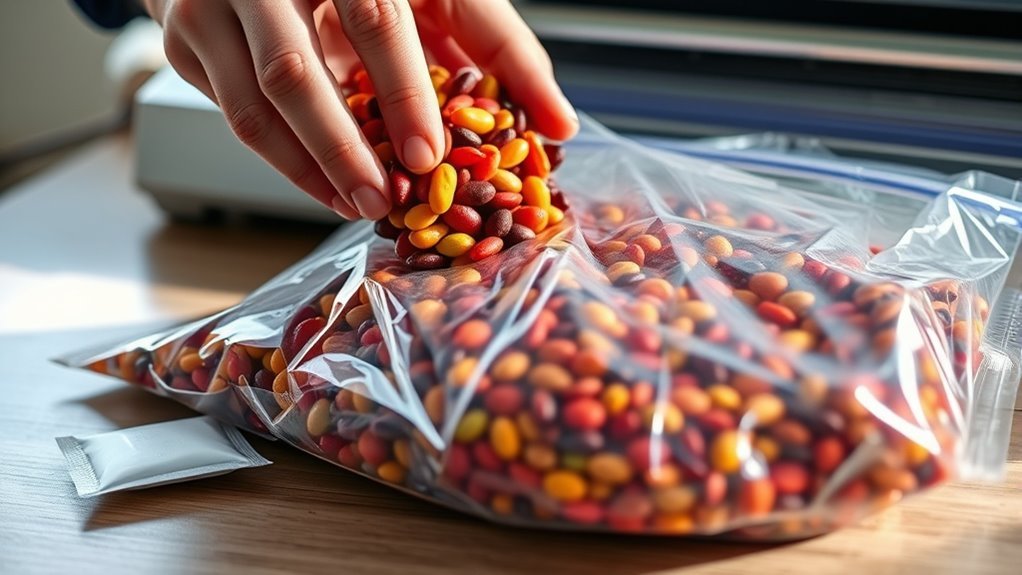
To keep your long-term food fresh and safe, you should repackage it using oxygen absorbers and airtight sealing. Start by placing your food into small jars or vacuum-sealed containers, then insert oxygen absorbers to remove any residual oxygen.
Make sure you place these inside Mylar bags or airtight containers before heat sealing to extend shelf life up to 20 years. After opening oxygen absorber packages, be sure to reseal them within 30 minutes to keep them effective.
Avoid storing oxygen absorbers in humid areas, as moisture can rust the iron and reduce their function. Finally, label each repackaged item with the packing date to help you rotate stock efficiently and monitor freshness over time.
This careful process ensures your long-term food stays safe and edible. It’s a simple step that really makes a difference!
Frequently Asked Questions
How to Make Long Term Food Storage?
You start by choosing shelf-stable foods, then seal them in airtight containers with oxygen absorbers.
Store them in a cool, dark, dry place, label everything clearly, and rotate stock regularly to keep food fresh and safe.
It’s pretty straightforward once you get the hang of it! Just keep everything organized and check your supplies every now and then.
What Should I Stock up on if WW3 Happens?
You should stock shelf-stable grains, dried beans, canned goods, powdered milk, and dehydrated foods.
Don’t forget fats, essential spices, salt, sugar, and emergency staples like honey and multivitamins to stay nourished and healthy.
What Is the 2-2-2 Rule for Food Storage?
The 2-2-2 rule means you store two weeks’ worth of food for two people in two types of containers.
You’ll rotate your stock every two years to keep it fresh and ready for emergencies.
It’s a simple way to make sure you’re prepared without going overboard.
Just keep track, swap out old items, and you’re good to go!
What Is the Best Way to Preserve Food Long Term?
The best way to preserve food long term is to use oxygen absorbers in airtight containers or vacuum-sealed bags. Store them in a cool, dark, dry place to keep everything fresh.
Also, make sure to keep moisture and air exposure to a minimum. This helps maintain maximum freshness for your food.
Conclusion
You might think long-term food storage is complicated or time-consuming, but it’s easier than you expect. By choosing the right shelf-stable foods, keeping your inventory organized, and using oxygen absorbers with airtight packaging, you’ll preserve your supplies effectively.
With just these three simple steps, you can confidently prepare for emergencies without stress or hassle. Start now, and give yourself peace of mind knowing your food will last when you need it most. Long-term food storage doesn’t have to be overwhelming. Just focus on smart food choices, proper storage methods, and regular inventory checks to ensure your supplies stay fresh and ready. Remember, a little preparation today can make a huge difference in an emergency. So, take these easy steps and build your food storage plan with confidence!